Key takeaways for OEM depot repair decisions
- Depot repair centralizes OEM-authorized diagnostics, component-level repair and quality-controlled refurbishment in a single facility that field teams cannot match.
- Outsourcing depot repair for OEM programs transfers capital, compliance and capacity risk to a specialized partner while internal teams focus on core product innovation.
- ISO 9001/14001 certification, ASC authorizations and government-grade credentials such as NIST, CMMC and TAA support compliant, auditable repair outcomes.
- Integrating depot repair with RMA intake, refurbishment and remarketing under one partner improves asset recovery value and reduces vendor-management overhead.
- Premier Logitech delivers single-source, ISO-certified depot repair for OEM programs with ASC authorizations and full compliance; talk to a lifecycle expert to evaluate the right model for each program.
How depot level repair works for OEM hardware
Depot level repair uses a centralized facility where returned units move through controlled, documented workflows. Authorized technicians work with OEM-approved parts, calibrated tooling and current documentation. The model sits above field service and basic bench repair in complexity and scope.
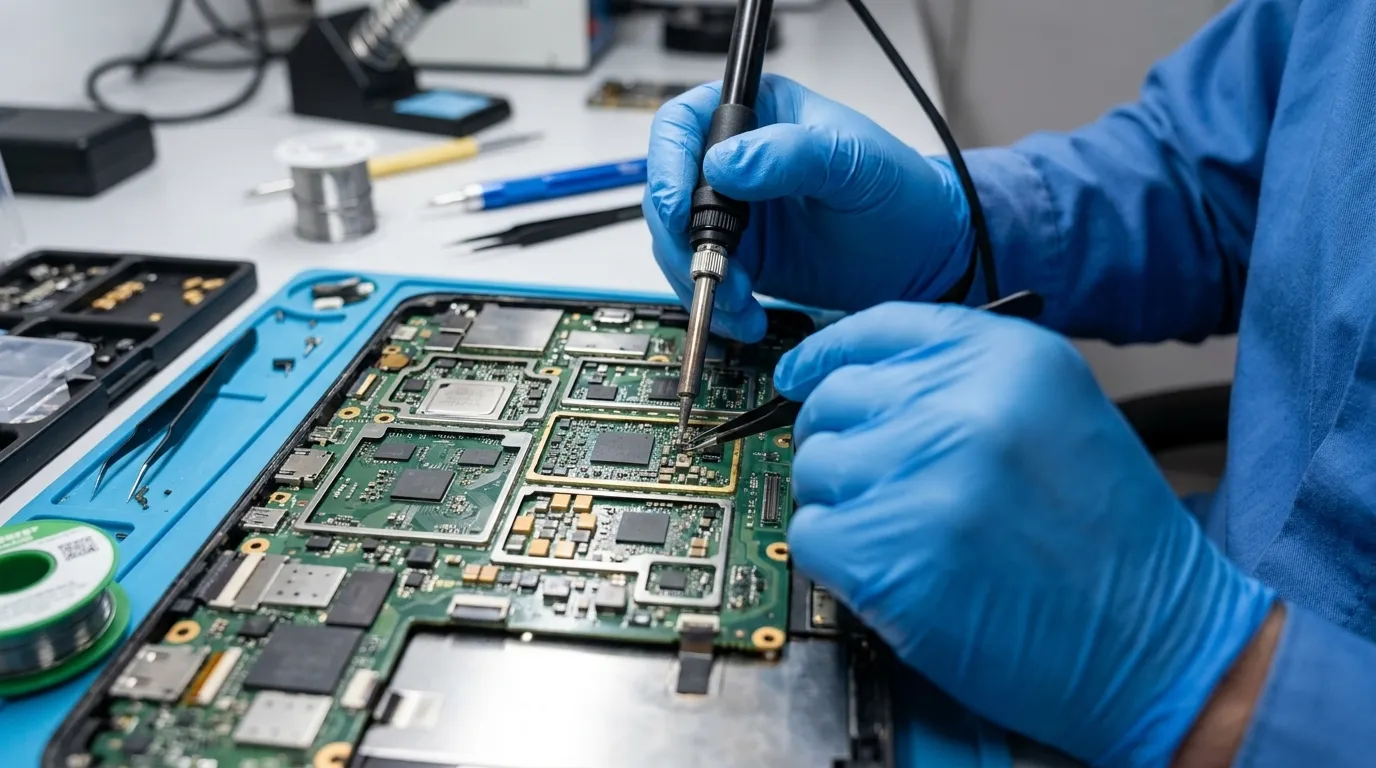
Depot teams handle assembly, sub-assembly and component-level work. Typical activities include PCB diagnostics, BGA rework and firmware updates that require specialized equipment and training.
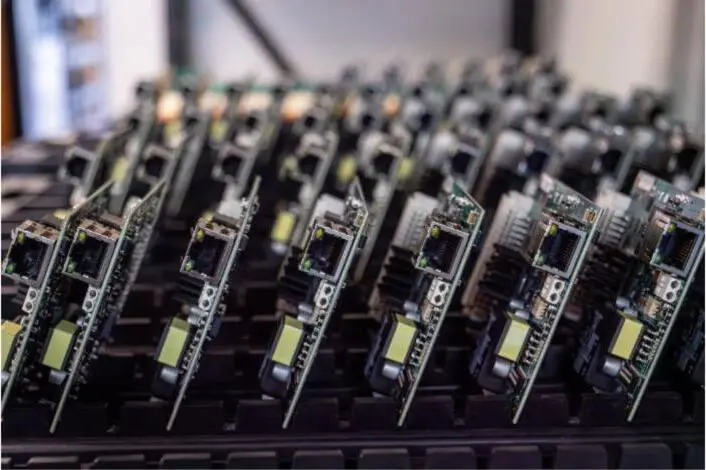
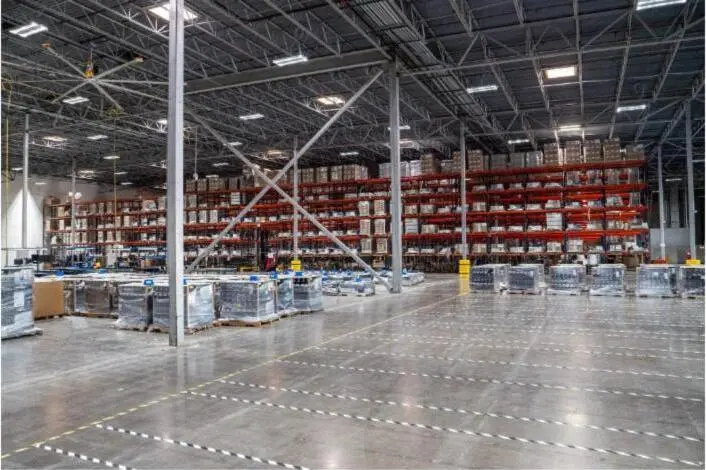
Premier Logitech operates depot level repair across L1 through L4 capability tiers. Its DFW-area facilities and nearshore operations in Laredo and Nuevo Laredo, Mexico support significant repair capacity. That scale allows the program to absorb volume spikes without degrading turnaround or quality consistency.
Within broader reverse logistics programs, aftermarket services including depot repair carry profit margins at least twice those of new-equipment sales. Depot repair therefore functions as a profit-relevant capability rather than a pure cost center.
Depot repair compared with field service
Environment creates the main difference between depot repair and field service. Depot repair centralizes technical expertise, tools, documentation and parts inventory in one controlled environment, enabling component-level repairs and rigorous testing that field technicians cannot reasonably replicate.
A depot technician can complete more repairs per day than a field technician who travels between sites. Inventory also remains consolidated in the depot instead of being duplicated across vehicles or regional locations.
Field service retains an advantage when equipment is too large or delicate to move. It also fits when downtime costs exceed the premium for on-site service or when troubleshooting requires the actual operating environment.
For portable IT hardware such as laptops, tablets and handheld devices, depot models support better scalability. A central team absorbs volume spikes more flexibly than a fixed in-house crew spread across locations.
Best-in-class field service teams achieve first-time fix rates of about 88%. That benchmark depends on controlled diagnostics, full tool access and documented repair procedures. A controlled depot environment supports thorough pre-return testing, which improves first-time fix rates and reduces repeat service events.
Key decision criteria include equipment portability, downtime cost, repair complexity, parts availability and any contractual requirements for standardized testing and documentation.
Step-by-step OEM depot repair workflow
A compliant, ISO-rigorous depot repair workflow follows a defined sequence. Premier Logitech’s DFW hub and Mexico operations execute this flow at scale.
- Intake and logging: Returned units enter the facility with RMA details, serial information, condition notes and customer context. Staff assign a unique identifier and log the unit into the tracking system before any physical handling.
- Decontamination and assessment: Units move into a segregated area for initial processing. Technicians screen units against OEM-approved diagnostic paths rather than loose assumptions and document pre-existing damage and condition.
- Diagnostics: Certified technicians conduct component-level analysis to identify all issues beyond the reported symptom. Work can include BGA rework, PCB testing and precision soldering.
- Authorized repair: Teams execute work using authorized procedures, OEM-approved parts, calibrated tools and technician authorization levels that match the repair tier.
- Validation and QC: Each unit is tested against defined acceptance criteria. Every repaired unit is reviewed against current engineering change notices (ECNs) before passing through Quality Control.
- Documentation: Staff capture repair records, test results and parts traceability data. These records support warranty administration, OEM reporting and compliance audits.
- Redeploy or disposition: The product is returned, stored, exchanged or routed per the service model with supporting records for the customer, OEM and quality system. Units that cannot return to A-stock are graded, repackaged and assigned to secondary market channels.
Consistent capture of repair data across this workflow reveals patterns such as repeat failures, parts issues and design weaknesses. That intelligence informs training, parts planning and engineering updates.
Build internal depot services or outsource
The build-versus-outsource decision for depot repair in OEM programs rests on four criteria: differentiation, competency, control and economics.
A make-versus-buy analysis applies a core-versus-context test. Core activities that advance competitive advantage lean toward internal ownership. Context activities default to outsourcing unless risk or economics point elsewhere. For most OEMs, depot repair functions as a context activity that supports products without defining them.
Volume thresholds determine whether the fixed costs of internal depot capability make sense. Building that capability requires capital investment in facilities, tooling, trained technicians and quality systems. That investment pays off when repair volume remains sustained, predictable and large enough to absorb fixed overhead.
When volume is variable or seasonal, the same fixed investment becomes a liability. In those cases an outsourced partner that absorbs capacity risk without stranding capital becomes the more practical choice.
Beyond volume economics, regulatory requirements add another decision layer that often favors outsourcing. Outsourcing service delivery allows OEMs to free in-house staff to concentrate on core business functions such as innovating and building products rather than maintaining service infrastructure, while the outsourced partner carries the compliance burden.
Premier Logitech’s single-source lifecycle model addresses consolidation directly. Operations leaders can route RMA intake, depot repair, refurbishment and recycling through one partner. That structure reduces handoffs, improves visibility and simplifies compliance reporting.
ISO-certified depot repair standards
ISO 9001 certification establishes a documented quality management system that governs how depot repair work is planned, executed, inspected and improved. For OEMs, this standard means the repair partner follows consistent processes instead of ad hoc procedures. It also means quality outcomes remain traceable and auditable.
ISO 14001 extends the framework to environmental management. Environmental frameworks such as ISO 14001 establish processes for managing emissions, waste systems and environmental risks. These controls matter for depot operations that handle e-waste, parts harvesting and end-of-life disposition.
Premier Logitech holds ISO 9001 and ISO 14001 certifications. These credentials support both quality consistency and responsible recycling outcomes for OEM clients.
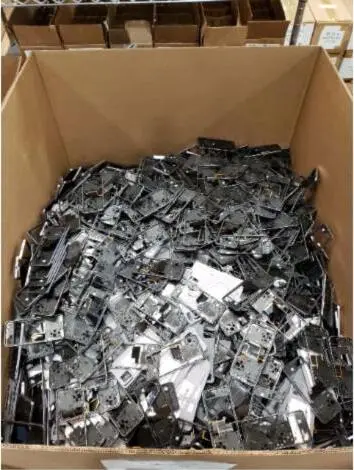
ASC authorization and government compliance
Authorized Service Center (ASC) status means a repair facility has been vetted and approved by an OEM to perform warranty and out-of-warranty repairs using OEM-approved procedures and parts. Without ASC authorization, repairs may void warranties, introduce non-compliant parts or fail OEM audit requirements.
Premier Logitech holds ASC authorizations for multiple OEM brands across major IT and telecom hardware categories used by enterprise and government customers. That breadth allows a single partner to handle multi-brand return programs without routing units to separate authorized facilities.
Government and defense customers face additional compliance requirements beyond OEM authorization. NIST SP 800-171 defines 110 security requirements across 14 control families to protect Controlled Unclassified Information in nonfederal systems, with Maintenance and Physical Protection families directly relevant to depot repair operations. CMMC builds on this NIST foundation, requiring defense industrial base contractors handling Federal Contract Information and CUI to demonstrate the same controls through third-party assessment.
Premier Logitech’s compliance framework covers TAA, NIST, CMMC, SOC 2 and ISO 9001/14001, with a CAGE Code (4WAJ9) that establishes pre-vetted status for U.S. federal government engagements. NIST SP 800-53 MA-07 formalizes the requirement to route maintenance of critical systems to controlled, authorized facilities, a standard that Premier Logitech structures operations to meet.
Business benefits of authorized depot repair
Authorized depot repair for OEM programs delivers measurable advantages across cost, quality and speed when structured around a single integrated partner.
On cost, a centralized maintenance facility is often more cost-effective than distributed field maintenance because it eliminates the costly duplication of tooling, specialist skills and inventory that would otherwise be required at each location. Consolidating repair, refurbishment and recycling under one partner further reduces vendor management overhead.
On quality, ISO-certified processes and ASC authorization create consistent repair outcomes across high volumes. Operating depot repair inside an ISO-certified quality system provides documented inspection steps, material traceability and service record support. That documentation supports warranty administration, OEM audits and regulatory compliance.
On asset recovery, sustainability and circular-economy requirements are elevating depot repair and reverse logistics from cost centers to the value-recovery functions described earlier. Refurbished and regraded units generate secondary market revenue that offsets return processing costs.
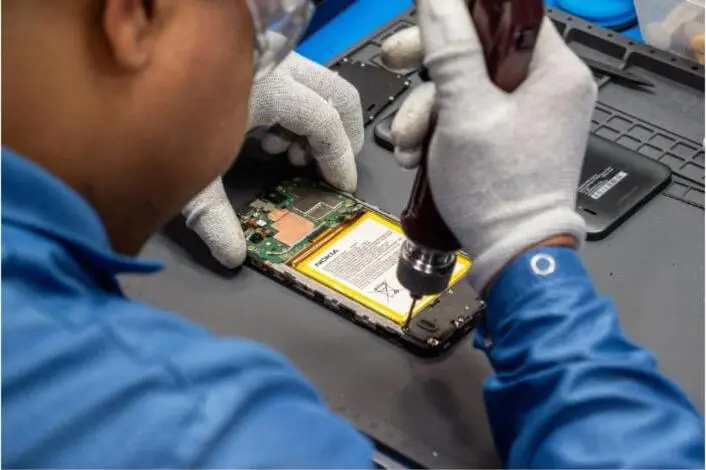
Premier Logitech’s RMA-to-refurbishment workflow integrates intake, repair, grading and remarketing into a single program. This integration reduces handoffs that often limit recovery value.
The refurbishment and repair logistics orchestration platforms market is projected to grow from USD 870 million in 2025. That growth reflects enterprise investment in unified reverse logistics programs that treat depot repair as a core function.
Frequently asked questions about depot repair
What is the difference between depot repair and field service for OEM hardware?
Depot repair routes returned units to a centralized, authorized facility where technicians have access to OEM-approved parts, specialized tooling and documented quality processes. Field service sends a technician to the equipment location.
Depot repair serves as the standard path for complex, warranty-covered or compliance-sensitive repairs. Field service fits when equipment cannot be moved or when on-site troubleshooting is required.
For portable IT hardware at scale, depot models deliver more consistent outcomes and better data capture than distributed field operations.
What certifications should an OEM depot repair partner hold?
An authorized depot repair partner should hold ISO 9001 for quality management and ASC authorization from relevant OEM brands. Government and defense programs require NIST SP 800-171, CMMC and TAA compliance.
ISO 1401 supports responsible environmental handling of returned units and e-waste. SOC 2 addresses data security controls for any repair operation that handles devices containing sensitive information. A CAGE Code is required for direct federal government engagement.
How does outsourcing depot repair compare to building an internal capability?
Building internal depot repair capability requires sustained capital investment in facilities, tooling, trained technicians and quality systems. That investment makes sense when repair volume is large, predictable and strategically core to the business.
For most OEMs, depot repair functions as a context capability that supports products without driving differentiation. Outsourcing transfers capacity risk, compliance burden and infrastructure cost to a specialized partner while delivering the focus advantages discussed in the build-versus-outsource section.
A single-source partner that covers RMA intake through refurbishment and recycling also reduces vendor fragmentation.
What volume of returns justifies outsourcing to a depot repair partner?
No universal threshold applies, so organizations weigh volume variability, repair complexity and compliance requirements. Seasonal or unpredictable return volumes favor outsourcing because a partner absorbs capacity spikes without stranding fixed overhead.
When repairs require ASC authorization, ISO-certified processes or government compliance credentials, outsourcing to a qualified partner often becomes the only practical path regardless of volume. High-volume programs benefit from partners with demonstrated capacity to handle large weekly repair throughput without degrading turnaround or quality.
How does depot repair integrate with broader reverse logistics and asset recovery programs?
Depot repair performs best as part of an integrated reverse logistics workflow rather than a standalone function. A unified program connects RMA intake, triage, depot repair, refurbishment, grading, secondary market disposition and responsible recycling under a single operational model.
This integration reduces handoffs, improves asset recovery value and provides end-to-end visibility into return volumes, repair outcomes and disposition results. Platforms and partners that unify these functions allow returned units to flow directly from repair into refurbishment or remarketing channels without manual routing decisions at each stage.
Conclusion: choosing a depot repair model
The evaluation framework for depot repair in OEM programs centers on four points. Organizations assess whether they have the volume, infrastructure and compliance credentials to build internally. They determine whether repair work requires ASC authorization or government-grade security controls.
They also review whether the current reverse logistics program is fragmented across multiple vendors and whether asset recovery value is fully captured. For most operations and supply chain leaders, these answers point toward outsourcing to an authorized, ISO-certified partner with the scale, compliance credentials and single-source lifecycle integration to handle programs end to end.
Premier Logitech has operated in this space since 2007, holding the ASC authorizations and compliance credentials detailed in the certification section and a repair capacity that supports enterprise and government programs at scale.
Talk to a lifecycle expert to evaluate the right depot repair model for each program.
