High Capacity Depot Repair: What Operations Leaders Gain
- High capacity depot repair centralizes intake, diagnostics, L1–L4 repair, QA and redeployment to manage large IT return volumes with full traceability.
- Scaling depot repair programs typically breaks at the integration layer, where manual status chasing and fragmented vendors create data gaps and compliance exposure.
- A structured five-step workflow with RMA intake, triage, repair, QA and recovery, combined with OEM ASC authorizations and real-time TMS tracking, maintains consistent quality at scale.
- Premier Logitech’s three DFW facilities, more than 20 OEM ASC designations and active TAA, NIST, CMMC, SOC 2 and ISO certifications support enterprise and government reverse logistics.
- Consolidating depot repair under a single integrated partner removes handoff failures and documentation gaps; schedule a working session with a Premier Logitech lifecycle expert to map the current program.
The Problem: Where High Capacity Depot Repair Programs Break
Most depot programs hit the same wall when return volumes grow. Physical repair work rarely creates the first bottleneck because facilities can add technicians and workstations. The integration layer between intake workflow states, warehouse events and downstream systems such as ERP, CRM or warranty platforms becomes the constraint, with manual status chasing, inventory reconciliation and exception handling by email.
Disconnected portals, warehouse systems and financial systems create data gaps that ripple across the supply chain, reducing visibility when volume peaks. Items sit waiting for the next step because approvals, receiving and system updates do not stay synchronized.
Compliance exposure compounds these operational issues. High-volume depot repair programs for regulated products require item-level traceability, chain-of-custody records and controlled documentation that proves what was repaired, by whom, to what revision, with what materials, inspections and release authority. Fragmented vendor relationships make consistent documentation difficult to maintain.
Vendor fragmentation also reduces asset recovery. When repair fulfillment and recycling sit with multiple providers, no single partner owns the outcome. Grading inconsistencies, missed warranty claims and delayed redeployment all erode the residual value of returned assets.
Addressing these integration, compliance and fragmentation challenges requires a structured workflow that maintains control at every stage.
Consolidate the depot repair program under one accountable partner and review the current workflow.
High Capacity Depot Repair: A Five-Step Workflow That Scales
A structured high capacity depot repair program follows a defined sequence that maintains traceability and quality control at every stage. Best-in-class depot repair operations target high first-time fix rates, a benchmark that requires process discipline from intake through final disposition.
- RMA intake and diagnostics: Every unit enters through a controlled receiving process. Teams log serial numbers, record condition and tie diagnostic results to the asset record before repair work begins.
- Triage and sorting: Teams sort units by repair complexity, warranty status and disposition path. Rules-based disposition logic tied to condition grades removes variability from manual judgment at high volumes.
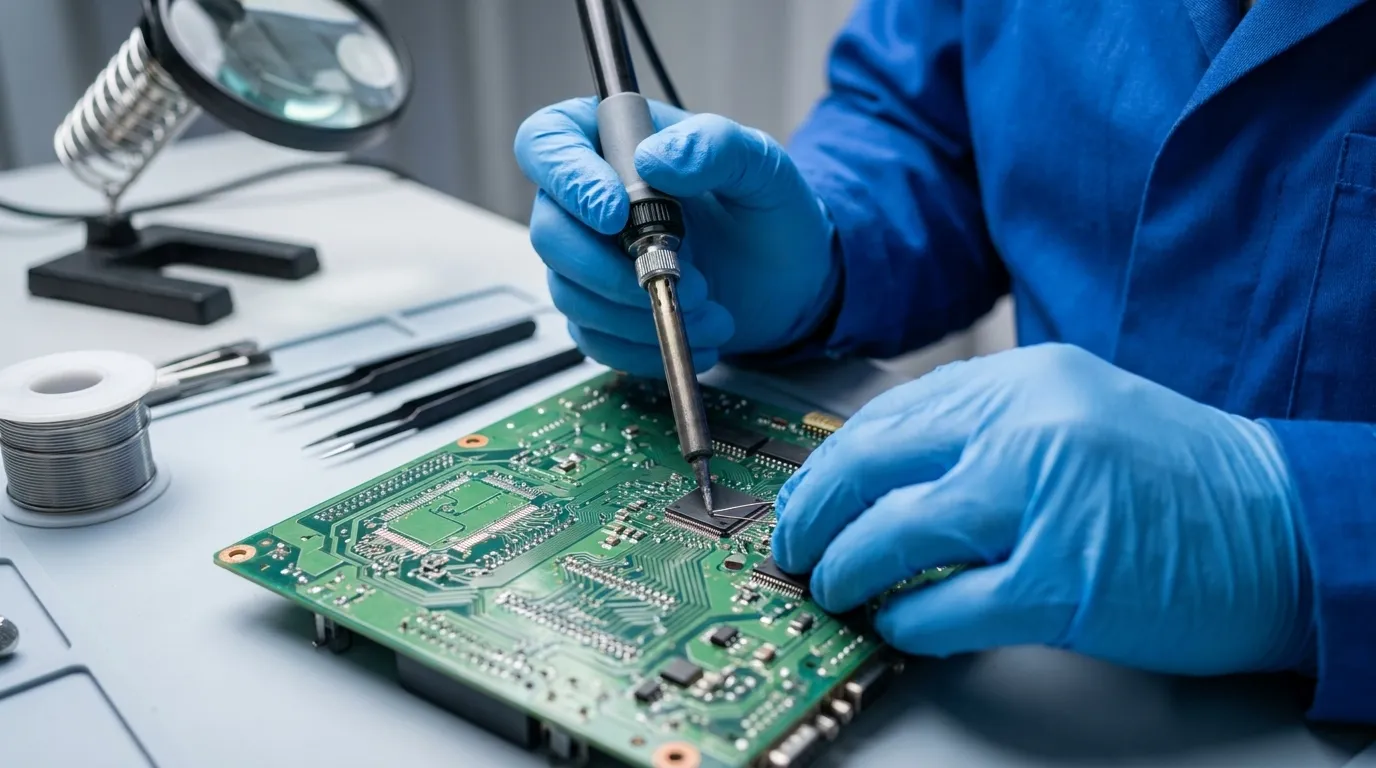
- L1–L4 repair: Repair scope ranges from basic resets and software reloads at L1 through board-level and component repair at L4. ASC authorization from the OEM governs permitted repair levels and applicable technical data revisions.
- QA and compliance verification: Every repaired unit passes through a dedicated quality control station. Depot repair operations achieve quality control through consistent repair environments with proper lighting, climate control, access to tools and documentation and mandatory comprehensive testing protocols before units return to service.
- Redeployment or recovery: Units that pass QA move to redeployment, refurbishment or secondary market grading. Units that cannot be repaired route to parts reclamation or responsible recycling with documented chain of custody.
Premier Logitech’s High Volume Depot Repair Advantages
Premier Logitech operates three DFW facilities with nearshore operations in Laredo and Nuevo Laredo, Mexico, supporting repair capacity that absorbs enterprise and government return volumes without backlogs. The company holds more than 20 OEM Authorized Service Center designations, so repair work follows OEM-approved technical data and revision standards, not approximations.
Many depot repair partners provide only a web portal for manual lookups and report exports, which does not support surfacing repair status inside customer systems, triggering downstream workflows or synchronizing serialized asset data. Premier Logitech’s Transportation Management System provides real-time tracking across logistics and repair workflows, giving operations teams live visibility instead of periodic report exports.
Operational best practices for faster recovery include dedicated inspection and processing stations with clear workflows, standardized inspection criteria and disposition codes and dedicated lanes for high-volume return streams. Premier Logitech’s DFW hub follows these principles with separate receiving, repair, QA and shipping areas that prevent cross-contamination of workflow stages.
Centralized depot operations improve parts utilization by consolidating inventory in one location, which supports lower overall stock levels while maintaining availability. Premier Logitech’s parts reclamation and harvesting capabilities extend this benefit by recovering usable components from non-repairable units to support repair continuity.
Compliance Requirements in High Volume IT Depot Repair
High volume depot repair programs must align daily operations with specific compliance frameworks. TAA governs procurement and repair of IT assets for U.S. federal contracts and requires products from TAA-designated countries while repair processes preserve country-of-origin status. Programs must maintain country-of-origin records and component traceability.
NIST SP 800-88 defines media sanitization requirements during repair, refurbishment and ITAD. Teams apply Clear, Purge or Destroy methods based on data sensitivity, and serial-level Certificates of Destruction or Reuse are required. Sanitization logs, certificates with serial numbers and chain-of-custody records support audits.
CMMC governs handling of Controlled Unclassified Information on devices in repair. Programs must enforce access controls, incident response and audit logging for systems that process CUI assets, supported by system security plans, access logs and audit trails.
SOC 2 focuses on data security and availability controls at the depot facility. Programs must meet Trust Service Criteria for security, availability and confidentiality of customer asset data, documented through SOC 2 Type II reports and control evidence.
ISO 9001 and ISO 14001 cover quality and environmental management in repair operations. Work order traceability, inspection records, nonconformance documentation and calibration records support quality management, while environmental compliance reports document responsible handling and recycling.
Reverse Logistics Depot Repair Integration Across the Lifecycle
Reverse logistics programs that span multiple vendors create handoff failures at every transition point. A repair vendor receives a unit but cannot update the warranty system. A recycler disposes of an asset but the ERP still shows it as active inventory. A refurbishment partner grades a device using criteria that differ from the OEM standard. These examples show how the earlier data gap problem appears in daily operations.
A single integrated partner removes these failure points by owning the full workflow from RMA intake through repair, refurbishment, grading, redeployment and recycling under one system of record. Premier Logitech’s end-to-end model connects transportation, depot repair, configuration, fulfillment and ITAD within a single operational structure. That structure supports real-time TMS visibility and serialized asset tracking without requiring clients to manage data synchronization across vendors.
Certificate of Destruction or Certificate of Reuse documentation with serial-level verification is an accountability and audit requirement in ITAD reverse logistics to maintain chain of custody from collection to final disposition. When one partner owns the chain of custody end to end, that documentation stays consistent and auditable.
Identify where vendor handoffs create data gaps in the current reverse logistics program.
How to Choose the Right High Capacity Depot Repair Partner
Partner selection for a high capacity depot repair program requires evaluation across five dimensions. The following checklist covers criteria that separate scalable partners from those that create bottlenecks.
- Technical capabilities: Confirm L1–L4 repair scope and OEM ASC authorization for the specific brands in the program. ASC status means the partner uses OEM-approved technical data, not reverse-engineered procedures.
- Operational scale: Verify that the partner’s facility footprint, staffing model and parts inventory can absorb peak return volumes without extending turnaround times. Ask for quality metrics by repair category, including the first-time fix rates mentioned earlier.
- Security posture: Confirm active certifications for TAA, NIST, CMMC, SOC 2 and ISO frameworks. Request the CAGE Code if the program involves federal assets. Premier Logitech holds CAGE Code 4WAJ9 as a pre-vetted federal partner.
- Service flexibility: Determine whether the partner supports modular engagement, such as depot repair only, or full lifecycle management. Programs evolve, and a partner locked into one model creates switching costs later.
- SLA clarity: Require defined turnaround time tiers by repair level, escalation procedures for parts shortages and reporting cadences that include first-time fix rates and comeback rates. Tracking comeback rates by technician and repair type enables depot operations to identify root-cause quality problems rather than addressing only symptom-level failures.
Frequently Asked Questions
What is high capacity depot repair and how does it differ from standard depot repair?
High capacity depot repair refers to a centralized repair program designed to process large volumes of returned IT assets continuously, not only during peak periods. Standard depot repair programs may handle occasional returns with general staffing and shared facilities. High capacity programs require dedicated intake lanes, tiered repair workflows, real-time asset tracking and compliance infrastructure that can sustain throughput without degrading quality or documentation standards. This distinction matters for enterprise and government programs where return volumes remain ongoing and compliance requirements remain strict.
What OEM authorizations should a depot repair partner hold?
An Authorized Service Center designation from the OEM certifies that the repair partner can perform warranty and out-of-warranty repairs using OEM-approved technical data, tools and parts. Without ASC status, repairs may void warranties, fail OEM quality audits or use non-approved components that create liability. For programs covering multiple device categories such as laptops, mobile devices, networking equipment and peripherals, the partner should hold ASC authorizations across all relevant brands. Premier Logitech holds more than 20 OEM ASC authorizations, a capability referenced throughout this program overview.
How does a single integrated partner improve compliance compared to a multi-vendor model?
Compliance in depot repair and reverse logistics depends on unbroken chain-of-custody documentation from intake through final disposition. In a multi-vendor model, each handoff between providers creates a documentation gap, where serial-level traceability can break, sanitization records may not transfer or grading criteria may differ. A single integrated partner maintains one system of record across all workflow stages, which makes audit responses faster and more complete. For programs subject to NIST, CMMC or federal procurement requirements, that continuity functions as a structural requirement, not a preference.
What metrics should a director of reverse logistics track in a high volume depot repair program?
Core metrics include turnaround time by repair level, first-time fix rate, comeback rate by repair type and technician, cost per repair, asset recovery rate and compliance documentation completeness. Turnaround time benchmarks vary by repair complexity because simple repairs resolve faster than component-level work. First-time fix rates below 90 percent signal process or training issues that compound at scale. Asset recovery rate measures the percentage of returned units that re-enter the supply chain through redeployment, refurbishment or secondary market sale, which directly affects program ROI.
Can a depot repair partner support both warranty and out-of-warranty repairs under one program?
One depot repair partner can support both warranty and out-of-warranty repairs under a single program, which reduces administrative overhead. In-warranty repairs require OEM ASC authorization and adherence to OEM technical data. Out-of-warranty repairs may follow different cost and disposition rules but benefit from the same intake, tracking and QA infrastructure. A partner with ASC status and full L1–L4 capability can manage both streams within one workflow, applying the correct repair path based on warranty status determined at triage. Premier Logitech supports in-warranty and out-of-warranty claim handling as part of its depot repair program.
The Case for a Single Source Depot Repair Partner
Fragmented depot repair programs create compounding problems that include compliance gaps, lost asset visibility, inconsistent quality and vendor relationships that cannot scale. The operational and regulatory demands of high volume IT returns require a partner with national facility scale, deep OEM authorization and a compliance posture that covers federal and enterprise requirements.
Premier Logitech has operated as an end-to-end IT lifecycle and reverse logistics partner since 2007. The company’s depot repair program covers L1–L4 repair across more than 20 OEM-authorized brands, operates from three DFW facilities with nearshore Mexico capacity and maintains active certifications across TAA, NIST, CMMC, SOC 2 and ISO frameworks. Real-time TMS visibility and serialized asset tracking connect every stage of the workflow under one system of record.
For directors of reverse logistics and VPs of supply chain who manage high return volumes, scalable and compliant depot repair depends on a single integrated partner, not a collection of vendors.
Build a scalable depot repair program with end-to-end visibility and compliance.
