Key Takeaways for Enterprise Rollouts
- Technology deployment services follow a repeatable five-stage process that moves hardware and software from procurement into productive enterprise use while maintaining compliance and asset value.
- Each stage, including planning, staging, multi-location execution, on-site installation and validation, produces documented outputs that feed the next and create an auditable chain of custody.
- Early integration of compliance requirements such as TAA, NIST SP 800-53 and CMMC prevents costly remediation and ensures hardware qualifies for regulated environments.
- Centralized staging, logistics control and dedicated field technicians reduce configuration drift, on-site labor and exception-handling costs across large-scale rollouts.
- Premier Logitech delivers this structured deployment process as part of an end-to-end sourcing-to-recycling lifecycle solution, and teams can talk to a lifecycle expert to map it to a specific program.
Planning and Site Readiness for Enterprise Deployments
Planning establishes the scope, schedule and compliance baseline for the entire rollout. Key inputs include asset inventories, network infrastructure assessments, procurement lead times and regulatory requirements.
Primary actions at this stage include:
- Conducting site surveys to confirm power, connectivity and physical space
- Mapping device counts and configurations to each location
- Aligning procurement to Trade Agreements Act (TAA) sourcing requirements for government and regulated enterprise programs
- Establishing data security protocols consistent with NIST SP 800-53 and, where applicable, CMMC controls
- Defining wave sequencing to minimize operational disruption
The primary output is a deployment plan that includes a site-readiness checklist, a bill of materials per location and a compliance attestation record. The key decision at this stage is whether to deploy in a single wave or in phased waves. Phased waves reduce risk but extend the overall timeline. Single-wave deployments compress the schedule but require greater parallel coordination capacity.
Cross-team coordination at this stage involves operations, IT security, procurement and facilities. Compliance integration must occur here, not retroactively, because sourcing decisions made without TAA or CMMC review can disqualify hardware from use in regulated environments.
Staging and Configuration in Controlled Facilities
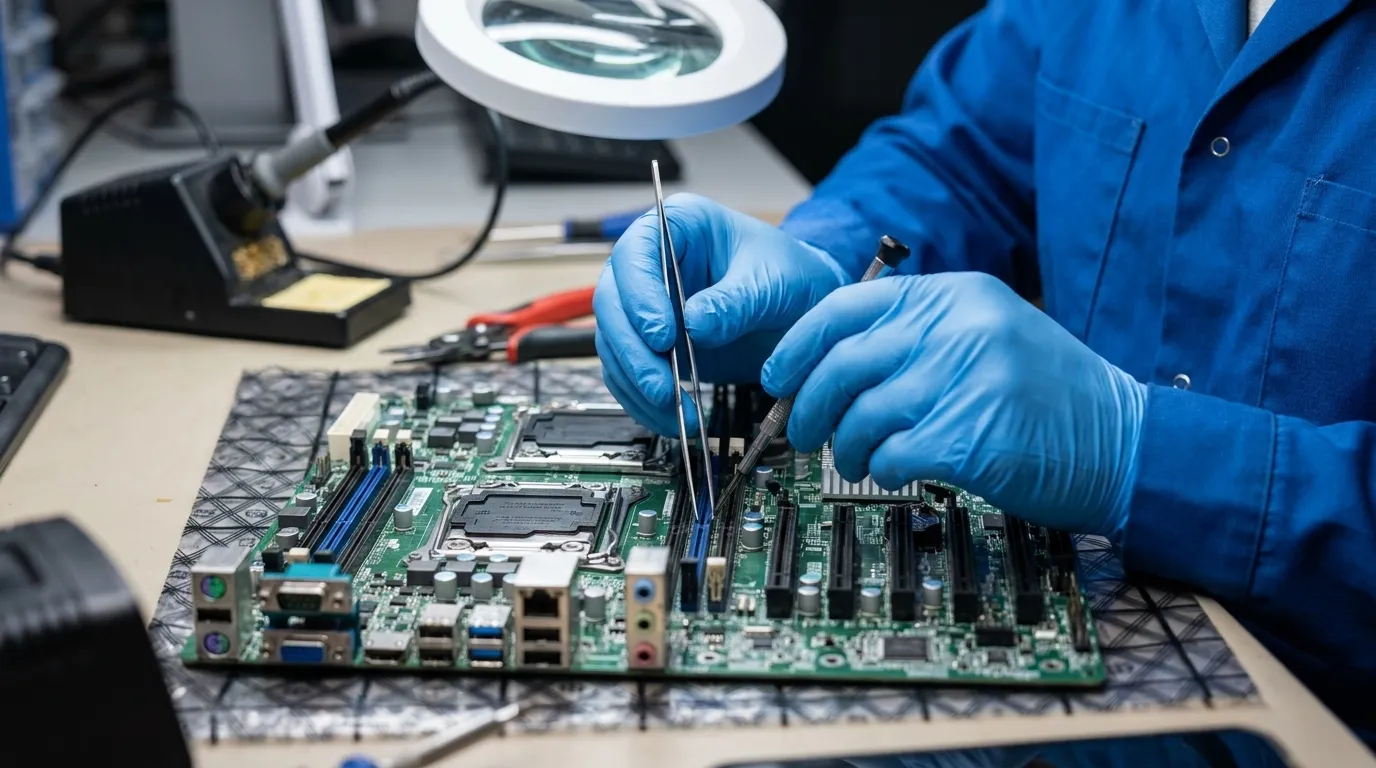
Staging transforms procured hardware into deployment-ready assets. Work occurs in a controlled facility environment before devices reach end-user locations, which reduces on-site labor time and error rates.

Primary actions include:
- Device imaging and BIOS configuration to organizational standards
- Software installation, patching and license activation
- SIM and IMEI pairing for mobile and connected devices
- Asset tagging, serialization and inventory recording
- Kitting and custom packaging per site or user profile
- Modern provisioning through cloud-based enrollment platforms
Inputs are the approved device configurations, software images and kitting specifications from the planning stage. Outputs are serialized, labeled, tested and packaged units ready for shipment to each site.

The key trade-off at this stage is between centralized staging at a single facility and distributed staging closer to deployment sites. Centralized staging supports tighter quality control and compliance documentation. Distributed staging can reduce freight costs and compress delivery windows for geographically dispersed rollouts.
Compliance integration at this stage includes chain-of-custody documentation and secure handling procedures. For government programs, it also includes verification that each device meets applicable security configuration baselines.
Coordinated Multi-Location Execution and Logistics Control
With assets now serialized, labeled, tested and packaged, multi-location execution becomes the logistics and scheduling layer that moves these assets to the right site at the right time. For enterprise rollouts spanning dozens or hundreds of locations, this stage determines whether the deployment plan holds or collapses under operational pressure.
Primary actions include:
- Coordinating inbound freight schedules with site availability windows
- Managing carrier selection across LTL, full truckload and white-glove delivery modes
- Tracking shipments in real time through a transportation management system (TMS)
- Sequencing site activations to align with IT support capacity
- Managing exception handling for delayed, damaged or missing shipments
Inputs are the staged and packaged units, the wave schedule and the site-readiness confirmations. Outputs are confirmed deliveries at each location with proof-of-delivery documentation and updated asset tracking records.
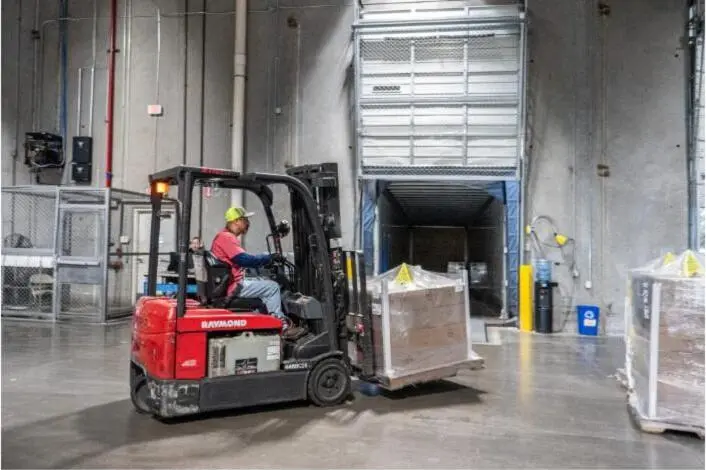
The key decision at this stage is the degree of centralized logistics control versus delegation to regional carriers or local teams. Centralized control through a single logistics partner provides visibility and accountability. Fragmented carrier relationships introduce tracking gaps and complicate exception resolution.
Compliance integration includes maintaining chain-of-custody records during transit, particularly for devices that contain preloaded sensitive configurations or government-classified software environments.
Talk to a lifecycle expert about coordinating a multi-site rollout under a single logistics program.
On-Site Installation and Integration at Each Location
On-site installation connects staged devices to the production environment. This stage involves physical setup, network integration and user environment configuration at each location.
Primary actions include:
- Unpacking, rack mounting or desk deployment of hardware
- Network registration and IP assignment
- Integration with existing directory services, endpoint management platforms and security tools
- Peripheral connection and labeling
- Removal and disposition of legacy equipment being replaced
Inputs are the delivered, staged devices and the site-specific integration specifications. Outputs are connected, enrolled devices operating within the production network.
The key trade-off is between deploying dedicated field technicians to each site and relying on local IT staff. Dedicated technicians maintain consistency and reduce errors. Local staff reduce travel costs but introduce variability in execution quality across sites.
Compliance integration at this stage includes verifying that devices enroll into the correct security policy groups. It also includes confirming that legacy device data is wiped according to NIST SP 800-88 standards and that all installation activities are logged for audit purposes.
Testing, Validation and Handover to Operations
Testing and validation confirm that deployed devices meet functional, security and performance requirements before formal handover to operations or end users. This stage closes the deployment record and initiates the asset management phase of the lifecycle.
Primary actions include:
- Functional testing of hardware, software and network connectivity
- Security configuration validation against the approved baseline
- User acceptance testing where applicable
- Documentation of as-deployed configurations for each asset
- Formal sign-off and handover to the receiving team or end user
Inputs are the installed devices and the acceptance criteria defined during planning. Outputs are validated, documented assets with completed handover records and updated lifecycle tracking entries.
The key decision at this stage is the threshold for acceptable defect rates before declaring a site complete. Establishing this threshold during planning prevents disputes at handover and sets a clear standard for remediation.
Compliance integration includes generating the final compliance attestation package. This package documents TAA sourcing, NIST configuration baselines, data destruction records for replaced assets and chain-of-custody logs from staging through handover.
Common Deployment Risks and Practical Mitigation Tactics
Enterprise rollouts fail at predictable points. The following risks and mitigations apply across most large-scale deployments:
- Incomplete site readiness: Sites that are not physically or technically prepared delay installation and compress subsequent stages. Mitigation is a formal site-readiness checklist completed and verified before staging begins.
- Configuration drift: Devices configured at different times or by different technicians diverge from the approved baseline. Mitigation is centralized imaging and automated configuration validation before shipment.
- Supply chain disruptions: Component shortages or carrier delays break wave schedules. Mitigation is building buffer inventory and maintaining relationships with multiple vetted carriers.
- Compliance gaps discovered late: TAA or CMMC issues identified after procurement require costly remediation. Mitigation is integrating compliance review into the planning stage before purchase orders are issued.
- Legacy asset disposition delays: Unreturned or improperly handled legacy devices create data security exposure and delay asset recovery value. Mitigation is scheduling reverse logistics pickups concurrent with new device delivery.
- Scope creep: Undocumented site-specific requirements added during installation inflate costs and timelines. Mitigation is a change-control process with documented approval for any deviation from the deployment plan.
Measuring Deployment Success with Clear Indicators
Deployment performance measurement requires both leading indicators, which signal risk before problems escalate, and lagging indicators, which confirm outcomes after completion.
Leading indicators include:
- Site-readiness scores at the close of the planning stage
- Configuration accuracy rates from staging quality checks
- On-time shipment rates by wave
- Technician-to-site ratio against the deployment schedule
Lagging indicators include:
- Total cost of deployment per device or per site
- Post-handover incident rate within the first 30 and 90 days
- Asset recovery value realized from retired legacy equipment
- Time from purchase order to productive use per device
Leading indicators allow operations teams to intervene before a wave falls behind. Lagging indicators inform the planning assumptions for the next rollout cycle and support vendor performance reviews.
Frequently Asked Questions About Technology Deployment
How long does an enterprise technology deployment typically take?
Timeline depends on the number of sites, device count, configuration complexity and site-readiness conditions. Deployments involving a single location with standardized configurations complete faster than multi-site rollouts that require custom imaging, compliance documentation and phased wave scheduling. Planning and staging function as lead-time activities, so early compliance and procurement review can compress the overall program duration.
What are the primary cost drivers in a technology deployment program?
Key cost drivers in a technology deployment program often include labor for configuration and on-site installation, freight and logistics across multiple locations and remediation work caused by planning or configuration issues. Programs that invest in thorough site readiness assessment can reduce on-site labor hours and exception-handling costs. Integrating reverse logistics for legacy asset recovery into the deployment program can help generate asset recovery value.
Which regulatory frameworks most commonly apply to enterprise and government technology deployments?
TAA compliance governs hardware sourcing for U.S. federal contracts and many state and local government programs. NIST SP 800-53 and NIST SP 800-88 apply to security configuration and data sanitization. CMMC applies to defense contractors and their supply chains. ISO 9001 and SOC 2 frameworks apply to the service providers that execute configuration and fulfillment. Organizations that operate in multiple regulatory environments benefit from a deployment partner that maintains certifications across these frameworks rather than managing compliance separately for each.
When should an organization revisit its technology deployment approach?
Organizations typically revisit their deployment approach when rollout timelines consistently exceed plan, when post-handover incident rates remain elevated, when compliance findings emerge during audits or when a merger, acquisition or major infrastructure refresh changes the scale or geographic footprint of the program. Fragmented vendor relationships across staging, logistics and installation often trigger this review, because consolidating to a single lifecycle partner can reduce coordination overhead and improve accountability.
How does technology deployment connect to the broader asset lifecycle?
Deployment functions as one stage in a continuous lifecycle that begins with sourcing and ends with recycling or remarketing. Assets that are deployed without lifecycle tracking in place are harder to manage through repair, refresh and retirement. Connecting deployment records to an asset management system from day one supports warranty tracking, refresh planning and compliant end-of-life disposition. Organizations that integrate deployment as part of the asset lifecycle rather than treating it as an isolated project can gain better control over total cost of ownership across the asset life.
Conclusion: Structured Deployment Within the Asset Lifecycle
Technology deployment services work through a structured five-stage process that includes planning and site readiness, staging and configuration, coordinated multi-location execution, on-site installation and integration and testing, validation and handover. Each stage produces documented outputs that feed the next and that connect directly to asset management, repair and end-of-life programs.
Premier Logitech delivers this process as one component of an end-to-end sourcing-to-recycling lifecycle solution. From TAA-compliant procurement and centralized staging through multi-site logistics and reverse logistics for retired assets, Premier Logitech operates as a single-source partner for enterprises, OEMs and government agencies that manage complex technology programs.
Talk to a lifecycle expert to discuss how a structured deployment program fits into a broader lifecycle strategy.
