Key Takeaways
- Slow RMA turnaround creates SLA breaches, erodes asset recovery value and increases regulatory exposure.
- Leading operations cut depot repair cycles to a few business days through automation and standardized processes.
- Common bottlenecks include missing documentation, parts constraints, multi-vendor hand-offs, compliance holds and no-fault-found units.
- Vendor consolidation, process standardization, automation, real-time visibility and pre-positioned inventory compress cycle times.
- Premier Logitech delivers single-vendor reverse logistics with ASC authorizations, compliance certifications and real-time tracking. Talk to a lifecycle expert to benchmark current RMA performance.
RMA Context for Enterprise and Public Sector Programs
This article addresses directors and VPs responsible for reverse logistics, supply chain and IT asset management at OEMs, telecom carriers and government programs. These programs often process thousands of units per month across multiple product lines and vendor relationships.
U.S. regulatory expectations add complexity beyond operational efficiency. Data security standards under NIST and CMMC frameworks require documented chain-of-custody and certified data destruction at each stage. Trade compliance under the Trade Agreements Act governs which products and components qualify for government programs. Environmental rules require responsible recycling and e-waste documentation.
Key terms used throughout this article:
- RMA (Return Merchandise Authorization): A formal process authorizing the return of a product for repair, replacement or credit.
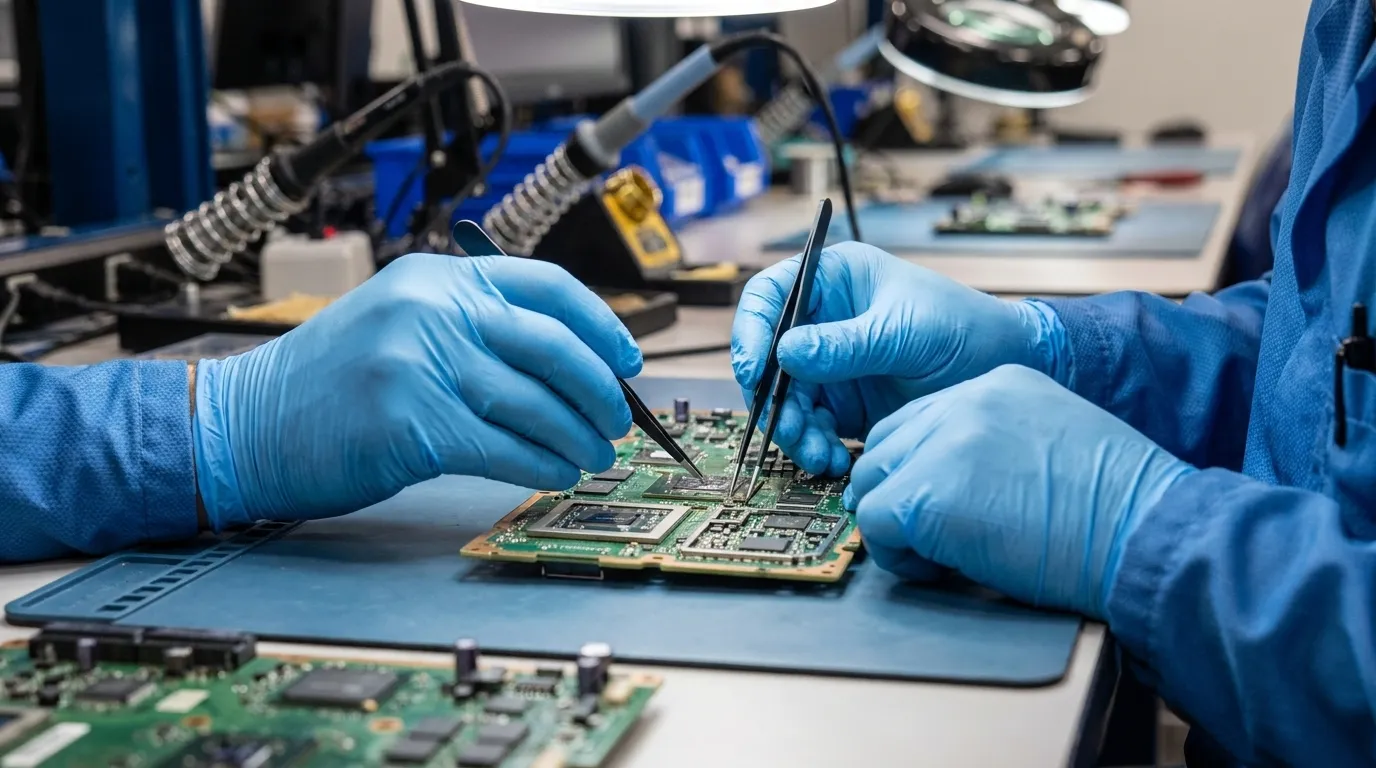
- Depot Repair (L1–L4): Tiered repair levels ranging from basic triage and swap at L1 through board-level and component repair at L3 and L4.
- SLA (Service Level Agreement): A contractual commitment defining acceptable turnaround windows.
- ITAD (IT Asset Disposition): The structured process of retiring, wiping and disposing of technology assets.
- Asset Tagging and Serialization: Assigning unique identifiers to devices for traceability throughout the lifecycle.
- Forward vs. Reverse Logistics: Forward logistics moves product from manufacturer to end user, while reverse logistics moves it back through the supply chain.
- OEM Warranty Constraints: Manufacturer requirements that limit which service providers can perform warranty repairs without voiding coverage.
Enterprise RMA Benchmarks and Cycle Expectations
With the regulatory and operational context established, meaningful improvement starts with clear benchmarks. Turnaround time varies by resolution type. Standard return RMAs often resolve within a few weeks from customer drop-off. Warranty RMAs run longer. Repair RMAs that depend on parts procurement extend further.
At the depot level, a standard repair cycle covers diagnosis, repair, testing and quality assurance. Leading reverse logistics operations that use automated sorting, integrated disposition routing and dedicated refurbishment workstations can cut processing time from carrier receipt to final disposition to a few business days.
Industrial and specialized hardware often follows longer timelines. An 8D failure analysis stage alone can require several additional business days. RMA turnaround for test and measurement products often takes several weeks after receipt, with extensions for large quantities or material availability constraints.
The metric that matters more than the average is variance. High variance frustrates customers and breaks SLAs. Per-segment measurement provides more actionable data than a single organization-wide average.
Operational Factors That Extend Turnaround Time
Several bottlenecks consistently extend RMA cycles in enterprise programs. Each carries a clear operational or financial consequence.
- Missing or incomplete documentation: Incomplete initial RMA documentation commonly delays validation before repair begins. Missing RMA numbers or asset IDs break traceability and delay processing.
- Parts availability: Material constraints extend turnaround beyond standard windows. Repair work often waits until a purchase order arrives, which adds administrative lag before technical work starts.
- Multi-vendor hand-offs: Each vendor transition introduces a new intake queue, documentation requirement and potential miscommunication. Fragmented programs multiply these delays across every unit processed.
- Compliance holds: Export reviews, data security verification and trade documentation requirements create gating steps. Compliance clearance occurs after RMA case creation but before warehouse dispatch coordination. In international programs, inaccurate customs documentation can cause delays and compliance issues.
- No-fault-found units: Units classified as NFF or showing customer-induced damage return at the customer’s expense. These units extend cycle time and consume depot capacity without generating recovery value.
How to Check RMA Status and Resolve Common Issues
Knowledge of the main bottlenecks becomes useful when operations teams can see where a specific unit sits in the process. Enterprise RMA programs frequently stall at predictable points. The following checklist addresses the most common status issues.
- Pending RMA authorization: Confirm that an RMA number was issued and has not expired. RMA numbers can expire after a defined period, after which units shipped without a valid RMA may be returned without processing.
- Missing paperwork: Verify that serial numbers, defect descriptions, proof of purchase and any required photos are attached to the case. As discussed in the bottlenecks section, incomplete submissions are the leading cause of validation delays.
- Compliance hold: Check whether a regulatory review is pending. Some programs require customers to complete additional documentation or forms before shipment can be authorized.
- Unit in transit with no tracking update: Confirm the carrier scan history. Units without a delivery confirmation cannot enter the inspection queue.
- Awaiting purchase order: Repair or calibration work begins only after a purchase order is received when one is required. Confirm PO status with procurement before escalating to the service provider.
- NFF classification: When a unit returns without a confirmed defect, request the inspection report and cross-test results before resubmitting.
Practical Tactics to Shorten RMA Cycles
The following tactics reduce queue time and improve first-pass yield across high-volume programs. These recommendations apply regardless of which service provider handles execution.
Vendor consolidation: Reducing the number of vendors in a reverse logistics program removes hand-off delays by eliminating intake queues at each transition. This consolidation also standardizes documentation requirements across the program, which creates a single accountability chain instead of fragmented ownership. The impact compounds because each additional vendor adds intake latency and increases the risk of data loss between systems.
Process standardization: Structured self-service intake forms that require photos, validate order IDs in real time and use reason codes cut the share of cases that need follow-up communication. Standardized intake reduces the documentation errors that cause validation delays.
Automation: Rule-based automation that auto-approves returns meeting policy criteria and escalates exceptions can cut RMA processing time. Barcode-driven inspection workflows allow warehouse teams to classify returned items and trigger resolutions as soon as inspection completes.
Real-time visibility: Centralized return authorization, real-time inventory visibility and serialized asset tracking reduce RMA process delays. Programs without live status data often detect bottlenecks only after SLAs are already breached.
Pre-positioned inventory: Strategically located replacement stock shortens RMA response times by removing the lead time gap between unit receipt and replacement shipment.
Talk to a lifecycle expert to identify which of these tactics fits the current program structure.
How Premier Logitech Speeds Enterprise RMA Turnaround
Premier Logitech operates as a single-vendor reverse logistics and depot repair partner. This structure removes the multi-vendor hand-offs that extend cycles in fragmented programs. The company holds Authorized Service Center status with more than 20 OEM brands. This status enables warranty-compliant repairs that do not require routing units through the original manufacturer.
Repair capacity at Premier Logitech’s DFW facilities supports high-volume programs at scale, while additional nearshore operations in Laredo and Nuevo Laredo extend that capacity with cost-effective throughput for programs that need geographic redundancy. To maintain visibility across both locations, the company’s Transportation Management System provides real-time tracking across inbound and outbound shipments. This system gives operations teams live insight into unit location and queue status.
For compliance-sensitive programs, Premier Logitech maintains certifications under TAA, NIST, CMMC, ISO 9001/14001, TAPA and SOC 2. These certifications make Premier Logitech eligible for government programs and enterprise contracts that require documented chain-of-custody, certified data destruction and trade-compliant sourcing. The company’s CAGE Code 4WAJ9 identifies it as a pre-vetted partner for U.S. federal government programs.
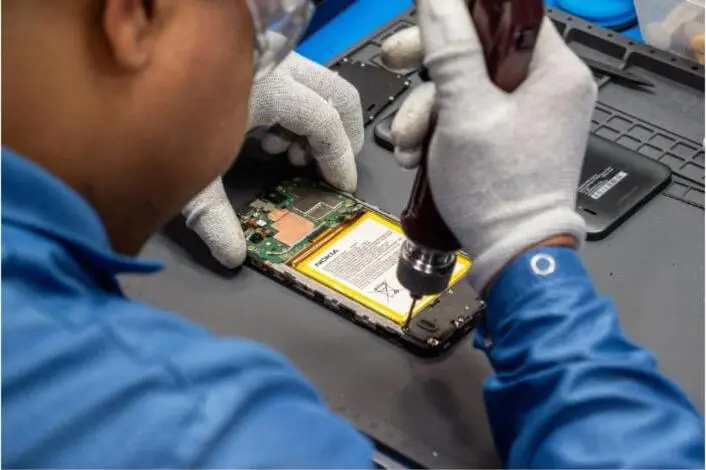
Depot repair services span L1 through L4. These services range from basic triage and advance exchange through board-level and component repair. Rapid exchange programs support next-day replacement for programs with tight SLAs. Cosmetic refurbishment and grading services prepare returned units for secondary market channels. These services recover asset value that would otherwise be lost.
Metrics That Define RMA Program Success
Effective RMA programs track both leading and lagging indicators. Leading indicators signal bottlenecks before they breach SLAs. Lagging indicators measure financial and operational outcomes.
Leading indicators to track daily:
- Queue time by stage, including intake, inspection, repair and disposition
- First-pass fix rate, defined as units resolved without rework
- Exception rate per 1,000 transactions
- Documentation completeness rate at intake
- Compliance hold frequency and average hold duration
Lagging indicators to review monthly:
- Net recovery rate, defined as recovered value minus costs, divided by costs
- Total cost of delay, including SLA penalties, expedite fees and lost resale value
- Asset recovery value by disposition path, such as restock, refurbish or scrap
- Days to vendor credit for supplier recovery workflows
- Return rate paired with defect rate to separate quality issues from policy issues
Three high-impact dashboards for RMA analytics are the Time-to-Resolution Dashboard, the Top Return Reasons Dashboard and the Supplier vs. Internal Resolution Dashboard. Each surfaces a different category of bottleneck and supports corrective action at the right level of the organization.
Advanced RMA Capabilities for Mature Programs
Programs ready to scale beyond standard optimization can pursue several advanced capabilities. Dynamic routing uses real-time inventory and capacity data to direct inbound units to the facility or repair tier best positioned to resolve them. This approach reduces queue time at high-volume nodes.
Closed-loop analytics connect return reason codes to product quality data. This connection enables OEMs to identify chronic defect patterns and address them upstream. Root cause analysis aggregated by SKU and supplier surfaces chronic defects and vendors requiring corrective action.
Automation at the intake and disposition layers, including AI-assisted photo review and rule-based approval workflows, can reduce complex case resolution time substantially. These tools free operations staff to focus on exception handling and compliance documentation.
Frequently Asked Questions
How long does the RMA process take for enterprise hardware programs?
Turnaround time depends on resolution type. Standard returns with straightforward disposition resolve faster than warranty repairs that require diagnostics or parts procurement. Repair RMAs involving component-level work take longer than advance exchange programs. As noted in the benchmarks section, variance matters more than average turnaround time. Programs with high variance are the ones that breach SLAs and frustrate stakeholders.
What happens after an RMA is approved?
After approval, the unit enters the inbound logistics stage. Once received at the depot, it goes through intake scanning, inspection and triage. Depending on the resolution type, it then routes to advance exchange, depot repair, refurbishment or disposition. At each stage, a well-run program generates a status update tied to the unit’s serial number. Final resolution triggers either a replacement shipment, a credit memo or a disposition record, depending on the program terms.
How do operations teams check RMA status in real time?
Status visibility depends on the systems in place. Programs that use a Transportation Management System with serialized asset tracking can query unit location and queue position at any point in the cycle. Programs that rely on manual updates or email-based communication develop significant blind spots. Integrating the service provider’s system with the client’s ERP or ITSM platform provides the most reliable way to maintain live status without manual follow-up.
What compliance requirements affect RMA processing timelines?
Data security requirements under NIST and CMMC frameworks mandate documented chain-of-custody and certified data destruction before units can be released for repair or resale. TAA compliance governs which products qualify for government programs and affects how units are classified during inspection. Environmental regulations require documented recycling and e-waste handling. Each of these creates a gating step in the RMA workflow. Programs that build compliance documentation into intake avoid the holds that extend cycle time.
What is the difference between L1 and L4 depot repair?
L1 repair covers basic triage, functional testing and unit swap or advance exchange. L2 covers component replacement and software-level repair. L3 involves board-level diagnostics and repair. L4 represents the deepest level, covering component-level rework, BGA reballing and full refurbishment. Higher repair levels require more specialized tooling, certified technicians and longer cycle times. Programs that route units to the appropriate repair tier recover throughput and reduce cost per unit.
Talk to a lifecycle expert to discuss how Premier Logitech structures depot repair tiers for high-volume programs.
Conclusion: Turning RMA Turnaround Into a Managed Metric
RMA processing turnaround time functions as a measurable, manageable operational variable. The hidden costs of slow cycles, including SLA penalties, lost asset recovery value and compliance exposure, accumulate across every unit that sits in a return queue longer than necessary.
The playbook outlined here moves from problem quantification through benchmarking to specific tactics. Standardized intake documentation, vendor consolidation, automated routine decisions, embedded compliance steps and balanced leading and lagging indicators each compress cycle time and protect asset value.
Premier Logitech brings together ASC authorizations, repair capacity, compliance certifications and real-time visibility infrastructure in a single partner. From L1 triage through L4 refurbishment, and from TAA-compliant sourcing through CMMC-certified data destruction, Premier Logitech manages the full reverse logistics lifecycle without the hand-off delays that fragment multi-vendor programs.
