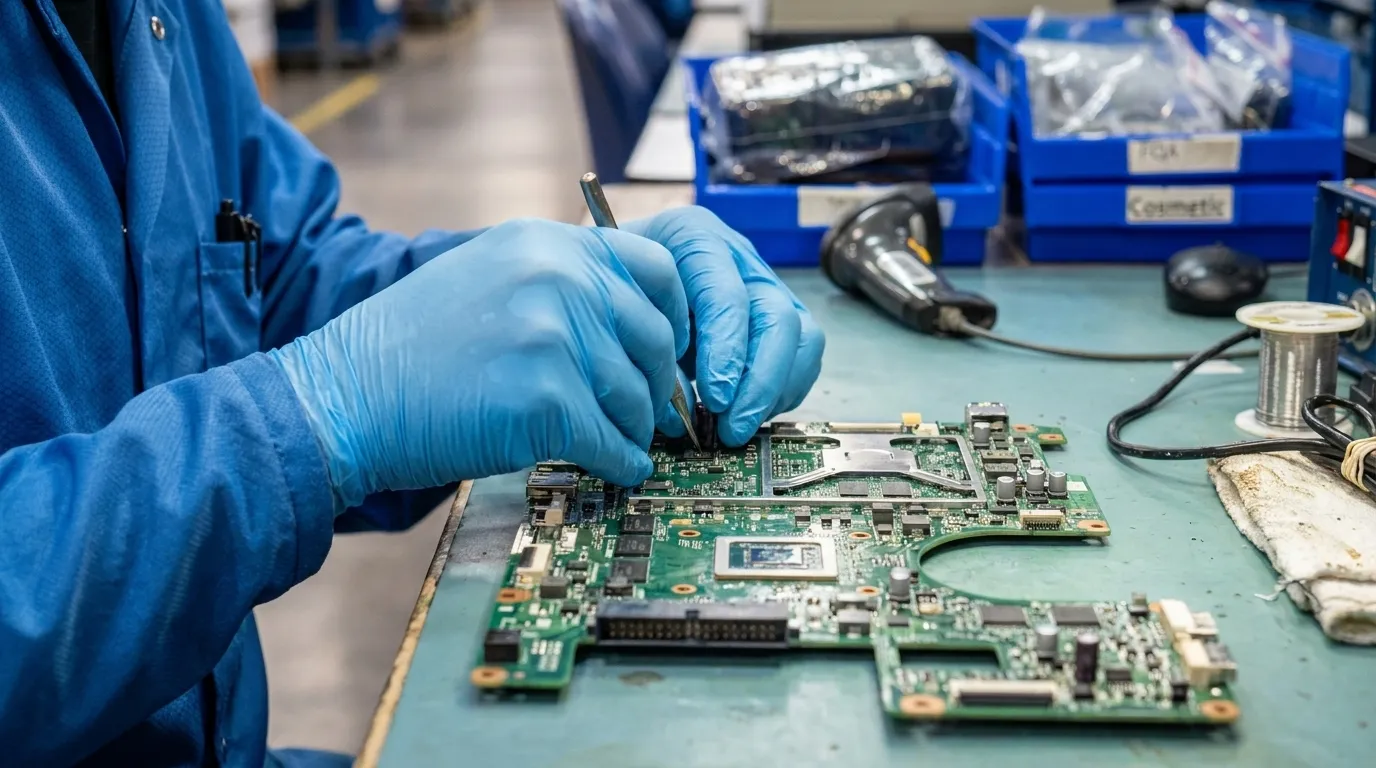
Key Takeaways for Configuration and Lifecycle Planning
- CDW technology configuration services provide device imaging, provisioning and kitting but leave gaps in repair, reverse logistics and end-of-life recovery.
- Fragmented vendor stacks create compliance and chain-of-custody risk, especially for government contractors subject to TAA, CMMC and NIST requirements.
- Integrated lifecycle partners consolidate configuration through asset recovery under a single contract, which reduces vendor management overhead and supports continuous compliance documentation.
- Scalability, real-time asset tracking and OEM-authorized repair capabilities are essential criteria when selecting a configuration partner for large or regulated deployments.
- Premier Logitech delivers end-to-end lifecycle services with TAA, CMMC, NIST and SOC 2 certifications; talk to a lifecycle expert to close configuration and compliance gaps in a current program.
The Problem: Fragmented Technology Configuration and Deployment
Operations and supply chain leaders in regulated environments face recurring risk when technology configuration and deployment rely on fragmented vendor stacks. These risks compound as programs scale and as compliance expectations increase.
- Fragmented vendor stacks: Separate providers for imaging, kitting, repair and asset recovery create handoff gaps, inconsistent documentation and split accountability across the lifecycle.
- Limited compliance depth: Standard configuration services may not align with Trade Agreements Act (TAA) sourcing requirements, CMMC Level 2 controls or NIST SP 800-171 documentation standards. This exposure increases audit findings and contract risk for government contractors.
- Lack of integrated reverse logistics: When configuration providers do not own repair, exchange or end-of-life recovery, returned assets lose value and chain-of-custody control weakens.
- Deployment visibility gaps: Without real-time tracking tied to a single operational platform, inventory accuracy degrades and deployment timelines slip.
- Scalability ceilings: Point-solution providers often lack the physical infrastructure to absorb large-volume kitting surges without extending timelines or adding vendors, which limits program growth.
What CDW Configuration Services Cover and Where They Stop
CDW offers hardware procurement, device imaging, software provisioning, rack integration and kitting as part of its configuration services portfolio. These capabilities support the front end of the technology lifecycle by preparing devices and shipping them to deployment sites.
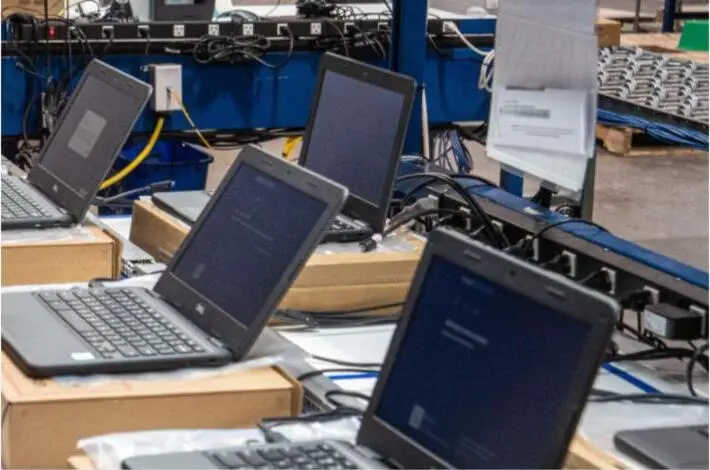
CDW involvement typically ends at the point of deployment. Repair depot services, rapid exchange programs, reverse logistics, secure data destruction and end-of-life asset recovery are often absent or handled through third-party relationships. That structure reintroduces the fragmentation problem that many teams aim to solve. An integrated lifecycle partner addresses this gap by owning every stage from configuration through recycling under a single contract and chain of custody.
Configuration Operating Models Beyond CDW
Teams evaluating CDW IT configuration services often compare three operating models. Each model balances control, accountability and scalability in different ways.
- In-house configuration: This model provides maximum control but requires dedicated facilities, trained staff, compliance infrastructure and capital investment in imaging and kitting equipment. Scalability depends on internal headcount and floor space.
- Multiple specialized vendors: This approach allows best-of-breed selection for imaging, kitting, repair and ITAD as separate services. Trade-offs include split accountability, uneven compliance posture across vendors and higher program management overhead.
- Single integrated lifecycle partner: This model consolidates configuration, fulfillment, repair, reverse logistics and asset recovery under one provider. It reduces vendor management burden, maintains a single compliance framework and provides end-to-end visibility. The trade-off is dependence on the partner’s operational scale and certification depth.
For regulated environments that handle Controlled Unclassified Information or operate under federal contract vehicles, the single integrated partner model reduces compliance exposure by removing handoff points where documentation and chain of custody can break.
Government Configuration Requirements and Compliance Depth
Government buyers operate under compliance requirements that standard commercial configuration services often do not meet. TAA compliance requires that hardware be manufactured or substantially transformed in the United States or a designated trade-agreement country. Procuring noncompliant hardware under federal contracts increases audit findings, equipment removal and supply chain security risk.
CMMC Level 2 requires full implementation of the 110 security controls in NIST SP 800-171 across the contractor environment. Configuration Management, Physical Protection and Media Protection domains directly affect how hardware is staged, imaged and handled. The CMMC Program Final Rule, effective December 16, 2024, requires contractors to demonstrate operational controls rather than rely on self-attestation.
Government-focused evaluation criteria include TAA-compliant sourcing documentation, CMMC-aligned configuration procedures, NIST SP 800-88 media sanitization practices and SOC 2 reporting for service organization controls. Premier Logitech holds TAA, TAPA, ISO, NIST, CMMC and SOC 2 certifications and operates under CAGE Code 4WAJ9 as a pre-vetted federal partner.
Configuration and Kitting Scalability for Large Programs
Large-scale configuration programs require substantial physical infrastructure, not only process documentation. Enterprise kitting operations cover receiving, inspection, asset tagging, serial records, imaging, accessory pairing, user- or site-based kit assembly, warehousing, packing and shipping across high-volume programs.
Typical limitations at scale include facility constraints, imaging throughput bottlenecks and BOM complexity for multi-vendor kits. These constraints directly affect a provider’s ability to absorb volume surges. Teams should evaluate whether a provider can scale without adding vendors or extending timelines. Helpful criteria include monthly kitting capacity, BOM-based assembly capabilities, new-hire kit programs and support for direct-to-user fulfillment at national scale.
Deployment Visibility, Tracking and Analytics
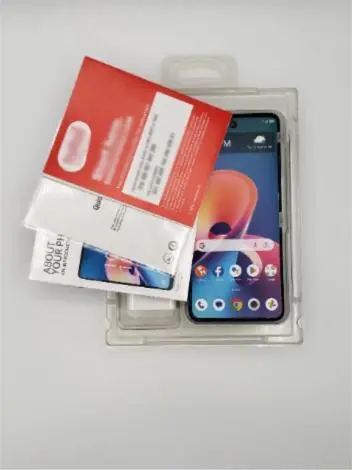
Current IT asset lifecycle trends emphasize automation across discovery, provisioning, maintenance and disposal to reduce manual errors and support compliance. Without real-time tracking tied to a single operational platform, inventory accuracy declines and deployment exceptions linger.
Teams should assess whether a configuration provider offers serialized item-level tracking, asset tagging integrated with deployment records and lifecycle analytics that persist through repair and recovery stages. A transportation management system with freight audit capabilities extends visibility into the last mile and supports post-deployment reporting.
Repair and Rapid-Exchange Support at Scale
The repair gap identified earlier becomes operational at the point of device failure. When a deployed device fails without an integrated repair and rapid-exchange program, teams must restart vendor onboarding and compliance documentation with a separate provider.
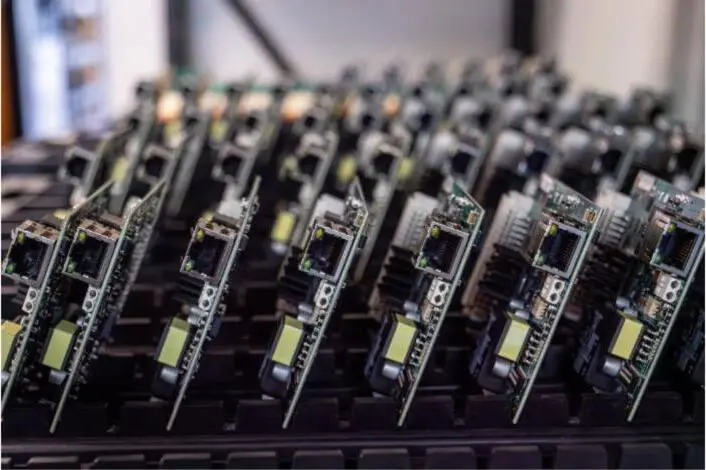
Enterprises that treat reverse logistics as an operational discipline recover more value by using a single accountable partner instead of fragmented vendors. Evaluation criteria for repair support include depot repair levels from L1 through L4, OEM authorization status, rapid exchange program availability and in-warranty and out-of-warranty claim handling. Premier Logitech holds authorization across more than 20 OEM brands and operates repair capacity at scale across its DFW facilities.
Talk to a lifecycle expert about integrating repair and exchange into an existing configuration program.
End-of-Life Asset Recovery and ITAD Ownership
Delays in asset pickup can cause measurable losses in market value, and untracked assets create audit failures under standards such as NIST SP 800-88. Configuration providers that do not extend into ITAD leave teams managing a separate vendor relationship for secure data destruction, grading, remarketing and responsible recycling.
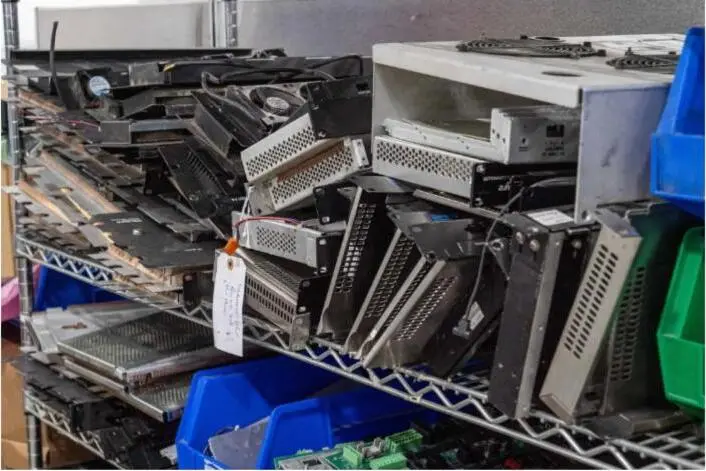
Evaluation criteria for end-of-life recovery include secure data destruction with documented chain of custody, NIST SP 800-88 media sanitization compliance, certified refurbishment and grading for secondary market channels, e-waste reduction programs and compliance reporting. Regulated programs benefit from serialized item-level reconciliation from intake through final disposition.
Due-Diligence Checklist for Configuration Partners
Effective partner selection starts with compliance foundations and then moves into operational capabilities that determine day-to-day performance across the lifecycle.
- Certifications: Confirm the certifications discussed earlier are current and documented for any partner under evaluation. These credentials establish baseline eligibility for regulated programs.
- Reporting capabilities: Require serialized asset tracking, lifecycle analytics, compliance reporting and audit-ready documentation at each lifecycle stage. Certifications need this operational support to remain effective.
- Geographic reach: Assess facility locations, nearshore operations and carrier network depth for national program coverage and consistent service levels.
- Integration flexibility: Evaluate API or ITSM integration capabilities, TMS connectivity and modular versus end-to-end engagement options to match current systems.
- SLA clarity: Require documented SLAs for imaging throughput, kitting capacity, repair turnaround, exchange fulfillment and asset recovery timelines.
- OEM authorization depth: Confirm authorized service center status for the OEM brands in the program hardware portfolio.
- Reverse logistics ownership: Verify that repair, exchange and ITAD occur in-house rather than through subcontractors to maintain chain of custody.
Frequently Asked Questions
What is the difference between CDW configuration services and an integrated lifecycle partner?
CDW configuration services focus on device imaging, provisioning, kitting and rack builds at the front end of the technology lifecycle. An integrated lifecycle partner extends those capabilities through repair, rapid exchange, reverse logistics and end-of-life asset recovery under a single contract and compliance framework. For regulated environments, the integrated model reduces vendor fragmentation and maintains a continuous chain of custody from deployment through disposition.
What compliance frameworks should a technology configuration partner support for government contracts?
Government contractors and agencies typically require partners that support the Trade Agreements Act for hardware sourcing, CMMC Level 1 or Level 2 based on data sensitivity, NIST SP 800-171 security controls, NIST SP 800-88 media sanitization and SOC 2 for service organization controls. Partners with a CAGE Code and pre-existing federal procurement vehicle eligibility reduce onboarding friction for government programs.
How does kitting scalability affect large enterprise deployment programs?
Large enterprise deployments depend on configuration partners with physical infrastructure that can absorb volume surges without adding vendors or extending timelines. BOM-based kitting, multi-vendor product assembly, new-hire kit programs and direct-to-user fulfillment all require dedicated facility space, trained staff and sufficient imaging throughput capacity. Teams should assess a provider monthly kitting capacity and whether that capacity is owned or subcontracted before committing to a program.
What should buyers look for in a rapid-exchange and repair program?
Teams should confirm that a provider performs depot repair in-house across L1 through L4 levels, holds OEM authorized service center status for relevant hardware brands and operates rapid exchange programs with documented SLAs. In-warranty and out-of-warranty claim support, cosmetic refurbishment and parts reclamation capabilities indicate a mature repair operation. Subcontracted repair introduces chain-of-custody gaps that increase compliance exposure in regulated programs.
How does end-of-life asset recovery connect to configuration services?
End-of-life recovery represents the final stage of the same lifecycle that begins with configuration. As discussed in the end-of-life recovery section, separation between configuration and ITAD creates handoff points where serialized tracking can break and compliance documentation becomes inconsistent. An integrated partner maintains item-level traceability from initial imaging through final disposition, which supports audit requirements under NIST SP 800-88 and environmental compliance standards.
Decision Framework for Selecting an Integrated Lifecycle Partner
Operations and supply chain leaders can use the following questions to assess whether a single integrated lifecycle partner fits their program needs.
- Does the current vendor stack create handoff points where compliance documentation or chain of custody breaks.
- Are repair, exchange and asset recovery managed by the same partner that handles configuration and kitting.
- Does the program operate under TAA, CMMC, NIST or SOC 2 requirements that all vendors in the stack must meet.
- Is real-time, serialized asset tracking available from imaging through end-of-life disposition.
- Can the current configuration provider absorb volume surges without adding vendors or extending timelines.
- Is there a single point of contact and accountability across the full program lifecycle.
Programs that surface gaps in two or more of these areas are strong candidates for consolidation under a single integrated lifecycle partner. Premier Logitech operates as both a modular services provider and a full end-to-end lifecycle partner, which allows organizations to engage at the scope that fits the current program structure and expand as needs evolve.
Talk to a lifecycle expert to assess fit and request a scope discussion for a configuration or lifecycle program.
