Key Takeaways for Enterprise IT Leaders
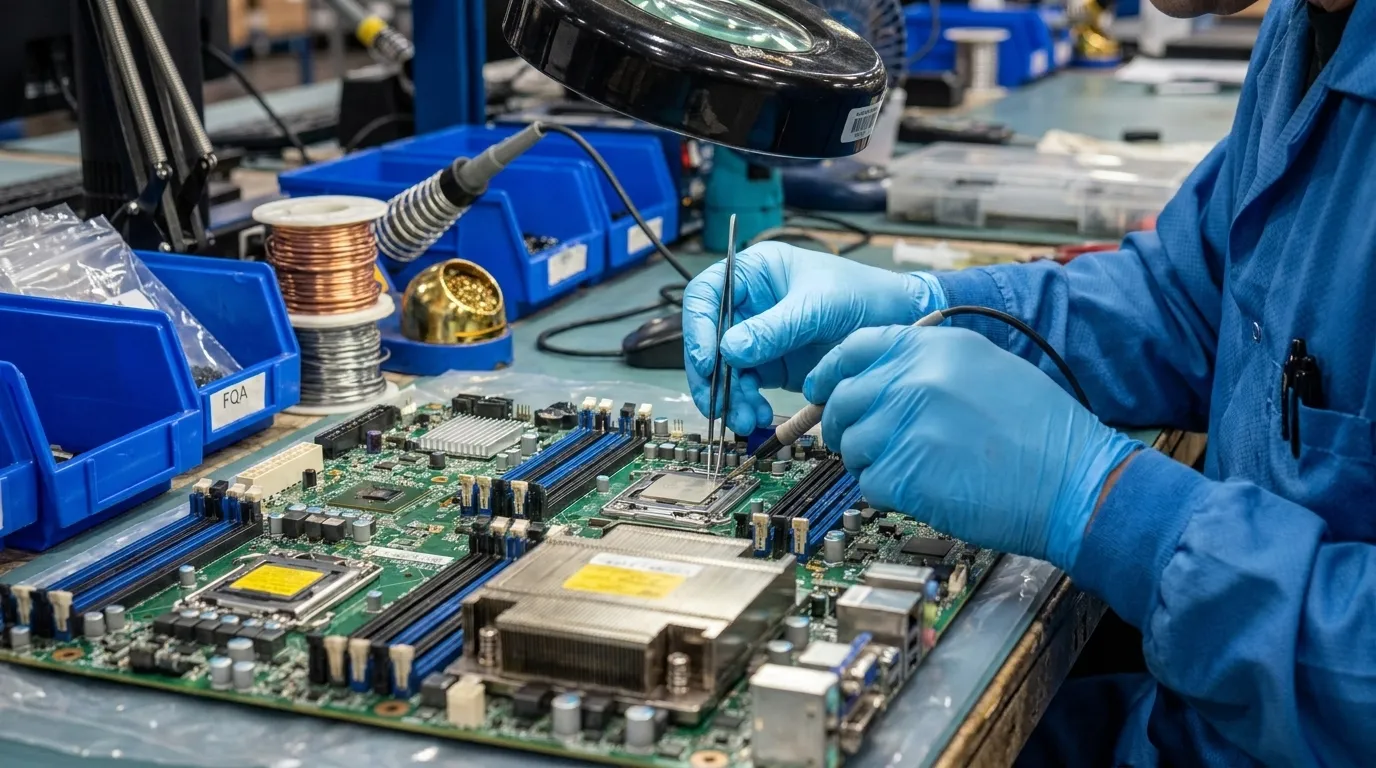
- Enterprise hardware configuration connects sourcing and deployment by handling OS imaging, security baselines, asset tagging, SIM pairing and custom software loads.
- Most search results for “us it config providers” focus on software or MSP services, not on hardware configuration, imaging, kitting and fulfillment.
- Leading providers integrate configuration with sourcing, warehousing, fulfillment, depot repair and asset recovery under a single accountable lifecycle program.
- Compliance certifications such as TAA, CMMC, NIST, SOC 2 and ISO are essential for federal and regulated buyers. Premier Logitech holds these credentials plus CAGE Code 4WAJ9.
- Premier Logitech delivers end-to-end IT lifecycle services that meet enterprise compliance and scale requirements. Connect with a lifecycle specialist to design a configuration program that fits complex environments.
Why Search Results Miss Enterprise Hardware Configuration
Search results for “us it config providers” surface three dominant interpretations that do not address enterprise hardware needs.
- Software configuration providers: Vendors managing application settings, .NET configuration frameworks and environment-specific parameter files.
- Infrastructure-as-code and Terraform providers: Teams automating cloud and network infrastructure provisioning through declarative configuration scripts.
- Generic managed service providers (MSPs): IT support firms listed in broad directories, typically focused on helpdesk, monitoring and software management rather than physical device staging.
The missing fourth category is enterprise hardware configuration, imaging, kitting and fulfillment. Operations, supply chain and IT leaders rely on this category when scaling device deployments, onboarding workforces or fulfilling government contracts. Premier Logitech operates squarely in this space.
Enterprise Configuration Scope and How It Fits the Lifecycle
Custom configuration for enterprises covers the full range of physical and logical preparation required before a device enters service. Capable providers handle device imaging and BIOS configuration, software installation and updates, SIM and IMEI pairing, asset tagging and serialization, connected and cloud-based modern provisioning and new-hire kit assembly.
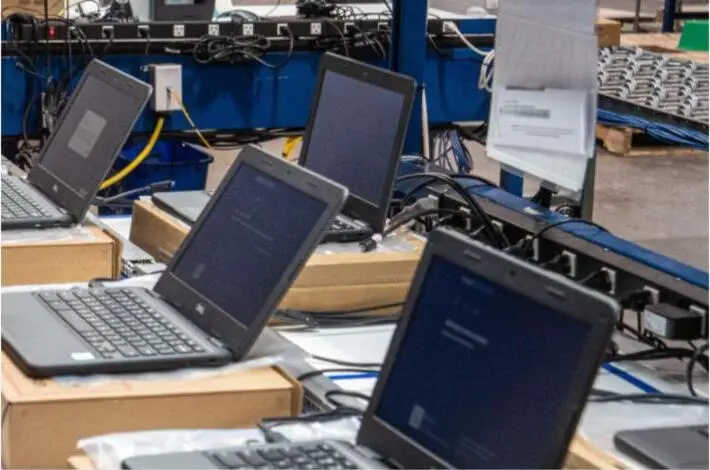
Integration with sourcing and fulfillment matters as much as the configuration work itself. Leading providers own sourcing, ordering, staging, kitting, warehousing and delivery as a single accountable process, handing asset records downstream into deployment, support and lifecycle management without gaps in traceability.
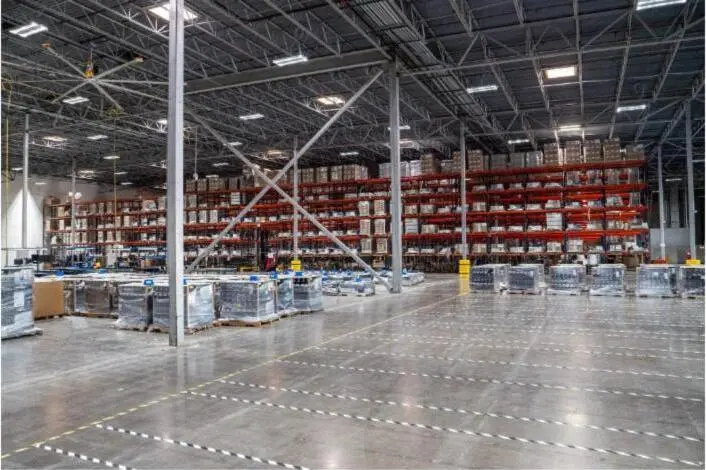
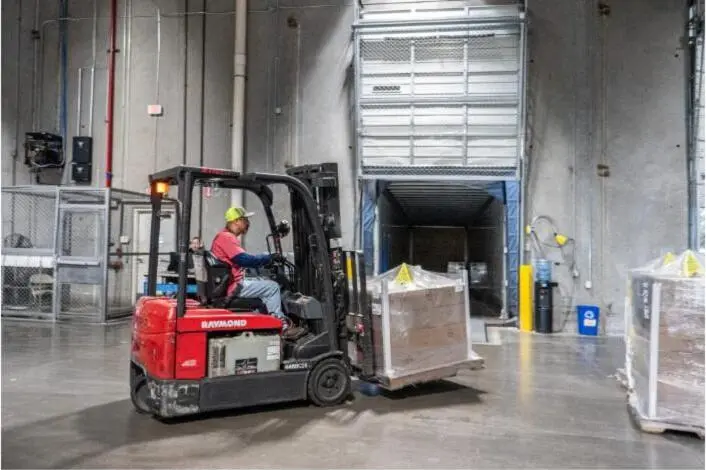
This integrated approach defines Premier Logitech’s service model. Premier Logitech delivers custom configuration as part of an end-to-end lifecycle program. Services span vendor-consolidated procurement, contract manufacturing, BOM-based kitting and direct B2B or B2C fulfillment, with real-time inventory visibility across three DFW facilities and nearshore operations in Mexico.
Evaluating Device Imaging and Kitting Providers
Device imaging and kitting providers vary significantly in scale, accuracy and integration depth. The US kitting automation systems market reflects sustained enterprise investment in faster, more accurate kitting operations. Hardware components command the largest share of that market.
To identify partners that deliver on that investment, buyers evaluate operational dimensions that separate high-performing providers from commodity vendors.
- Order accuracy rates and first-pass yield benchmarks
- Throughput capacity for high-volume programs
- BOM-based kitting with multi-vendor product assembly
- Custom packaging, labeling and serialization capabilities
- Integration with downstream fulfillment and reverse logistics
- Real-time inventory reporting and device traceability
Industry benchmarks for order accuracy and on-time shipping set a high bar for credible providers. Providers that cannot document performance against these metrics introduce operational risk.
TAA-Compliant Configuration for Federal and Regulated Programs
TAA compliance is a threshold requirement for any provider serving federal agencies or regulated sectors. Under the Trade Agreements Act (19 U.S.C. § 2501 et seq.) implemented via FAR Subpart 25.4, federal contracts containing FAR 52.225-5 prohibit supply of products manufactured in non-designated countries such as China, India, Malaysia or Thailand, regardless of brand headquarters.
Configuration providers that build, bundle, image or transform hardware before delivery carry a specific compliance obligation. TAA compliance for configured IT hardware is determined by the country of substantial transformation, not the brand’s country of origin. A US-headquartered brand’s product made in China remains non-compliant.
Beyond TAA, activities such as configuration, imaging, staging and fulfillment fall inside the CMMC compliance boundary when they involve storage, processing or transmission of Controlled Unclassified Information (CUI) or security-sensitive assets. NIST SP 800-88 governs data sanitization at end of life and SOC 2 attestation addresses operational security controls.
Premier Logitech maintains the full compliance stack described above, with CAGE Code 4WAJ9 identifying it as a pre-vetted, high-security partner for US federal government procurement.
Managed IT Configuration Integrated with Deployment and Returns
Managed IT configuration providers differentiate themselves by embedding configuration within a broader lifecycle program rather than offering it as a standalone service. Enterprise organizations manage deployment and configuration as a distinct lifecycle stage that includes endpoint provisioning, network integration and updates to CMDB or ITAM records.
On the reverse logistics side, the highest-risk window in the IT asset lifecycle runs from device decommissioning to verified data destruction, and serialized tracking with chain of custody compresses this window and supports compliance with standards such as NIST SP 800-88.
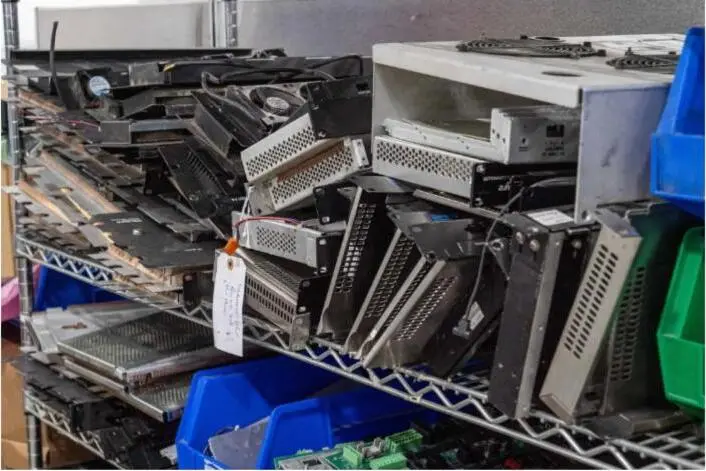
Premier Logitech integrates configuration with sourcing, warehousing, fulfillment, depot repair and asset recovery under one program. Clients access L1–L4 depot repair, OEM-authorized service across more than 20 brands, rapid exchange programs, secure data destruction and responsible recycling from a single partner.
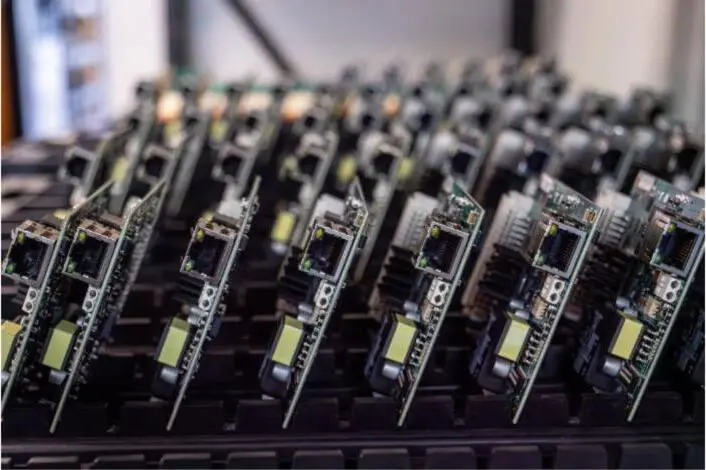
See how a unified lifecycle program eliminates vendor handoffs in complex environments.
2026 US Provider Landscape and Premier Logitech’s Position
The US enterprise IT configuration and fulfillment market includes large broadline distributors, specialized 3PLs and regional staging providers. Most serve either the forward logistics side or the reverse logistics side, but few operate both at scale under a single compliance framework.
Premier Logitech’s differentiation rests on structural advantages that work together as a single operating model.
- End-to-end lifecycle scope from sourcing through recycling, available as a full program or modular services
- Government-grade compliance framework that meets federal procurement requirements
- OEM authorization across more than 20 brands, which creates a compliance barrier that broadline competitors without ASC status cannot match
- DFW logistics hub with nearshore operations in Mexico, which supports competitive service across North America
- Kitting and repair capacity at scale, supporting high-volume enterprise and government programs without sacrificing accuracy
- Real-time inventory tracking, lifecycle analytics and a transportation management system with vetted LTL carriers, which ties physical flows to data visibility
Review how this lifecycle model aligns with current configuration and fulfillment requirements.
Seven Criteria Operations Leaders Use to Evaluate Providers
Operations and supply chain executives evaluating US IT config providers benefit from a structured framework. Formal IT vendor evaluation processes deliver higher project success rates compared to ad hoc approaches.
- Compliance posture: TAA, CMMC, NIST, SOC 2 and ISO certifications relevant to the program’s regulatory environment.
- Lifecycle integration: Whether configuration connects to sourcing, fulfillment, depot repair and asset recovery within one accountable program.
- OEM authorization: ASC status for the brands in the program’s device portfolio, which affects warranty validity and repair options.
- Throughput and capacity: Demonstrated ability to scale for high-volume deployments without degrading accuracy or turnaround.
- Total cost of ownership: Evaluation of total cost of ownership, including labor, logistics, quality, internal handling and risk exposure, rather than per-unit pricing alone.
- Operational visibility: Real-time asset tracking, inventory reporting and lifecycle analytics accessible to the client team.
- Vendor consolidation potential: Ability to replace fragmented repair, fulfillment and recycling vendors with a single point of contact.
Common Configuration and ITAD Pitfalls
Several recurring mistakes increase cost and risk in enterprise IT configuration programs.
- Treating configuration as a commodity: Configuration errors played a role in data breaches, according to Verizon’s Data Breach Investigations Report. Selecting providers on price alone without evaluating process rigor creates downstream security incidents.
- Ignoring substantial transformation rules: Providers that image or bundle hardware must verify the final configured SKU remains TAA-compliant. Non-compliant TAA purchases on federal contracts can trigger mandatory replacement at contractor cost, contract termination for default and False Claims Act liability with treble damages.
- Fragmenting the vendor network: Separate providers for sourcing, configuration, fulfillment and reverse logistics create handoff gaps, accountability voids and hidden costs from expediting and rework.
- Underestimating reverse logistics: Treating reverse logistics as busywork is the most common and most costly mistake in ITAD because it leaves recoverable value on the table. Returns-analytics platforms in North American fulfillment can recoup meaningful value per item through refurbishment, resale and data monetization, value that disappears when reverse logistics goes to the lowest bidder without strategic oversight.
- Manual asset tracking: Manual tracking introduces errors and delays that undermine effective IT asset lifecycle management. Centralized, automated tracking is a baseline requirement for programs at enterprise scale.
Decision Framework and RFP Question Set
Buyers issuing RFPs for US IT config providers benefit from structured evaluation criteria defined before proposals arrive. Procurement teams that define and publish evaluation criteria before issuing an RFP improve proposal quality from suppliers and reduce the risk of unconscious bias in criterion definition.
Recommended RFP questions for enterprise IT configuration and kitting programs include the following.
- What compliance certifications does the provider hold, and how are they maintained and audited?
- Which OEM brands carry ASC authorization, and what repair levels are covered?
- How does the provider track assets from receipt through configuration, fulfillment and return?
- What are the provider’s documented accuracy and on-time performance benchmarks?
- How does the provider handle TAA substantial transformation documentation for configured SKUs?
- What reverse logistics and ITAD services are available within the same program?
- How does the provider scale capacity for surge demand without degrading service levels?
Frequently Asked Questions
What compliance standards apply to US configuration providers?
Federal and regulated clients require providers to meet the Trade Agreements Act, which mandates that configured hardware be manufactured or substantially transformed in the United States or a TAA-designated country. Providers handling Controlled Unclassified Information operate within a CMMC-compliant environment. NIST SP 800-88 governs data sanitization at end of life. SOC 2 attestation addresses operational security controls for service organizations. ISO 9001 and ISO 14001 cover quality and environmental management. Premier Logitech holds certifications across these frameworks and carries CAGE Code 4WAJ9 for federal procurement eligibility.
How do leading providers connect configuration with sourcing and recovery?
Leading providers embed configuration within a single accountable lifecycle program rather than treating it as a standalone service. Procurement, staging, imaging, kitting and fulfillment share a common asset record from the moment hardware is received. That record follows the device through deployment and into reverse logistics, where it supports triage, repair, refurbishment and disposition decisions. Premier Logitech operates this model across sourcing, contract manufacturing, configuration, fulfillment, depot repair and recycling, with real-time visibility available throughout.
Which performance metrics matter for high-volume kitting and imaging?
The most important metrics for high-volume IT kitting and imaging programs are order accuracy, on-time shipping, inventory accuracy and Perfect Order Rate. Order accuracy measures whether the correct components were assembled and shipped. On-time shipping measures adherence to committed delivery windows. Inventory accuracy reflects the reliability of component availability for kitting workflows. Perfect Order Rate is a composite metric that multiplies on-time delivery, order completeness, damage-free rate and documentation accuracy into a single performance indicator. Providers share documented benchmarks for each metric and explain how they monitor and remediate deviations.
How should buyers weigh single-source and multi-vendor models?
Single-source models consolidate configuration, fulfillment, repair and reverse logistics with one provider, which reduces management overhead, closes accountability gaps and enables deeper operational integration. Multi-vendor models distribute risk across multiple suppliers but introduce handoff complexity, fragmented data and higher coordination costs. For enterprise IT programs where compliance, traceability and turnaround consistency are priorities, a single-source model with a proven, certified partner typically produces better risk-adjusted outcomes. Buyers evaluate total cost of ownership, including hidden costs of coordination, expediting and compliance gaps, rather than comparing headline unit prices across vendors.
Conclusion: Selecting a US IT Configuration Partner
Enterprise hardware configuration, imaging, kitting and fulfillment form a distinct commercial category that most searches for “us it config providers” do not surface. Operations and supply chain leaders benefit from a US-based partner that delivers TAA-, CMMC-, NIST- and SOC 2-compliant services, integrates configuration with the full technology lifecycle and provides real-time visibility from sourcing through asset recovery.
Premier Logitech has delivered end-to-end IT lifecycle and reverse logistics services since 2007. The company serves large enterprises, OEMs, telecom providers and government agencies with scalable, secure and data-driven configuration programs built around compliance and operational continuity.
Explore a configuration and lifecycle program built for enterprise scale and compliance needs.
