Key Takeaways on Enterprise Depot Repair
- Enterprise and OEM reverse logistics programs face rising return volumes, strict OEM authorization rules and regulatory mandates that authorized mobile device warranty repair depots address in a structured way.
- Depot-level repair centralizes intake, triage, diagnosis and repair at a single authorized facility, with serial-number tracking, L1-L4 repair capabilities and complete auditable repair histories that differ from consumer repair services.
- OEM Authorized Service Center (ASC) status governs valid warranty claims, genuine parts usage and compliance. Premier Logitech holds authorizations across 20+ OEM brands, which supports single-vendor consolidation for mixed-brand fleets.
- Enterprise programs require comprehensive compliance, including NIST SP 800-88 data sanitization, R2v3 certification, TAA compliance, CMMC 2.0 alignment, SOC 2 and per-device chain-of-custody documentation that consumer services do not provide.
- Premier Logitech consolidates depot repair, rapid exchange, refurbishment, secure data destruction and responsible recycling under one compliant program structure. Talk to a lifecycle expert to assess a current warranty repair program.
Depot-Level Repair for Enterprise and OEM Programs
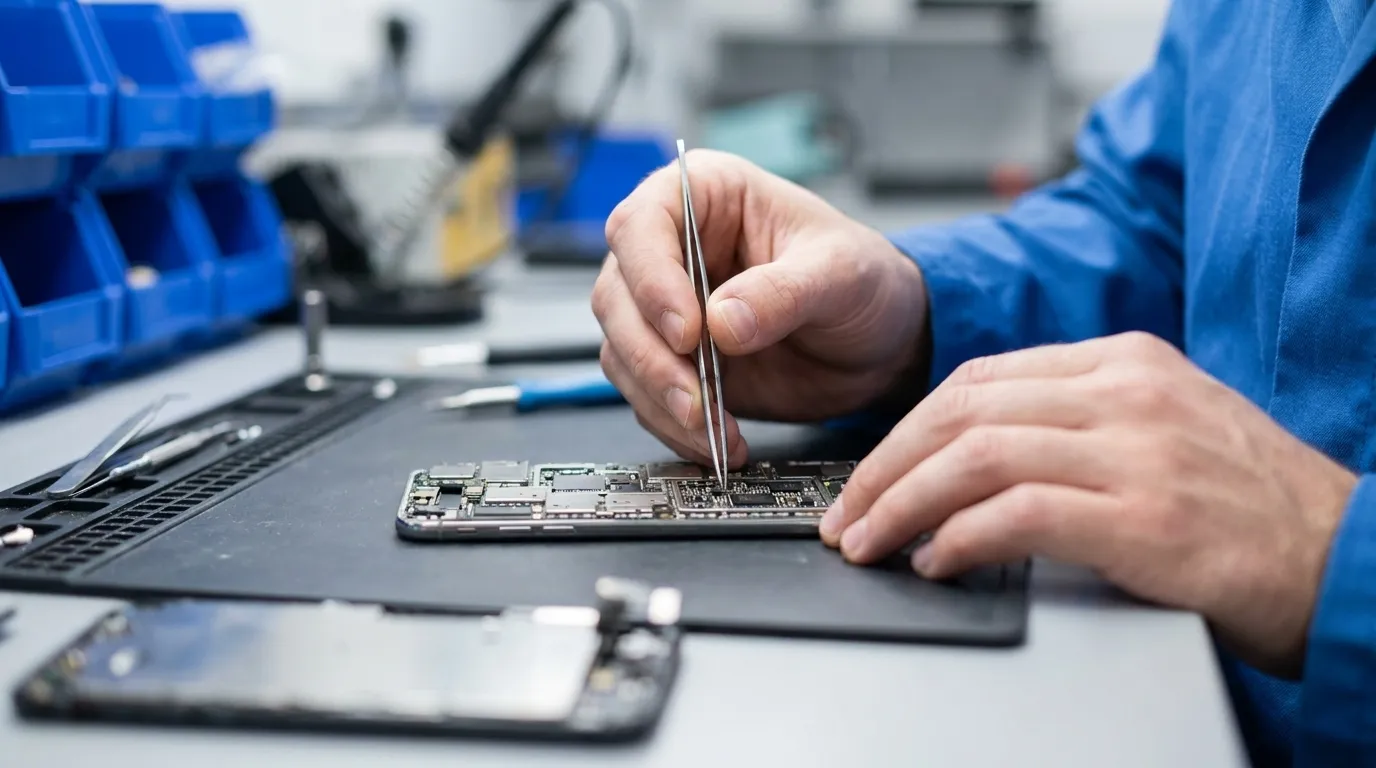
Depot-level repair uses a centralized service model where failed devices ship to a single authorized facility for intake, triage, diagnosis, repair and return. The depot tracks every unit by serial number, applies L1 through L4 repair levels based on fault complexity and returns each device with a complete, auditable repair history. Enterprise depot programs support high-volume OEM and carrier contracts with consistent quality and a single data view across every device.
Depot repair differs from field service because the device travels to the repair facility instead of a technician traveling to the device. The Technology & Services Industry Association estimates the fully loaded cost of a single field-service truck roll at roughly $1,000 per dispatch, which makes depot repair the more cost-effective model for shippable hardware.
How Enterprise Depot Repair Differs From Consumer Repair
Consumer mail-in and walk-in repair services handle single devices on a transactional basis with limited controls. Authorization, documentation and chain-of-custody practices remain minimal. A consumer technician may use third-party parts, skip firmware authorization checks or perform repairs without auditable consent records.
Enterprise and OEM depot operations follow a different model with structured controls. Every device enters against a manifest or RMA record. Repair actions require documented authorization, and enterprise-level repair programs require explicit, auditable authorization for diagnostic and software actions such as firmware flashing, in contrast to informal consumer repairs that may skip documentation and proof-of-ownership checks. These documentation gaps create broader warranty and compliance exposure for enterprise programs.
The risk of using unauthorized repair providers extends beyond quality. OEM warranty agreements typically require repairs to be performed by an Authorized Service Center using genuine parts and approved procedures. Non-authorized repairs can void OEM warranty coverage, create data security exposure and introduce compliance gaps that affect government and enterprise contracts. Accenture’s returns research found that around 68% of consumer electronics returns are no-fault-found, meaning the device is functional and the issue stems from setup or user error. An authorized depot catches these at triage and avoids unnecessary repair costs that non-authorized providers may not flag.
The Mobile Device Warranty Repair Workflow
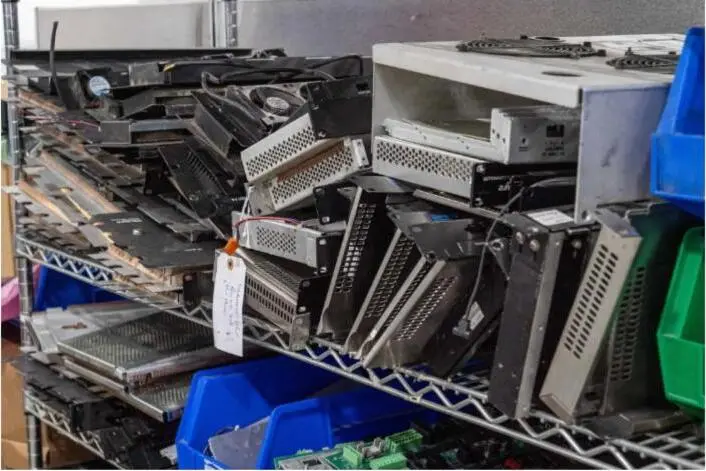
A mature depot program follows a repeatable, serial-number-tracked workflow that maintains chain-of-custody at every stage and controls cost before repair resources are consumed. A compliant depot tracks each unit from intake to final shipment and retains complete repair history per serial number. The standard process shows how structured triage and tracking protect warranty claim validity and reduce no-fault-found waste.
- Intake: Devices are received against an RMA or manifest. Serial numbers, IMEIs and cosmetic condition are logged at arrival. Chain-of-custody documentation begins at this step.
- Triage and diagnosis: Technicians verify the reported fault and determine the appropriate repair path. No-fault-found units are identified here, which prevents unnecessary repair spend.
- Repair by level:
- L1: Software resets, firmware updates and basic configuration corrections.
- L2: Component replacement, including screens, batteries, cameras and similar field-replaceable parts.
- L3: Advanced assembly-level repair that requires partial disassembly and subcomponent replacement.
- L4: Board-level and micro-soldering work performed by trained technicians on failed PCBs and chipsets.
- Rapid exchange: A pre-staged replacement unit ships at claim approval. The failed unit returns to the depot for repair and restock into the exchange pool.
- Next-day replacement programs: Advanced exchange programs deliver replacement units rapidly after authorization, with expedited options for mission-critical equipment. End-user downtime drops to courier transit time rather than the full repair cycle.
Turnaround time in an authorized depot program depends on repair level, parts availability and program SLA. Traditional depot repair typically takes several days, while advanced exchange programs reduce end-user impact to the shipping window by separating replacement from repair.
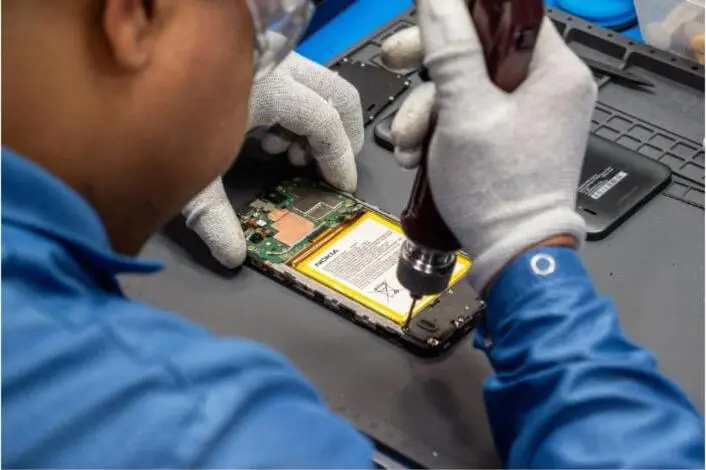
Certified refurbishment recovers value from returned devices. Technicians in ESD-safe gloves repair and regrade hardware for secondary-market resale — secure, documented, warranty-backed. Why OEM ASC Authorization Protects Warranty Value
OEM Authorized Service Center status functions as a contractual requirement that governs parts sourcing, repair procedures, technician training and warranty claim eligibility. A depot without ASC authorization cannot submit valid warranty claims on behalf of OEM or carrier clients, and repairs performed outside authorization may not be covered under the OEM’s warranty terms.
Operations and supply chain leaders managing multi-brand device fleets depend on the breadth of ASC authorizations held by a depot partner. A depot authorized across a single OEM brand creates vendor fragmentation for programs that span multiple manufacturers. Premier Logitech holds ASC authorizations across 20+ OEM brands, which enables a single-vendor program structure across mixed-brand enterprise and carrier fleets without splitting repair volume across multiple providers.
U.S.-based manufacturers paid $30.37 billion in warranty claims in 2025, a 4% increase from 2024. Programs that route repairs through non-authorized providers face higher risk of claim rejection and added cost that authorized depot operations avoid.
Talk to a lifecycle expert to review authorization coverage across current device brands.
Compliance and Security Standards for Depot Repair
Enterprise and government warranty repair programs carry compliance obligations that consumer repair services are not structured to meet. Data sanitization, chain-of-custody documentation and facility certifications form baseline requirements for OEM, telecom and public-sector clients.
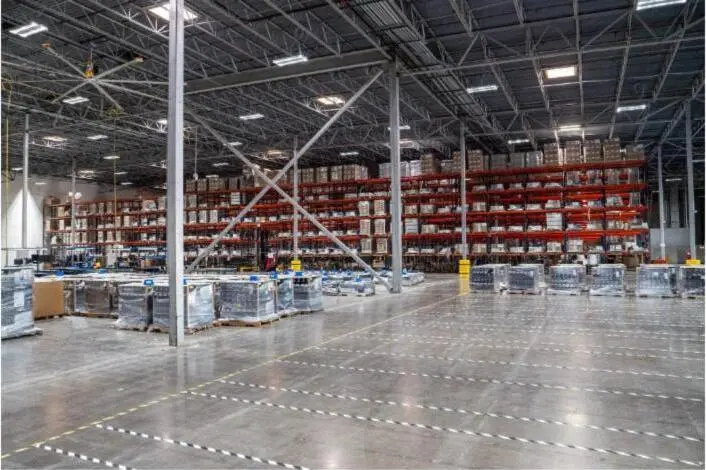
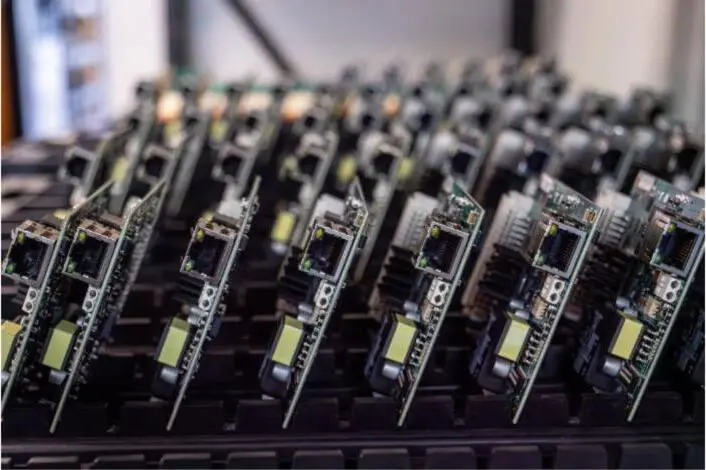
IT asset management starts with control. Racked, bar-coded inventory across secure DFW facilities gives full device traceability — receiving to retirement — under ISO, NIST, and SOC 2 processes. NIST SP 800-88 Rev. 1 is the core federal media-sanitization framework, defining Clear, Purge and Destroy outcomes and mapping directly to FAR 52.204-21 and CMMC 2.0 Level 1 requirements. For mobile devices, compliant sanitization requires MDM remote wipe combined with factory reset, full-disk encryption and controlled key management. A factory reset alone does not satisfy NIST 800-88 requirements.
R2v3 Core Requirement 8 applies to every certified facility that handles data-bearing devices and requires a written data security policy, protection from unauthorized access and sanitization consistent with the NIST framework described above. Per-device sanitization certificates must include IMEI or serial number, sanitization method, date and verification result. Batch-level records do not meet R2v3 Appendix B requirements.
Buyers can use the following certifications and capabilities as a checklist when evaluating a depot partner:
- Trade Agreements Act (TAA) compliance for government and federal contract programs
- NIST SP 800-88 Rev. 1-compliant data sanitization with per-device certificates
- CMMC 2.0 alignment for programs handling Federal Contract Information
- SOC 2 certification covering security, availability and confidentiality controls
- R2v3 certification with documented chain-of-custody from intake through disposition
- ISO 9001 quality management and ISO 14001 environmental management
- Auditable chain-of-custody records with serial-number-level tracking per device
- MDM unenrollment capability prior to sanitization and resale
How to Choose a Mobile Device Warranty Repair Depot Partner
Selection of a depot partner for an enterprise or OEM warranty program works best when framed across four dimensions: authorization breadth, compliance scope, chain-of-custody capability and single-vendor consolidation potential.
Authorization breadth: The partner must hold ASC status for every OEM brand in the program’s device fleet. Gaps in authorization create warranty claim risk and force split-vendor arrangements. However, authorization alone does not address the regulatory requirements that govern government and enterprise programs.
Compliance scope: The partner must demonstrate active certifications, not just familiarity, with TAA, NIST, CMMC, SOC 2 and R2v3. Government and enterprise programs require documentation rather than informal assertions, so audit-ready evidence matters.
Chain-of-custody capability: Every device must be tracked by serial number or IMEI from intake through repair, sanitization and return or disposition, as required by R2v3 Appendix B. This tracking supports data security, warranty validation and accurate asset recovery reporting.
Single-vendor consolidation: A partner that covers repair, fulfillment, configuration, asset recovery and recycling removes fragmented vendor relationships that drive operational cost and compliance risk. Premier Logitech operates as a single-source lifecycle partner and consolidates depot repair, rapid exchange, refurbishment, secure data destruction and responsible recycling under one program structure.
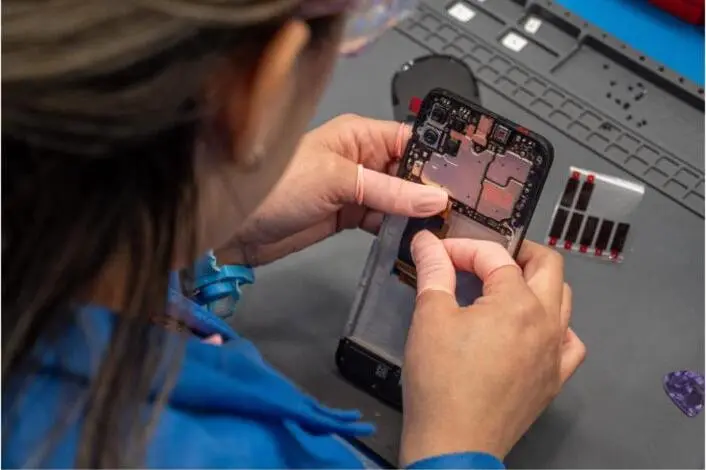
Device lifecycle management across the full arc — deploy, support, repair, and recover — with secure data wipe and NIST-compliant handling protecting every asset from first login to disposition. Next Steps for Consolidating a Warranty Program
Frequently Asked Questions on Depot Repair
What is the difference between in-warranty and out-of-warranty depot repair?
In-warranty depot repair is performed under the OEM’s warranty terms, with costs covered by the manufacturer when the depot holds valid ASC authorization and uses approved parts and procedures. Out-of-warranty repair is billed to the device owner or program operator. An authorized depot can handle both claim types within a single program and maintain consistent documentation and quality standards regardless of warranty status.
How does a rapid exchange program affect inventory requirements?
Rapid exchange programs require a buffer pool of pre-staged, pre-tested replacement units. The depot maintains this pool by repairing and restocking returned defective units. Pool size is determined by program volume, device mix and agreed service levels. A well-structured program balances inventory carrying cost against the cost of downtime for end users or field operations.
What happens to devices that cannot be repaired?
Beyond-economic-repair units enter a disposition path that may include parts reclamation and harvesting, cosmetic refurbishment for secondary market grading, secure data destruction and responsible recycling. An authorized depot with R2v3 certification and NIST-compliant sanitization capabilities manages this path within the same chain-of-custody framework as repaired units. This approach preserves asset recovery value and meets environmental compliance requirements.
Can a single depot partner support both enterprise and government warranty programs?
Yes, when the partner holds the required certifications. Government programs require TAA compliance, CMMC alignment and NIST SP 800-88-compliant sanitization with auditable records. Premier Logitech holds a CAGE Code (4WAJ9) as a pre-vetted federal partner and maintains the compliance framework required for both enterprise and public-sector warranty programs under a single operational structure.
How should no-fault-found claims be managed in a depot program?
No-fault-found claims represent a significant share of warranty returns and can erode program margins. On average, 40% of telco warranty claims fall into the no-fault-found category, where the device is later found fully functional, and OEMs do not reimburse telcos for these claims. An authorized depot with structured triage catches NFF units before repair resources are consumed, which reduces program cost and improves claim accuracy. Documented triage outcomes also support OEM reporting and program analytics.
Premier Logitech has provided authorized depot repair, reverse logistics and lifecycle services since 2007. With 20+ OEM ASC authorizations, TAA, NIST, CMMC and SOC 2 compliance and operations across three DFW facilities with nearshore capacity, Premier Logitech consolidates the repair, fulfillment, asset recovery and recycling functions that fragmented vendor programs split across multiple providers.
