Key Takeaways for Faster RMA Processing
- RMA processing efficiency reflects how quickly and accurately returned IT or telecom assets move through authorization, triage, repair and final disposition with minimal manual work.
- Automated approvals, standardized triage workflows and complete asset data at intake shorten cycle time and reduce manual touches.
- Integrated RMA, ERP, WMS and CRM systems remove duplicate data entry and keep inventory accurate across the reverse logistics chain.
- Compliance-gated disposition workflows and exception-only routing maintain audit-ready records while limiting agent-handled volume for government and OEM programs.
- Premier Logitech combines RMA management, ASC-authorized repair and compliance infrastructure in a single-source program that scales with volume and meets government-grade requirements talk to a lifecycle expert to get started.
Typical RMA Timelines and Where Delays Occur
RMA duration varies by program. Total cycle time depends on shipping, diagnostic complexity, parts availability, repair scope, quality assurance and final disposition. Tracking segmented stage times provides more insight than a single aggregate number.
Operations that exceed typical thresholds usually have identifiable bottlenecks that can be isolated and corrected.
Tracking median and 90th-percentile timing for each stage, rather than averages alone, reveals queue buildup and tail latency that simple averages hide. Once these bottlenecks are visible, automation becomes the primary lever for reducing cycle time at each stage.
Talk to a lifecycle expert to benchmark current stage times against program targets.
Automating RMA Approvals for Faster Intake
Tactic 1: Automate RMA Authorization and Case Creation
Outcome metric: Reduced case intake time and more inbound accounts processed without manual triage.
Manual RMA approval creates bottlenecks at the first gate. Automated inbound case creation with pre-populated contextual data from multiple sources cuts intake time and removes manual triage for many accounts. Platforms such as ServiceNow CSM or Boomi-based RMA workflows automate return initiation, ERP policy validation and customer notifications, which shortens return cycle times and keeps traceability intact.
Implementation checklist:
- Define approval rules by return reason, warranty status and asset class so the system can auto-approve standard cases.
- Connect the RMA portal to the ERP for real-time policy validation so rules apply without manual review.
- Configure automated notifications at each status change to keep customers and internal teams informed as cases advance.
- Log every authorization event for TAA, NIST, CMMC and SOC 2 audit trails so automated decisions remain auditable.
Premier Logitech RMA management infrastructure supports compliant automation aligned to TAA, NIST, CMMC and SOC 2 requirements, with real-time tracking from authorization through final disposition.
Standardizing Triage to Reduce Manual Touches
Tactic 2: Use Standard Inspection Workflows and Decision Trees
Outcome metric: Lower dwell time and preserved recovery value through structured routing at intake.
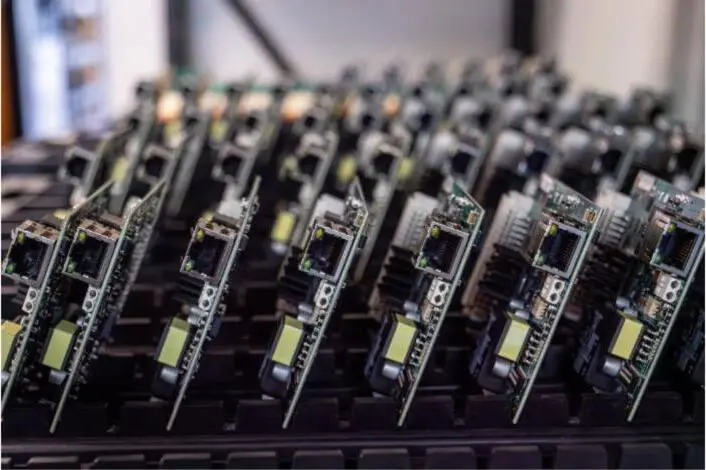
Standardized inspection workflows and predefined decision trees shorten dwell time and protect value in reverse logistics operations. Triage is the initial evaluation that sets the technical path for a returned unit, including physical condition, symptom verification, diagnostic routing and urgency.
Implementation checklist:
- Map fixed disposition codes such as restock, refurbish, repair, liquidate and scrap to keep routing consistent.
- Build yes or no inspection criteria that remove subjective judgment at the bench.
- Route No Fault Found units to documented findings with a defined next action so they do not stall.
- Assign ASC-authorized technicians to units that require OEM-level repair.
Premier Logitech operates as an Authorized Service Center for more than 20 OEM brands and provides L1–L4 depot repair with real-time visibility into unit status at every triage stage.
Tactic 3: Capture Complete Asset Data at Return Initiation
Outcome metric: Fewer manual handoffs and routing errors downstream.
RMA creation should capture asset ID, serial number, product or model, SKU, reported failure, warranty status, vendor, RMA number, repair location and request date. Complete data at intake reduces clarification cycles and manual handoffs later. Regulated products must be traced back to specific batches, suppliers and serial numbers to prevent compliance issues and maintain an audit trail.
Implementation checklist:
- Enforce mandatory fields at RMA portal submission so incomplete records cannot proceed.
- Validate serial numbers against asset records before authorization to prevent mismatches.
- Flag incomplete submissions for exception review instead of allowing partial records to advance.
- Retain records that support DFARS 252.246-7007 and 252.246-7008 counterfeit-part controls.
Tactic 4: Build Exception-Only Workflows
Outcome metric: Lower agent-handled volume as automation resolves routine cases without human intervention.
Exception-only workflows send standard returns through automated disposition paths and escalate only units that fail predefined criteria. Automated inbound email case creation for many accounts removed manual triage and reduced agent-handled ticket volume.
Implementation checklist:
- Define exception triggers such as missing serial number, out-of-warranty claim, suspected counterfeit or sensitive government property.
- Route exceptions to a dedicated queue with SLA timers to keep work visible and time bound.
- Auto-close standard cases after disposition confirmation so queues stay clean.
- Log exception rates as a KPI to reveal systemic upstream problems.
Connecting RMA Platforms With Core Systems
Tactic 5: Integrate RMA Systems With ERP, WMS and CRM
Outcome metric: No duplicate data entry and real-time inventory updates.
Reverse logistics WMS modules direct inspection flows, record dispositions and update inventory in real time when linked to the RMA platform. Disconnected systems force manual re-entry, create errors and slow disposition decisions.
Implementation checklist:
- Connect the RMA platform to ERP for warranty validation and credit issuance.
- Sync WMS so inventory status updates at each disposition stage.
- Push status updates to CRM to provide customer-facing visibility.
- Confirm that integration architecture meets SOC 2 data-handling requirements.
Managing Inbound Volume at the Dock
Tactic 6: Schedule Inbound Dock Capacity in Advance
Outcome metric: Less receiving congestion with labor and staging aligned to inbound volume.
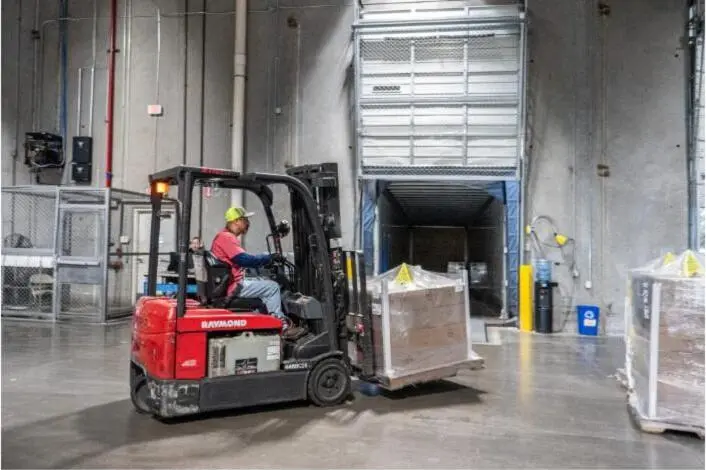
Dock scheduling software gives returns warehouses advance visibility into inbound loads. That visibility supports labor planning, staging space allocation and inspection capacity alignment before trucks arrive. International Auto Processing increased carrier self-scheduling and transformed inbound dock operations after adopting dock scheduling software.
Implementation checklist:
- Require carriers to self-schedule inbound returns appointments.
- Define receiving zones by return type such as warranty, sensitive government assets and end-of-life.
- Align staffing plans to scheduled inbound volume at least 24 hours in advance.
- Flag unscheduled arrivals as exceptions for supervisor review.
Speeding Receiving With Mobile Scanning
Tactic 7: Deploy Mobile Scanning at Receiving
Outcome metric: Faster inspections and less manual data entry at receipt.
Mobile scanning and barcode templates cut manual data entry and speed inspections with handheld scanners and pre-filled disposition options. Receiving teams confirm receipt, validate the RMA number, match the product to the RMA record, verify the serial number, inspect and record physical condition and update receiving and inventory status. Mobile scanning accelerates each step and keeps the process auditable.
Implementation checklist:
- Issue handheld scanners to all receiving staff.
- Pre-load disposition options by product category.
- Capture condition photos at scan for dispute resolution.
- Sync scan events to WMS and the RMA platform in real time.
Talk to a lifecycle expert about adding mobile scanning to an existing returns workflow.
Meeting Government and OEM Compliance at Disposition
Tactic 8: Apply Compliance-Gated Disposition for Government and OEM Programs
Outcome metric: Audit-ready disposition records and controlled counterfeit or restricted-equipment risk.
DFARS 252.246-7007 and 252.246-7008 require systems that detect and avoid counterfeit electronic parts, rely on original manufacturers or authorized distributors and extend controls to all subcontractor tiers. These requirements apply directly to RMA repair and refurbishment workflows. FAR 52.204-25 bars federal contractors from providing or using covered telecommunications equipment from designated vendors, which shapes sourcing for replacement or refurbished RMA units.
Implementation checklist:
- Gate disposition decisions behind TAA and Buy American Act compliance checks.
- Verify replacement parts against authorized distributor records before use.
- Quarantine and report suspected counterfeit parts under DFARS requirements.
- Maintain NIST SP 800-88-compliant data destruction records for all returned storage media.
- Retain disposition documentation for the required audit period.
Premier Logitech maintains these certifications under CAGE Code 4WAJ9 and provides the compliance infrastructure that government RMA programs require.
Using RMA Data to Cut Future Returns
Tactic 9: Build a Root-Cause Feedback Loop From RMA Data
Outcome metric: Lower future return rates as reverse logistics data informs design, sourcing and inventory planning.
Reverse logistics data that flows back into design, sourcing and inventory planning reduces future return rates and turns returns into a performance feedback engine. Missing return reason data prevents teams from fixing root causes such as component failures or packaging defects.
Implementation checklist:
- Track NFF rate, repeat failure rate and defect rate by SKU and supplier to pinpoint problem areas.
- Share monthly RMA trend reports with product engineering and procurement.
- Flag high-return SKUs for design-for-recoverability review.
- Use redeployment rate and repair yield as indicators of program health.
Checklist for Exception-Only RMA Workflows
This checklist outlines minimum gates for an exception-only RMA workflow in a TAA, NIST, CMMC and SOC 2 compliant environment. Standard units clear each gate automatically, and only units that fail a gate enter the exception queue.
- RMA number validated against an open authorization record.
- Serial number matched to the asset database.
- Warranty status confirmed, including in-warranty, out-of-warranty and sensitive government assets.
- Physical condition recorded through mobile scan with condition photo.
- Disposition code assigned from a fixed list such as restock, refurbish, ASC repair, liquidate or scrap.
- Counterfeit-part check completed for any replacement components under DFARS 252.246-7007 and 252.246-7008.
- TAA and Buy American Act compliance verified for replacement sourcing.
- Data destruction initiated and logged under NIST SP 800-88 for storage media.
- Exception trigger absent, so the unit advances to the automated disposition path.
- Exception trigger present, so the unit routes to a supervisor queue and starts an SLA timer.
Premier Logitech ASC-authorized repair network and government-grade compliance infrastructure support each gate in this checklist, from serialized intake through certified data destruction and compliant disposition.
Turning RMA Data Into Product and Process Improvement
RMA data provides direct signals from the field about product performance, packaging strength and supplier quality. Segmenting returns by value density instead of volume and using historical data to focus on categories that recover the highest share of original value highlights the most impactful improvement opportunities first.
Key KPIs for this feedback loop include NFF rate, repeat failure rate, repair yield and redeployment rate. Rising NFF rates on a specific SKU often signal a field-condition mismatch, a documentation gap or a design issue. Rising repeat failure rates often signal an inadequate repair procedure or a component sourcing issue, which then guides corrective action.
Manufacturers can start reverse logistics improvement with design for recoverability by reviewing high-return product categories for modularity, standardized components and ease of disassembly. RMA data turns that review into an evidence-based process instead of an anecdotal one.
Accurate triage at intake that routes assets to resale, repair, parts harvest or recycling directly shapes recovery value. The same triage data, aggregated over time, reveals which product categories generate the most recoverable value and which generate the most write-offs, which then informs procurement and inventory planning.
Conclusion: Apply the Nine-Tactic RMA Automation Playbook
The nine tactics above address common sources of RMA cycle-time loss, including manual approvals, inconsistent triage, incomplete upfront data, disconnected systems, unscheduled inbound volume, slow receiving, compliance gaps and missing feedback loops. Each tactic can be deployed on its own and each produces measurable output that supports the next stage.
High-volume IT or telecom RMA programs that serve government agencies with TAA, NIST, CMMC or SOC 2 obligations face compounding risk when any stage runs without automation or standardization. Stalled assets erode recovery value. Manual touches increase compliance exposure. Fragmented vendors create accountability gaps.
Premier Logitech combines RMA management, ASC-authorized depot repair, compliant data destruction and lifecycle analytics in a single-source program. That structure supports a repeatable, auditable reverse logistics operation that scales with volume and satisfies government-grade compliance requirements.
Frequently Asked Questions
What compliance frameworks apply to RMA workflows for government contractors?
Government RMA workflows must address several overlapping frameworks. TAA compliance governs sourcing of replacement and refurbished units and requires that products originate from the United States or designated countries. NIST SP 800-171 controls apply to any contractor that handles Controlled Unclassified Information, including asset records and repair documentation. CMMC certification applies to Department of Defense contractors at the appropriate maturity level. DFARS 252.246-7007 and 252.246-7008 mandate counterfeit-part detection and avoidance systems that apply directly to repair and refurbishment operations, as covered in Tactic 8. FAR 52.204-25 prohibits use of covered telecommunications equipment from designated vendors in replacement sourcing. SOC 2 governs security and availability of systems that process RMA data. Premier Logitech maintains these certifications under CAGE Code 4WAJ9.
What KPIs should a reverse logistics director track to measure RMA processing efficiency?
Actionable RMA KPIs fall into four categories. Volume metrics include return rate, measured as the percentage of shipped units that return. Quality metrics include defect rate and NFF rate, which show whether reported failures are reproducible. Speed metrics include time to receive, time to inspect, time to close and depot repair turnaround time, all tracked at median and 90th percentile to reveal tail latency. Value metrics include repair yield, redeployment rate, operational yield and net recovery rate. Units awaiting disposition serve as a stalled-asset metric for exception management dashboards. Tracking these KPIs by stage, rather than as a single aggregate cycle time, reveals where bottlenecks occur at intake, diagnostics, repair, QA or disposition.
How does an exception-only workflow differ from a standard RMA process?
A standard RMA process routes every unit through the same manual review steps regardless of complexity. An exception-only workflow automates disposition for units that meet all predefined criteria such as valid RMA number, matched serial number, confirmed warranty status and clean compliance checks. The workflow then escalates only units that fail one or more gates. That structure allows most returns to move through the system without human intervention while staff attention focuses on cases that require judgment, including suspected counterfeits, sensitive government assets, out-of-warranty disputes or units with incomplete documentation. Exception-only workflows reduce manual touches, lower agent-handled volume and make SLA performance measurable at the exception level instead of across the entire return population.
What is the role of an Authorized Service Center in RMA processing?
An Authorized Service Center holds OEM authorization to perform warranty and out-of-warranty repairs on specific product lines using approved parts, procedures and tooling. In an RMA workflow, ASC status determines whether a repaired unit can return to service under the original OEM warranty, resell through certified refurbishment channels or redeploy in a government program that requires OEM-authorized repair documentation. Without ASC authorization, repairs may void warranties, fail compliance audits or be rejected by secondary market buyers. Premier Logitech holds ASC authorization for more than 20 OEM brands and provides L1 through L4 depot repair with the documentation chain that enterprise and government programs require.
How does Premier Logitech support vendor consolidation in reverse logistics?
Fragmented vendor relationships across transport, receiving, repair, refurbishment and recycling create accountability gaps, duplicate data entry and compliance exposure at every handoff. Premier Logitech operates as a single-source lifecycle partner that covers RMA management, L1 through L4 depot repair, cosmetic refurbishment, secure data destruction, parts reclamation and responsible recycling under one program. Clients can also engage Premier Logitech for individual services on a standalone basis. This consolidation reduces the risk of assets and accountability falling between vendors, lowers the number of compliance audits required across the supply chain and provides a single point of contact for program management and escalation.
