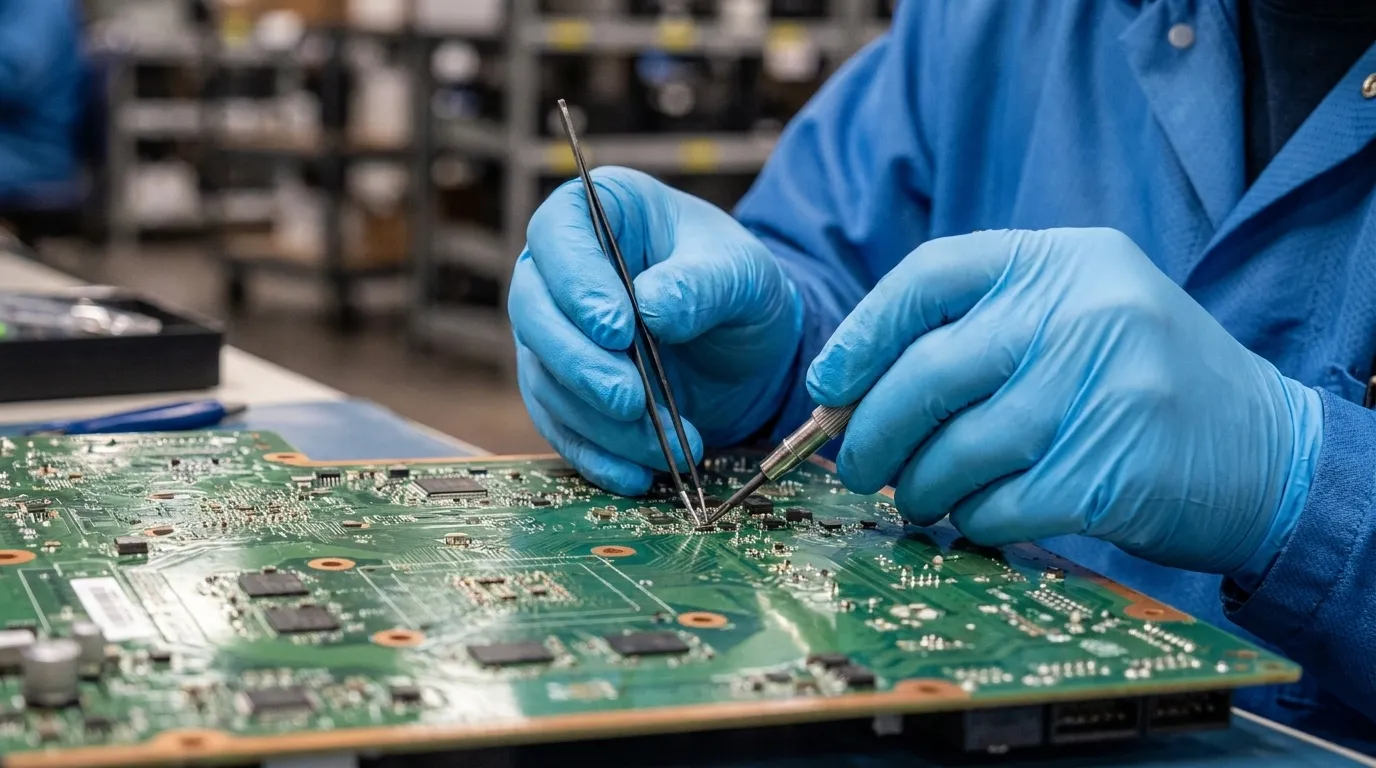
Key takeaways for IT lifecycle configuration
- IT lifecycle configuration services prepare, secure and manage hardware and software so devices arrive ready for use across five core phases.
- Each phase, from procurement and planning through maintenance and reclamation, requires coordinated execution to meet enterprise and government compliance standards.
- Security baseline configuration, asset tagging and CMDB integration must occur before deployment to reduce audit findings and incident risk.
- Modern provisioning tools such as Autopilot and Intune reduce time-to-desk, and physical staging remains essential for bare-metal installs and large-scale reimaging.
- Premier Logitech delivers all five phases as a single compliant partner; map current IT lifecycle configuration flows with a lifecycle expert.
The five core phases of IT lifecycle configuration services
- Procurement & Planning
- Staging, Imaging & Kitting
- Security Baseline Configuration & Asset Tagging
- Deployment & Modern Provisioning
- Maintenance, Drift Tracking & Reclamation
Phase 1: Procurement and planning for compliant device programs
Procurement and planning establish the foundation for every downstream phase. Lifecycle partners align hardware specifications to organizational requirements, validate TAA-compliant sourcing and build bill-of-materials (BOM) structures that govern kitting capacity and configuration scope.
For government agencies and defense contractors, sourcing decisions carry regulatory weight. NIST SP 800-171 Rev. 3 introduced a Supply Chain Risk Management family that requires organizations to manage supply chain risks across acquisition, suppliers and system components for CUI-handling systems. Procurement planning that ignores these requirements creates downstream compliance exposure.
Premier Logitech integrates procurement with vendor consolidation, aggregated purchasing and open-market channel distribution, addressing the compliance and sourcing requirements described above. Defining BOM-based kitting structures at this stage ensures that staging and assembly operations scale without rework, because every downstream phase executes against a single source of truth. Integration with existing procurement systems reduces handoff friction and supports real-time inventory visibility from the first purchase order, which gives operations teams data to manage capacity and timelines.
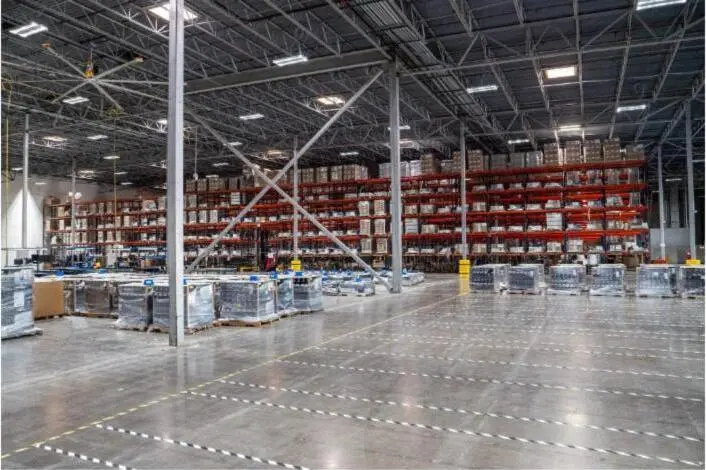
Once procurement establishes the BOM and sourcing requirements, those specifications flow directly into the staging phase. Review TAA-compliant procurement options with a lifecycle expert.
Phase 2: Staging, imaging and kitting for deployment-ready devices
Staging, imaging and kitting transform procured hardware into deployment-ready units, executing against the BOM structures defined during procurement. This phase covers device imaging, BIOS configuration, multi-vendor product assembly, custom packaging and burn-in testing. At enterprise scale, consistency across thousands of units determines whether deployment succeeds or generates support tickets.
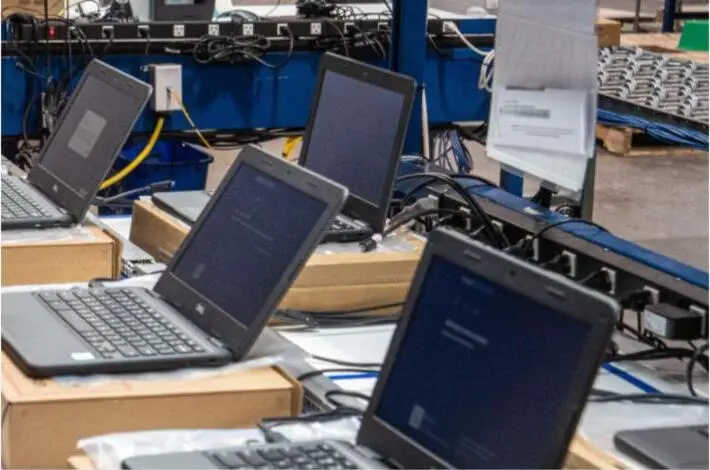
Organizations with distributed workforces face a choice: burden internal IT teams with device staging and shipping, or adopt a depot services model that handles these functions externally. Device lifecycle management at scale requires staging, kitting and direct-to-site shipping through a depot services model to reach distributed workforces without burdening internal IT teams. Premier Logitech supports kitting capacity across its facilities, enabling programs that require rapid ramp without capital investment in additional infrastructure.
New-hire kit assembly, pick/pack/ship operations and custom labeling follow the BOM specifications established in Phase 1. Burn-in and functional testing validate device integrity before units leave the facility. Multi-vendor assembly consolidates peripherals, accessories and documentation into a single outbound package, which reduces receiving complexity at the destination.

These deployment-ready units then move into security baseline configuration, where controls and asset data attach to each device before shipment.
Phase 3: Security baselines and asset tagging before deployment
Security baseline configuration applies organization-defined controls to every device before it reaches an end user. This phase covers encryption, endpoint protection, BIOS hardening, software installation and policy enforcement aligned to NIST SP 800-171 and related frameworks.
In the deployment and configuration phase, assets are provisioned according to documented standards, configured to baseline security requirements, enrolled in monitoring platforms and added to the asset register. Skipping or compressing this phase leaves endpoints in an inconsistent security state that creates audit findings and incident risk.
Asset tagging occurs in parallel with security configuration. Physical and RFID tags are applied after successful testing, capturing serial numbers, device identifiers and organizational metadata. Asset recording that adds new equipment to the customer's asset inventory early in the procurement cycle maintains a full audit trail and supports CMDB population at scale.
Premier Logitech performs imaging, custom asset tagging and serialization as part of its configuration and fulfillment services. CMDB integration ensures that every tagged device appears in the organization's configuration management database before deployment. This approach supports change management and impact analysis from day one and prepares devices for efficient deployment and modern provisioning.
Phase 4: Deployment and modern provisioning at scale
Deployment and modern provisioning move configured devices to end users through cloud-based enrollment and direct-to-site logistics. Modern device provisioning through automated Microsoft Autopilot out-of-box experience and manual pre-provisioning (White Glove) for Windows 11 reduces time-to-desk while supporting hybrid connectivity requirements.
Despite the rise of cloud-based provisioning tools, traditional OS deployment remains a critical function for IT teams. A February 2026 survey of IT professionals found that 99% say OS deployment is important (81% high or critical), even as cloud tooling expands. Autopilot and Intune streamline provisioning for new endpoints but leave gaps for bare-metal installs, disaster recovery and large-scale reimaging scenarios that require physical staging capacity.
Premier Logitech supports connected configuration and modern provisioning, SIM and IMEI pairing for mobile devices and direct-to-consumer and B2B fulfillment. New-hire kits ship directly to employee locations, whether centralized or distributed, without requiring on-site IT presence. This model supports enterprises with geographically dispersed workforces and government agencies with field deployments and sets the stage for structured maintenance and reclamation.
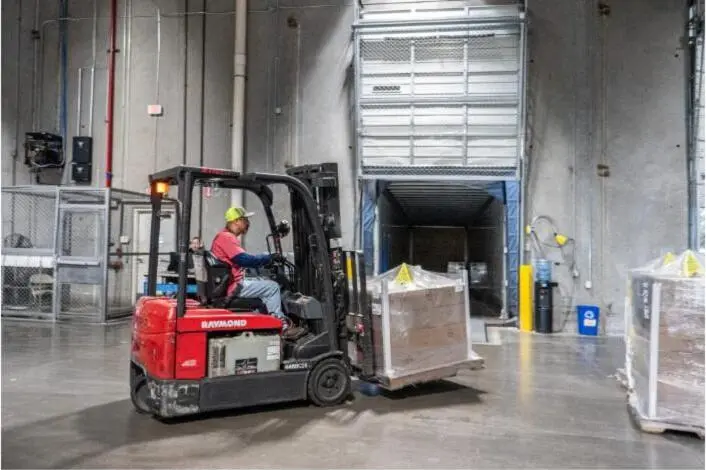
Discuss Autopilot and Intune provisioning at scale with a lifecycle expert.
Phase 5: Maintenance, drift tracking and reclamation programs
Maintenance, drift tracking and reclamation extend the value of deployed assets and close the lifecycle loop. This phase covers ongoing monitoring, configuration drift remediation, depot repair, rapid exchange and return logistics.
Reclamation programs provide prepaid return logistics, chain-of-custody documentation and secure handling when employees offboard or devices are due for refresh. Without structured reclamation, retired devices accumulate outside asset registers, which creates data security exposure and missed recovery value.
Premier Logitech operates ASC-authorized repair at L1 through L4 across 20-plus OEM authorizations, with capacity for repairs at scale. Rapid exchange and next-day replacement programs reduce downtime for end users. Return logistics, secure data destruction and responsible recycling complete the reclamation cycle with full compliance documentation.
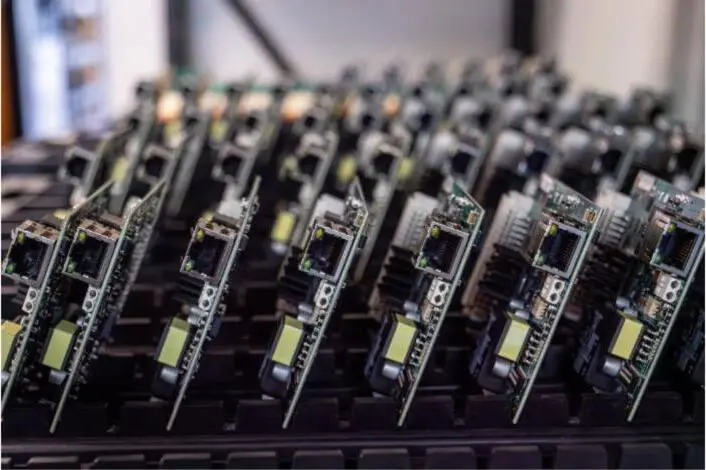
Full lifecycle management services form a growing part of the DaaS market and reflect enterprise demand for single-vendor accountability across procurement, deployment, repair, refresh and certified disposal. These services operate within a strict compliance and security context.
Compliance and security across the device lifecycle
IT lifecycle configuration services for U.S. enterprises and government agencies operate within a layered compliance environment. Relevant frameworks include TAA, NIST SP 800-171, CMMC, SOC 2 and ISO quality standards, which shape sourcing, configuration and data handling across all five phases.
For DoD contractors handling Federal Contract Information or Controlled Unclassified Information, core obligations include safeguarding FCI under FAR 52.204-21 and safeguarding CUI under DFARS 252.204-7012 using the 110 controls from NIST SP 800-171 Rev. 2. These obligations remained active after the July 2026 CMMC Phase 2 pause and apply directly to devices configured and deployed through lifecycle services.
On June 23, 2026, the FAR Council published a Proposed Rule that would extend CUI safeguarding requirements to civilian-agency contractors for the first time, requiring NIST SP 800-171 Rev. 3 compliance and 72-hour incident reporting. Configuration services that provision and deploy devices handling CUI fall directly in scope for these obligations.
Premier Logitech holds certifications and operates under TAA, TAPA, ISO quality frameworks, NIST, CMMC and SOC 2. The company's CAGE Code 4WAJ9 identifies it as a pre-vetted partner for U.S. federal government programs. Government-grade handling, secure data destruction and compliance reporting integrate into every phase of the lifecycle.
Provider selection checklist aligned to the five phases
Evaluating IT lifecycle configuration providers works best with criteria mapped to each of the five phases. The following checklist supports structured provider assessment and connects directly to the framework above.
- Service scope: Provider covers all five phases under a single contract, from TAA-compliant procurement through certified asset disposition.
- Technical capabilities: Supports device imaging, BIOS configuration, Autopilot and Intune provisioning, SIM and IMEI pairing and CMDB integration.
- Quality and compliance: Holds relevant certifications (TAA, NIST, CMMC, SOC 2, ISO) and maintains documented audit trails for government and enterprise programs.
- Scalability and flexibility: Demonstrates kitting and repair capacity that matches program volume requirements without requiring client capital investment.
- Visibility and data: Provides real-time inventory tracking, asset register integration and lifecycle analytics accessible to operations and supply chain teams.
- Network coverage: Operates facilities and carrier relationships that support direct-to-site deployment across distributed U.S. locations.
- ASC authorizations: Holds authorized service center status for the OEM brands in the device fleet to support warranty-compliant repair.
- Total cost and value: Consolidates fragmented vendor relationships into a single program with defined SLAs and performance metrics.
Vendor fragmentation in IT operations leads to slower issue resolution, increased downtime from lack of coordination, higher costs from redundant vendors and increased cybersecurity exposure through the supply chain. A single compliant partner reduces these structural risks.
Configuration services compared with full lifecycle management
IT configuration services and full lifecycle management differ in scope, ongoing management and asset disposition. Configuration services focus on preparing devices for deployment through imaging, security baselines, asset tagging and provisioning. The engagement typically ends when devices reach end users.
Full lifecycle management extends the relationship through the operational life of the asset. IT lifecycle management connects to procurement, financial planning, security posture, compliance and service continuity. A server or endpoint reaching end-of-life without a managed refresh plan creates business continuity risk and potential compliance violations in regulated industries.
IT Asset Management tracks ownership, financial value and the full lifecycle of assets, while Service Configuration Management ensures accurate information about configuration items and their relationships is available for impact analysis and change planning. Both disciplines are necessary and complementary.
Premier Logitech operates as both a single-source lifecycle partner and a modular services provider. Organizations can engage for end-to-end program management or select individual services such as configuration and fulfillment, depot repair or transportation on a standalone basis. This structure allows programs to start with configuration services and expand into full lifecycle management as operational maturity grows.
Conclusion: Applying the five-phase evaluation framework
The five-phase model for Procurement and Planning, Staging, Imaging and Kitting, Security Baseline Configuration and Asset Tagging, Deployment and Modern Provisioning, and Maintenance, Drift Tracking and Reclamation provides a structured framework for evaluating internal capabilities and external partners.
Organizations preparing to engage a lifecycle configuration partner can map current operational flows against each phase, identify compliance gaps relative to TAA, NIST, CMMC and SOC 2 requirements and gather performance data on existing vendor relationships. The provider selection checklist above translates those findings into actionable evaluation criteria.
Premier Logitech delivers all five phases as a single compliant partner, with national-scale kitting capacity, ASC-authorized repair across multiple OEM brands, cloud provisioning through Autopilot and Intune and end-to-end compliance documentation for enterprise and government programs. The company has served OEMs, enterprises and government agencies since 2007 from its DFW facilities and nearshore operations.
Frequently asked questions
What is the difference between IT lifecycle configuration services and IT asset management?
IT lifecycle configuration services focus on preparing devices for deployment, covering imaging, security baselines, asset tagging, kitting and provisioning. IT asset management tracks the financial value, ownership and compliance status of those assets throughout their operational life. The two disciplines are complementary.
Configuration services establish the data foundation that asset management systems rely on, including CMDB records, serial numbers and assigned user data. Premier Logitech integrates both functions, ensuring that devices are configured to standard and recorded accurately before they reach end users.
How do NIST, CMMC and TAA requirements affect IT configuration and deployment programs?
These frameworks impose specific requirements on how devices are sourced, configured and handled. TAA compliance governs where hardware is manufactured and applies to federal procurement programs. NIST SP 800-171 defines security controls for systems that process, store or transmit Controlled Unclassified Information, covering configuration management, access control and system protection.
CMMC builds on NIST SP 800-171 and requires DoD contractors to demonstrate compliance as a condition of contract award. Configuration services that apply security baselines, maintain audit trails and support CMDB integration are directly relevant to meeting these requirements. As noted earlier, Premier Logitech maintains the certifications required for government programs and integrates compliance documentation into every phase of its lifecycle services.
What does modern provisioning mean in the context of IT lifecycle configuration?
Modern provisioning refers to cloud-based device enrollment and configuration using tools such as Microsoft Autopilot and Microsoft Intune. Rather than requiring manual imaging at a central location, modern provisioning allows devices to self-configure when connected to the internet, pulling policies, applications and security settings from cloud management platforms.
This approach reduces time-to-desk and supports distributed workforces. Modern provisioning does not replace physical staging for all scenarios. Bare-metal installs, large-scale reimaging, disaster recovery and mobile device configuration still require physical handling. Premier Logitech supports both cloud-based modern provisioning and traditional imaging, which gives programs flexibility to use the right method for each deployment scenario.
How does vendor consolidation reduce risk in IT lifecycle programs?
Fragmented vendor relationships create handoff points where accountability gaps emerge. When separate vendors handle procurement, configuration, deployment, repair and disposition, coordination failures lead to delayed deployments, inconsistent security baselines, missed compliance documentation and untracked assets.
Consolidating these functions under a single partner with defined SLAs and integrated data systems reduces those gaps. Premier Logitech serves as a single-source lifecycle partner, managing sourcing, configuration, fulfillment, repair and asset recovery under one program. This structure provides a single point of accountability and real-time visibility across the full device lifecycle.
What should organizations look for when selecting an IT lifecycle configuration partner for government programs?
Government programs require partners with documented compliance certifications, TAA-compliant sourcing, secure handling procedures and the ability to maintain audit trails across every phase of the lifecycle. Key criteria include active certifications under relevant frameworks such as NIST, CMMC, SOC 2 and ISO, a CAGE Code for federal procurement eligibility, ASC authorizations for the OEM brands in the device fleet and demonstrated capacity to scale without compromising compliance.
Premier Logitech holds the CAGE Code mentioned earlier, operates under TAA and CMMC-aligned frameworks and maintains ASC authorizations for the OEM brands mentioned earlier, which makes it a qualified partner for enterprise and public sector lifecycle programs.
