Key Takeaways for Government Configuration Programs
-
Government technology configuration services must align with FedRAMP, NIST, and CMMC requirements before systems enter production.
-
Hardware staging, baseline hardening, and cloud configuration work best when a single TAA-compliant partner manages them across all device types.
-
Endpoint management and secure disposition function as part of one lifecycle, which supports continuous compliance and lowers vendor management effort.
-
Procurement officers should assess providers on certifications, contract vehicles, and the capacity to manage assets from configuration through secure disposal.
-
Premier Logitech operates as a CAGE-coded, TAA-compliant partner that unifies configuration, repair, recovery, and recycling through GSA and cooperative schedules, helping agencies launch and sustain secure programs.
1. Hardware Staging for Government Agencies
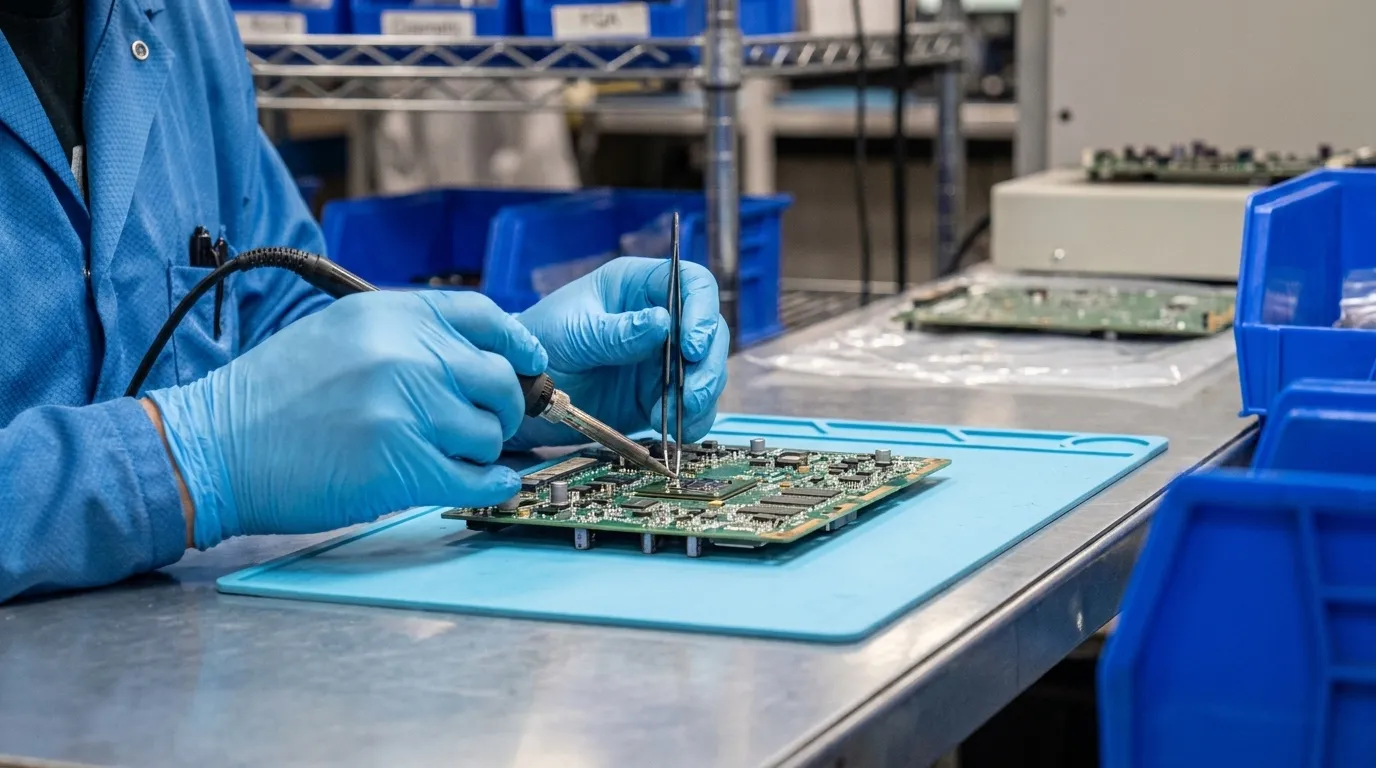
Hardware staging prepares physical endpoints before agency staff receive them. Typical deployments cover laptops, workstations, tablets, mobile devices, and peripherals. Staging includes imaging, BIOS configuration, asset tagging, serialization, kitting, and direct distribution to field locations.

CMMC treats any device that processes, stores, transmits, or protects Controlled Unclassified Information as an endpoint. That definition requires consistent baseline enforcement across every device class instead of user-by-user setup.
Premier Logitech brings imaging, custom asset tagging, SIM and IMEI pairing, software installation, BOM-based kitting, and direct-to-agency distribution into a single procurement vehicle. That consolidation reduces coordination overhead across vendors and allows Premier Logitech to stage endpoints at scale without fragmenting the supply chain.

Get a staging plan tailored to the agency’s deployment timeline and compliance requirements.
Staging prepares the physical device, but deployment readiness requires more than imaging and asset tags. Every endpoint must meet documented security baselines before it reaches a user.
2. NIST Baseline Hardening for Government
Baseline hardening defines and enforces a documented security configuration for every system throughout its life. Federal systems apply approved baselines such as the United States Government Configuration Baseline, DISA STIGs, or CIS Benchmarks, with deviations documented, justified, and approved under NIST SP 800-128.
NIST SP 800-171 Rev 2 requirement CM.L2-3.4.1 calls for baseline configurations and inventories of organizational systems across the development lifecycle. CM.L2-3.4.2 builds on that foundation by requiring security configuration settings for all IT products used in those systems. Together, these controls connect asset inventories to hardened configurations.
These configuration requirements intersect with several compliance frameworks that procurement teams manage at the same time. The matrix below shows how each framework addresses configuration, where obligations overlap, and where they differ.
|
Framework |
Governing Body |
Key Configuration Requirement |
Reference |
|---|---|---|---|
|
NIST SP 800-171 / CMMC |
DoD / NIST |
Baseline configuration, least functionality, change control |
|
|
FedRAMP (CM-6, CM-2) |
GSA / OMB |
Hardened images, monthly vulnerability scans, POA&M tracking |
|
|
TAA (Trade Agreements Act) |
GSA |
Products manufactured or substantially transformed in TAA-designated countries |
|
|
SOC 2 / ISO 9001 & 14001 |
AICPA / ISO |
Change management documentation, asset lifecycle controls |
Premier Logitech holds TAA, TAPA, ISO, NIST, CMMC, and SOC 2 certifications and aligns configuration work with each framework. Agencies avoid managing separate compliance relationships for staging, hardening, and lifecycle services.

3. Cloud Configuration and FedRAMP ATO
FedRAMP requires cloud service providers to maintain secure configuration baselines and validate final configurations against controls such as CM-6, SC-2, SC-3, SC-4, SC-6, SC-28, and SC-39. FedRAMP 2026 rules add that providers must select a FedRAMP Certification Profile and apply all relevant FedRAMP Practices across the full cloud service.
Agencies procure cloud configuration services through established contract vehicles, and the sequence of steps affects both compliance and schedule. Skipping data categorization or issuing a request for quote before confirming FedRAMP Marketplace status can delay or invalidate a procurement. The six-step process below reflects the most common federal and SLED path and highlights where delays often appear.
-
Define requirements and categorize data sensitivity using NIST FIPS Publication 199.
-
Search the FedRAMP Marketplace for authorized or FedRAMP Ready offerings at the required impact level.
-
Identify the appropriate contract vehicle, such as GSA MAS IT, NASA SEWP, NASPO ValuePoint, or a state cooperative schedule.
-
Issue a task order or request for quote against the pre-competed vehicle to avoid a full FAR Part 15 competition.
-
Evaluate proposals against NIST SP 800-53 controls, past performance, and certifications such as SOC 2 Type II or CMMC.
-
Award and execute with continuous monitoring requirements written into the performance work statement.
GSA MAS contracts serve federal agencies directly and extend to state, local, and tribal governments for eligible items through Cooperative Purchasing. NASPO ValuePoint, Sourcewell, OMNIA Partners, and GSA MAS extended to SLED provide widely used cooperative purchasing paths for state and local agencies. These vehicles align with the six-step process by supplying pre-competed options at step three.
Premier Logitech supports cloud-based and connected configuration, modern provisioning, and device imaging through GSA and cooperative schedules. Procurement teams gain a single pre-vetted source for both hardware and cloud configuration work.
4. Endpoint Management and Security Baseline Enforcement
Endpoint management connects configuration to daily operations across the asset lifecycle. CMMC patch management requires operating system updates, application patches, and firmware fixes with documented cycles and remediation tracking. These records give assessors evidence of repeatable vulnerability correction.
Lifecycle integration extends that discipline beyond initial deployment. IT asset recovery practices link asset records and configuration history to repair, refurbishment, recovery, and final secure disposition, supporting frameworks such as NIST, ISO, and GDPR.
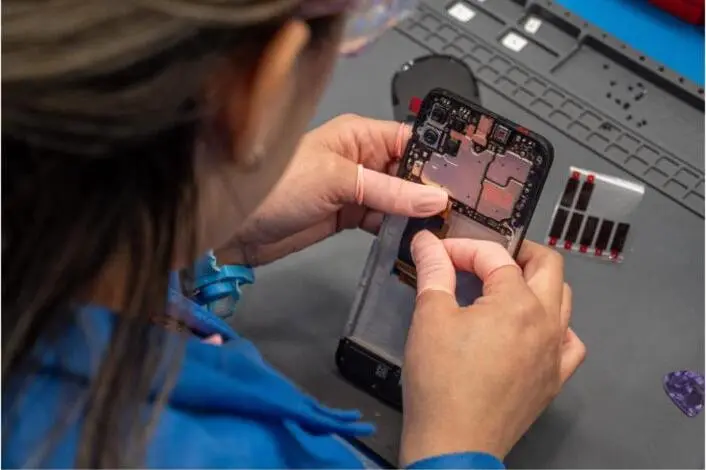
Premier Logitech manages this continuum through depot repair at Levels 1 through 4, rapid exchange programs, secure data destruction, and responsible recycling. All services operate within the same program as initial configuration and staging. Agencies gain end-to-end visibility without coordinating separate vendors for repair, recovery, and disposition.

See how integrated endpoint management can reduce vendor overhead for complex programs.
That level of lifecycle integration remains uncommon across the market. Many agencies still manage configuration, repair, and disposal through separate contracts, which increases complexity. Procurement teams need clear criteria to identify providers that deliver true lifecycle consolidation instead of marketing claims.
5. Vendor Selection Criteria for Government Configuration Services
Procurement officers benefit from a structured framework when evaluating configuration service providers. Effective frameworks address compliance evidence, technical capability, and operational readiness. A layered evaluation approach begins with third-party evidence such as FedRAMP or SOC 2 reports, then adds control-specific questionnaires and ongoing monitoring for service-specific risks. Each layer supports one dimension of the framework.
The following buyer checklist translates that structure into practical evaluation steps for government configuration partners.
-
Verify TAA compliance and confirm that the provider holds a CAGE Code for federal procurement eligibility.
-
Confirm active certifications such as CMMC, SOC 2 Type II, ISO 27001, or FedRAMP Ready status from an accredited 3PAO.
-
Review evidence of NIST SP 800-70 National Checklist Program adoption and SCAP automation capability.
-
Confirm that the provider operates under an approved contract vehicle such as GSA MAS IT or NASPO ValuePoint to reduce sole-source risk.
-
Assess lifecycle integration and confirm that configuration, repair, recovery, and recycling operate within a single service program.
-
Evaluate past performance with federal or SLED agencies of similar size and security posture.
-
Confirm OEM authorization status so that repair and configuration activities preserve warranties.
Premier Logitech satisfies each criterion with the certifications detailed earlier, OEM Authorized Service Center relationships, and CAGE Code 4WAJ9 status.
Meeting vendor selection criteria forms a strong foundation, but deployment still presents operational challenges. Recognizing those challenges in advance helps procurement teams write performance work statements that address common failure points.
6. Common Deployment Challenges and Proven Solutions
The U.S. government spends more than $100 billion each year on information technology, with most funding directed to legacy systems. That focus limits capacity for new deployments and increases the risk of configuration drift during transitions.
The list below summarizes frequent deployment challenges and practical responses.
-
Fragmented vendor relationships: Multiple providers for sourcing, staging, repair, and recycling increase coordination effort and create compliance gaps. A single lifecycle partner through one contract simplifies oversight and reduces the chance of missed controls.
-
Configuration drift: Undocumented changes create control gaps that can fail assessments. Automated baseline enforcement and continuous monitoring tools such as MECM, Ansible, and Qualys detect and correct drift before audits.
-
Compressed sourcing timelines: Infrastructure Investment and Jobs Act grant deadlines compress sourcing cycles and favor catalog-based solutions. Cooperative contract vehicles and pre-staged inventory shorten the time from award to deployment.
-
Compliance cost uplift: Frameworks such as CMMC increase managed services costs through audit preparation, documentation, and continuous monitoring. Consolidating compliance activities with one certified partner reduces duplicated audit work.
-
Secure disposition gaps: Secure disposition requires NIST SP 800-88 data sanitization methods, destruction certificates tied to serial numbers, and full chain-of-custody records. Premier Logitech includes certified data destruction and recycling within the same lifecycle program that manages configuration and repair.
Frequently Asked Questions
What technology does the government use for endpoint configuration?
Federal and SLED agencies deploy workstations, laptops, tablets, mobile phones, and operational technology devices. Configuration typically follows DISA STIGs, CIS Benchmarks, or the United States Government Configuration Baseline. Common enforcement and verification tools include Microsoft Endpoint Configuration Manager, Ansible, Puppet, Chef, AppLocker, and SCAP-validated scanners such as Qualys or Tenable. Premier Logitech supports device imaging, BIOS configuration, software installation, and asset tagging across these device classes as part of its configuration and fulfillment services.
Does the federal government use AWS for cloud deployments?
Federal agencies use several cloud providers, including AWS GovCloud, Microsoft Azure Government, and Google Public Sector, based on mission needs and data sensitivity. Any cloud service that processes federal data must hold a FedRAMP authorization at the appropriate impact level of Low, Moderate, or High. FedRAMP 2026 rules, described earlier in this guide, require providers to apply relevant FedRAMP Practices across the full service and appear in the FedRAMP Marketplace before certification. Premier Logitech supports connected configuration and modern cloud-based provisioning that integrates with agency-selected FedRAMP-authorized environments.
What is the difference between FedRAMP Ready and FedRAMP Authorized?
FedRAMP Ready indicates that an accredited Third Party Assessment Organization has reviewed a cloud service offering’s security capabilities and produced a Readiness Assessment Report accepted by FedRAMP. This status signals a strong path toward full authorization but does not grant reuse. FedRAMP Authorized means the cloud service offering has completed the full certification process and is available for government-wide reuse with established security documentation. Procurement officers should confirm the specific designation instead of relying on informal claims such as “FedRAMP compliant” or “FedRAMP equivalent,” which have no official standing.
How do government agencies manage IT assets from configuration through disposal?
Government IT asset lifecycle management follows a defined sequence: planning and procurement, deployment with configuration and tagging, operation and maintenance, and retirement with secure data destruction and recycling or refurbishment. NIST SP 800-88 provides the primary guidance for data sanitization at disposal, and chain-of-custody documentation must remain intact throughout. Premier Logitech manages each stage, from TAA-compliant sourcing and hardware staging through depot repair, secure data wipe, and responsible recycling, within a single lifecycle program that produces auditable records.
What contract vehicles can SLED agencies use to procure configuration services?
State, local, and education agencies can access several procurement paths. GSA MAS IT extends Cooperative Purchasing eligibility to SLED buyers for qualifying items. NASPO ValuePoint, Sourcewell, and OMNIA Partners offer nationally competed cooperative contracts that satisfy most state competitive bidding rules. NASA SEWP V provides an assisted acquisition model that connects SLED agencies with pre-vetted federal vendors. These cooperative vehicles remove the need for standalone competitive solicitations and shorten procurement cycles while maintaining compliance with state codes. Premier Logitech is available through GSA and cooperative schedules, giving SLED procurement officers a pre-vetted, CAGE-coded partner without a new full-and-open competition.
Conclusion: A Practical Evaluation Framework for Configuration Partners
Government procurement and IT leaders face consistent pressures that shape configuration decisions. Fragmented vendor relationships, overlapping compliance obligations across NIST, FedRAMP, CMMC, and TAA, and the operational burden of managing assets from staging through secure disposal all draw from the same root cause. Multiple vendors across the lifecycle increase complexity and risk.
The evaluation framework in this guide reduces those pressures to one central decision point. The key question is whether a provider can deliver TAA-compliant sourcing, NIST-aligned configuration, and full-lifecycle support through a single pre-vetted contract.
Premier Logitech meets that standard as a CAGE Code 4WAJ9 partner with the compliance certifications outlined in Section 2, OEM authorization across multiple brands, and operational capacity that scales from individual agency projects to large federal programs. Configuration, repair, recovery, and recycling operate within one agreement, one point of contact, and one coordinated compliance approach.
