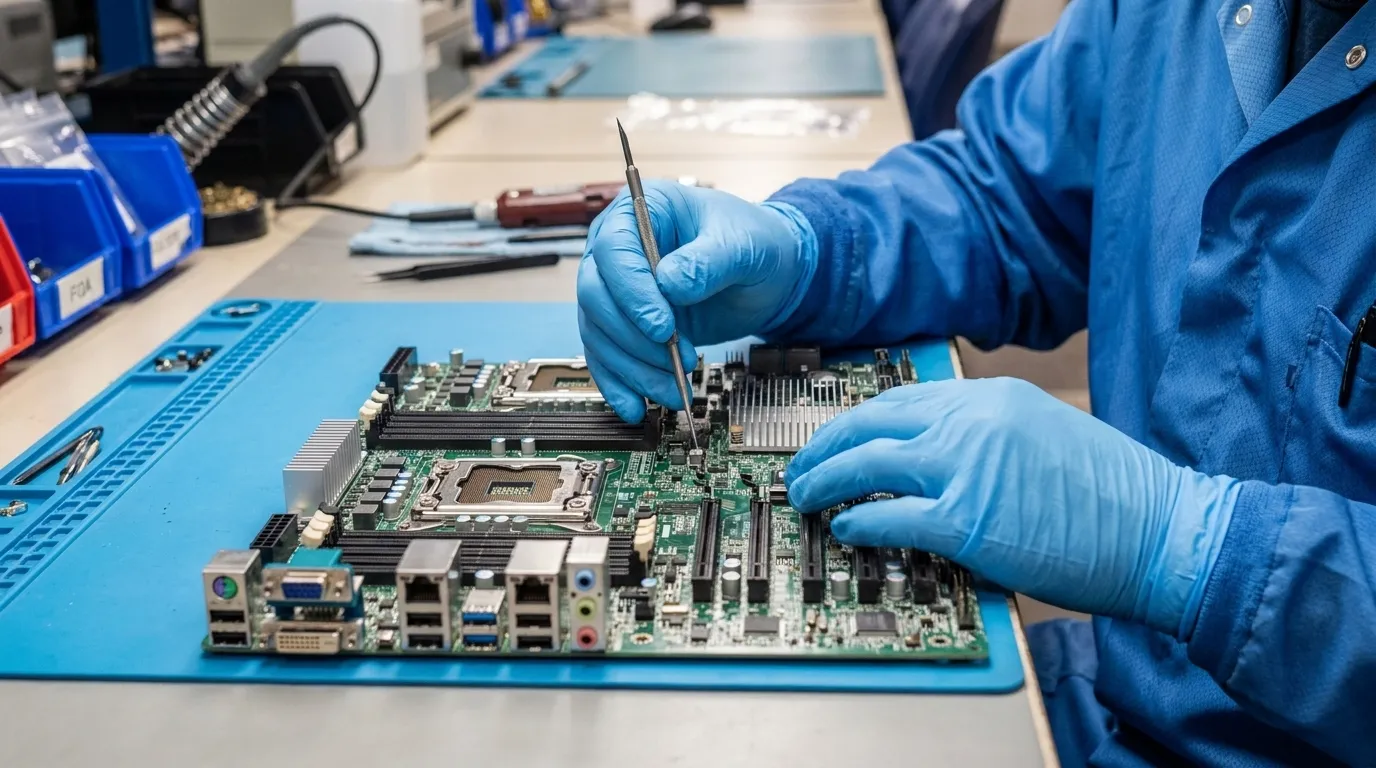
Key Takeaways for 2026 Configuration Compliance
- Government IT configuration services establish secure hardware and software baselines mapped to NIST SP 800-53, FedRAMP Rev 5, USGCB and DISA STIG requirements.
- The five pillars of configuration management translate into a five-stage lifecycle from planning through secure disposal.
- USGCB and DISA STIGs serve as primary approved sources for baseline configurations, with FedRAMP Rev 5 requiring documented use and justified deviations.
- Premier Logitech delivers TAA-compliant sourcing, STIG-aligned imaging, asset tagging, chain-of-custody logistics and CMDB integration that satisfy CM-02, CM-08 and CA-07 controls.
- Agencies can map 2026 compliance requirements to a documented execution plan with a Premier Logitech lifecycle expert.
Five Configuration Pillars and the Lifecycle Stages That Implement Them
The five pillars of configuration management provide the structural foundation for a defensible program.
- Identification — Define which system components are configuration items. A civilian agency catalogs every endpoint, server and network device under CM-08.
- Baseline establishment — Document approved secure configurations per CM-02. A DoD component uses DISA STIGs as the baseline source.
- Change control — Review, approve and record all changes per CM-03. A state Medicaid agency routes every patch through a Change Advisory Board before deployment.
- Status accounting — Maintain a current, auditable record of configuration item status. A federal health agency tracks firmware versions in its CMDB against CM-08(04) accountability requirements.
- Verification and audit — Confirm deployed configurations match approved baselines. An IRS system owner runs automated scans per CM-06(01) to detect drift before an OIG review.
The five stages of the configuration management process translate those pillars into an operational sequence. Each stage applies one or more pillars across the hardware lifecycle.
- Planning and procurement — Agencies define lifecycle roles, TAA sourcing requirements and baseline standards before acquisition begins. This work establishes the foundation for identification and baseline establishment.
- Deployment and configuration — Hardware receives imaging, BIOS hardening, asset tagging and an initial software load at a secure staging facility before field delivery. This stage implements the approved baselines defined during planning.
- Maintenance and monitoring — Patch cycles, hardware diagnostics and continuous monitoring per NIST IR 8011 Volume 1 Rev 1 detect configuration drift between assessment cycles. These activities support change control and verification.
- Refresh and replacement — Aging assets are swapped against a rolling refresh calendar tied to vendor support end dates and performance telemetry. This process maintains accurate status accounting as components age out.
- Retirement and secure disposal — Data wiping or physical destruction, formal CMDB removal and issuance of a disposal certificate close the chain-of-custody record. This step completes verification and preserves the audit trail.
Map these five stages to an execution plan with a Premier Logitech lifecycle expert.
USGCB and STIG Baselines for Federal Configuration Programs
The five-stage process depends on approved baseline configurations that define secure settings for each component. The United States Government Configuration Baseline (USGCB) and DISA Security Technical Implementation Guides (STIGs) provide those approved secure configurations for federal systems. NIST recommends that system-level configuration management plans document the use of USGCB, DISA STIGs and the National Checklist Program as the basis for approved baseline configurations, along with any justified deviations.
FedRAMP Moderate and High baselines require service providers to use DoD STIGs to establish configuration settings. CIS Level 2 guidelines apply only when STIGs are unavailable. Custom baselines apply only when CIS is unavailable and must be documented and validated during independent assessment.
Premier Logitech configuration and fulfillment services apply STIG-aligned BIOS settings, software loads and imaging profiles at the staging facility before devices ship. Every unit receives asset tagging, serialization and a documented configuration record that supports CM-02 baseline evidence requirements.
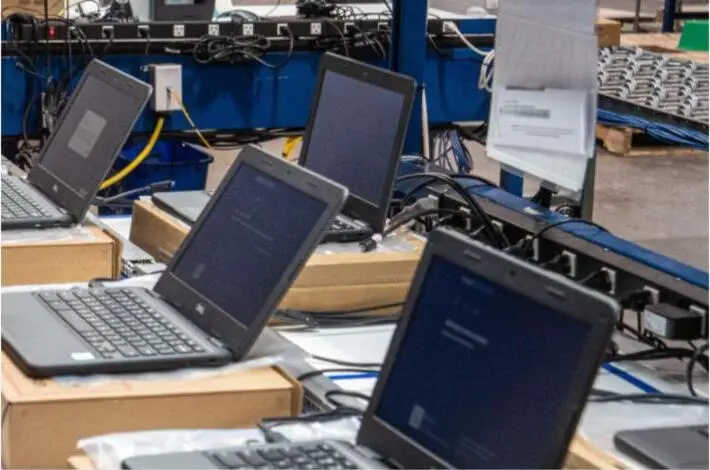
FedRAMP Rev 5 Configuration Controls That Shape 2026 Programs
FedRAMP Rev 5 control reference contains 1,014 active controls across 20 families. The underlying catalog is NIST SP 800-53 Release 5.2.0, published August 27, 2025, and the FedRAMP OSCAL catalog was last modified May 11, 2026.
Key 2026 CM-family requirements agencies must address include the following controls.
- CM-08 — Develop and document a system component inventory that accurately reflects the system, includes every component without duplication and is maintained at the granularity needed for tracking and reporting.
- CM-11 — Enforce policies on user-installed software and monitor compliance continuously via CM-7(5), with FedRAMP setting the monitoring frequency to “Continuously.”
- CM-14 — Prevent installation of software and firmware unless the component carries a digitally signed certificate recognized by the organization, or an alternative cryptographic integrity check such as a hash is used when signatures are unavailable.
- RFC-0027 (March 2026) — Updates CM-6(a) to require Security Configuration Guidelines covering how to securely access, configure, operate and decommission top-level administrative accounts in cloud service offerings.
FedRAMP Rev 5 Class D certification requires providers to obtain certification by January 1, 2027, with a grace period ending at the first independent assessment started after that date. Agencies sourcing cloud-hosted configuration tooling must confirm their providers remain on track.
Hardware and Software Kitting and Imaging That Apply Baselines
The CM-family controls and FedRAMP requirements remain abstract until applied to physical hardware. Secure imaging and kitting translate baseline documentation into devices that arrive field ready. Premier Logitech DFW staging facilities implement the STIG-aligned process described above, adding SIM and IMEI pairing for mobile devices, custom asset tagging and serialization to the baseline BIOS and imaging workflow. This pre-deployment hardening reduces field handling and maintains a documented path from staging to end user.

A modern government IT statement of work requires vendors to demonstrate TAA country-of-origin compliance, component-level integrity verification at receiving, a tamper-evident and auditable logistics path and firmware and platform integrity checks rooted in hardware. Premier Logitech configuration workflows address each requirement with documented chain-of-custody records that support ATO evidence packages.
NIST SP 800-70 Revision 5, released May 8, 2026, enhances mapping between checklist settings, NIST CSF 2.0 outcomes, SP 800-53 controls and CCE identifiers to support evidence-ready automation and reporting. Premier Logitech imaging processes align with SP 800-70r5 checklist formats for stand-alone, managed and specialized security-limited environments.
CMDB and Continuous-Monitoring Requirements for Asset Data
A March 2026 CIGIE report reviewing 35 OIG and GAO reports identified configuration management as one of six best-practice themes for cloud-based systems. The report recommends that agencies establish and maintain baseline configurations and a complete, accurate asset inventory as core elements of effective configuration management.
The monthly CM-8(b) reporting cadence established by RFC-0027 demands granular, near real-time asset data. Premier Logitech asset management capabilities, including inventory reporting that captures CM-08 data elements, device traceability that maintains chain-of-custody records and lifecycle tracking from receiving through retirement that supports status accounting, feed the data agencies need to satisfy CM-08 and CA-07 continuous monitoring requirements.
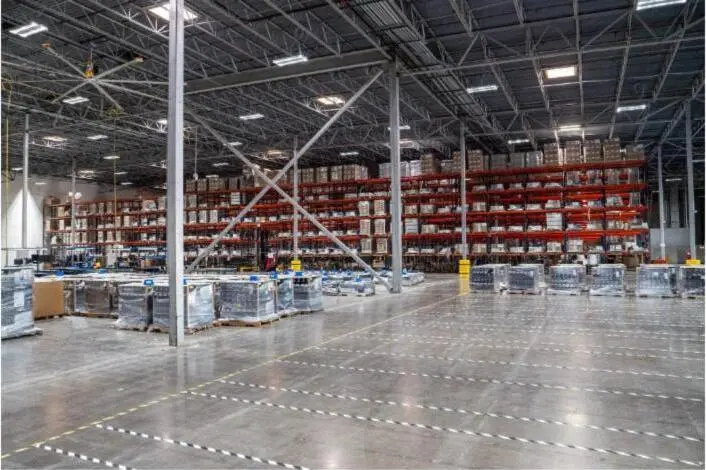
TAA-Compliant Sourcing and Secure Deployment Logistics
The Trade Agreements Act, implemented through FAR Subpart 25.4, restricts the federal government from acquiring products that do not originate from the United States or from designated countries. TAA compliance is determined by where a product was substantially transformed, not by the brand headquarters country. Procuring TAA-non-compliant products on a federal contract can result in mandatory replacement at contractor cost, contract termination for default and False Claims Act exposure with treble damages.
Premier Logitech holds CAGE Code 4WAJ9 as a pre-vetted federal partner and sources hardware through TAA-compliant channels with written country-of-origin declarations tied to specific part numbers. A defensible compliance program requires a supply-chain audit mapping all components to countries of origin, supplier agreements requiring TAA certifications and documentation of certificates of origin and substantial-transformation analyses. Premier Logitech maintains that documentation as part of every government sourcing engagement.
Deployment follows a tamper-evident logistics path. Staged and imaged units ship with chain-of-custody records, white-glove delivery options and asset tracking through Premier Logitech Transportation Management System across a network of vetted North American carriers.

2026 Configuration Compliance Checklist and Vendor Scorecard
Agencies preparing for a 2026 configuration services engagement or ATO renewal should verify the following items.
- CM-02 baseline configurations documented and tied to STIG or USGCB profiles
- CM-03 change control board established with defined approval and documentation workflows
- CM-08 system component inventory maintained at required data-element granularity
- CM-06 Security Configuration Guidelines updated per RFC-0027 requirements
- CM-14 signed-component policy enforced for all firmware and software installations
- CM-11 user-installed software monitored continuously via CM-7(5)
- TAA country-of-origin documentation retained in the contract file for every SKU
- Chain-of-custody records covering staging, transport and deployment
- CMDB updated at receiving and retirement per CM-08(01) and CM-08(04)
- Continuous monitoring strategy documented per CA-07 and aligned to FedRAMP CCM rules
Walk through this compliance checklist with a Premier Logitech expert to identify program gaps.
How Premier Logitech Executes Key Configuration Controls
Premier Logitech delivers a single-source execution path across every control area covered in this guide.
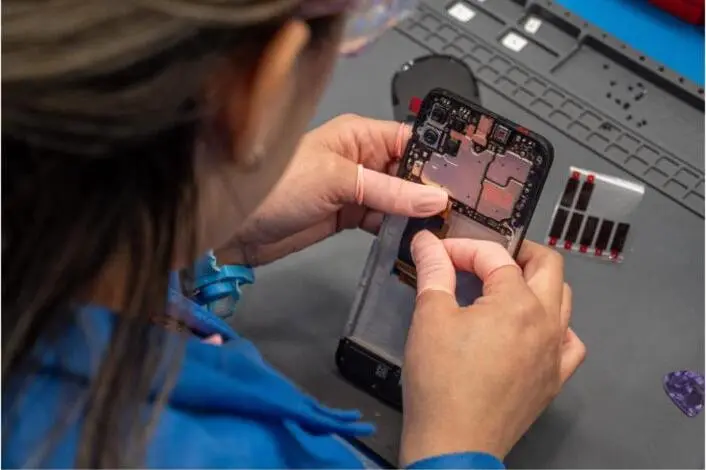
- Sourcing (CM-02, TAA) — TAA-compliant hardware procurement with written origin declarations and contract-file documentation.
- Imaging and BIOS configuration (CM-06, CM-14) — STIG-aligned imaging, BIOS hardening and signed-component verification applied at staging before shipment.
- Kitting and asset tagging (CM-08) — BOM-based kitting, custom labeling, serialization and asset tagging that populate inventory records at the point of configuration.
- Deployment and chain-of-custody (CM-05, C-SCRM) — Tamper-evident packaging, TMS-tracked transport and white-glove delivery with auditable chain-of-custody records.
- CMDB and continuous monitoring (CM-08, CA-07) — Inventory reporting, device traceability and lifecycle analytics that feed agency CMDB and continuous monitoring programs.
- Asset recovery and secure disposal (CM-08(01)) — Secure data wipe, responsible recycling and formal CMDB removal with disposal certificates that close the chain-of-custody record.
Premier Logitech holds certifications across TAA, TAPA, ISO quality frameworks, NIST, CMMC and SOC 2 and operates as both a single-source lifecycle partner and a modular services provider for agencies that need to engage one service at a time.
Conclusion: Building an Audit-Ready Configuration Program
Fragmented configuration services create the audit findings that OIG and GAO reports have consistently flagged across federal cloud environments. The 2026 FedRAMP Rev 5 CM-family requirements, NIST SP 800-53 Rev 5.2.0 and updated SP 800-70r5 checklist guidance collectively raise expectations for documented, automated and continuously monitored configuration programs.
Agencies that map sourcing, imaging, kitting, deployment and asset recovery to a single TAA-compliant partner reduce the compliance gaps that emerge when those functions are split across multiple vendors with no shared chain-of-custody record. The scorecard above helps evaluate current vendors against the criteria that matter most for an audit-ready program.
Frequently Asked Questions
What makes a government IT configuration services provider TAA compliant?
TAA compliance requires that every end product delivered under a covered federal contract originates from the United States or a designated trade-partner country through substantial transformation. A compliant provider maintains written country-of-origin declarations tied to specific part numbers, not just model families. The provider also retains certificates of origin and substantial-transformation analyses in an audit-ready format. Verbal assurances and marketing claims such as “designed in USA” do not satisfy TAA requirements. Agencies confirm that the exact SKU on a quote matches the compliance evidence provided and that provider documentation covers the full supply chain, not just the finished product.
How do DISA STIGs and USGCB baselines apply to hardware imaging and kitting?
DISA STIGs provide prescriptive configuration settings for operating systems, applications and hardware components used in federal environments. USGCB establishes baseline security settings for common desktop and laptop configurations. Both serve as the approved source for CM-02 baseline configurations under NIST SP 800-53 and FedRAMP Rev 5. In practice, a configuration services provider applies STIG-aligned BIOS settings, OS images and software loads to devices at a secure staging facility before shipment. Each unit receives asset tagging and a configuration record that documents which STIG version and profile was applied, any justified deviations and the technician and date of configuration. That documentation becomes part of the ATO evidence package and supports CM-06 and CM-08 audit requirements.
What continuous monitoring requirements apply to configuration management under FedRAMP Rev 5 in 2026?
FedRAMP Rev 5 sets the monitoring frequency for user-installed software under CM-11 to “Continuously” via CM-7(5). For system component inventory under CM-08, providers following traditional Rev 5 processes submit inventory reports at least monthly, while those participating in the Vulnerability Detection and Response or Collaborative Continuous Monitoring Balance Improvement Release tracks may shift to automated, continuous evidence collection. The 2026 RFC-0027 updates also require Security Configuration Guidelines under CM-6(a) that document how to securely access, configure, operate and decommission top-level administrative accounts. Agencies develop a system-level continuous monitoring strategy under CA-07 that covers metrics, frequencies, ongoing assessments, correlation, response actions and reporting aligned to FedRAMP Continuous Collaborative Monitoring rules.
What data elements must a federal system component inventory include to satisfy CM-08?
A CM-08-compliant inventory captures the unique identifier and serial number, system affiliation, component type, manufacturer and model, operating system version with CPE name, virtual machine status, application versions with CPE name, physical and logical locations, MAC address, owner, operational status, primary and secondary administrators and primary user for each component. The inventory accurately reflects the current system, includes every component without duplication and is maintained at the granularity needed for tracking and reporting. FedRAMP guidance directs organizations to follow Continuous Collaborative Monitoring and Vulnerability Detection and Response rules for CM-08 reporting cadence, with the specific track determining whether monthly spreadsheet submissions or automated continuous reporting applies.
Can an agency engage Premier Logitech for a single lifecycle stage rather than the full program?
Premier Logitech operates as both a single-source lifecycle partner and a modular services provider. Agencies can engage for end-to-end program management covering sourcing, imaging, kitting, deployment, asset management and secure disposal, or select individual services such as configuration and fulfillment, warehousing and inventory management or transportation on a standalone basis. This modular structure allows agencies to address a specific compliance gap, such as TAA-compliant sourcing or CMDB-integrated asset tagging, without restructuring an existing lifecycle program. Premier Logitech teams work with agency IT directors and procurement officers to scope engagements that align with current contract vehicles and compliance timelines.
