
Key Takeaways for Government Hardware Rollouts
- Fragmented hardware rollouts create audit risk, supply chain gaps and operational delays that can stall an agency’s Authority to Operate.
- Premier Logitech’s government IT deployment services cover every phase of a secure, multi-site rollout, from TAA-compliant sourcing through post-deployment asset recovery, while generating documentation auditors require under NIST 800-53, CMMC and FISMA.
- The eight-step compliance checklist maps each deployment phase to specific compliance artifacts auditors examine under NIST SP 800-53, TAA, CMMC and FISMA.
- Selecting a single-source partner reduces audit risk by consolidating documentation under one chain of custody, with evaluation criteria that include CAGE code registration, certifications and multi-facility staging capacity.
- Start building a compliant, auditable deployment program with Premier Logitech
Scope of Government IT Deployment Services
Government IT deployment services cover sourcing, configuring, staging and installing compliant hardware across distributed agency sites. Each transfer point produces chain-of-custody documentation and compliance artifacts that satisfy federal and state audit requirements.

Multi-Site Government IT Deployment Checklist
The following eight steps break the deployment lifecycle into clear phases and link each phase to the compliance artifacts auditors review under NIST SP 800-53, TAA, CMMC and FISMA.
- Requirements gathering and CUI scope definition. Lock the Controlled Unclassified Information boundary before purchasing or deploying hardware. Expanding the assessment footprint after procurement increases CMMC certification costs and complexity. Artifacts: system boundary diagram, data flow map, CUI category register.
- TAA-compliant sourcing and provenance documentation. Obtain a Manufacturer’s Certificate of Compliance before issuing a purchase order. TAA compliance requirements apply to most federal IT hardware acquisitions above the micro-purchase threshold under FAR Subpart 25.4. Artifacts: certificates of compliance, country-of-origin records, vendor TAA attestations.
- Secure kitting and imaging. Image devices to agency-approved baselines and apply BIOS configurations in a controlled staging environment. NIST SP 800-53 SC-41 requires a documented inventory of ports and devices plus version-controlled configuration baselines that enforce restrictions before systems enter production use. Artifacts: imaging runbooks, BIOS configuration exports, SC-41 port restriction records.
- Asset tagging and serialization. Attach human-readable impact-level markings and unique identifiers before devices leave the staging facility. NIST SP 800-53 PE-22 recommends integrating component marking into the hardware provisioning workflow so new devices receive markings before deployment. Artifacts: asset tag register, PE-22 marking procedures, hardware component inventory.
- Chain-of-custody transfer documentation. Record every custody transfer with signed log entries and hash verification. NIST SP 800-53 SR-4 requires ownership and custody chain records documenting the chronological history of transfers, location changes and modifications to critical system components. Artifacts: signed transfer logs, SR-4 provenance records, inter-organizational transfer agreements.
- White-glove delivery and physical installation. Execute site delivery through a Transportation Management System with access-logged installation windows. Undocumented or unlabeled network infrastructure creates immediate gaps in an agency’s System Security Plan that can delay ATO approval by months. Artifacts: delivery receipts, site installation logs, as-built network drawings.
- Post-deployment inventory reconciliation. Update the system component inventory immediately after installation to keep records aligned with the live environment. NIST SP 800-53 CM-8 calls for updating the system component inventory during installations, removals and system updates. Artifacts: updated CM-8 inventory, reconciliation sign-off, lifecycle status records.
- Asset recovery and secure data destruction. Retrieve retired hardware through a documented reverse logistics process with certified data wipe records. SC-41 requires periodic validation of port and peripheral states and audit logs confirming restrictions remain enforced before assets are redeployed or stored. Artifacts: data destruction certificates, ITAD disposition records, updated asset inventory.
Map rollout plans to these deployment compliance artifacts
FedRAMP and TAA Requirements in Hardware Rollouts
FedRAMP governs cloud service authorization and applies to software and platform environments, not physical hardware. TAA governs the country of origin for tangible products procured with federal funds. These frameworks cover different layers of a deployment and operate in parallel.
TAA compliance requires that end products be manufactured or substantially transformed in a designated country. Procurement officers must request a Manufacturer’s Certificate of Compliance from vendors before issuing a purchase order, and this documentation must be collected and retained before the order is finalized. When a deployment includes cloud-managed device provisioning, FedRAMP-authorized platforms may govern the software layer while TAA governs the physical hardware.
Chain-of-custody documentation connects both frameworks. A hardware deployment partner maintains provenance records that satisfy TAA country-of-origin requirements and support supply chain risk management controls, particularly SR-4, that FedRAMP-adjacent audits review.
NIST 800-53 and FISMA Controls in Hardware Deployment
FISMA requires agencies to implement NIST SP 800-53 controls across all federal information systems, including the physical hardware that supports them. Four control families directly shape deployment workflows.
PE (Physical and Environmental Protection) governs physical access to hardware during installation and storage. NIST SP 800-53 PE-3 requires access-logged entry points and physical segregation of sensitive processing areas. White-glove delivery with documented installation windows provides PE access-control evidence.

CM-8 (System Component Inventory) requires an accurate, current inventory updated at every installation and removal. NIST SP 800-53 Rev. 5 CM-8 ties configuration management to a system component inventory that asset tagging supports.
SR-4 (Provenance) requires documented origin, ownership chain and integrity verification for every component. SR-4 mandates inter-organizational transfer agreements that specify provenance documentation requirements, transfer procedures and integrity verification obligations for vendors and partners.
SC-41 (Port and I/O Device Access) requires that designated ports be disabled or removed before systems enter production. Auditors assess SC-41 compliance by comparing documented port restriction policies against live configuration exports from endpoint management consoles. Imaging workflows generate these exports as deployment artifacts.
Criteria for Selecting a TAA-Compliant Deployment Partner
Single-source partners reduce audit risk by consolidating documentation under one chain of custody. Evaluation criteria fall into three groups: federal eligibility, compliance credentials and operational capacity.

- CAGE code registration. A CAGE code confirms the vendor is pre-vetted for federal engagement. Premier Logitech holds CAGE code 4WAJ9.
- Certifications. The partner should hold ISO 9001, ISO 14001, NIST alignment, CMMC readiness and SOC 2 credentials. Agencies should request specific evidence of NIST control implementation, such as configuration baselines, endpoint management screenshots and exception management records, rather than general compliance statements.
- ASC-authorized repair network. An Authorized Service Center designation from OEMs ensures warranty-compliant repair and reduces supply chain substitution risk during post-deployment recovery.
- TMS-enabled logistics. A Transportation Management System provides real-time tracking and freight audit records that support PE and SR-4 evidence requirements.
- Multi-facility staging capacity. Distributed staging facilities reduce transit risk and support parallel-wave delivery across multi-site rollouts. Premier Logitech operates three DFW facilities with nearshore support.
- End-to-end service scope. The partner covers sourcing, kitting, imaging, white-glove delivery and asset recovery under a single program to eliminate custody gaps between vendors.
Evaluate Premier Logitech against these deployment criteria
Premier Logitech Certifications That Reduce Audit Risk
Premier Logitech’s compliance credentials align with the artifacts auditors request during hardware deployment reviews and support consistent evidence across programs.
- CAGE Code 4WAJ9 identifies Premier Logitech as a pre-vetted federal partner and appears on contract documentation and chain-of-custody records.
- TAA-compliant sourcing relies on country-of-origin documentation and vendor attestations that satisfy FAR Subpart 25.4 requirements and support SR-4 provenance records.
- ISO 9001 / ISO 14001 quality and environmental management certifications support SOC 2 and NIST audit evidence packages and demonstrate process control across kitting, imaging and recovery operations.
- NIST SP 800-53 alignment maps operational procedures to CM-8, SR-4, PE and SC-41 controls, producing artifacts that satisfy FISMA documentation requirements.
- CMMC readiness reflects deployment workflows that support NIST SP 800-171 Rev. 2 control evidence collection embedded in staging and delivery processes. Following the July 13, 2026 suspension of CMMC Phase 2, DFARS 252.204-7012 and Phase 1 self-assessment requirements remain fully in effect.
- SOC 2 third-party audit coverage of security, availability and confidentiality controls supports agency risk assessments and vendor evaluation packages.
- ASC authorization for 20+ OEM brands ensures repair and recovery activities meet OEM standards and do not void warranties or introduce unapproved components.
Contract Vehicles for Government IT Hardware Deployment
Three contract vehicles cover most federal IT hardware and deployment service acquisitions. Each vehicle has distinct scope, fee structures and eligibility rules that shape how a lifecycle partner can be engaged.
GSA Multiple Award Schedule (MAS) provides a broad vendor pool and product coverage for IT hardware and services. GSA Schedule is available to all federal agencies plus state and local governments under the Cooperative Purchasing program. Procurement officers compare at least three vendors and document market research. The GSA industrial funding fee is 0.75%.
NASA SEWP V / SEWP VI suits high-value IT products with competitive pricing. NASA SEWP allows incidental services such as installation, configuration and maintenance to be bundled with product orders but does not cover pure professional services or staff augmentation. SEWP’s administrative fee is lower than GSA Schedule’s industrial funding fee. SEWP VI supports task orders across a 10-year ordering period.
Agency-specific IDIQs such as ITES-4H, ADMC 3 and 2GIT serve DoD and Army acquisitions with defense-specific terms and pre-vetted vendor pools. Defense and Army acquisitions often use purpose-built vehicles such as ITES-4H, ADMC 3 or 2GIT rather than GSA Schedule. These vehicles allow agencies to engage lifecycle partners with end-to-end deployment scope when the IDIQ terms permit bundled services.
Under FAR 15.101-1, a tradeoff process permits the government to accept other than the lowest-priced proposal when the perceived benefits of a higher-priced proposal merit the additional cost and the rationale is documented. This framework supports selection of a single-source lifecycle partner whose compliance documentation and end-to-end capabilities reduce audit risk and operational fragmentation.
Vendor-Evaluation Checklist for Single-Source Deployment Partners
The following checklist summarizes key requirements for a deployment partner supporting a multi-site government rollout.
- Holds a valid CAGE code and appears in SAM.gov as an active registrant
- Provides TAA-compliant sourcing with Manufacturer’s Certificates of Compliance for all hardware
- Maintains ISO 9001 and ISO 14001 certifications with current audit reports
- Demonstrates NIST SP 800-53 and CMMC alignment with control-specific evidence, not general attestations
- Holds SOC 2 Type II certification covering deployment and logistics operations
- Operates as an Authorized Service Center for the OEM brands included in the rollout
- Uses a Transportation Management System with real-time tracking and freight audit records
- Offers white-glove delivery with signed chain-of-custody documentation at every transfer point
- Provides imaging, BIOS configuration, asset tagging and serialization in a controlled staging environment
- Covers post-deployment asset recovery, secure data destruction and ITAD disposition reporting
- Operates multiple staging facilities to support parallel-wave multi-site delivery
- Delivers a single program manager and consolidated compliance documentation package
Conclusion: Reducing Audit Risk in Multi-Site Rollouts
Multi-site government hardware rollouts generate audit risk at every handoff point, including sourcing, staging, delivery and recovery. A single-source partner that produces compliance artifacts at each phase closes documentation gaps that fragmented vendor models create.
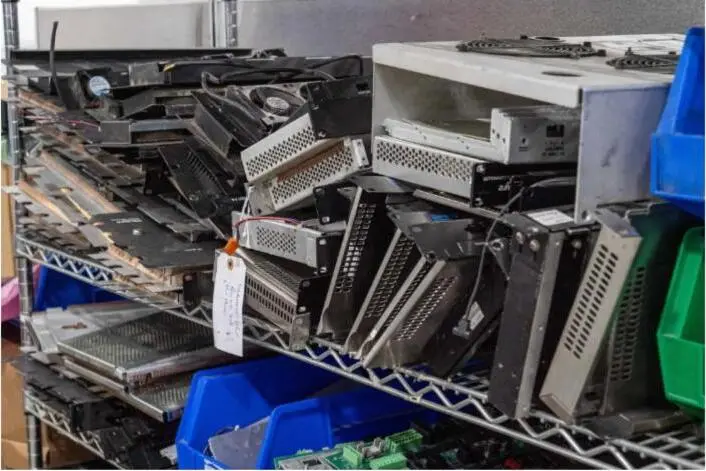
Premier Logitech’s end-to-end government IT deployment services cover TAA-compliant sourcing, secure kitting and imaging, TMS-enabled white-glove delivery and post-deployment asset recovery across three DFW facilities. All services operate under CAGE 4WAJ9 with ISO, NIST, CMMC and SOC 2 credentials that support audit readiness from day one.
Build a compliant, auditable deployment program
Frequently Asked Questions
What compliance frameworks does Premier Logitech support for government IT deployments?
Premier Logitech supports TAA, NIST SP 800-53, CMMC, FISMA, ISO 9001, ISO 14001, SOC 2 and TAPA. The company’s deployment workflows produce specific artifacts such as CM-8 inventory records, SR-4 provenance documentation, PE-22 marking procedures and SC-41 configuration baselines that auditors examine during hardware rollout reviews. CAGE Code 4WAJ9 identifies Premier Logitech as a pre-vetted federal partner across applicable contract vehicles.
How does Premier Logitech handle TAA compliance documentation during a multi-site rollout?
Premier Logitech sources hardware through trade-compliant procurement channels and collects Manufacturer’s Certificates of Compliance before any purchase order is finalized. Country-of-origin records remain part of the chain-of-custody package and stay available for audit review at each deployment phase. This documentation satisfies FAR Subpart 25.4 requirements and supports NIST SP 800-53 SR-4 provenance controls at the same time.
What is the current status of CMMC Phase 2 requirements and how does it affect hardware deployment planning?
On July 13, 2026, the Department of War suspended CMMC Phase 2 requirements, which rendered the original Nov. 10, 2026 date for mandatory Level 2 C3PAO assessments inoperative pending a 60-day program review. CMMC Phase 1 self-assessments, DFARS 252.204-7012 safeguarding obligations and SPRS score maintenance remain fully in effect. Hardware deployment planning still accounts for NIST SP 800-171 Rev. 2 controls, including asset inventory, secure staging and control evidence collection embedded in the deployment workflow, because these obligations operate independently of the suspended Phase 2 milestones.
Can Premier Logitech support both the deployment and post-deployment recovery phases of a government hardware program?
Premier Logitech covers the full lifecycle from sourcing through retirement. Post-deployment services include asset recovery, secure data destruction, ITAD disposition reporting and reverse logistics processing. All recovery activities run through ASC-authorized repair channels for applicable OEM brands, which preserves warranty compliance and removes unapproved component substitution risk. Disposition records serve as compliance artifacts that support CM-8 inventory updates and audit evidence packages.
Which contract vehicles can agencies use to engage Premier Logitech for end-to-end deployment services?
Agencies can engage Premier Logitech through GSA Multiple Award Schedule, which is available to federal, state and local governments, as well as NASA SEWP for product-focused acquisitions with bundled incidental services. Defense agencies may also use purpose-built vehicles such as ITES-4H or 2GIT where program terms permit end-to-end lifecycle scope. Premier Logitech’s team assists procurement officers in identifying the most appropriate vehicle for a program’s scope, timeline and compliance requirements.
