
Last updated: August 25, 2026
Key Takeaways for Tech Warehouse 5S
- Generic 5S programs fail in large electronics warehouses because they ignore ESD controls, rapid SKU obsolescence and strict compliance requirements such as TAA, NIST and CMMC.
- A zone-based 5S rollout ties every step to measurable KPIs and connects directly with WMS and RFID systems for real-time visibility.
- Each 5S pillar, Sort, Set in Order, Shine, Standardize and Sustain, must fit high-value tech inventory, including red-tag processes, velocity slotting and daily inspection routines.
- Common failure points include treating 5S as a one-time project, measuring audit scores instead of operational outcomes and skipping ESD or chain-of-custody integration.
- Premier Logitech designs and implements compliance-aware 5S programs that connect physical standards to lifecycle operations; talk to a lifecycle expert to start a structured rollout.
5S in High-Value Electronics Warehouses
5S is a workplace organization method built on five Japanese principles: Sort, Set in Order, Shine, Standardize and Sustain. In a general warehouse, 5S primarily addresses clutter and floor safety. In a tech warehouse, 5S also protects sensitive components, compliance posture and automation uptime.
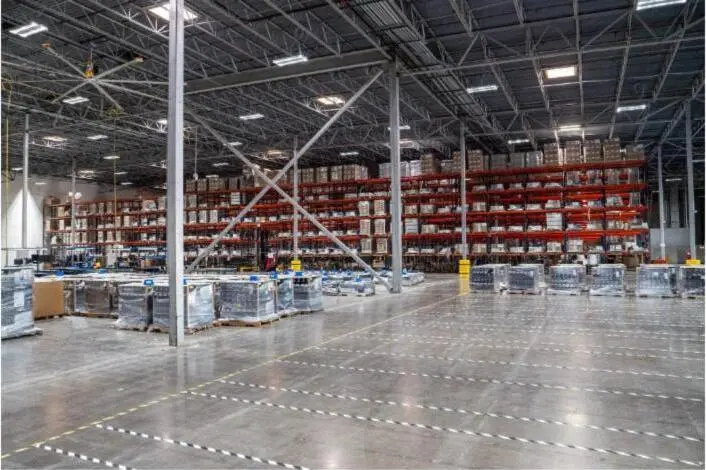
ESD zones require controlled flooring, grounding protocols and static-dissipative storage. Rapid SKU obsolescence means dead stock can occupy prime pick slots within weeks of a product refresh. Chain-of-custody documentation must satisfy auditors under NIST, CMMC and SOC 2 frameworks. Automation cells depend on precise item placement. Misplaced inventory or cluttered zones can cause robot navigation errors, conveyor jams and system downtime that far exceed the cost of a manual pick error.
These operational realities mean 5S in tech warehouses must function as both a physical standard and a compliance documentation system. A compliance-aware 5S program treats visual standards as audit evidence, not just housekeeping.
5 Steps to Roll Out 5S in Tech Warehouses
- Sort: Remove what no longer serves current operations
- Set in Order: Give every item a logical, compliant home
- Shine: Treat cleaning as daily inspection
- Standardize: Lock in visual rules across all shifts
- Sustain: Make 5S part of daily work
1. Sort: Clear Out Nonproductive Inventory
Sort eliminates everything that does not belong in active operations. In tech warehouses, that includes obsolete SKUs, expired components and redundant packaging materials occupying prime pick locations.
Red-tag obsolete or dead-stock SKUs occupying golden-zone slots and stage them in a marked red-tag area with a decision date. Removing these items from the golden zone reduces pick-travel distance because pickers no longer navigate around dead inventory to reach active SKUs. To keep this material from drifting back into active areas during SKU refreshes, establish separate quarantine zones that physically isolate dead stock until disposition decisions are complete.
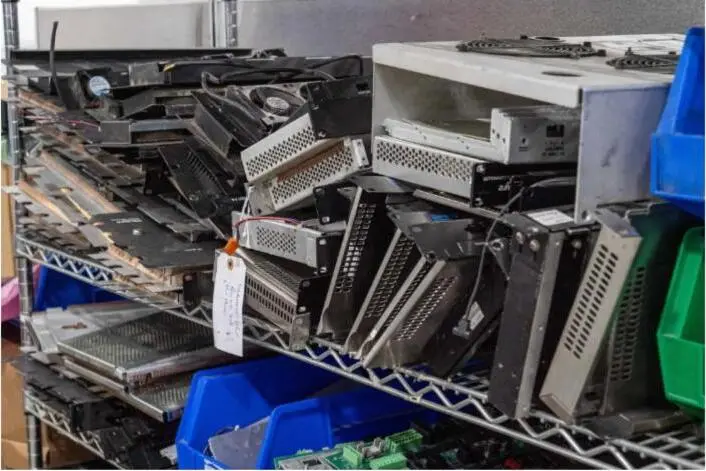
Premier Logitech lifecycle teams conduct structured asset triage as part of every program onboarding. These teams separate active inventory from end-of-life units and route each group to the appropriate disposition path, such as repair, remarketing or responsible recycling.
2. Set in Order: Design Locations for Speed and Compliance
Set in Order assigns a defined location to every SKU, tool and tote. In tech warehouses, location logic must account for velocity, value and ESD requirements at the same time.
Re-slot SKUs by velocity with fast movers placed in the golden zone at waist-to-shoulder height closest to pack-out. Place slow movers higher or farther back, and stage point-of-use supplies at the work location. Apply ESD floor tape to define static-controlled zones and use color-coded labels that distinguish ESD-safe storage from standard shelving. These physical location standards work when warehouse staff follow them consistently during put-away and picking.
RFID-enabled location prompts reinforce Set in Order by validating put-away accuracy on the first attempt. This validation keeps items in the correct slots and supports accurate cycle counts.
Premier Logitech integrates asset tagging, RFID tracking and inventory reporting into location design. This integration gives operations teams real-time visibility into where every unit sits in the facility.
3. Shine: Use Cleaning to Protect Assets and Automation
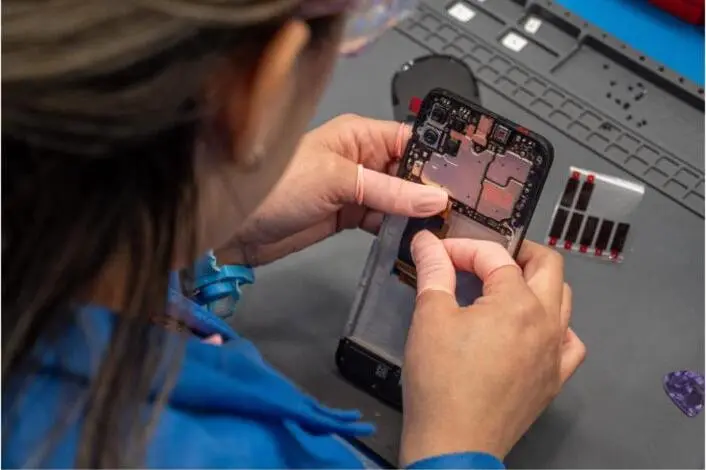
Shine converts cleaning from a periodic task into a structured inspection routine. In electronics environments, contamination and ESD damage often remain invisible until a device fails downstream. Daily Shine routines catch early indicators such as debris near ESD zones, damaged labels and worn floor markings before they become defects.
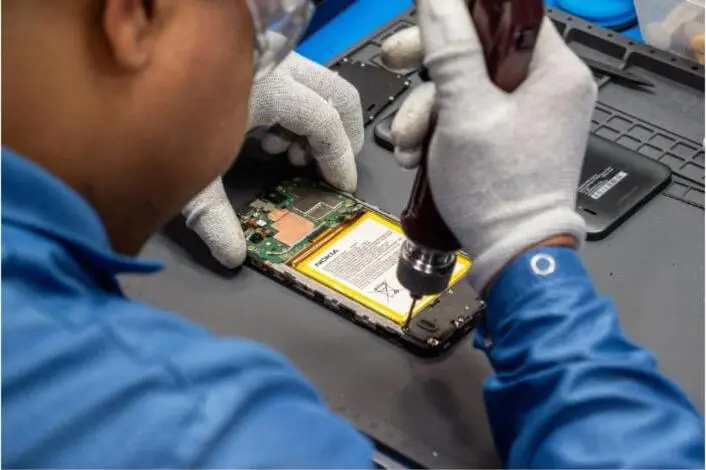
Automation cells require visual standards that define acceptable versus unacceptable conditions at each station. Automated systems depend on precise item placement and clear pathways to function correctly. Shine in an automated zone means verifying path clearance and sensor sight lines as well as sweeping floors.
Photo-standard references posted at each workstation make Shine auditable without requiring supervisor judgment. Staff can compare current conditions to images and correct issues on the spot.
Premier Logitech depot operations apply inspection-grade cleanliness standards across repair and refurbishment cells. These practices support cosmetic grading accuracy and reduce rework rates on returned units.
4. Standardize: Turn 5S Practices into Repeatable Rules
Standardize converts the gains from the first three steps into documented, auditable rules. In multi-shift tech warehouses, standards must be specific enough to audit objectively. Standards written too broadly cannot be audited consistently and become a primary driver of Sustain failure. A standard that requires interpretation will be interpreted differently across shifts, so standards must be specific enough that any auditor reaches the same score without discussion.
WMS-linked SOPs embed 5S rules into daily workflows and ensure that system prompts reinforce physical standards at every transaction. These digital standards work in tandem with color-coded zones that align with chain-of-custody requirements. Inbound triage, active repair, quarantine, ready-to-ship and secure data destruction each carry a distinct visual identity so staff can identify compliance boundaries at a glance. To verify that both digital and physical standards remain in use, Standardize relies on simple checklists such as daily tidy of forward pick faces and weekly label inspections.
For TAA, NIST and CMMC compliance, Standardize also defines how chain-of-custody entries are recorded. Each record captures who handled an asset, what action occurred, when it occurred and where it occurred so that audit trails remain complete and tamper evident.
Premier Logitech builds compliance documentation into program SOPs, supporting government and enterprise customers that require certified handling and audit-ready records.
5. Sustain: Keep 5S Working Across All Shifts
Sustain determines whether 5S improvements hold over time. The root cause of failure is often structural, with ownership assigned to a CI team rather than a named line role and audits disconnected from daily operating metrics.
Effective Sustain governance assigns named zone owners at the team-leader or supervisor level. Monthly audits tie directly to pick accuracy and repair throughput KPIs, not just audit scores. Brief daily 5S audits create accountability and support long-term discipline more effectively than occasional deep-dive audits.
Metrics to track in a sustained 5S program include:
- Pick accuracy, measured as lines picked without error
- Mis-pick rate in parts per million
- Dock-to-stock time
- Repair throughput per shift
- Inventory accuracy by location and by value
- Cycle-count variance
90-Day 5S Implementation Timeline
The implementation follows three phases. The pilot zone runs through weeks one to four. Zone-by-zone expansion follows through week 10, with formal Sustain governance active by week 13. Premier Logitech designs program timelines based on facility size, SKU complexity and compliance requirements.
Downloadable 5S Audit Checklist for Tech Warehouses
A structured audit checklist accelerates the Standardize and Sustain phases by giving zone owners an objective scoring tool. A practical 5S warehouse checklist for tech environments covers:
- Sort: Red-tag area active, obsolete SKUs removed from golden zone, quarantine zone clearly marked
- Set in Order: All locations labeled, ESD zones demarcated, velocity slotting confirmed, RFID tags readable
- Shine: Floors and shelves clear of debris, ESD mats intact, automation path unobstructed, photo standards posted
- Standardize: SOPs current and posted, color-coded zones consistent across shifts, chain-of-custody fields complete
- Sustain: Zone owner identified, last audit date recorded, corrective actions closed, KPIs posted at zone
Talk to a lifecycle expert to receive a customized 5S audit checklist built for electronics and reverse-logistics facilities.
Common 5S Mistakes in Tech Warehouses
Several failure patterns appear consistently in electronics warehouse 5S programs.
Treating 5S as a one-time cleanup. The effort becomes a one-time cleanup project rather than part of daily operations, especially when leadership stops reinforcing standards. Without recurring digital audits tied to production metrics, gains erode within months.
Measuring audit scores instead of operational outcomes. Audit scores serve as a leading indicator, not the goal. The goal is pick accuracy, repair throughput and asset recovery value. Programs that chase audit scores without connecting to WMS KPIs lose operational impact.
Assigning ownership to a CI team rather than line roles. Ownership assigned to a continuous improvement program team rather than a named line role creates a structural weakness that drives Sustain failure. Zone owners at the team-leader level sustain standards more effectively than centralized CI teams.
Writing standards too broadly for multi-shift use. As noted in the Standardize section, vague standards that require interpretation drift across shifts and undermine the entire program.
Skipping ESD and compliance integration. Generic 5S programs often ignore ESD zone demarcation, chain-of-custody documentation and data destruction protocols. In electronics facilities, these omissions create compliance exposure and downstream quality failures.
Talk to a Lifecycle Expert
Premier Logitech has delivered end-to-end lifecycle and reverse-logistics programs for OEMs, enterprises and government agencies since 2007. The company operates repair capacity across multiple DFW facilities with ASC authorization for more than 20 OEM brands and supports TAA, NIST, CMMC and SOC 2 requirements.
A 5S program built on generic templates will not hold in a fast-SKU, ESD-sensitive, compliance-heavy facility. Premier Logitech designs zone-based lifecycle programs that connect 5S discipline with WMS visibility, RFID tracking and certified compliance handling.
Talk to a lifecycle expert to start building a 5S-enabled lifecycle program for an electronics operation.
Frequently Asked Questions
How long does a 5S implementation take in a large tech warehouse?
A structured rollout covering pilot, expansion and sustain phases typically spans 90 days for a single facility, as outlined in the implementation timeline above. Larger facilities with multiple compliance zones may extend the rollout phase, but the 90-day framework establishes the governance structure that makes ongoing expansion manageable. Premier Logitech designs program timelines based on facility size, SKU complexity and compliance requirements.
How does 5S integrate with an existing WMS or RFID system?
5S integration with WMS and RFID occurs during the Standardize and Sustain phases. Location labels and zone definitions in the physical environment must match location codes in the WMS so that put-away validation, cycle counts and pick confirmation all reinforce the physical standard. RFID adds real-time location visibility and enables teams to detect when assets move outside defined zones, which is critical in ESD-controlled or chain-of-custody environments. Digital audit tools connect 5S scores to operational KPIs such as pick accuracy, dock-to-stock time and repair throughput, making the link between physical standards and system performance clear to operations leadership.
What compliance requirements affect 5S design in electronics warehouses?
Electronics warehouses serving government agencies or handling sensitive IT assets must align 5S zone design with TAA sourcing controls, NIST asset management requirements, CMMC cybersecurity practices and SOC 2 operational controls. In practice, this alignment means chain-of-custody documentation sits inside zone SOPs, data destruction areas require physical separation and access controls, and audit trails remain tamper evident and time stamped. ESD zone demarcation is a separate requirement driven by component sensitivity rather than regulatory mandate, but it must receive the same rigor as compliance controls because ESD failures generate downstream quality and warranty costs. Premier Logitech holds TAA, NIST, CMMC and SOC 2 certifications and builds these requirements into program design from the outset.
What KPIs should operations directors track after a 5S rollout?
The most operationally meaningful KPIs in a tech warehouse 5S program are pick accuracy, mis-pick rate, dock-to-stock time, repair throughput per shift, inventory accuracy by location and cycle-count variance. These metrics show whether 5S changes produce real operational gains or only improve audit scores. Secondary metrics include put-away accuracy on first attempt, units per labor hour normalized by product family and damage rate tagged by root cause. For reverse-logistics operations, asset recovery value per unit processed and repair yield rate provide additional indicators that connect 5S discipline to financial outcomes.
Why do most 5S programs fail in multi-shift electronics facilities?
The most common failure is structural rather than behavioral. Programs fail when standards are written too broadly to audit objectively, when ownership sits with a CI team rather than named line roles and when audit results are disconnected from daily operational metrics. In multi-shift environments, a standard that one shift interprets one way and another shift interprets differently will degrade within weeks. Electronics facilities add complexity through ESD requirements, compliance documentation and rapid SKU changes that generic 5S programs do not address. Sustaining 5S requires named zone owners, daily audit cadences tied to shift handoffs and digital tools that make compliance visible across all shifts without requiring supervisor presence at every check.
