Last updated: July 31, 2026
Key Takeaways for Enterprise IT Inventory
- Enterprise IT inventory at scale requires automated multi-method discovery, continuous CMDB reconciliation and lifecycle controls from procurement through secure disposition under strict compliance frameworks.
- Organizations evaluate platforms against seven core requirements: CMDB depth, hybrid-cloud discovery, government-grade security, scalability, visibility, network coverage and total cost of ownership.
- Large enterprises maintain accurate records through tiered discovery architectures that combine agentless scans, lightweight agents, API-based cloud collection, passive discovery and multi-source reconciliation.
- Hybrid-cloud and SaaS visibility gaps persist in 2026, so programs rely on continuous API discovery, edge and IoT coverage, SaaS sprawl management and External Attack Surface Management.
- Premier Logitech provides lifecycle services that handle physical asset recovery, secure disposition and compliance programs that complement any ITAM platform, so teams can start aligning software and services today.
Seven Core Requirements for Enterprise IT Inventory Platforms
Enterprise ITAM teams start with clear requirements so platform evaluations stay grounded in measurable capabilities. The seven criteria below define the minimum bar for large hybrid estates.
- CMDB depth: Automated CI creation, relationship mapping, duplicate reconciliation and field-level source-authority rules. Industry CMDB accuracy averages around 60%, so platforms must close that gap through continuous refresh, not manual cleanup.
- Hybrid-cloud discovery: Continuous API-based discovery across AWS, Azure, GCP and Kubernetes combined with agentless scanning for on-premises and legacy infrastructure. Strong discovery answers what exists, who owns it and what changed.
- Government-grade security: Alignment with NIST SP 800-66, CMMC, TAA, SOC 2 and ISO 9001/14001. HHS guidance links HIPAA Security Rule compliance directly to accurate, current asset inventories.
- Scalability: Full-estate discovery at large asset volumes without added infrastructure. Discovery cycles that slow at higher volumes signal an architectural ceiling, not flexibility.
- Visibility: Coverage of assets in stock, in transit, with vendors and off-network. A significant share of enterprise assets remain unknown to IT at any given time.
- Network coverage: Active and passive scanning, agent-based endpoints, SNMP/SSH/WMI for OT and IoT and External Attack Surface Management for shadow IT.
- Total cost of ownership: License fees, discovery infrastructure, implementation consulting, integration development and ongoing admin headcount evaluated over multiple years, not annual sticker price. Hidden costs often include integration fees, data migration charges and feature gating behind higher tiers.
How Large Enterprises Maintain Accurate IT Inventory
Large enterprises rely on tiered discovery architectures instead of a single scanner. These architectures mix agentless scans for network gear and servers, lightweight agents for deep software detail and API-based collection for cloud workloads. Each method covers blind spots the others miss.
Passive discovery through network traffic analysis with tools such as Zeek or ExtraHop identifies assets that block ICMP or port scans and fragile IoT or OT devices that active probes miss. Agent-based discovery then fills the gap for remote laptops that connect through VPN and rarely appear on corporate networks.
Scan frequency follows asset criticality because uniform schedules waste effort and weaken oversight. Critical assets receive frequent internal scans to catch configuration drift quickly. High-priority assets receive less frequent scans, while medium-priority assets receive monthly scans and low-priority assets receive quarterly internal scans.
Multi-source reconciliation connects these discovery methods into a single trusted record. Each CI field such as hostname, IP, software and hardware needs a single source that wins on conflict. This approach eliminates duplicate or partial records without manual cleanup, and frequent ITSM sync keeps incident and change workflows aligned with current data.
First discovery scans consistently find more assets than CMDB records show. That gap reflects the way manual records degrade in hybrid environments where cloud resources spin up and down daily.
Software normalization then turns raw discovery into reliable license data. Estates with hundreds of thousands of installations need normalization so variant names map to a single canonical entry. Without that step, teams can waste a large share of desktop software spend because unnormalized records hide true usage.
Hybrid-Cloud and SaaS Visibility Gaps in 2026
Most enterprises now operate across hybrid or multi-cloud environments, and many report governance gaps across platforms. This pattern reflects structural limits in tooling, not simple configuration oversights.
The API-based collection described earlier must run continuously instead of on fixed schedules. Enterprise cloud discovery needs continuous APIs, tag and ownership enrichment, Kubernetes visibility, SaaS discovery, CMDB reconciliation and risk context from vulnerabilities and compliance status. Periodic exports miss resources created or terminated between cycles.
Edge and IoT assets now create a second major blind spot. The 5G edge computing market is predicted to grow through 2030, and IDC forecasts global spending on edge computing solutions will reach hundreds of billions by 2028. Many ITAM platforms were not built to discover OT sensors, PLC controllers or edge nodes at that scale.
SaaS sprawl forms the third major gap. Many organizations report dozens to hundreds of SaaS tools in their tech stack, with a significant portion unknown to IT and untracked in inventories. Discovery platforms that rely only on network scanning cannot surface SaaS applications that bypass corporate infrastructure entirely.
Shadow IT extends the attack surface beyond internal discovery. External Attack Surface Management tools discover forgotten subdomains, public cloud storage buckets, exposed development servers and shadow IT that internal discovery misses. A significant share of breaches exploit assets the security team did not know existed or believed were decommissioned. These gaps shape platform selection and highlight where external support strengthens coverage.
Platform Thresholds for Services Partnerships
Eight platforms dominate enterprise evaluations in 2026, and each reaches a point where software alone no longer suffices. At that point a lifecycle services partner becomes essential.
ServiceNow ITAM fits enterprises already running ServiceNow ITSM. It offers native CMDB integration, agent and agentless discovery with cloud connectors and built-in lifecycle governance. Implementations commonly require months of partner-led work before first production cutover, and data migration from legacy systems typically needs external expertise.
Lansweeper leads on agentless network discovery depth across diverse estates that include OT and cloud assets. It has no native CMDB and relies on API connectors for ITSM integration. Physical asset verification, hardware recovery and secure disposition still require a services partner because Lansweeper delivers data, not logistics.
Flexera enriches each CI with cost allocation, security posture and compliance risk. It also provides dependency mapping across cloud and on-premises assets. Annual costs for large deployments often reach significant levels and can rise further with security integrations, and the platform still depends on a services partner for physical lifecycle execution.
ManageEngine AssetExplorer supports agent-based and agentless discovery, software license management and a built-in CMDB. Multi-site enterprises with complex compliance requirements often add external program governance to turn surfaced data into consistent lifecycle execution.
Freshservice combines service desk, CMDB and automation in one platform. Inventory data flows directly into incident, problem and change workflows. End-of-life lifecycle execution, including asset recovery and e-waste handling, sits outside the platform and requires services support.
SolarWinds Service Desk links discovered asset records to helpdesk and ITAM workflows. Discovery functions as part of the broader ITSM suite rather than a standalone deep discovery engine. Reverse logistics and physical disposition still depend on a dedicated services partner.
Ivanti Neurons combines ITAM and CMDB capabilities for enterprise estates. Large-scale data migration from prior ITAM systems and ongoing program governance across many sites often require external lifecycle expertise.
Device42 focuses on automated hybrid discovery and application dependency mapping. It helps teams understand relationships and blast radius for migrations or changes in complex environments. Physical asset recovery, certified refurbishment and NIST-compliant data destruction still require a services partner with authorized capabilities.
The pattern across these platforms stays consistent. Software surfaces the data, while a lifecycle services partner executes the physical, compliance and governance work that data demands.
Map any chosen platform to a tailored lifecycle services program with Premier Logitech.
When Enterprise Software Requires a Services Partner
Four operational realities define when large enterprises pair ITAM software with a lifecycle services partner in 2026.
Data migration and CMDB population. Data migration costs for complex environments commonly reach significant amounts. Manual asset records often become inaccurate within months. Migrating uncleansed data into a new platform replicates existing problems at higher cost, which makes physical verification essential. Premier Logitech's asset tagging, inventory reporting and device traceability services provide the ground truth that keeps CMDB population accurate from day one.
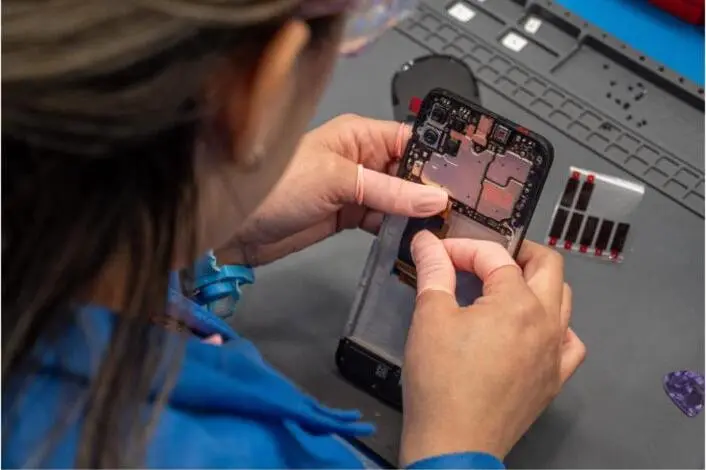
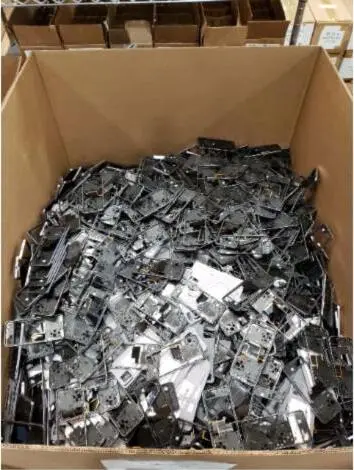
Asset recovery and secure disposition. CMDBs degrade quickly without automated refresh, and decommissioned assets still marked active remain a common data quality failure. Retiring assets from the CMDB without physically recovering and sanitizing hardware creates compliance exposure. Premier Logitech delivers secure data destruction, responsible recycling and asset recovery programs that connect software records to physical disposition.
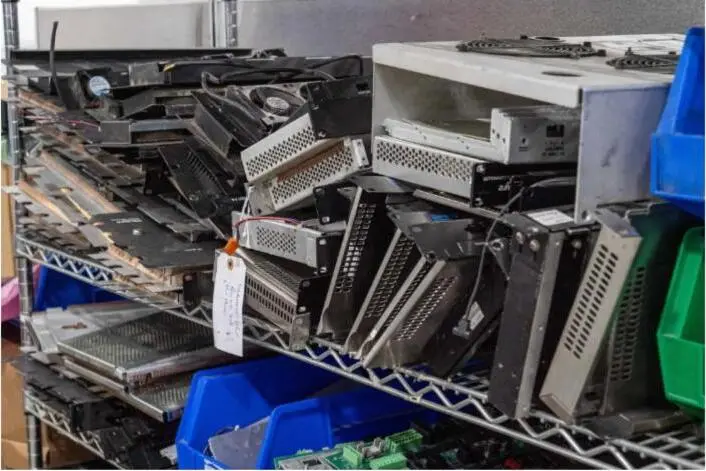
NIST, CMMC and e-waste compliance. Proposed HIPAA Security Rule updates highlight the need for technology asset inventories that protect ePHI. CMMC and NIST SP 800-88 add requirements for documented media sanitization at end of life. Premier Logitech holds TAA, TAPA, ISO, NIST, CMMC and SOC 2 certifications and carries a CAGE Code for federal engagements, which supports the documentation auditors expect.
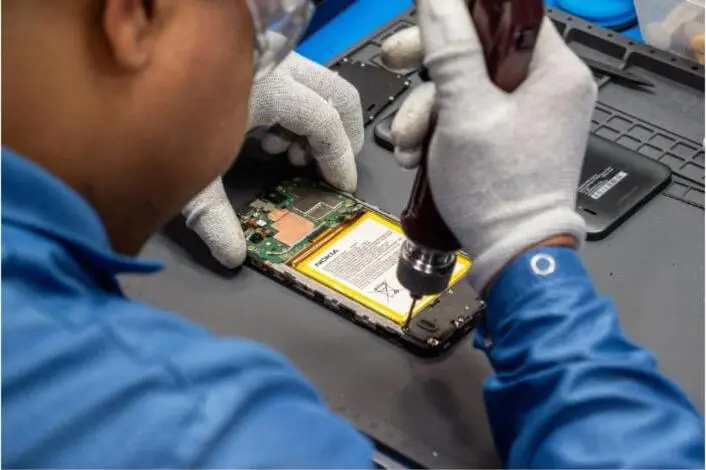
Ongoing program governance. ServiceNow ITAM benefits from a dedicated administrator or team for ongoing maturity. Many enterprise IT teams lack spare headcount for a full ITAM program alongside daily operations. Premier Logitech operates as a single-source lifecycle partner or as a modular services provider so organizations can match support levels to internal capacity.
Assess where lifecycle services can strengthen an existing ITAM program with Premier Logitech.
Decision Tree: Matching Engagement Models to Enterprise Estates
These decision points help large organizations select the right mix of platform and services.
- Asset scale across hybrid environments. If the organization manages fewer than 10,000 assets, a mid-market SaaS ITAM platform may suffice. At 10,000 or more assets, proceed to step 2.
- Current CMDB accuracy and discovery coverage. If CMDB accuracy sits below 80 percent or discovery coverage misses cloud, edge or OT assets, start with a discovery and CMDB remediation engagement before platform selection. Premier Logitech's asset tagging and inventory services establish that baseline. If coverage already meets these thresholds, proceed to step 3.
- Regulatory requirements. If the organization faces NIST, CMMC, HIPAA or federal compliance requirements, pair any platform with a services partner that offers certified disposition and compliance reporting. In that case, proceed to a Premier Logitech consultation. If not, proceed to step 4.
- End-of-life execution model. If end-of-life asset recovery, secure data destruction or reverse logistics rely on fragmented vendors, consolidating through a single lifecycle partner reduces total cost of ownership and compliance risk. That scenario points to a Premier Logitech consultation. If end-of-life execution already runs through a cohesive model, a platform-only engagement may fit, with modular services added as the program matures.
Determine the right lifecycle path for an enterprise estate with guidance from Premier Logitech.
Frequently Asked Questions
What is the difference between IT asset management software and a lifecycle services partner?
IT asset management software discovers, records and reports on assets across an environment. It surfaces data about what exists, who owns each asset and what its status is. A lifecycle services partner executes the physical work that data demands, including procurement, configuration, deployment, repair, asset recovery, secure data destruction and compliant recycling. At 10,000 or more assets, the pattern described earlier applies, with software providing data and services providing execution. Premier Logitech works alongside any chosen platform to deliver the end-to-end execution layer that software alone cannot provide.
How do organizations meet NIST and CMMC requirements through IT asset management in 2026?
NIST and CMMC compliance in IT asset management rests on three documented capabilities. Programs maintain an accurate, continuously updated inventory of all assets that process or store controlled information. They perform certified media sanitization at end of life per NIST SP 800-88. They also keep audit-ready records of asset disposition, data destruction and chain of custody. Software platforms maintain the inventory and generate reports, while certified physical disposition requires a services partner with appropriate authorizations. Premier Logitech holds TAA, NIST, CMMC and SOC 2 certifications and carries a federal CAGE Code, which supports the documentation government and enterprise auditors require at each lifecycle stage.
What hidden costs should IT asset management buyers account for beyond software licensing?
Data migration, integration development and ongoing administration form the largest non-license expenses in enterprise ITAM deployments. Data migration from legacy systems into a new platform requires cleansing, normalization and validation work that often matches the first year of software licensing. Integration development to connect the ITAM platform with ITSM, procurement, MDM and security tools adds further cost, especially for non-native connections. Ongoing administration for discovery schedules, reconciliation rules, CMDB hygiene and compliance reporting requires dedicated internal headcount or an external partner. Organizations evaluating platforms benefit from a 36-month total cost of ownership model that includes these components, not the annual license rate alone. Premier Logitech's modular services model lets organizations engage only the lifecycle functions they need and convert unpredictable internal labor into a defined services program.
