Last updated: August 21, 2026
Key Takeaways for Large OEM PLM Decisions
- Enterprise PLM software serves as the system of record for large OEMs and connects engineering, manufacturing, supply chain and service data across sites and CAD platforms.
- Four platforms dominate the enterprise shortlist: Siemens Teamcenter, PTC Windchill, Dassault 3DEXPERIENCE and Aras Innovator. Evaluation centers on CAD and ERP integration depth, configuration management maturity, cloud flexibility and total cost of ownership.
- Industry requirements differ by segment. Aerospace and defense OEMs prioritize export control and data residency. Automotive OEMs manage complex EV and global supply-chain demands. Industrial equipment OEMs balance multi-CAD environments against implementation speed.
- PLM software manages the digital record but does not execute physical returns, depot repair, secure data destruction or compliant disposition, which creates a critical execution gap.
- Premier Logitech closes that gap with TAA, NIST, CMMC and SOC 2 compliance, 20+ OEM ASC authorizations and scalable reverse-logistics capacity. Talk to a lifecycle expert to integrate physical execution into a PLM strategy.
Aerospace PLM Requirements and the SpaceX Context
Platform selection starts with industry constraints. Aerospace and defense OEMs operate under the tightest export control, data residency and access management rules, which narrow the PLM field early.
What PLM Does SpaceX Use?
SpaceX and comparable aerospace and defense OEMs operate under export control mandates, data residency requirements and identity and access management constraints that narrow the PLM field significantly. These requirements remove platforms that lack sovereign or air-gapped deployment options and granular supplier visibility controls.
Siemens Teamcenter appears most often in aerospace and defense environments because it supports flexible cloud, on-premises and SaaS deployments and cross-domain digital thread requirements. Dassault Systemes 3DEXPERIENCE also serves major aerospace primes, with CATIA integration that maintains continuity from design through manufacturing.
2026 implementation watch-out for aerospace OEMs: Teamcenter implementations can experience cost overruns, with legacy PDM data migration often adding unexpected time and expense. Programs with classified or ITAR-controlled data face additional validation cycles that extend timelines further.
PLM software governs the digital record. It does not manage physical return of field units, depot-level repair under government contracts, secure data destruction on decommissioned hardware or TAA-compliant disposition of end-of-life assets. Premier Logitech holds TAA, NIST, CMMC and SOC 2 compliance certifications and carries a CAGE Code (4WAJ9) that qualifies it as a pre-vetted partner for U.S. federal programs. With 20+ OEM Authorized Service Center (ASC) authorizations, Premier Logitech operates as the physical execution layer that aerospace and defense PLM deployments require but cannot provide.
PLM Cost Structures for Large Automotive OEMs
Beyond deployment requirements, total cost of ownership shapes platform viability across all three OEM segments. Automotive OEMs face the most complex PLM TCO profiles because of electric vehicle program complexity, global supply chain coordination and regulatory compliance across multiple markets.
How Much Does PLM Software Cost for a Large OEM?
Automotive programs drive a large share of PLM demand because they combine complex product development, EV adoption and strict regulatory oversight. These factors increase both software and operational cost layers.
Software licensing represents only one cost layer. For large manufacturers, Siemens Teamcenter and PTC Windchill implementations require significant time and resources, and implementation costs can exceed software licensing fees. Hidden cost drivers compound quickly across multi-site automotive programs.
Boston Consulting Group reports that only 30 percent of digital transformation initiatives meet or exceed their target value, and PLM programs follow the same pattern. Heavy customization requirements, difficult integrations and onboarding friction across global plants drive cost overruns that turn initial licensing estimates into multi-year budget drains.
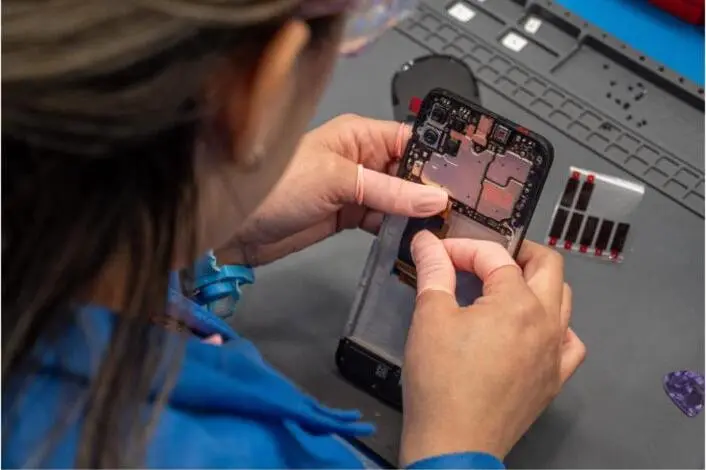
The physical cost layer remains separate and often unplanned. Automotive OEMs that manage high return volumes, warranty claims and end-of-life device streams need a repair and reverse logistics partner that scales with production cycles. Premier Logitech’s 40,000-unit weekly repair capacity and rapid-exchange programs function as a physical cost-control layer that PLM software cannot replicate. Consolidating repair, fulfillment and recycling under one partner removes vendor fragmentation that drives hidden operational costs.
Discuss cost-control strategies with a lifecycle expert to build a physical services model that complements the PLM platform under evaluation.
Teamcenter vs. Windchill for Industrial Manufacturers
Industrial equipment OEMs in heavy machinery, robotics and energy systems typically run multi-CAD environments with long product lifecycles, complex service histories and distributed manufacturing across owned and contract facilities. This profile makes the Teamcenter versus Windchill decision a pivotal shortlist choice for this segment.
Siemens Teamcenter supports a digital-twin model for cross-domain collaboration across mechanical, electrical, software, manufacturing and service domains. That breadth suits industrial OEMs with complex service and maintenance requirements. PTC Windchill fits engineering-heavy manufacturers that need strong BOM management and design-to-manufacturing coordination, with faster implementation timelines relative to Teamcenter for organizations with native PTC CAD environments.
2025 to 2026 upgrade watch-out for industrial OEMs: Composable PLM architectures now replace monolithic single-platform visions for many large OEMs. These architectures combine a core backbone for data governance with specialized applications connected through open APIs. Industrial equipment buyers evaluating Teamcenter or Windchill should assess each platform’s API governance and third-party integration ecosystem, not just native feature sets.
Only about one in five large manufacturers has achieved highly mature PLM-MES integration, so most industrial OEMs still face data silos between engineering and the shop floor regardless of PLM choice. This gap makes API governance and third-party integration capabilities more important than native feature sets when comparing Teamcenter and Windchill.
Premier Logitech replaces the fragmented vendor relationships that industrial OEMs accumulate over multi-decade product lifecycles. Separate repair providers, fulfillment partners and recycling contractors give way to a single-source partner that manages the full physical lifecycle. A single-source partner with the ASC authorizations mentioned earlier reduces coordination overhead and creates a unified data record for physical asset disposition that feeds back into PLM-governed service histories.
Decision Matrix for Aligning PLM Platforms to OEM Profiles
The right PLM platform depends on the intersection of industry profile, CAD environment, deployment constraints and integration maturity. Each OEM segment prioritizes different capabilities, which narrows the platform shortlist before cost and implementation timelines enter the discussion.
Automotive OEMs with high variant counts, global supply chains and EV program complexity benefit from platforms with mature configuration management and strong ERP integration. Aras Innovator targets complex make-to-order environments and unites engineering, operations and product teams in a single source of truth for variant management. Dassault 3DEXPERIENCE serves automotive primes with deep CATIA integration and embedded sustainability constraints.
Aerospace and defense OEMs with export control requirements, data residency mandates and classified program needs prioritize deployment flexibility and access control granularity. Siemens Teamcenter and Dassault 3DEXPERIENCE both serve major aerospace primes with on-premises and sovereign cloud options.
Industrial equipment OEMs with multi-CAD environments, long service lifecycles and distributed manufacturing weigh Teamcenter’s cross-domain digital thread against Windchill’s faster implementation profile and native PTC CAD integration. The 2026 Gartner Magic Quadrant for PLM Software in Discrete Manufacturing Industries evaluated vendors including Aras, Dassault Systemes, PTC and Siemens, which provides a current benchmark for shortlist validation.
Every profile shares one requirement that no PLM platform addresses: a physical-services partner for returns processing, depot repair, secure data destruction and compliant disposition. Premier Logitech operates across all three OEM profiles with government-grade compliance certifications and the operational scale to match enterprise program volumes.
Quick self-qualification: These three questions sharpen the shortlist.
- What is the primary industry: automotive, aerospace and defense or industrial equipment?
- Does the environment include multiple CAD platforms (multi-CAD) or a single standard?
- Is the preferred deployment cloud-hosted, on-premises or hybrid?
Automotive with multi-CAD and hybrid deployment points toward Teamcenter or 3DEXPERIENCE. Aerospace with on-premises and export control requirements points toward Teamcenter or 3DEXPERIENCE with sovereign options. Industrial with PTC CAD and faster implementation priority points toward Windchill. All three profiles require Premier Logitech for physical lifecycle execution.
Five RFP Questions That Expose the Physical Execution Gap
PLM RFPs often focus on software capabilities. These five questions test whether the full lifecycle, including physical returns, repair and disposition, is covered by the proposed solution stack.
- How does the platform ingest field return data, including repair outcomes, part condition grades and disposition records, back into the engineering BOM and service history? A PLM that cannot close the loop from physical return to digital record leaves service engineering operating on incomplete data.
- What APIs or integration patterns does the platform support for connecting depot repair systems and reverse logistics platforms to the PLM digital thread? PLM, MES and ERP platforms differ in data semantics and transaction behavior, so integration requires governed APIs and middleware rather than assumptions about native connectivity.
- How does the platform support TAA-compliant and CMMC-governed disposition workflows for end-of-life hardware, including secure data destruction audit trails? Regulated OEMs must treat disposition as a traceable workflow inside the PLM record.
- Which physical-services partners does the proposed implementation team have established integration relationships with for reverse logistics and depot repair data exchange? Software integrators rarely maintain operational relationships with repair and logistics partners, and the gap between PLM go-live and physical execution readiness often stalls programs.
- How does the platform handle engineering change propagation to field service and repair partners when a component is revised or discontinued? Many manufacturers still rely on manual lookups for engineering change impact analysis, so most PLM deployments have not solved this problem at the physical execution layer.
Premier Logitech is built to answer these questions from the physical side. With real-time inventory tracking, lifecycle analytics and compliance reporting across TAA, NIST, CMMC and SOC 2 frameworks, Premier Logitech provides the data that PLM systems need to maintain an accurate as-maintained record.
Next Step: Schedule a Discovery Call
PLM platform selection functions as a multi-month program with long-term cost and integration consequences. The software decision represents only half of the lifecycle equation. The physical execution layer, including returns, depot repair, configuration and compliant disposition, determines whether the digital thread reflects reality once assets leave the factory.
Premier Logitech has served OEMs, enterprises and government agencies since 2007 with end-to-end lifecycle services, the compliance certifications and ASC authorizations detailed earlier and government-grade security practices. The team works alongside any PLM platform to close the gap between digital record and physical asset.
Schedule a discovery call to bring the physical execution layer into the PLM evaluation before the RFP closes.
Frequently Asked Questions
What is the difference between PLM software and a physical lifecycle services partner?
PLM software manages the digital record of a product, including engineering structures, BOMs, change orders, compliance documentation and service history. A physical lifecycle services partner manages tangible operations that PLM cannot execute, such as receiving returned units, performing depot repair, refurbishing and grading hardware, destroying data on decommissioned assets and disposing of end-of-life equipment in compliance with regulatory requirements. The two functions work together. PLM governs the data, and a partner like Premier Logitech governs the physical asset from return through disposition.
How does Premier Logitech integrate with enterprise PLM platforms?
Premier Logitech provides operational visibility through real-time tracking, lifecycle analytics and compliance reporting that feeds back into the customer’s system of record. Repair outcomes, part condition grades, disposition records and audit trails are available for integration into PLM-governed service histories. Premier Logitech operates as a modular or end-to-end partner, so OEMs can engage specific services such as depot repair, returns processing or secure data destruction without replacing existing PLM or ERP infrastructure. The team collaborates with customer integration and IT teams to define data exchange requirements during program onboarding.
What compliance certifications does Premier Logitech hold that are relevant to aerospace and defense OEMs?
Premier Logitech holds Trade Agreements Act (TAA), NIST, CMMC, SOC 2, TAPA and ISO quality framework certifications. The company carries CAGE Code 4WAJ9, which identifies it as a pre-vetted, high-security partner for U.S. federal government programs. These certifications position Premier Logitech as a qualified physical-services partner for aerospace and defense OEMs that operate under government contracts, export control requirements and classified program constraints where vendor compliance is a contractual prerequisite.
Can Premier Logitech support OEMs that are mid-PLM implementation and have not yet finalized their platform selection?
Premier Logitech engages OEMs at any stage of the lifecycle program, including organizations that are actively evaluating PLM platforms. Physical lifecycle services such as returns processing, depot repair, configuration and fulfillment operate independently of PLM platform selection and can be deployed while software evaluation and implementation proceed. Many OEMs define physical execution requirements first, then use those requirements to shape RFP questions for PLM vendors about reverse logistics data integration and disposition workflow support.
What makes Premier Logitech different from other reverse logistics and depot repair providers?
Premier Logitech combines ASC authorization across 20+ OEM brands with government-grade compliance certifications and a single-source service model that spans sourcing, configuration, fulfillment, depot repair and responsible recycling. Most reverse logistics providers specialize in one segment of the lifecycle. Premier Logitech operates across the full chain, which removes vendor fragmentation, separate repair contractors, fulfillment partners and recycling providers that create data gaps and coordination overhead for large OEM programs. The company’s DFW logistics hub and nearshore operations in Laredo and Nuevo Laredo provide geographic and cost advantages for North American OEM supply chains.
