Last updated: August 6, 2026
Key Takeaways for Circular IT Asset Programs
- A circular economy end-of-life strategy replaces linear disposal with a closed loop that recovers value through reuse, refurbishment, component harvesting and certified recycling.
- End-of-life outcomes are largely determined at procurement, so contracts should mandate modular design, vendor take-back obligations and NIST SP 800-88 r2-compliant data sanitization before devices ship.
- Internal redeployment delivers the highest value, and condition-based tiering with real-time asset visibility returns functional assets to active use before external disposition.
- Selecting a single ITAD partner with R2v3 or e-Stewards, ISO 14001, NIST SP 800-88 r2, CMMC 2.0, SOC 2 and TAA compliance closes chain-of-custody gaps and supports unified ESG reporting.
- Premier Logitech consolidates every stage of the circular workflow under one certified partner; talk to a lifecycle expert to map this program to the enterprise environment.
Procurement Choices That Shape End-of-Life Results
End-of-life outcomes are largely determined at the moment of purchase. By the time a device reaches end of life, sustainability outcomes have already been shaped by earlier procurement choices about what was bought, how it was configured, how long it was used and whether recovery was planned.
Organizations that struggle most with ITAD are not the ones that made bad decisions at end of life, they are the ones that made no decisions at acquisition. Procurement contracts should mandate modular design, spare-parts availability, vendor take-back obligations and data sanitization standards before a single device ships.
A Total Cost of Ownership analysis for IT equipment should include secure disposition costs per device for certified data destruction, plus physical destruction expenses for high-security assets. Standardizing device configurations across the fleet reduces hardware diversity, improves parts reuse and simplifies downstream refurbishment.
Premier Logitech TAA-compliant sourcing integrates lifecycle planning from the procurement stage. Clients receive asset tagging, serialization and inventory reporting at intake, which creates the data foundation that makes downstream recovery, compliance documentation and ESG reporting measurable rather than estimated.
Eight-Stage Circular Hierarchy for Enterprise IT Assets
Lansink Ladder, formally embedded in the European Waste Framework Directive, ranks waste management options from most to least preferred as prevention, reuse, recycling, energy recovery, incineration and landfill. Applied to enterprise IT, the hierarchy works as follows.
- Prevention: Design and procurement choices that extend asset life, such as standardized configurations, modular hardware and extended warranty terms, reduce the volume of assets reaching end of life early.
- Reuse: Laptops, mobile devices and monitors that pass inspection and cleaning return to a second user without significant processing, which preserves economic and ecological value.
- Refurbishment and remanufacturing: Business laptops and rack servers that require component replacement or cosmetic restoration are graded and remarketed. A study of more than 117,000 storage devices found that the vast majority were suitable for reuse after data sanitization.
- Component harvesting: Storage drives, memory modules, CPUs and power supplies extracted from assets that fail whole-unit refurbishment criteria re-enter the supply chain as serviceable parts.
- Recycling: Circuit boards, chassis and cables processed at certified facilities recover metals, plastics and rare earth elements. R2- or e-Stewards-certified recyclers recover high percentages of materials from laptops.
- Energy recovery: Materials that cannot be recycled are incinerated with energy capture, which is preferable to incineration without recovery.
- Incineration without recovery and landfill: These lowest rungs represent permanent loss of material value and serve as last resorts only for nonrecoverable residues.
Google 2026 Environmental Report states that its data center hardware lifecycle program harvested 7.5 million components for internal reuse in 2025. Premier Logitech applies the same hierarchy logic and routes every asset to the highest-value stage its condition supports.
Data Sanitization Standards and Verifiable Certificates
NIST Special Publication 800-88 Revision 2, published September 2025, is the current federal standard for media sanitization and defines three categories, Clear, Purge and Destroy. Each category maps to a sensitivity level and media type.
- Clear applies logical overwriting techniques to storage devices containing nonsensitive data and protects against simple recovery tools.
- Purge applies more resistant techniques, including Cryptographic Erase for SSDs, NVMe and eMMC, that protect against laboratory-grade recovery. Degaussing has no effect on flash storage because these devices store data via electrical charge rather than magnetic orientation.
- Destroy applies physical destruction, such as shredding to defined particle sizes or incineration, for classified or damaged media where Purge is not feasible.
CMMC 2.0 control MP.L2-3.8.3 requires media sanitization per NIST SP 800-88 r2 for all Controlled Unclassified Information media, and failure to demonstrate conformance prevents a defense contractor from qualifying for DoD contracts containing CUI. The IEEE 2883-2022 standard deprecates shredding, pulverizing and crushing as sanitization methods and encourages verifiable, reuse-enabling techniques.
Many laptops and data center drives are refurbished without certified data erasure, which creates potential data-breach exposure in reuse streams. Premier Logitech sanitization processes align with NIST SP 800-88 r2 and CMMC MP.L2-3.8.3, and SOC 2 reporting provides auditable evidence for every asset processed. Certificates of data destruction are delivered with chain-of-custody documentation for every disposition event.
Internal Redeployment and Condition-Based Tiering
Internal redeployment delivers the highest-value disposition path for functional assets. Before any device enters external remarketing or recycling, a condition-based tiering assessment determines whether it can serve another internal user, be repurposed for a lower-demand role or be staged for a specific program need.
HPE reports that high percentages of PCs and servers were upcycled and returned to active use through its Technology Renewal Center programs. Achieving comparable rates requires real-time asset visibility, which means knowing what is in inventory, where it resides and what condition it is in before a refresh wave begins.
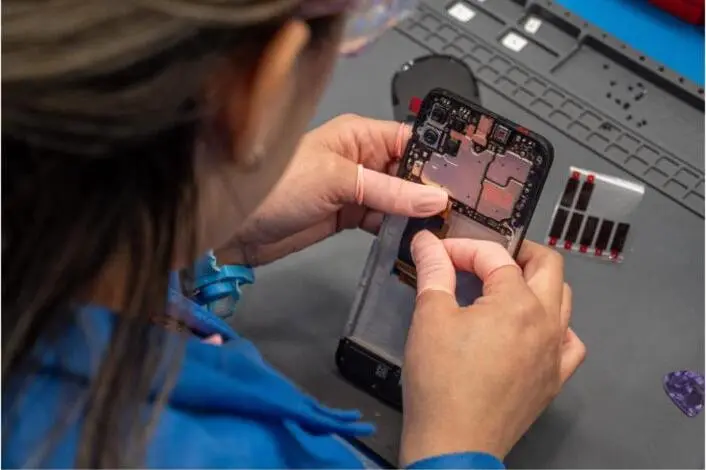
Premier Logitech inventory reporting and device traceability systems provide that visibility. Asset tagging at intake, integration with lifecycle event data and real-time tracking enable operations teams to make redeployment decisions based on current condition data rather than assumptions. Redeployment programs are structured to reduce new procurement demand and extend average asset lifecycle length, which serve as core KPIs in circular economy reporting.
Refurbishment and Resale Decisions for Retired Assets
Not every asset that passes data sanitization warrants full refurbishment. The decision depends on age, condition, repair cost relative to resale value and the available remarketing channel. Organizations should evaluate retired IT assets for resale or refurbishment suitability based on whether they are working, within standard age thresholds and carry meaningful per-unit resale value.
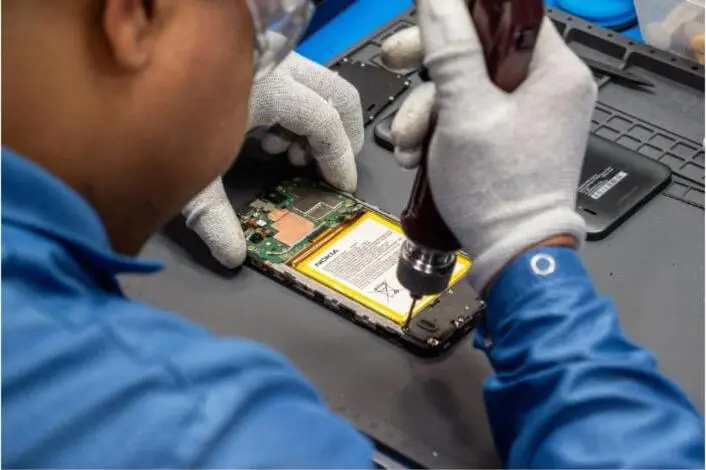
Assets that pass the economic-repair threshold move through cosmetic refurbishment, including display replacement, chassis repair, keyboard service and battery service, and are graded against standardized condition scales before entering secondary-market channels. Assets that fail the threshold are assessed for component harvesting before material recovery.
Premier Logitech holds authorizations from more than 20 OEM Authorized Service Centers that cover the major enterprise hardware brands. Those authorizations enable warranty-compliant repair, access to OEM parts and grading standards that secondary-market buyers recognize and trust. This structure supports higher realized resale value and faster channel placement compared to nonauthorized refurbishment.
Talk to a lifecycle expert about refurbishment and resale options for the current refresh cycle.
ITAD Partner Selection Criteria for Enterprise Programs
ITAD partner selection requires evaluation of certifications, compliance coverage, geographic capability and the ability to execute every disposition pathway without subcontracting to unvetted downstream vendors. The core certification stack for enterprise and government programs includes the following elements.
- R2v3 or e-Stewards: Downstream accountability and responsible recycling standards verified by third-party auditors.
- ISO 14001: Environmental management system certification that demonstrates structured environmental performance improvement.
- NIST SP 800-88 r2: Federal media sanitization standard required for government and CUI-handling programs.
- CMMC 2.0 (MP.L2-3.8.3): Defense contractor requirement for sanitization of CUI media.
- SOC 2: Security and availability controls reporting that supports enterprise data-handling assurance.
- TAA compliance: Requirement for federal procurement and programs subject to the Trade Agreements Act.
- OEM ASC authorizations: Warranty-compliant repair and access to OEM parts and grading standards.
Vendor fragmentation, which uses separate partners for logistics, sanitization, refurbishment and recycling, creates chain-of-custody gaps, inconsistent documentation and compliance risk. Premier Logitech consolidates all of these functions under a single compliance stack, with TAA, TAPA, ISO, NIST, CMMC and SOC 2 coverage and a CAGE Code (4WAJ9) that qualifies the company as a prevetted partner for U.S. federal programs.
Component Harvesting and Certified Recycling Pathways
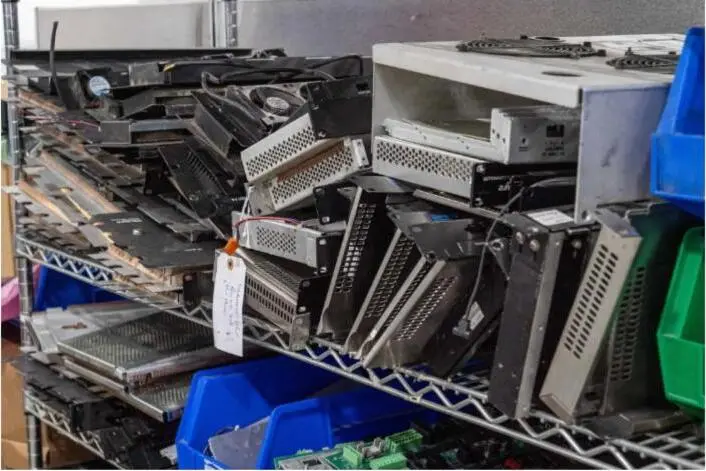
Assets that cannot support whole-unit refurbishment still contain recoverable value. Component harvesting extracts serviceable storage drives, memory modules, processors, power supplies and display assemblies for reuse in repair programs or secondary-market sale. Remaining materials move to certified recycling only after harvesting.
The Google component recovery program mentioned earlier also resold more than 54 million components since 2015, which demonstrates the scale possible with centralized processing infrastructure. Component-level recovery at that scale requires centralized processing and documented downstream tracking.
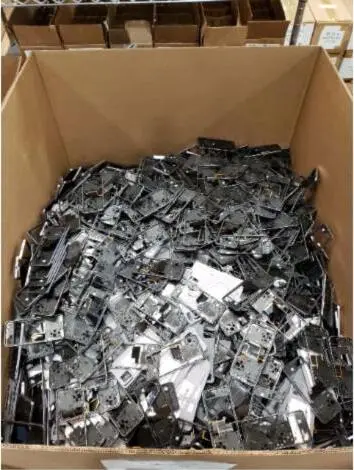
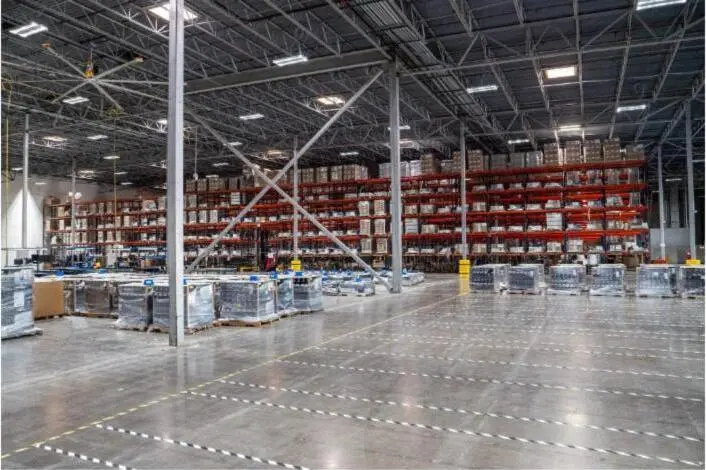
Premier Logitech operates three DFW facilities with nearshore operations in Laredo and Nuevo Laredo, Mexico. That hub-and-nearshore model supports high-volume processing with cost-effective labor for labor-intensive harvesting and grading operations while maintaining U.S.-based compliance oversight and chain-of-custody documentation. Hazardous components, including lithium batteries, mercury-containing displays and capacitors, are segregated and routed to specialist handlers, which supports zero-landfill program goals.
Governance KPIs and ESG Reporting Structure
A circular ITAD program requires measurable KPIs to demonstrate compliance, justify investment and satisfy ESG reporting requirements. Three KPI categories structure program governance.
Financial KPIs
- Percentage of assets reused or redeployed vs. scrapped
- Average value recovered per asset through remarketing
- Cost avoidance from reuse and redeployment decisions
- Time from decommission to final disposition outcome
Security and compliance KPIs
- Percentage of assets with verified data destruction certificates
- Audit pass rates for ITAD processes and documentation
- Exception rates for chain-of-custody issues
- Time to remediation for compliance gaps
Sustainability KPIs
- Percentage of assets diverted from landfill
- Weight and material recovery volumes by category
- Estimated CO2e avoided through reuse and remarketing
- Reuse, redeploy, remarket and recycle rate trends by quarter
Stakeholders now expect data-backed proof of sustainability progress, not high-level statements, which drives adoption of quantifiable ESG metrics across the IT asset lifecycle. Premier Logitech lifecycle analytics and compliance reporting deliver the chain-of-custody documentation, disposition certificates and KPI dashboards that operations, legal and ESG teams require.
Internal-Readiness Checklist for Circular ITAD
Operations and IT-asset teams benefit from completing an internal readiness assessment before engaging an ITAD partner. The following checklist identifies the foundational elements a circular end-of-life program requires and shows how each step supports the next.
- Inventory baseline: a current, complete record of all active IT assets with make, model, serial number, condition and data classification, which enables accurate planning for every later step.
- Data-classification mapping: documented sensitivity levels for data stored on each asset class, which drives sanitization method selection once the inventory baseline exists.
- Procurement clause review: confirmation that existing vendor contracts include end-of-life recovery, data sanitization and take-back obligations, which aligns future acquisitions with the classification map.
- Refresh schedule: a defined timeline for upcoming hardware refresh waves that supports batched logistics and coordinated partner engagement based on procurement and inventory data.
- Compliance requirements: identification of applicable frameworks, including NIST SP 800-88 r2, CMMC, TAA, SOC 2 and ISO 14001, and documentation requirements for each, which informs partner selection and reporting design.
- KPI baseline: current reuse, refurbishment, recycling and landfill diversion rates that establish a benchmark for measuring program improvement once the circular model launches.
- Partner onboarding criteria: a defined list of required certifications, downstream accountability standards and reporting deliverables for any ITAD vendor, which ensures that selected partners can support the compliance and KPI framework.
Frequently Asked Questions
What is the difference between ITAD and a circular economy end-of-life program?
ITAD, or IT asset disposition, refers to the processes used to retire and dispose of enterprise IT hardware, including data sanitization, remarketing and recycling. A circular economy end-of-life program is a broader strategic framework that integrates ITAD with procurement planning, internal redeployment, refurbishment, component harvesting and ESG reporting. The circular model treats disposition as one stage in a continuous loop, with the goal of keeping assets and materials in productive use as long as possible.
How does NIST SP 800-88 r2 apply to SSDs and flash storage devices?
NIST SP 800-88 Revision 2 addresses the limitations of earlier sanitization methods for flash-based media. As noted in the sanitization section, degaussing cannot sanitize flash-based media. The standard requires Cryptographic Erase under the Purge category for flash media where that capability is supported, or physical destruction under the Destroy category for damaged drives or classified data. Organizations subject to CMMC 2.0 must demonstrate conformance with these requirements for all media containing Controlled Unclassified Information.
How does vendor fragmentation create compliance risk in enterprise ITAD programs?
When separate vendors handle logistics, data sanitization, refurbishment and recycling, chain-of-custody documentation becomes inconsistent. Each handoff between vendors introduces a gap where asset tracking, sanitization verification or downstream accountability may not be maintained to the same standard. Compliance audits require end-to-end documentation, and gaps discovered during an audit can result in failed certifications, regulatory exposure or contract disqualification for government programs. Consolidating all functions under a single certified partner removes those handoff gaps and produces a unified documentation trail.
What determines whether a retired enterprise laptop or server is suitable for refurbishment?
Refurbishment suitability depends on asset age, physical condition, repair cost relative to expected resale value and the availability of OEM-authorized parts. Well-maintained business laptops within standard refresh cycles are strong candidates for cosmetic refurbishment and secondary-market resale. Servers are evaluated at the component level, with serviceable drives, memory and processors harvested even when the chassis is not suitable for whole-unit remarketing. Assets that fail economic-repair thresholds proceed to component harvesting and then certified material recovery.
What certifications should enterprises require from an ITAD partner?
The certification stack detailed in the partner selection section covers the full range of enterprise and government requirements. OEM Authorized Service Center status is an additional differentiator that enables warranty-compliant repair and access to OEM grading standards, which affects the resale value of refurbished assets.
Next Step: Consolidate a Circular ITAD Program
A circular economy end-of-life program reduces cost, recovers asset value, closes compliance gaps and produces the ESG documentation that stakeholders and regulators require. Executing this program across procurement, sanitization, refurbishment, component harvesting and recycling requires a partner with the certifications, infrastructure and OEM relationships to manage every stage without subcontracting accountability away.
Premier Logitech has operated as an end-to-end IT lifecycle partner since 2007, with TAA, NIST, CMMC and SOC 2 compliance, more than 20 OEM ASC authorizations, three DFW facilities and nearshore operations in Mexico. Operations, supply-chain and IT-asset leaders working to build or improve a circular ITAD program can engage Premier Logitech for full program management or for specific services within an existing framework.
Talk to a lifecycle expert and start building a compliant, measurable circular ITAD program.
