Last updated: August 6, 2026
Key Takeaways for 2026 OEM Partner Selection
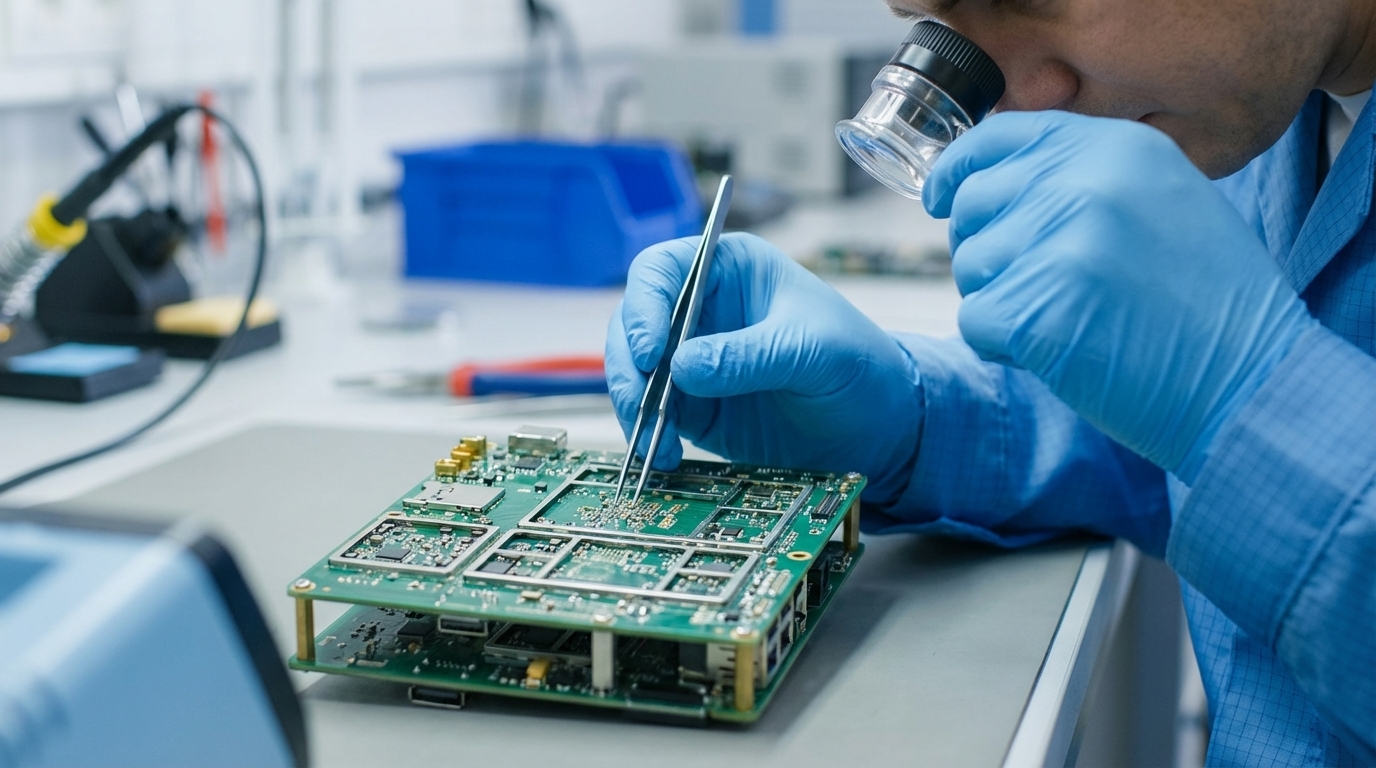
- An OEM contract manufacturer builds, assembles and tests medical devices to an OEM’s specifications under FDA-regulated quality systems.
- 2026 selection criteria center on ISO 13485 registration, QMSR transition readiness, cleanroom capabilities, US manufacturing capacity, tooling ownership and full lifecycle scope.
- Device-class requirements differ: Class III implants need validated sterilization and unit-level traceability, wearables require flex-circuit and data-security capabilities, and disposables demand high-volume repeatability and biocompatibility documentation.
- The seven-question buyer checklist surfaces disqualifying gaps in volume commitments, tooling ownership, US content, certifications, QMSR readiness, data security and end-to-end lifecycle services before an RFQ is issued.
- Premier Logitech consolidates regulatory readiness, security posture, operational scale and lifecycle completeness under a single partner relationship and provides a direct path to start a structured evaluation.
Core Selection Criteria for 2026 Medical Device Programs
Contract manufacturers must meet clear baseline criteria before entering a formal evaluation for a US medical device program in 2026.
ISO 13485 registration provides the baseline for FDA supplier qualification, and QMSR transition readiness extends that foundation by aligning 21 CFR Part 820 with the ISO standard. Physical capabilities then come into focus, as cleanroom infrastructure supports sterile and implantable builds, while US manufacturing capacity supports TAA compliance and strengthens supply chain resilience. Contractual and data factors complete the picture, since tooling and IP ownership protect OEMs during partner transitions and data security frameworks support connected and government-adjacent devices. Full lifecycle scope ties these elements together by reducing vendor fragmentation risk and closing compliance gaps at handoff points.
Talk to a lifecycle expert about mapping these criteria to a current program.
These baseline criteria apply across medical device programs, and device class then determines which capabilities move from preferred to nonnegotiable.
Device-Class Shortlists for Common Medical Programs
Different device classes impose distinct manufacturing requirements that narrow the field of qualified partners. The following shortlists highlight essential capabilities for three common categories.
Class III Implantable Devices
- Partners need ISO-classified cleanrooms and validated sterilization processes.
- The PMA pathway requires full design history file support and complete process validation documentation.
- Traceability to the unit level is mandatory for effective post-market surveillance.
- Preferred partners maintain dedicated implant-grade material handling protocols.
Wearable Medical Devices
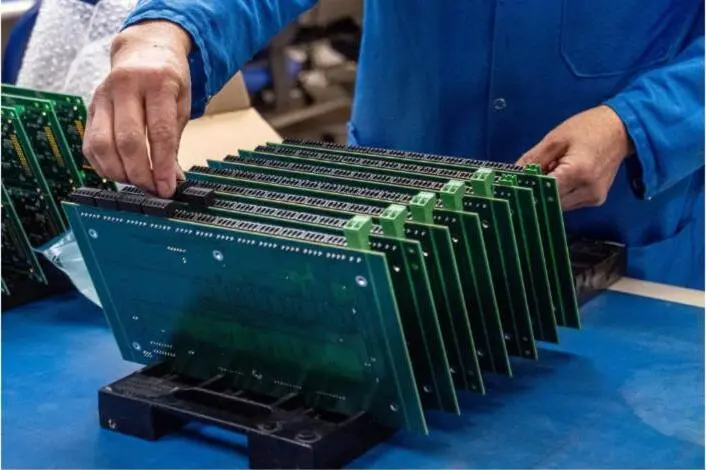
- Flex circuit assembly and PCBA capabilities function as core requirements.
- Software integration, firmware flashing and connected configuration must occur in a controlled environment.
- Partners need SOC 2 and NIST alignment for devices that transmit patient data.
- High-volume kitting and direct-to-patient fulfillment often support downstream program needs.
Disposable and Single-Use Devices
- High-volume, repeatable assembly with tight dimensional tolerances supports cost and quality targets.
- Biocompatibility documentation and lot traceability represent standard expectations.
- Partners with e-waste reduction programs and responsible recycling infrastructure reduce end-of-life compliance burden.
- Scalable pick, pack and ship operations support seasonal demand swings.
Seven-Question Buyer Checklist for OEM Qualification
This seven-question checklist qualifies any contract manufacturer before a formal RFQ. A partner that cannot answer all seven questions clearly should not advance.
- What is the minimum annual volume the partner will accept for this device class? Confirm the floor aligns with the program’s current and projected run rates.
- Who owns the tooling, fixtures and molds at contract end? The OEM must retain ownership or have a clear buyout path.
- What percentage of production occurs in US facilities? TAA compliance requires substantial transformation on US soil for government-adjacent programs.
- Is the partner’s ISO 13485 certification current and does it cover the specific device class? Scope limitations on a certificate can disqualify a partner for certain builds.
- Has the partner completed a QMSR gap analysis and documented its transition plan? FDA’s QMSR rule is now in effect and enforcement is active.
- What data security frameworks does the partner maintain: NIST, CMMC, SOC 2? Connected devices and government contracts require documented attestation.
- Does the partner provide end-to-end lifecycle services, including reverse logistics and compliant recycling? Fragmented vendors increase compliance risk and total cost of ownership.
Startup and Scale Needs in OEM Partner Selection
Program maturity shapes which partner attributes matter most during evaluation. Early-stage programs need partners that support low initial volumes and prototype iterations without rigid volume commitments, which creates room for design-for-manufacturability feedback during each build cycle. Tooling ownership clauses carry particular weight at this stage because switching costs peak before production ramps, so control of molds and fixtures protects future flexibility.
High-volume programs prioritize capacity guarantees, validated processes and supply chain redundancy. Partners with nearshore operations, such as facilities in the US-Mexico border corridor, can offer competitive unit economics while maintaining TAA compliance for qualifying programs. Surge capacity and rapid exchange programs become critical when device demand spikes or field failures require fast replacement cycles.
OEM and ODM Models for Regulated Devices
An OEM contract manufacturer builds to the OEM’s design, specification and regulatory submissions. The OEM retains full IP ownership and serves as the legal manufacturer of record with the FDA. An ODM, or original design manufacturer, owns the underlying design and licenses it to the brand. For regulated medical devices, ODM arrangements complicate the 510(k) or PMA submission because the brand may not control the design history file. Most US medical device programs rely on an OEM model to maintain regulatory control and direct access to design documentation.
FDA Compliance Landscape for 2026 Partner Decisions
The FDA’s Quality Management System Regulation (QMSR), which amends 21 CFR Part 820 to align with ISO 13485:2016, represents a significant compliance update for medical device manufacturers with an effective date in 2026. The rule requires manufacturers to incorporate ISO 13485 requirements directly into their quality management systems. Contract manufacturers that have not completed their QMSR transition represent a supplier qualification risk for any OEM undergoing an FDA inspection.
Beyond QMSR, FDA enforcement priorities in 2026 include supplier controls, complaint handling traceability and post-market surveillance data integrity. OEMs remain responsible for their contract manufacturers’ compliance under 21 CFR Part 820.50, which means a partner’s audit findings become the OEM’s problem. Selecting partners with documented QMSR readiness, current ISO 13485 registration and robust corrective action processes functions as a direct risk mitigation strategy.
For connected devices, FDA’s cybersecurity guidance for medical devices now requires manufacturers to submit a software bill of materials and a cybersecurity plan with premarket submissions. Partners handling firmware integration, software loads and connected configuration must operate under NIST and CMMC-aligned security frameworks.
How to Narrow the Field to the Top Three Partners
A structured process helps reduce a broad vendor list to a focused shortlist of three strong candidates. Start with a documented scope of work that covers every lifecycle stage, including sourcing, contract manufacturing, configuration, fulfillment, reverse logistics and compliant recycling. Partners that cannot cover the full scope require additional vendors, which multiplies compliance risk and management overhead.
Apply the seven-question checklist as a pass-or-fail filter that builds on this scope. Any partner that cannot provide written answers with supporting documentation does not advance to commercial discussions.
Score remaining partners on four dimensions that summarize the earlier criteria: regulatory readiness, security posture, operational scale and lifecycle completeness. These dimensions translate detailed requirements into a simple comparison framework that supports internal alignment.
Premier Logitech meets all four scoring dimensions through a single partner relationship. ISO 9001 and 14001 frameworks, TAA compliance, NIST, CMMC and SOC 2 certifications, and services spanning sourcing, contract manufacturing, configuration, fulfillment, reverse logistics and responsible recycling reduce fragmentation that creates compliance gaps and operational bottlenecks for medical device OEMs.
Conclusion: Turning Criteria into an Actionable Shortlist
OEM teams can select the right contract manufacturer for a US medical device program in 2026 by applying a consistent framework across QMSR readiness, ISO 13485 registration, cleanroom capabilities, US capacity, tooling ownership and full lifecycle compliance. The seven-question checklist surfaces disqualifying gaps before an RFQ, and device-class requirements further narrow the field to partners with relevant experience. The final step involves scoring remaining partners on regulatory readiness, security posture, operational scale and lifecycle completeness to support a confident decision.
Practical next steps include mapping current vendor flows against the selection criteria, identifying gaps in lifecycle coverage or compliance documentation, gathering performance data from existing partners and aligning internal stakeholders on the evaluation framework before engaging shortlisted manufacturers.
Begin a structured partner evaluation with Premier Logitech
Frequently Asked Questions
What lifecycle stages does Premier Logitech support for medical device OEMs?
Premier Logitech supports the full technology lifecycle from sourcing and contract manufacturing through configuration, fulfillment, reverse logistics and compliant recycling. For medical device OEMs, this structure means a single partner can manage procurement, box-build and electromechanical assembly, PCBA, firmware integration, kitting, distribution, depot repair, returns processing and responsible e-waste disposal. Consolidating these stages under one partner reduces vendor management complexity and closes compliance gaps that appear at handoff points between separate providers.
Which compliance frameworks does Premier Logitech maintain?
Premier Logitech operates under Trade Agreements Act (TAA) compliance, ISO 9001 and ISO 14001 quality and environmental frameworks, NIST cybersecurity standards, CMMC and SOC 2. These certifications support medical device OEMs that serve government-adjacent markets, handle connected devices with patient data or require documented environmental compliance for end-of-life recycling programs.
How does Premier Logitech handle data security for connected medical devices?
Premier Logitech’s NIST, CMMC and SOC 2 alignment covers the configuration and software integration stages where connected devices face the greatest exposure. Secure data destruction forms part of the reverse logistics workflow, which ensures that devices returned from the field do not carry patient or operational data into the refurbishment or recycling stream. Compliance reporting remains available to support OEM supplier qualification documentation and FDA audit readiness.
What is the difference between Premier Logitech’s end-to-end program and modular services?
Premier Logitech operates as both a single-source lifecycle partner and a modular services provider. OEMs with existing vendor relationships in some lifecycle stages can engage Premier Logitech for specific services, such as reverse logistics, depot repair or configuration and fulfillment, without restructuring the entire supply chain. OEMs seeking to consolidate fragmented vendor relationships can engage Premier Logitech for full program management across every stage.
Does Premier Logitech offer nearshore manufacturing and logistics options?
Premier Logitech operates facilities in the Dallas-Fort Worth area and maintains nearshore operations in the US-Mexico border corridor through Laredo and Nuevo Laredo. This structure supports programs that require cost-competitive assembly or kitting while maintaining proximity to US distribution networks. TAA compliance requirements are evaluated on a program-by-program basis to confirm that production activities meet substantial transformation standards for qualifying programs.
How does Premier Logitech support reverse logistics for high-return-volume medical device programs?
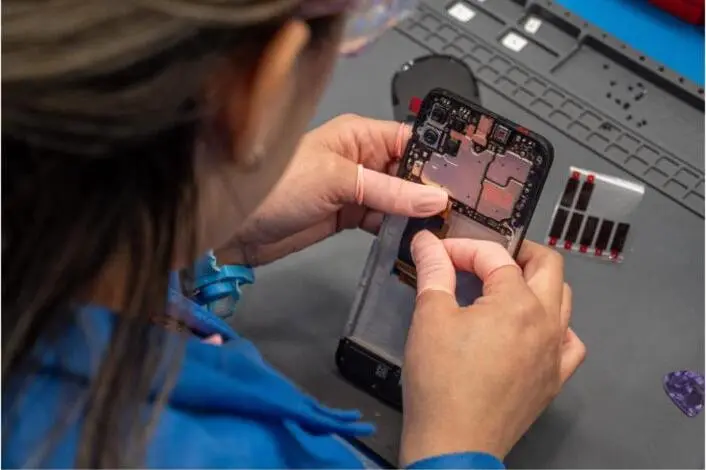
Premier Logitech’s reverse logistics infrastructure includes RMA management, triage, depot repair at multiple service levels, sorting and grading, cosmetic refurbishment, warranty claim support, rapid exchange and responsible recycling. For medical device programs with high return volumes or field replacement requirements, the depot repair and rapid exchange capabilities reduce device downtime and support post-market surveillance data collection through documented return and repair records.
