
Last updated: August 25, 2026
Key Takeaways for Enterprise WMS Selection
- Enterprise WMS platforms must support directed putaway, wave and zone picking, labor management, multi-carrier shipping and native ERP and automation integration across multiple sites.
- Most WMS projects fail due to poor ERP integration, incomplete requirements discovery and missing labor standards that weaken the business case.
- Successful vendor selection starts with mapping ERP backbone, automation maturity, site count and 3PL or compliance needs before evaluating platforms.
- Top platforms include SAP EWM for SAP-centric operations, Blue Yonder and Manhattan Active for high-automation environments and Oracle WMS Cloud for 3PL multi-client workflows.
- Talk to a lifecycle expert at Premier Logitech to align WMS implementation and lifecycle services with enterprise requirements.
The Problem: Why Enterprise WMS Projects Miss Their Targets
Poorly designed ERP and WMS integrations are the leading cause of WMS implementation delays and post-go-live performance problems. The integration layer is the most technically complex part of any WMS deployment, and it is where projects most commonly stall.
Surveys indicate that integration with existing systems is a common challenge for transportation and logistics enterprises. Data security concerns and implementation costs rank as the top two barriers. Enterprise shippers running multiple fulfillment nodes and regional ERP instances face growing point-to-point connections that cause data to silently diverge across ERP, WMS and TMS.
The consequences compound across multi-site operations. A single active client in a mid-size distribution center can generate tens of thousands of WMS transactions per day. That volume far exceeds what an ERP system is designed to ingest directly. Silent failures, such as dropped records, mapping errors and miscounted transactions, often surface only during client invoice disputes or audits.
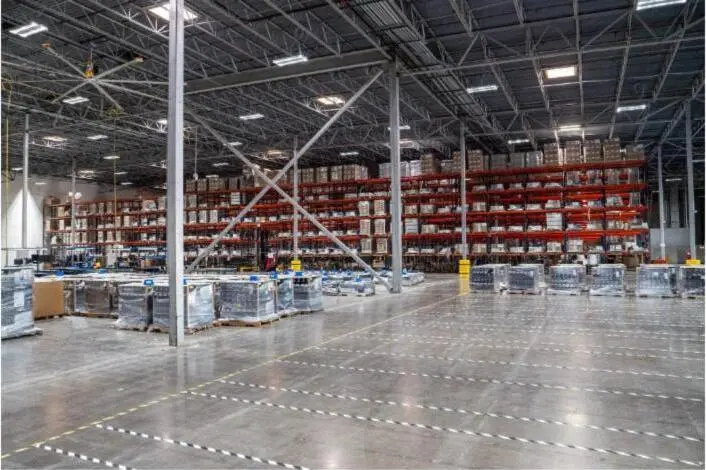
Labor management gaps create a parallel risk. Labor represents 50–70% of warehouse operating expenses. A WMS without engineered labor standards fails to deliver the business case that justified the investment. Returns processing blind spots and compliance shortfalls, particularly in TAA, NIST and CMMC environments, add further exposure for enterprises serving government or regulated markets.
Many failed WMS rollouts occur during the requirements discovery phase. Teams often do not fully document current warehouse flows, ERP integration needs, order volumes and target go-live dates before vendor selection begins.
Map current WMS failure points to Premier Logitech implementation and lifecycle services to stabilize existing programs or plan a new deployment.
The Solution Framework: Map the Environment Before Ranking Vendors
The failure patterns described above share a common root cause: organizations evaluate vendors before understanding their own requirements. Vendor selection must follow environment mapping, not precede it. Before evaluating any platform, logistics leaders should document four dimensions of the operating environment.
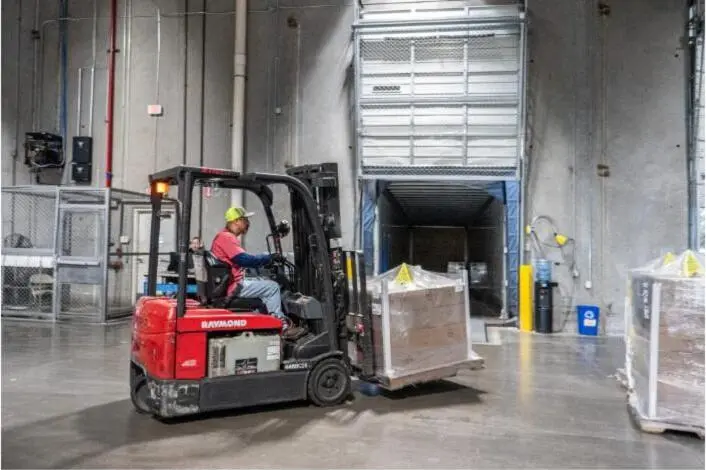
- ERP backbone: Identify the primary ERP, such as SAP S/4HANA, Oracle Fusion or Microsoft Dynamics 365, and confirm whether certified WMS connectors exist for that system.
- Automation maturity: Classify the current automation level, from manual pick and pack through AMR, AS/RS and goods-to-person systems. Determine whether a WES layer is required between the WMS and robotics.
- Site count and complexity: Document the number of facilities, whether operations are single-operator or multi-client and whether site-level workflow customization is required alongside centralized control.
- 3PL and compliance requirements: Determine whether multi-client inventory separation, activity-based billing, client portals and regulatory compliance frameworks such as TAA, NIST or CMMC apply.
Large logistics organizations evaluate WMS fit using a weighted scorecard that covers functional coverage, ERP and TMS integration depth, automation support, multi-site and multi-client scalability, total cost of ownership and vendor viability. The weighting shifts by logistics profile. Manufacturers emphasize lot traceability, 3PLs stress multi-client billing and omnichannel retailers prioritize OMS integration.
Best WMS Choice for SAP-Centric Enterprises
Organizations standardized on SAP S/4HANA or SAP ECC face a clear architectural decision. SAP Extended Warehouse Management delivers native S/4HANA integration with labor management, task interleaving, slotting and strong lot control and traceability for regulated industries. For enterprises already running SAP across finance, procurement and order management, SAP EWM removes the integration middleware layer that creates risk in best-of-breed deployments.
SAP EWM is a dedicated WMS product separate from the standard SAP ERP warehouse module and requires significant implementation investment. It suits large, complex operations where the SAP ecosystem is already the system of record and where implementation timelines of 12 to 24 months are acceptable.
Best WMS Platforms for High-Automation Robotics Environments
Warehouses operating AMRs, goods-to-person systems and conveyor sortation need a WMS that orchestrates automation continuously rather than only recording transactions. Blue Yonder WMS provides strong robotics and automation integration along with deep labor management capabilities using engineered labor standards. That combination makes it a strong option for automation-heavy distribution centers in retail, CPG and food and beverage.
Manhattan Active WMS is positioned as a leading enterprise platform due to its cloud-native architecture, AI-driven optimization and recognition as a Gartner Magic Quadrant Leader 17 times. The platform achieves the highest capability ceiling among top platforms and the highest complexity score for Level 3–5 warehouse complexity per Gartner. Those attributes make it suitable for automation-heavy enterprises and high-volume omnichannel retailers.
By 2026, WMS serves as the inventory brain for allocations and lot and serial control, while WES acts as the conductor for real-time task sequencing across humans, AMRs and conveyors. WCS manages sub-second machine control in heavily automated facilities. This layered architecture means that selecting a WMS without confirming its WES integration architecture creates a gap that no post-go-live configuration can fully close.
Best WMS for 3PLs with Multi-Client Workflows
Third-party logistics providers face requirements that single-operator warehouses do not. A true 3PL WMS must natively support multiple clients without separate systems or brittle workarounds. Core needs include segmented inventory and order data, client-specific workflows and rules, role-based permissions per client and accurate reporting and billing by account. The billing engine in particular is essential, because spreadsheet-based billing leads to missed accessorial charges and revenue leakage.
Oracle Warehouse Management Cloud has held a Gartner Leader position for ten consecutive years and handles multi-site, multi-client scenarios with strong barcode, RFID and wave-processing capabilities. Gartner Peer Insights reviews note a steep learning curve, long implementation timelines and difficulty integrating with non-Oracle systems.
Manhattan Active WMS targets enterprise-scale deployments and suits complex multi-warehouse networks in retail, 3PL and omnichannel verticals. Its Billing Management module supports 3PL operations at scale and reduces revenue leakage from manual billing processes.
Explore how Premier Logitech 3PL and reverse logistics services align with the WMS platforms evaluated here to support multi-client growth.
Common Enterprise WMS Failure Points and Practical Avoidance Tactics
The three most frequent causes of WMS implementation delays are incomplete or inaccurate master data discovered mid-migration, undocumented integration edge cases and under-allocated internal super users. Effective mitigation assigns dedicated super users per facility at meaningful time commitments during training and cutover. It also requires a full data audit before building integrations and a pilot at a single site before scaling.
Recurring integration failure patterns include status desynchronization, master data drift, brittle point-to-point connections, silent failures and customization lock-in that prevents surviving vendor upgrades. Clean integration requires a defined system of record for each data object and an event-driven or API-led architecture rather than batch file transfer.
Compliance shortfalls represent a distinct failure category for enterprises serving government or regulated markets. A WMS that lacks audit trails, role-based access controls and certified data handling cannot satisfy TAA, NIST or CMMC requirements. Post-go-live remediation costs often dwarf the savings from selecting a lower-cost platform.
Why Implementation and Lifecycle Partnership Drives Outcomes
Platform selection is one decision. Implementation execution and post-go-live lifecycle management determine whether the investment delivers its business case.
Premier Logitech serves as a single implementation and lifecycle partner for large enterprises and 3PLs navigating WMS deployment. Founded in 2007, Premier Logitech provides end-to-end technology lifecycle services, from sourcing and configuration through depot repair, reverse logistics and ITAD. The organization maintains repair capacity, kitting capacity and a logistics network spanning more than 120 LTL carriers across North America.
Enterprises with compliance requirements benefit from Premier Logitech TAA, TAPA, ISO, NIST, CMMC and SOC 2 certifications, along with a CAGE Code that identifies it as a pre-vetted partner for U.S. federal government programs. Authorized service center status across more than 20 OEM brands creates a repair and returns capability that competitors without those authorizations cannot match.

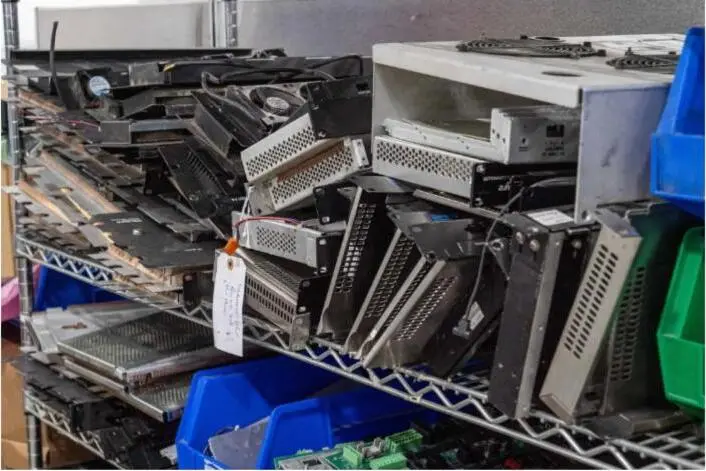
Reverse logistics is a persistent blind spot in many WMS implementations. A sophisticated WMS manages busy inbound and outbound logistics flows in reverse logistics by tracking every return in real time and ensuring it moves to its next destination quickly and accurately. Premier Logitech RMA management, L1–L4 depot repair, grading, refurbishment and secure data destruction services extend WMS-driven visibility into the reverse flow and close the loop that most implementations leave open.
CFO and IT Vendor-Scoring Checklist
The following checklist supports internal scoring before a final vendor recommendation reaches leadership.
- Certified ERP connector confirmed for the primary ERP, such as SAP, Oracle, Microsoft Dynamics or another platform
- WES integration architecture documented for current and planned automation equipment
- Multi-site configuration model reviewed, with centralized control and site-level workflow customization confirmed
- 3PL multi-client billing engine evaluated if applicable, including native activity-based billing, client portals and SLA management
- Labor management module assessed, including engineered labor standards, real-time performance tracking and incentive calculation
- Returns processing workflows validated, including guided triage, reason codes, quarantine locations and RTV flows
- Security and compliance confirmed, with SOC 2 report reviewed, SSO and role-based access controls verified, audit logs confirmed and data residency regions defined
- Implementation methodology reviewed, including BRD process, super user allocation plan, parallel run period and post-launch monitoring cadence
- Five-year TCO itemized across licenses, implementation, integration, data migration, training, infrastructure and ongoing support
- Lifecycle and reverse logistics partner identified, with authorized repair, returns processing and compliance coverage confirmed
Frequently Asked Questions
How long does an enterprise WMS implementation typically take?
Implementation timelines for enterprise WMS platforms vary based on site count, ERP complexity, automation level and data readiness. Single-site cloud deployments with standard processes and clean master data can complete in weeks. Multi-site deployments with complex ERP and EDI integrations typically take several months. Tier-1 platform deployments at large enterprises with heavy automation and multi-country operations commonly require six to 18 months or longer. The most reliable predictor of timeline is data quality. Incomplete or inaccurate master data discovered mid-migration is the leading cause of schedule overruns. Organizations that conduct a full data audit, assign dedicated super users per facility and pilot at a single site before scaling consistently achieve faster and more stable go-lives.
What does a 3PL WMS need that a single-operator WMS does not?
A 3PL WMS must natively support multi-client inventory separation so competing clients can coexist in the same warehouse without cross-contamination. This requirement drives client-specific workflows and rules, role-based permissions segmented by client and an activity-based billing engine that automatically accrues and invoices storage, handling and value-added services by account. Client-facing portals with real-time dashboards and API access support transparency and self-service. Platforms that handle these requirements through workarounds or manual processes create revenue leakage and audit risk. The billing engine is a core functional requirement, not an optional module, because spreadsheet-based billing at scale leads to missed accessorial charges and client disputes.
How does automation integration affect WMS selection for large enterprises?
Automation integration is one of the sharpest differentiators between enterprise and mid-market WMS platforms. Enterprise platforms provide native integration for AMRs, AS/RS, conveyor systems and goods-to-person equipment. Mid-market platforms typically rely on API-based or limited automation connectivity. For heavily automated facilities, the WMS must orchestrate tasks across humans and robots in real time. That orchestration requires a warehouse execution system layer between the WMS and the robotics subsystems. Organizations should confirm the WES integration architecture before selecting a platform, because retrofitting this layer post-go-live is costly and disruptive. The mobile layer must also support offline-first operation with local queuing and sub-second device response to maintain throughput during network variability common in large automated facilities.
Conclusion: Match WMS Selection with the Right Long-Term Partner
Selecting warehouse management software for large enterprise logistics teams in 2026 requires mapping ERP backbone, automation maturity, site count and 3PL complexity before any vendor evaluation. SAP EWM fits SAP-centric enterprises with complex supply chains. Manhattan Active and Blue Yonder serve high-automation and high-volume omnichannel environments. Oracle WMS Cloud and Manhattan Active address multi-client 3PL workflows. The platform decision is necessary but not sufficient.

Gartner reports that nearly two-thirds of supply chains are in a fragile state. Fragile operations face higher costs from delays, errors and missed service levels when WMS capabilities fall short. The gap between a well-selected platform and a well-implemented one is closed by the implementation partner, not the software vendor.
Premier Logitech provides implementation support, authorized repair and returns capacity, compliance certifications and real-time lifecycle visibility that large enterprises and 3PLs need to realize the full value of a Tier-1 WMS investment. From sourcing and configuration through depot repair, reverse logistics and secure data destruction, Premier Logitech operates as a single partner across the full technology lifecycle.
Build a WMS implementation and lifecycle program aligned to the organization ERP environment, automation roadmap and compliance requirements with Premier Logitech as a long-term partner.
