Last updated: August 24, 2026
Key Takeaways
- Large electronics and semiconductor manufacturers need serialized traceability, production-schedule awareness and compliance-grade controls across receiving, put-away, picking, shipping and returns.
- Short component lifecycles, fragmented vendor relationships and data silos between ERP, WMS and MES drive production line stoppages and reverse-logistics bottlenecks.
- Real-time WMS-ERP-MES integration, inventory segmentation, velocity-based slotting, selective automation with digital twins and structured exception workflows form the core solution pillars.
- Reverse logistics for electronics OEMs must satisfy multiple compliance frameworks at once, with Premier Logitech consolidating repair, refurbishment, grading and recycling under a single partner model.
- Manufacturers reduce coordination overhead and compliance risk by shifting from multi-vendor models to an integrated-partner approach. Assess current gaps and request a phased roadmap.
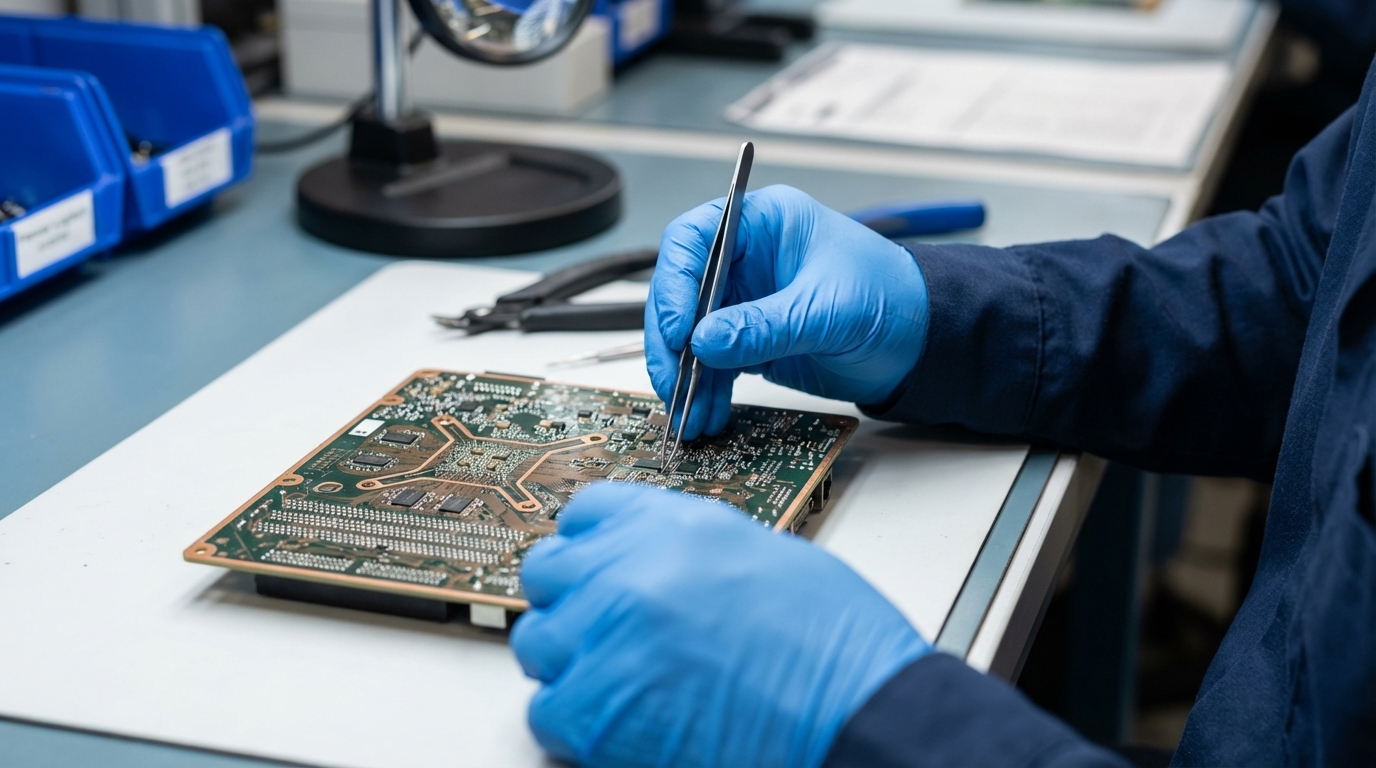
Electronics and semiconductor manufacturers face warehouse demands that general distribution models cannot meet. Production schedules, serialized traceability and strict compliance rules all converge in the same facilities. When warehouse operations fall behind these demands, margins erode through line stoppages, excess inventory and slow recovery from returns.
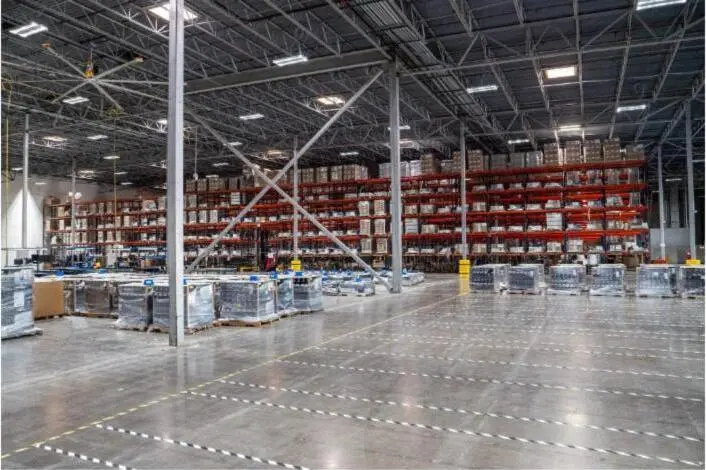
Production-Focused View of the 5 Warehouse Processes
Each core warehouse process carries production-specific requirements in electronics manufacturing. Standard distribution workflows miss these details and introduce risk.
- Receiving: Inbound components require TAA-compliant verification, lot traceability and counterfeit screening. SAE AS5553E and AS6496A require chain-of-custody evidence, not channel status alone, as proof of authenticity.
- Put-away: MES-triggered put-away routes components to locations based on live work-order demand. A well-designed MES-WMS integration improves material availability and reduces line-down events from missing or wrong materials.
- Picking and packing: BOM-driven pick instructions with pick-to-light or AGV delivery reduce manual kitting errors. Wireless intelligent picking carts receiving MES instructions replaced paper kitting lists in OMRON’s SMT operations.
- Shipping: Finished-goods release must synchronize with ERP financial postings and customer compliance documentation, including RoHS and REACH declarations.
- Returns: Reverse-logistics intake requires condition grading, secure data handling and disposition routing tied to warranty programs and asset-recovery targets.
These five processes form the operational canvas for improvement. The solution pillars below align directly to them, from real-time data flow to compliant returns.

The Problem: Short Lifecycles, Stoppages and Siloed Data
Many electronic components reach end of life earlier than manufacturers expected. Semiconductor product lifecycles have contracted to two to five years in many categories, while industrial and automotive grades often retain 10 to 15 year expectations.
Component issues can trigger unplanned line stoppages. At average SMT line costs, a multi-day stoppage can erase the margin on an entire production run. Recovery speed determines whether that margin loss stays contained or multiplies across orders.
Fragmented vendor relationships slow that recovery. When repair, refurbishment, grading and recycling sit with separate providers, visibility gaps delay disposition decisions and inflate carrying costs while the line remains at risk. Ninety-eight percent of manufacturers face data silos between ERP, WMS and MES systems, which cost hundreds of thousands of euros each year in lost productivity and inventory errors.
The solution is a synchronized, integrated operating model built on seven structured elements.
These elements follow a sequence. Integration establishes the data foundation. Segmentation and slotting then shape how inventory moves. Automation and exception workflows protect throughput. Reverse logistics and a phased roadmap complete the model.
Solution Pillar 1: Real-Time WMS-ERP-MES Integration
Disconnected systems create phantom stock, delayed production confirmations and reports that reflect yesterday’s plant reality. A Rockwell Automation 2026 global study of 1,560 operations decision-makers found that 93 percent of manufacturing companies run a MES in at least one facility, yet only 23 percent have fully integrated it across the enterprise. Manufacturers with integrated ERP, WMS and MES systems are 2.5 times more likely to achieve cost and time efficiencies.
This integration gap drives phantom stock and delayed confirmations. Closing it requires event-driven, bidirectional integration across WMS, ERP and MES using ISA-95 data models, canonical master data and idempotent message handling.
Evaluation criteria include API versioning, dead-letter handling, reconciliation reporting by lot and location and security controls that segment IT and OT networks.
Solution Pillar 2: Inventory Segmentation by Velocity, Criticality and Obsolescence Risk
Carrying costs for excess electronic component inventory can consume 25 to 30 percent of inventory value each year through warehousing, insurance and tied-up capital. These costs compound when components depreciate faster than they can be deployed or sold. High-risk components such as microcontrollers, ASICs, FPGAs and moisture-sensitive devices retain only a fraction of their value after two years without active management.
Segmentation by velocity, criticality and obsolescence risk tier supports targeted disposition decisions. Independent distributor buy-back programs with full traceability documentation recover more value than open-market or consignment channels.
Evaluation criteria include MPN-level audit capability, lot and date-code capture, moisture-sensitivity class tracking and integration with EOL notification feeds from major semiconductor manufacturers.
Solution Pillar 3: Velocity-Based Slotting and Line-Side Delivery
Static slotting designed for distribution does not match production environments where demand shifts with engineering changes and work-order schedules. Components needed at the line must arrive at the line, not at a staging area that requires operator retrieval.
Evaluation criteria include dynamic slotting rules tied to work-order priority, AGV or cart integration with MES pick triggers and replenishment logic that responds to real-time feeder consumption instead of fixed schedules.
Implementing AGV delivery and dynamic slotting often requires capital investment in automation. Before committing that capital, manufacturers need a way to confirm that the proposed system will perform under actual operating conditions.
Solution Pillar 4: Selective Automation with Digital-Twin Simulation
Capital automation investments in electronics warehouses carry significant financial risk if sized or integrated incorrectly. Digital twin simulation supports mechanization decisions by modeling actual order profiles and throughput requirements while pressure-testing vendor claims before capital commitment.
The global robotics market is anticipated to grow at a 19.6 percent CAGR from 2026 to 2036, according to Future Market Insights. Selective automation validated by simulation before deployment captures that growth while avoiding systems that do not fit the operational profile.
A practical ROI framework for digital twins calculates return across downtime savings, quality savings, energy savings and maintenance savings.
Evaluation criteria include simulation fidelity at actual SKU mix and throughput, hardware-in-the-loop validation before physical installation and a persistent twin connected to live WMS data for ongoing slotting optimization.
Solution Pillar 5: Labor and Exception Workflows for Changes and Shortages
Roughly 25 to 30 percent of lifecycle changes occur without preceding product change notifications reaching all affected customers. This level of volatility makes structured exception-management workflows essential.
Labor management systems tied to WMS and MES route exception tasks to qualified operators with documented procedures. This structure reduces the time between exception detection and production resumption.
Evaluation criteria include exception-routing logic by component class, integration with supplier notification feeds and audit trails that satisfy ISO 9001 change-control requirements.
Solution Pillar 6: Reverse Logistics Aligned to Warranty and Asset Recovery
Reverse logistics for electronics OEMs functions as a compliance discipline and a recovery engine. Returns must pass through condition grading, secure data destruction and disposition routing that satisfies TAA, NIST 800-88, CMMC, SOC 2 and ISO frameworks at the same time.
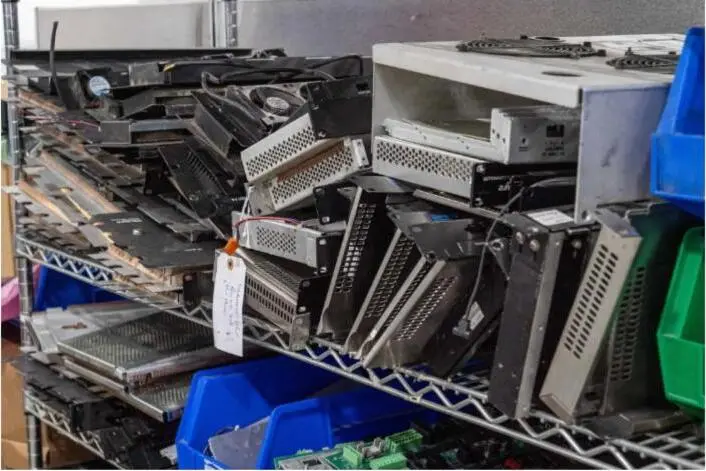
Compliant recovery operations require serial-number-level manifests, certificates of destruction tied to each serial number, chain-of-custody logs and vendor audit reports including current R2 or e-Stewards certifications. Condition grading tiers determine whether a returned unit is restocked, refurbished, harvested for parts or certified for recycling.
Structured electronics return programs improve recovery as they mature through recommerce channels and finance reconciliation.
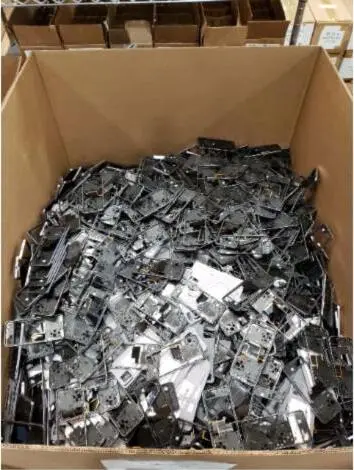
Premier Logitech consolidates repair at L1 through L4, refurbishment, grading and responsible recycling under a single partner model with more than 20 OEM authorized service center relationships. This structure closes compliance gaps that appear when separate vendors manage separate stages of the returns workflow.
Implementation: KPI Dashboard and 0–24 Month Phased Roadmap
The six solution pillars above form a comprehensive operating model. Implementing them requires a phased roadmap that guides the shift from fragmented, manual operations to production-synchronized warehouse execution.
Request a custom roadmap for a specific production environment.
Operating Model Comparison for Electronics Manufacturers
Manufacturers face a strategic choice in how they structure warehouse and reverse-logistics operations. The comparison below highlights trade-offs between in-house, multi-vendor and integrated-partner models and shows how coordination overhead and compliance risk rise as functions spread across more vendors.
Three operating models exist for managing warehouse and reverse-logistics operations in electronics manufacturing. An in-house model gives direct process control but requires sustained capital investment in systems, compliance certifications and specialized labor across every lifecycle stage. A multi-vendor model distributes functions across specialized providers but introduces handoff gaps, inconsistent data standards and compliance accountability that no single vendor owns. An integrated-partner model consolidates sourcing, warehousing, configuration, repair, refurbishment, grading and recycling under one governed program with unified data visibility and a single compliance framework. For large electronics and semiconductor manufacturers managing high-value components, engineering-change exceptions and compliance-grade asset recovery, the integrated-partner model reduces coordination overhead and compliance risk that multi-vendor arrangements accumulate over time.
Explore how a single integrated partner can reduce coordination overhead.
Frequently Asked Questions
What warehouse and lifecycle stages does Premier Logitech support for electronics manufacturers?
Premier Logitech supports the full technology lifecycle: sourcing and procurement, contract manufacturing, warehousing and inventory management, configuration and fulfillment, transportation and reverse logistics through recycling. Manufacturers can engage Premier Logitech as a single end-to-end partner or select individual services such as depot repair, kitting or returns processing on a standalone basis.
How does Premier Logitech handle compliance requirements for government and enterprise customers?
Premier Logitech operates under TAA, TAPA, ISO 9001 and 14001, NIST, CMMC and SOC 2 frameworks. The company holds a CAGE Code for pre-vetted federal government work and applies secure data destruction methods aligned to NIST 800-88 for returned devices. Compliance documentation, chain-of-custody logs and certificates of destruction are maintained at the serial-number level.
What reverse logistics capabilities does Premier Logitech provide for high-volume OEM returns?
Premier Logitech provides RMA intake, triage, depot repair at L1 through L4, cosmetic refurbishment, condition grading, warranty claim support, rapid exchange, parts reclamation and certified recycling. The company holds authorized service center status with more than 20 OEM brands, which enables warranty-compliant repair that third-party providers without ASC authorization cannot perform. Repair capacity supports tens of thousands of units each week.
How does Premier Logitech integrate with existing ERP, WMS and MES systems?
Premier Logitech’s operational visibility infrastructure uses a Transportation Management System and real-time tracking tools that connect with client ERP and WMS environments. Integration scope and architecture are defined during the collaborative onboarding phase, where Premier Logitech maps data flows, establishes master data governance and aligns reporting to client KPI frameworks. The modular service model allows integration to begin at the workflow stage where the client has the most acute need.
What does the transition process look like when moving from a multi-vendor model to Premier Logitech as a single partner?
The transition begins with a discovery and scoping call to document current vendor relationships, service levels, compliance obligations and operational pain points. Premier Logitech then develops a customized proposal that defines the integration strategy, deployment timeline and operational requirements. The phased onboarding approach prioritizes continuity of production support while standing up new workflows, with executive-level engagement maintained throughout the program.
