Last updated: August 8, 2026
Key Takeaways for ECM and Lifecycle Management
- Electronic contract manufacturing (ECM) lets OEMs outsource PCB fabrication, sourcing, assembly, testing and box build while retaining design ownership.
- Turnkey and consignment models define who controls procurement, inventory risk and component cost visibility across each program.
- Key risks such as IP exposure, quality drift and supply-chain visibility gaps can be reduced with security controls, named IPC standards and authorized-distributor-only sourcing.
- Partner selection should prioritize technical depth, compliance credentials (TAA, NIST, CMMC, SOC 2), U.S. footprint and authorized service center (ASC) status.
- Premier Logitech integrates ECM with reverse logistics, authorized depot repair and asset recovery under one U.S.-based partner; explore how to consolidate production and post-sale operations.
Electronic Contract Manufacturing Fundamentals
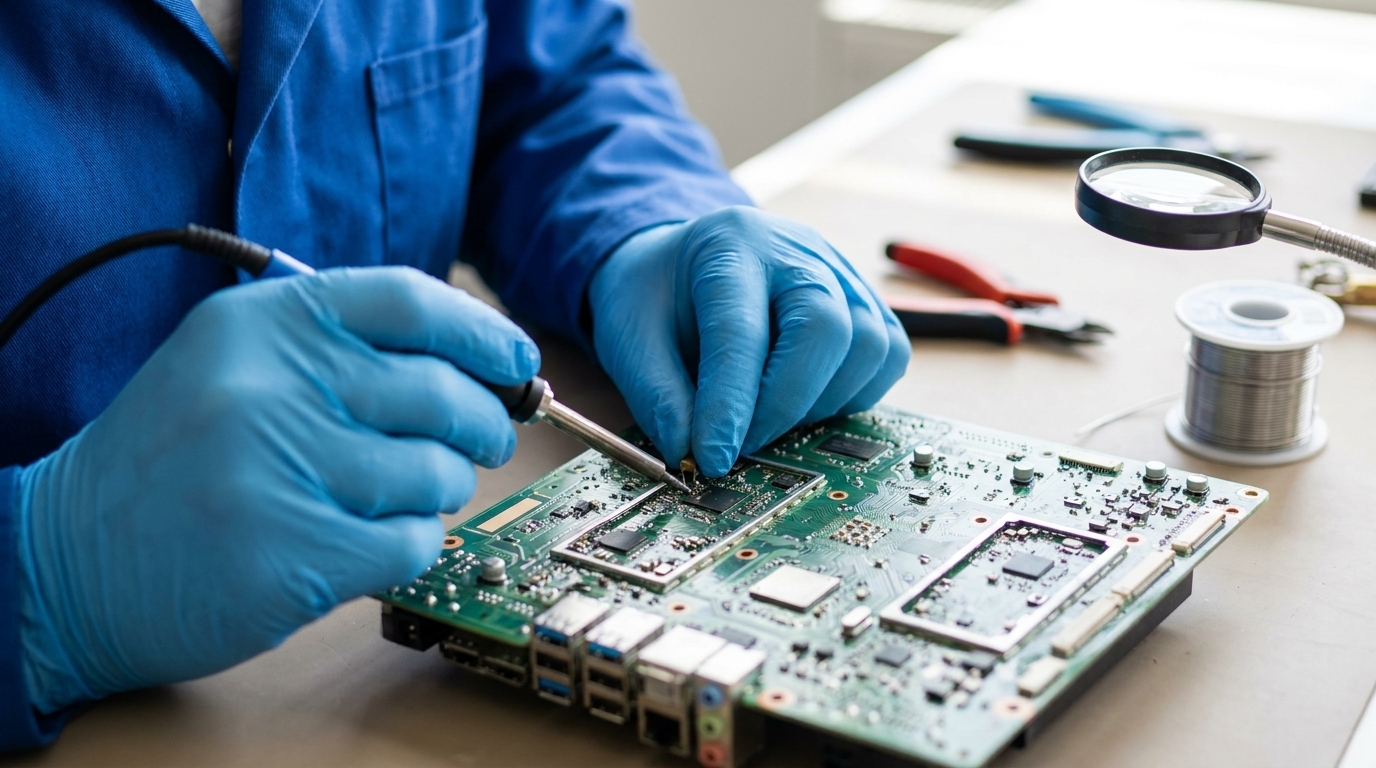
Contract electronics manufacturing traditionally refers to build-to-print manufacturing, while the broader electronics manufacturing services (EMS) category adds supply-chain management, new product introduction (NPI) support, design-for-manufacturability (DFM) feedback and after-sales services. Most modern providers describe themselves as EMS partners.
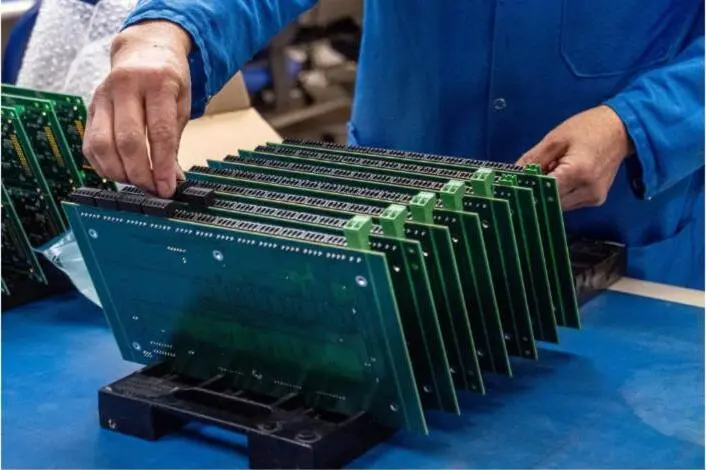
The scope of ECM services typically includes the following capabilities, which together allow OEMs to outsource the full production chain while keeping design control:
- PCB fabrication and SMT assembly
- Component sourcing and BOM management
- Sub-assembly, box build and electromechanical integration
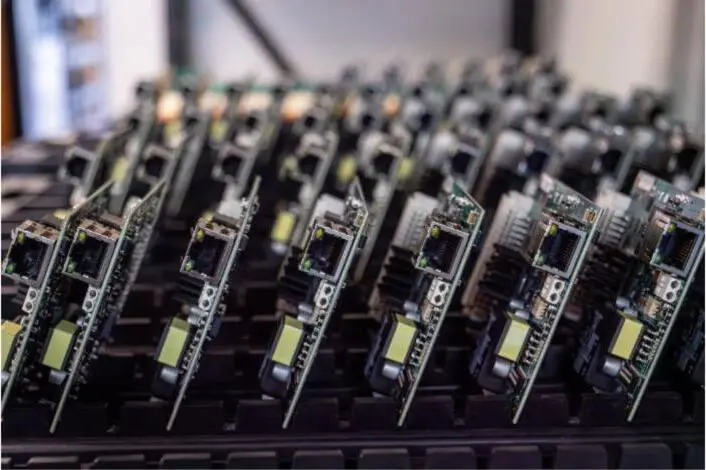
- Burn-in and functional testing
- NPI support and DFM review
- Configuration, kitting and fulfillment
Premier Logitech extends this scope through authorized depot repair, reverse logistics, asset recovery and compliance-backed end-of-life services, connecting the first build to the final disposition of every unit.
Turnkey and Consignment Models for ECM Programs
OEMs entering ECM relationships choose between two primary engagement structures. The right model depends on procurement capability, BOM complexity, volume and the OEM tolerance for inventory risk.
In a turnkey model, the contract manufacturer sources and purchases all components. In a consignment model, the OEM purchases and supplies the components while the manufacturer provides only labor, equipment and process. A partial consignment hybrid is common, where the OEM supplies only critical or long-lead components while the manufacturer sources the remainder of the BOM.
The following distinctions determine which model fits a program’s risk tolerance and procurement capability:
- Procurement ownership: Turnkey places sourcing responsibility with the manufacturer. Consignment places it with the OEM.
- Inventory risk: Turnkey shifts inventory and obsolescence risk to the manufacturer. Consignment keeps that risk on the OEM balance sheet.
- Component cost visibility: Turnkey adds a handling markup but reduces administrative load. Consignment gives the OEM full control over supplier pricing but increases procurement burden.
- Counterfeit risk: Under turnkey, the EMS provider assumes responsibility for component-level defects. Under consignment, the OEM retains that risk because it supplied the parts.
- Speed to production: Turnkey is typically faster for new product introductions because manufacturers have established procurement channels.
Most mature OEM programs use a hybrid model, consigning long-lead or specialized components such as ASICs or custom MCUs while allowing the contract manufacturer to turnkey standard passives and commodity parts.
Managing the Disadvantages of ECM
ECM introduces risks that OEMs must evaluate before selecting a partner. The primary categories are IP exposure, quality drift and supply-chain visibility.
IP exposure: The highest-risk ECM relationships are those where the manufacturer holds the complete design-to-manufacturing package while serving multiple competing OEMs simultaneously. OEMs should verify that CAD files, component specifications and supplier assignments are protected by access controls and that the partner has undergone security audits relevant to manufacturing environments.
Quality drift: Ambiguous quality standards in supply agreements create disputes when shipments fall within the agreed acceptance quality limit but are rejected by buyers due to brand reputation risks. Quality agreements should categorize non-conformances into critical, major and minor defects to improve accountability.
Supply-chain visibility: Limited supply-chain visibility allows phantom-factory scenarios in which ISO-certified facilities outsource production to unapproved lower-tier workshops, leading to inconsistent quality and undetected material substitution.
Mitigation approaches work together to protect IP, quality and compliance across the supply chain:
- Requiring authorized-distributor-only purchasing and written OEM approval for any component substitution prevents counterfeit parts from entering the supply chain.
- Specifying IPC standards by name (IPC-A-610, J-STD-001, IPC-6012) rather than generic certification language creates measurable workmanship expectations.
- Selecting a partner with compliance credentials that match the program regulatory environment (TAA, NIST, CMMC, SOC 2, ISO 9001/14001) aligns operations with audit needs.
- Implementing a layered test strategy covering incoming inspection, in-process validation and functional testing reduces field failures and warranty exposure.
- Auditing sub-tier supplier relationships and requiring traceability documentation maintains visibility into where and how each unit is built.
EMS Partner Selection Criteria for OEM Programs
Partner selection criteria should map directly to program requirements. The following checklist covers evaluation dimensions that support large IT, telecom, consumer electronics and government OEM programs.
- Technical capabilities: PCBA (SMT, through-hole, BGA), box build, electromechanical assembly, functional testing and configuration services
- Quality systems: ISO 9001 certification, IPC workmanship qualifications and a structured NPI process
- Geographic footprint: A U.S.-based EMS partner reduces ECM risks through shorter logistics cycles, improved communication and more responsive issue resolution
- Visibility tools: Real-time inventory tracking, lifecycle analytics and transportation management systems
- Lifecycle integration: The ability to manage sourcing, repair, reverse logistics and end-of-life under one agreement
- Compliance credentials: TAA, NIST, CMMC, SOC 2, ISO 9001/14001 for programs serving government or regulated enterprise customers
- Authorized service center (ASC) status: OEM-authorized repair that preserves warranty integrity and limits liability
Premier Logitech holds more than 20 OEM ASC authorizations, operates three DFW facilities with nearshore capacity in Laredo/Nuevo Laredo and carries TAA, TAPA, ISO, NIST, CMMC and SOC 2 credentials. That combination addresses the compliance burden and vendor-consolidation needs that many fragmented ECM relationships leave unresolved.
Review Premier Logitech’s compliance credentials and ASC authorizations against program requirements.
ECM Cost-Savings Mechanisms
ECM delivers cost control through several structural mechanisms rather than a single line-item reduction.
Capital conversion: Outsourcing electronics assembly converts fixed capital expenses into operational expenses, allowing OEMs to avoid large equipment investments and redirect capital toward design and product development.
Scalability without fixed overhead: OEMs outsourcing electronics assembly achieve instant elasticity and can scale production up or down without hiring or firing staff. This supports programs with seasonal demand or product-launch spikes.
Vendor consolidation: Full turnkey manufacturing from PCB assembly to box build saves management overhead compared to fragmented sourcing by removing redundant vendor margins and inter-vendor coordination delays.
Defect reduction: EMS providers using in-circuit and functional test achieve early failure rates below industry averages, which reduces field returns and warranty costs that compound total cost of ownership over a product life.
Time-to-market: Outsourced hardware development shortens time-to-market compared to building an in-house team from scratch by providing immediate access to specialized capabilities including RF engineering, EMC compliance and FPGA design.
In-House and Outsourced Production Decision Framework
These cost mechanisms matter only when ECM fits the program strategy. The decision to build in-house or outsource depends on capital intensity, compliance burden, scalability requirements and lifecycle integration needs.
Capital intensity: In-house production requires investment in SMT lines, test fixtures, AOI equipment and facility space. Selective soldering machines typically cost between $8,000 and $45,800. ECM converts those fixed costs into variable operational expenses tied to production volume.
Compliance burden: Government and regulated enterprise programs require TAA-compliant sourcing, NIST-aligned data handling, CMMC certification for defense contracts and ISO quality frameworks. Maintaining those credentials in-house requires dedicated personnel and audit infrastructure. An ECM partner with existing certifications absorbs that overhead.
Scalability: In 2026, automation investment and proximity benefits narrow the cost gap. U.S.-based ECM providers with strong automation compete effectively for high-mix, time-sensitive or IP-sensitive programs when tariffs, logistics and policy volatility are included.
Lifecycle integration: In-house production rarely extends to authorized depot repair, reverse logistics or certified asset recovery. An ECM partner with ASC authorizations and end-of-life services removes the need for separate vendor relationships at each lifecycle stage.
Total Cost of Ownership Across Build and Reverse Flow
Total cost of ownership in electronics extends beyond the unit build cost. Warranty obligations, return processing, data-security requirements and end-of-life disposition all carry costs that fragment across vendors when ECM and post-sale services are managed separately.
Effective reverse logistics improves customer experience and supports sustainability initiatives by reducing waste and recovering product value. This connection allows OEMs to pair electronics manufacturing with post-sale asset recovery programs.
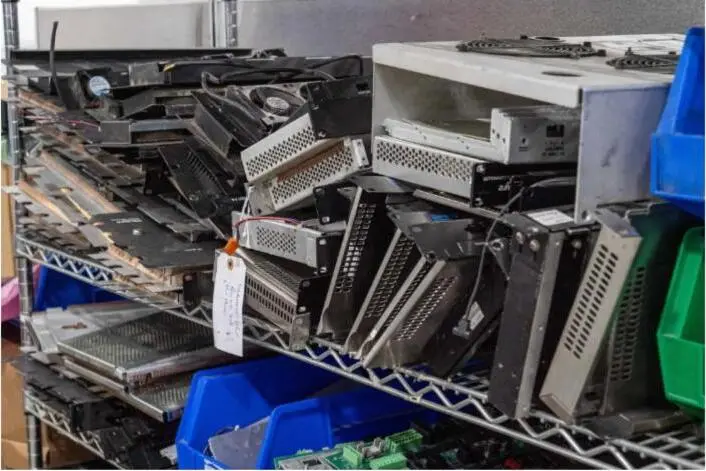
Returned units require a disposition decision, such as restock, refurbish, salvage or scrap. That triage process sits at the center of asset recovery programs that aim to recover the most value at the lowest processing cost.
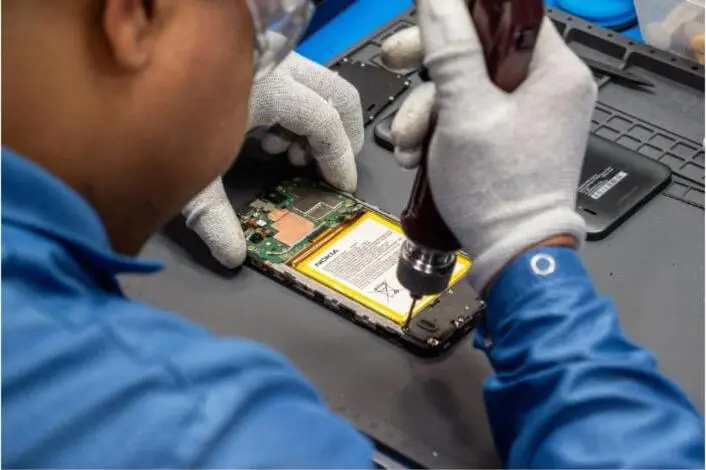
Premier Logitech’s authorized-service-center network handles L1 through L4 depot repair across more than 20 OEM brands, with capacity exceeding 40,000 repairs per week. That authorization structure matters because unauthorized repair voids OEM warranties and creates liability exposure. A single partner managing both the forward build and the reverse flow, with certified repair, secure data destruction, grading, refurbishment and responsible recycling, eliminates handoff costs and compliance gaps that fragmented vendor relationships create.
Key TCO levers that a single lifecycle partner addresses include:
- Warranty claim processing and in-warranty vs. out-of-warranty triage
- Rapid exchange and next-day replacement programs that reduce customer downtime
- Certified refurbishment and grading for secondary market resale
- Secure data destruction aligned with NIST and SOC 2 requirements
- Parts reclamation and harvesting to offset new component costs
- Compliance reporting for ISO, NIST and CMMC audit requirements
OEM Scenario: Integrated ECM and Reverse Logistics
A mid-to-large telecom OEM managing a high-volume device program faces a mix of new production, warranty returns and government contracts requiring TAA compliance and CMMC certification.
Under a fragmented model, the OEM contracts separately for PCB assembly, box build, depot repair, returns processing and ITAD. Each vendor handoff introduces lead-time variability, traceability gaps and compliance documentation that must be reconciled across systems. Warranty claims that cross vendor boundaries create disputes over root cause and liability.
Under Premier Logitech’s integrated model, the same program flows through a single partner. Production runs through TAA-compliant sourcing and U.S.-based assembly. Returns enter an ASC-authorized depot where L1–L4 repair, grading and refurbishment decisions are made against a single traceability record. Devices cleared for secondary market resale move directly to remarketing channels. End-of-life units go through certified data destruction and responsible recycling with compliance documentation generated automatically.
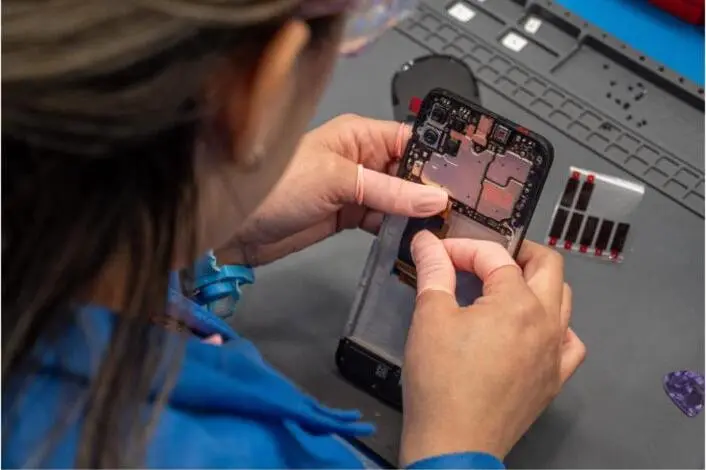
The operational result is a shorter total cycle from return intake to redeployment or disposition, a single compliance record for government audit purposes and recovered asset value that offsets forward production costs, all without managing multiple vendor relationships.
Map this model to an OEM program.
Conclusion: ECM as a Lifecycle Strategy
Electronic contract manufacturing gives OEMs a path to scalable, compliant production without the capital burden of in-house manufacturing. The decision between turnkey and consignment models, and between in-house and outsourced production, depends on procurement capability, compliance requirements and lifecycle integration needs.
OEMs that evaluate ECM partners on technical depth, compliance credentials, ASC authorizations and post-sale service capability, rather than unit price alone, realize broader TCO benefits. Premier Logitech connects ECM to reverse logistics, authorized depot repair, asset recovery and end-of-life compliance under one U.S.-based partner with the compliance credentials and ASC authorizations described earlier, resolving the fragmentation that limits value in many outsourced production programs.
Frequently Asked Questions
What is the difference between turnkey and consignment electronic contract manufacturing?
In a turnkey engagement, the contract manufacturer sources and purchases all components, manages inventory and delivers finished assemblies. The OEM provides design files and a BOM. In a consignment engagement, the OEM purchases and ships all components to the manufacturer, which provides only assembly labor, equipment and quality assurance. The primary difference is who owns and controls the production materials, which determines procurement risk, inventory carrying costs and accountability for component availability. Most mature OEM programs use a hybrid approach, consigning long-lead or proprietary components while allowing the manufacturer to source standard passives and commodity parts.
How does electronic contract manufacturing connect to reverse logistics and asset recovery?
ECM covers the forward production of a device. Reverse logistics manages what happens after the device reaches the end user, including returns, warranty repairs, refurbishment and end-of-life disposition. When separate vendors manage these functions, OEMs face traceability gaps, compliance documentation fragmentation and lost asset recovery value. A single partner that holds both ECM capabilities and authorized depot repair status can manage the full flow from first build to final disposition, generate a continuous traceability record and recover value from returned units through grading, refurbishment and secondary market resale rather than treating returns as a pure cost center.
What compliance frameworks should OEMs require from an ECM partner?
The relevant frameworks depend on the program end market. Government and defense programs typically require TAA-compliant sourcing, NIST-aligned data handling and CMMC certification. Enterprise IT and telecom programs benefit from SOC 2 for data security and ISO 9001 for quality management. Programs with environmental reporting obligations or EU market access need ISO 14001 and RoHS/REACH alignment. OEMs should require that a partner certifications are current, auditable and extend to sub-tier suppliers rather than applying only to the primary facility. Premier Logitech holds TAA, TAPA, ISO, NIST, CMMC and SOC 2 credentials and operates with a CAGE Code for U.S. federal government programs.
What are the main risks OEMs face when outsourcing electronics production?
The primary risks are IP exposure, quality drift, supply-chain visibility gaps and compliance failures. IP exposure increases when a contract manufacturer holds complete design packages while serving competing OEMs. Quality drift occurs when supply agreements lack clearly defined defect categories and acceptance criteria. Visibility gaps arise when manufacturers outsource to unapproved sub-tier facilities without OEM knowledge. Compliance failures result from component sourcing that does not meet RoHS, REACH, TAA or conflict-minerals requirements. Mitigation requires selecting a partner with documented security controls, named IPC quality standards in the supply agreement, authorized-distributor-only sourcing policies and compliance certifications that match the program regulatory environment.
Why does authorized service center status matter when selecting an ECM partner?
ASC authorization means the repair partner has been vetted and approved by the OEM brand to perform warranty-covered repairs using approved parts, processes and documentation. Unauthorized repair voids warranties, creates product liability exposure and disqualifies devices from secondary market resale at full refurbished value. For OEMs managing high return volumes, working with an ASC-authorized partner means warranty claims are processed without voiding coverage, repaired units meet original specifications and compliance documentation is generated in a format the OEM brand accepts. Premier Logitech holds ASC authorizations for more than 20 OEM brands, which allows it to handle warranty and out-of-warranty repair across a broad device portfolio under a single program agreement.
