
Last updated: August 17, 2026
Key takeaways for OEM transportation decisions
- Standard managed TMS providers reduce cost per shipment but lack the certifications and controls required for TAA-compliant, government-adjacent tech freight.
- IT and electronics OEMs face specific needs such as high-value asset handling, integrated reverse logistics, and NIST, CMMC and SOC 2 compliance that general freight providers do not cover.
- Asset-based, non-asset and hybrid TMS models trade off capacity control, geographic reach and scalability for variable tech shipment volumes.
- Premier Logitech’s integrated lifecycle model combines transportation management with depot repair, returns processing and asset recovery under one certified provider to remove handoff delays and compliance gaps.
- Start a conversation with Premier Logitech to assess whether its certified, end-to-end transportation and lifecycle model aligns with OEM freight and compliance needs.
The problem: Managed TMS gaps for IT and electronics OEMs
Managed transportation services, or managed TMS, extend beyond freight brokerage. A freight broker arranges individual shipments. A managed TMS provider assumes operational responsibility for carrier selection, routing, freight audit and performance reporting across a shipper network. The provider functions as part of the logistics team rather than as a transactional intermediary.
That distinction serves general manufacturers. It does not cover the full requirement set for IT and electronics OEMs. Tech shippers carry three connected constraints that standard managed TMS programs leave unresolved.
High-value asset freight such as servers, networking equipment and telecom hardware requires chain-of-custody documentation, secure handling and carrier vetting that exceed standard insurance checks. That documentation burden expands when returns enter the picture, because returns form a core revenue recovery channel for tech OEMs. When a separate vendor manages reverse logistics, returns data never informs forward-logistics planning and asset recovery value erodes across the program.
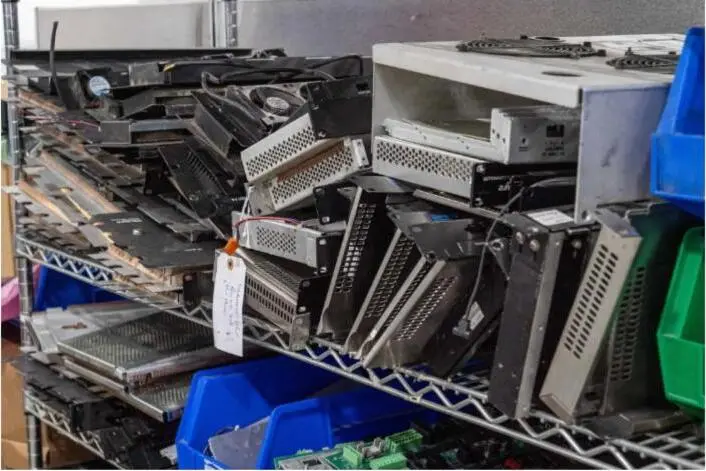
Compliance requirements compound these operational pressures. Government-adjacent contracts now apply NIST, CMMC and SOC 2 standards across the full supply chain, including transportation and depot services. A managed TMS provider without those certifications creates a compliance gap that the OEM absorbs.
Asset, non-asset and hybrid TMS models for tech freight
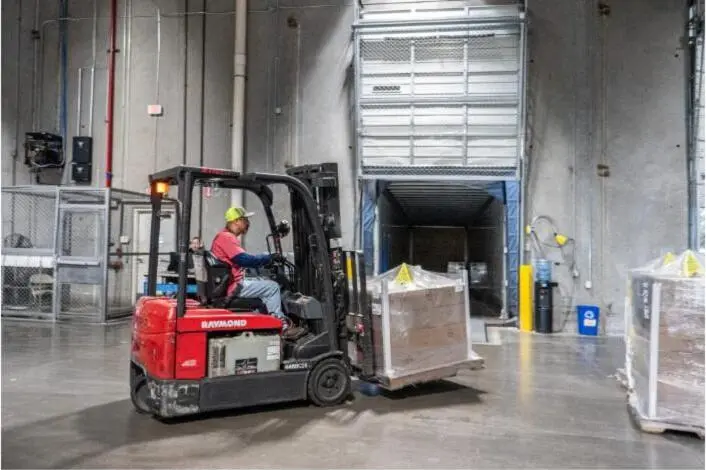
The asset-versus-non-asset distinction shapes every other characteristic of a managed TMS provider. Asset-based providers own trucks, trailers and warehouses, which gives them direct control over driver scheduling, equipment maintenance and service execution. That control supports predictable capacity on high-volume, consistent lanes. The tradeoff is fixed geography, limited scalability during demand peaks and pricing that reflects owned-fleet overhead.
Non-asset-based providers match shipper freight with external carrier networks, trading direct equipment control for broader geographic reach and rapid scalability. U.S. 3PL market net revenues reached $131.5 billion in 2024, which reflects the scale at which shippers rely on broker networks. This model fits variable shipment volumes, seasonal peaks and multimodal requirements where a single owned fleet cannot cover all lanes.
Hybrid providers own core capacity for the highest-volume lanes and supplement with brokered capacity for peaks and less-traveled routes. Mid-market shippers increasingly select tech-enabled managed transportation providers over asset-heavy carriers because the high-volume commitments required by asset-based models do not match growing or volatile freight profiles.
IT and electronics OEMs often ship a mix of TL and LTL freight, with irregular return volumes and multisite distribution. For that profile, a non-asset or hybrid managed TMS with a broad vetted carrier network and a strong technology platform usually delivers more flexibility than a dedicated contract carriage model built around dry van lanes.
Connect with Premier Logitech to map freight mix and volume patterns to the right TMS structure.
Compliance-focused TMS outsourcing for government-adjacent OEMs
The compliance landscape for government-adjacent tech freight tightened materially in 2026. Three developments now work together to define a unified baseline for OEMs and their logistics partners.
On January 5, 2026, the GSA released Revision 1 of its IT Security Procedural Guide, which requires contractors to implement NIST SP 800-171 Rev. 3 and select requirements from draft NIST SP 800-172 Rev. 3 for protecting Controlled Unclassified Information on nonfederal systems. The guide establishes nine binary “showstopper” controls, including phishing-resistant multifactor authentication, cryptographic protection of CUI and one-hour incident reporting. Contractors must fully implement these controls before authorization, with no Plan of Action and Milestones accepted.
The FAR Council published proposed rule FAR Case 2026-001 on June 23, 2026, which would set NIST SP 800-171 Rev. 3 as a uniform, government-wide baseline for all federal contractors and subcontractors handling CUI, regardless of contract value. Transportation and logistics vendors that store, route or process shipment data tied to CUI fall within this scope.
CMMC Phase 2 requirements were originally scheduled to take effect on November 10, 2026, but were suspended by the Department of Defense on July 13, 2026. Tier 2 defense manufacturers and their managed service providers that handle CUI must obtain CMMC Level 2 certification through a third-party C3PAO assessment. Logistics and depot repair providers that support defense or regulated IT shipments sit explicitly in scope under 32 CFR Part 170.
Federal expectations align with private-sector standards. Defense-freight carriers transporting sensitive electronics require NIST 800-53 Rev. 5 and NIST 800-171 Rev. 3 controls, along with supply chain security standards such as TAPA FSR 2024 and CBP C-TPAT.
Premier Logitech holds TAA, TAPA, ISO quality frameworks, NIST, CMMC and SOC 2 certifications and carries CAGE Code 4WAJ9 as a pre-vetted federal government partner. This certification stack covers the full range of requirements that government-adjacent OEM freight now demands, which general freight managed TMS providers typically do not match.
Premier Logitech’s integrated transportation and lifecycle model
Scale-focused managed TMS providers deliver broad carrier networks, strong freight procurement leverage and mature TMS platforms. Their programs serve general freight at high volume. They rarely connect transportation execution to depot repair workflows, manage RMA intake or carry the certifications that government-adjacent IT freight requires.
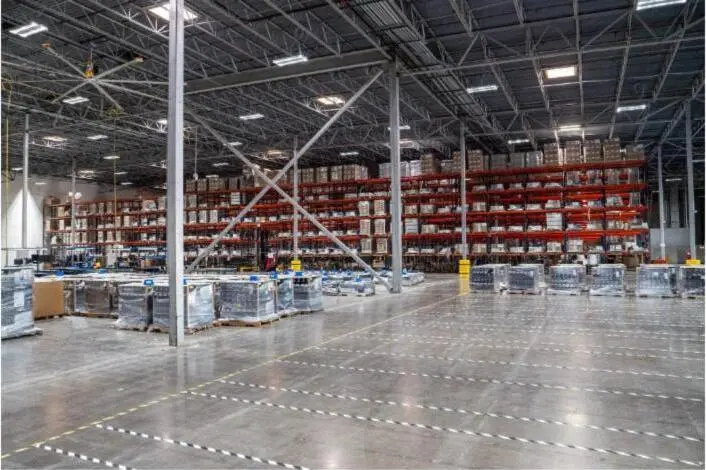
Premier Logitech operates a different model. Transportation management functions as one layer of an end-to-end lifecycle program that also includes configuration and fulfillment, depot repair at Levels 1 through 4, returns processing and RMA management, asset recovery and secure data destruction and responsible recycling. The carrier network spans more than 120 vetted North American LTL carriers, along with full truckload, intermodal and international air and ocean options.

Transportation, reverse logistics and depot repair operate under one program. Returns data flows directly into forward-logistics planning, which supports better routing and inventory decisions. Asset recovery value remains within the program instead of dissipating across disconnected vendors. Compliance documentation, chain-of-custody records, data destruction certificates and audit-ready disposition reports originate from a single operational system instead of multiple provider reports.
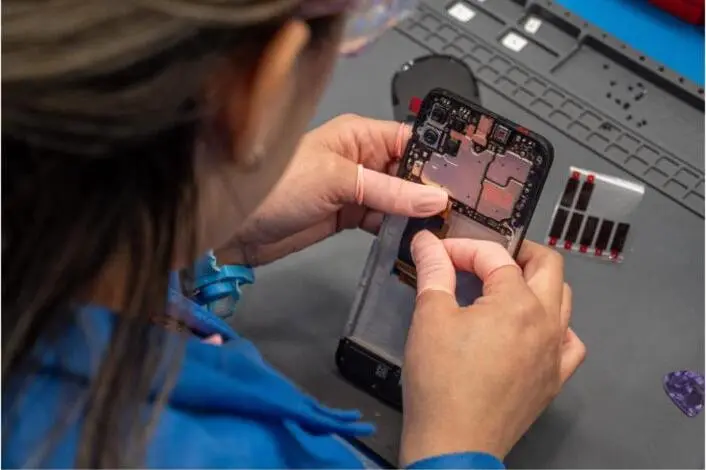
Certified IT asset recovery enhances data security, reduces e-waste, improves resource use and streamlines workflows through automation. Premier Logitech’s integrated model delivers these outcomes within one vendor relationship, so OEMs do not need to coordinate separate logistics, repair and IT asset disposition providers.
Decision path: Matching freight mix to the right provider
The right managed TMS partner depends on freight characteristics, compliance obligations and integration needs. A practical decision path starts with the freight profile, then layers in compliance and lifecycle priorities, and ends with operational fit.
First, map freight profile details. High return volumes or strong seasonality point toward providers with flexible capacity models and broad carrier networks. Stable, high-volume lanes may justify asset-based or hybrid models.
Next, apply compliance and security filters. Government-adjacent contracts that involve CUI require TAA, NIST and CMMC coverage that remove most general freight providers from consideration. Programs that rely on SOC 2 reporting or documented data destruction need providers that can supply those records for audits.
Finally, assess integration depth and lifecycle scope. When depot repair and asset recovery influence total cost of ownership, a provider that connects transportation to those workflows natively often delivers lower overall cost than assembling separate vendors. Use the following criteria to score candidates across these dimensions.
Freight profile considerations:
- TL-to-LTL mix and whether volume remains consistent or seasonal
- Presence of high-value or sensitive electronics that require chain-of-custody documentation
- Multisite distribution needs across domestic and international lanes
- Return volume as a share of total shipment activity
Compliance and security requirements:
- Whether freight touches government contracts subject to TAA, NIST, CMMC or GSA cybersecurity requirements
- Whether provider certifications cover the full scope of CUI handling, not only transportation execution
- Whether SOC 2 and data destruction documentation are available for audits
Integration and lifecycle requirements:
- Whether the provider connects transportation management to depot repair and returns processing natively
- Whether real-time visibility extends across forward and reverse flows in a single platform
- Whether asset recovery and refurbishment sit within the same program
- Whether the provider holds OEM Authorized Service Center status for brands in the product portfolio
Operational fit:
- Whether the provider can operate as a modular service or a full end-to-end lifecycle partner
- Whether nearshore or multifacility operations support the required geographic footprint
- Whether the provider offers executive-level engagement and a single point of contact
Frequently asked questions
What services are included in outsourced transportation management?
Outsourced transportation management typically covers carrier selection and procurement, routing, freight audit and payment, performance reporting and exception management. More comprehensive programs extend to control tower services with real-time visibility, freight analytics and multimodal execution across TL, LTL, intermodal and parcel. Premier Logitech’s transportation services include TMS, courier services, freight audit and logistics analytics, white glove delivery, LTL, full and partial truckload, intermodal and international air and ocean shipping.
How does integration with returns workflows affect total cost of ownership?
When separate vendors manage transportation and reverse logistics, handoff delays slow returns processing and asset recovery value declines. Compliance documentation also must be assembled from multiple sources. Integrating both functions under one provider removes those handoff costs, accelerates RMA processing and allows recovered asset value to offset forward-logistics spend. This structure produces a lower total cost of ownership than fragmented vendor relationships, even when the integrated provider’s per-service rate matches standalone alternatives.
What transition steps should OEMs expect when switching managed TMS providers?
A managed TMS transition typically follows four phases. Discovery and requirements alignment document current carrier relationships, lane data and compliance obligations. Proposal and pricing finalize scope and service levels. Integration and onboarding connect the provider’s TMS to the OEM’s ERP, WMS and carrier systems. Go-live and refinement then proceed with ongoing performance monitoring. Premier Logitech structures transitions through a defined Statement of Work and customized Service Level Agreement, with executive-level engagement to align deployment timelines and operational needs.
Which compliance certifications matter most for IT and telecom equipment in 2026?
For government-adjacent IT and telecom freight in 2026, the most relevant certifications include TAA compliance for trade-compliant product sourcing, NIST SP 800-171 Rev. 3 for protecting Controlled Unclassified Information, CMMC Level 2 for defense supply chain participants that handle CUI, SOC 2 for data security and operational controls and TAPA for physical cargo security. GSA’s January 2026 IT Security Procedural Guide and the proposed FAR Case 2026-001 rule elevate NIST and CMMC requirements to baseline contractual obligations for a broad range of federal contractors and their service providers, including logistics and depot repair vendors.
Evaluation checklist for outsourced transportation partners in 2026
Apply this checklist when evaluating managed TMS providers for IT, telecom or electronics OEM freight:
- Carrier network breadth covers all modes and geographies required by the freight profile
- Carrier vetting includes insurance verification, safety record review and ongoing performance monitoring
- TMS platform delivers real-time visibility across forward and reverse shipment flows
- Control tower capabilities include proactive exception management, not only postdelivery reporting
- Compliance certifications cover TAA, NIST, CMMC, SOC 2 and TAPA as applicable to the contract base
- Reverse logistics, depot repair and asset recovery are available within the same program or vendor relationship
- OEM Authorized Service Center status covers the brands in the product portfolio
- Pricing model aligns with shipment volume profile, whether subscription, per shipment or hybrid
- Implementation approach includes a defined SOW, SLA and integration strategy before go-live
- Provider can operate as a modular service or a full end-to-end lifecycle partner, depending on program scope
Standard managed TMS programs address carrier procurement and routing. They do not address the combined compliance, integration and lifecycle demands that IT and electronics OEMs carry into government-adjacent contracts. Premier Logitech’s integrated approach brings transportation, depot repair and asset recovery into one certified program that aligns with those requirements.
