Last updated: July 9, 2026
Key Takeaways for 2026 Refresh Planning
- Enterprise IT hardware refresh cycles in 2026 are shifting from calendar schedules to telemetry-informed frameworks that weigh warranty, performance, security and total cost of ownership.
- Benchmarks show laptops typically refresh every 3 to 4 years, servers 4 to 6 years, networking equipment 5 to 7 years and mobile devices 2 to 4 years, with triggers like OS end-of-support and performance thresholds driving earlier action.
- Condition-based refresh using telemetry data reduces unnecessary replacements, lowers capital spend and extends device lifecycles while maintaining compliance and security standards.
- Rolling refresh strategies provide predictable budgeting and reduced operational disruption compared with big-bang replacements, especially when paired with phased deployment and repair capabilities.
- Premier Logitech delivers a single-partner lifecycle solution for sourcing, repair, rapid exchange and certified recycling. Get started today to build a metrics-driven refresh program tailored to enterprise needs.
2026 Refresh Benchmarks by Asset Type
Industry benchmarks from sources such as CHG-MERIDIAN and Nexthink define typical refresh ranges across asset types. These ranges guide decisions as organizations weigh warranty status, compliance requirements and performance data.
Map this framework to current asset inventory with Premier Logitech lifecycle guidance.
Laptops and Endpoints: Short Cycles and Hard Triggers
Industry benchmarks place the standard enterprise laptop refresh at three to four years, with AI-heavy roles often following shorter cycles. Microsoft ended Windows 10 support on Oct. 14, 2025, which accelerated replacement decisions for organizations that could not meet Windows 11 hardware requirements on aging endpoints.
Three triggers make a refresh mandatory: OS or processor end-of-support, security patch unavailability and performance scores that fall below thresholds such as high memory utilization or persistent application crashes. Outside those triggers, condition-based analysis can extend useful life. One U.S. hospital reduced costs by identifying devices that did not need replacement and extending their lifecycle with targeted adjustments.
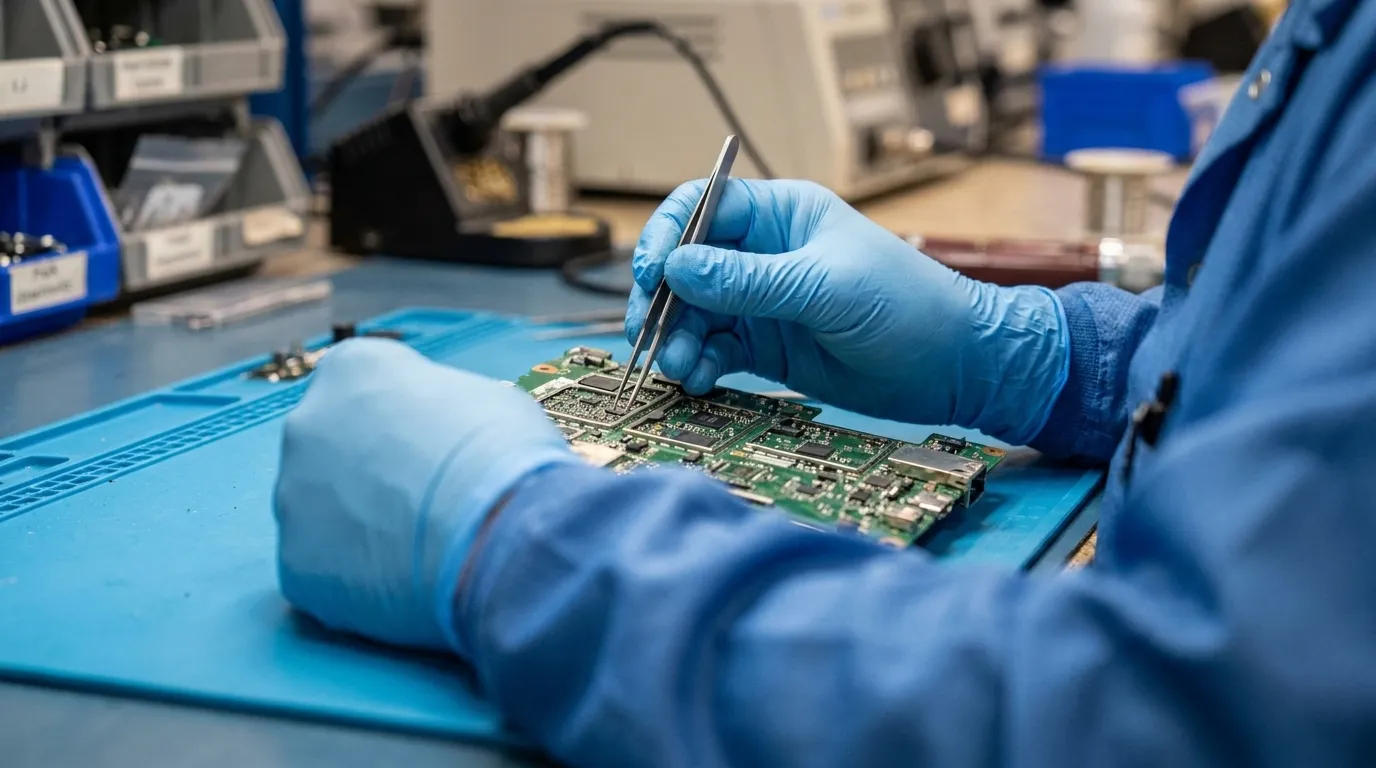
From a cost model perspective, organizations that manage reactive replacement cycles pay more per unit than those buying on a planned schedule. Premier Logitech depot repair and rapid exchange capabilities keep endpoints in service longer by resolving component-level failures before they force full replacement.
Explore depot repair and rapid exchange options for endpoint fleets.
Servers and Storage: Balancing Cost and Reliability
While endpoint refresh cycles focus on user-facing performance and OS support, server decisions center on operational costs and failure rates. The standard server refresh window runs four to six years, consistent with industry lifecycle benchmarks, and operating costs rise after 4 to 5 years.
Third-party maintenance provides a documented path to cost reduction for post-warranty servers. Extended lifecycle strategies work when telemetry confirms stable failure rates. Datasets from long-term tracking show server failure rates hold steady or decrease as equipment outlasts traditional failure assumptions.
Premier Logitech operates an authorized repair network with L1 to L4 depot service capabilities across more than 20 OEM brands. This network gives enterprises a compliant path to extend server lifecycles without voiding OEM authorizations or relying on unsupported maintenance providers.
Networking Equipment: Aligning Capacity and Security
Networking hardware typically follows a standard refresh window of 5 to 7 years per CHG-MERIDIAN benchmarks. Earlier replacement often occurs when bandwidth demand outpaces installed port speeds, firmware reaches end-of-life with no further security updates or emerging vulnerabilities exceed what patches can address.
Networking refresh timing benefits from alignment with server refresh cycles. Switches, firewalls, wireless access points and storage arrays should have major upgrades synchronized with server refresh cycles so bandwidth, port speeds and security capabilities stay matched. Phased port-speed upgrades and disciplined firmware management can extend useful life within the 5 to 7 year window when performance telemetry supports that decision.
Mobile Devices: Battery Health and Field Readiness
Mobile device refresh cycles run 2 to 4 years, compressed by battery degradation, OS support windows and carrier compatibility changes. Battery health telemetry provides the most actionable signal. AI-driven telemetry identifies early warning signs like declining battery capacity before user-facing failures occur, which enables targeted battery swaps instead of full device replacement.
Rapid exchange programs support field and customer-facing roles where downtime is unacceptable. Premier Logitech rapid exchange and next-day replacement programs keep mobile fleets operational while failed units move through repair and refurbishment workflows.
Rolling Refresh vs. Big-Bang Replacement
A rolling refresh program replaces assets in continuous waves aligned with depreciation schedules. A big-bang replacement retires and replaces a large portion of the fleet in a single cycle. Each approach carries distinct tradeoffs across budget, risk and operations.
Rolling refresh converts unpredictable capital events into steady, foreseeable spend. A rolling program aligned with depreciation schedules eliminates surprise capital expenses and allows IT and finance teams to forecast technology spending on a predictable annual basis. Phased deployments also reduce operational disruption by allowing IT teams to manage data migration, setup and training in manageable stages.
Big-bang replacement concentrates procurement leverage and simplifies standardization but introduces concentrated risk. A single delayed shipment or supply constraint affects the entire fleet at once. As noted earlier with endpoint procurement, reactive cycles drive higher per-unit costs, and big-bang programs that slip into reactive territory amplify that cost exposure across the fleet.
Premier Logitech supports phased deployment programs with kitting, imaging, configuration and fulfillment capabilities that scale to enterprise volumes. This logistics infrastructure allows operations teams to execute rolling refresh without managing multiple vendors.
Telemetry and Energy Metrics That Shift Timing
Condition-based refresh relies on continuous telemetry rather than calendar dates. Tools that surface performance scores, battery cycle counts, thermal stress trends and OS patch status allow IT teams to score each device by actual condition. A device with strong health metrics can stay in service past its nominal refresh date. A device with degraded battery health, frequent application crashes or an unsupported OS gets flagged for replacement regardless of age. This approach reduces unnecessary replacements and concentrates spend on devices that need it.
Organizations that move from calendar-based to condition-based maintenance see fewer unnecessary replacements in the first year, with lower capital spend and fewer emergency procurements.
Energy metrics add a Scope 3 dimension to refresh decisions. Extending laptop life can reduce embodied carbon per device, since manufacturing drives most of a laptop carbon footprint. Premier Logitech real-time visibility tools feed telemetry and asset condition data into lifecycle decisions, which connects device health signals to refresh timing and sustainability reporting.
Compliance and Security Requirements That Fix Deadlines
Regulatory frameworks impose hard deadlines on refresh timing that performance telemetry cannot override. TAA compliance governs sourcing for federal and public-sector procurement and requires that hardware originate from designated countries. NIST SP 800-88 defines data sanitization standards for retired devices. CMMC requirements for defense contractors mandate that hardware running controlled unclassified information meets current security patch and OS support standards. SOC 2 audits surface gaps when retired assets lack documented chain-of-custody records.
ITAD processes must document chain of custody, sanitize data per NIST 800-88 and issue destruction certificates. Healthcare organizations that fail HIPAA-compliant data destruction requirements face major financial penalties, which highlights the risk of gaps at any stage.
Premier Logitech holds TAA, NIST, CMMC, SOC 2, ISO and TAPA certifications and operates with a CAGE Code (4WAJ9) that identifies the company as a pre-vetted partner for U.S. federal procurement. Certified chain-of-custody documentation and authorized service center status across 20-plus OEM brands give compliance-sensitive organizations a defensible audit trail from first deployment through final disposition.
Build-Your-Refresh-Policy Checklist
The following steps create a repeatable foundation for a metrics-driven refresh policy.
- Audit the full asset inventory: capture purchase date, warranty status, OS version and remaining vendor support life for every device class. This baseline reveals which devices approach end-of-support or warranty expiration.
- Define refresh personas by role: separate AI-heavy users, knowledge workers, field staff and administrative users into distinct refresh tiers with different cycle lengths. Role-based tiers focus refresh spending on devices that affect revenue, service delivery or compliance.
- Connect telemetry to ITAM: integrate DEX scores, battery health data, thermal stress indicators and ticket volume per device into a single asset scoring system. This scoring system turns raw inventory data into actionable refresh priorities.
- Set compliance checkpoints: map TAA sourcing requirements, NIST 800-88 sanitization obligations, CMMC patch mandates and SOC 2 chain-of-custody requirements to each asset class. These checkpoints define hard limits on how far cycles can extend.
- Model total cost of ownership: include replacement cost, trade-in or resale value, ITAD service costs, third-party maintenance savings and productivity loss from aging devices. This model compares extend-versus-replace scenarios on a consistent basis.
- Choose a refresh strategy: evaluate rolling refresh versus big-bang replacement against budget cycle, operational risk tolerance and fleet size. This decision sets the cadence for procurement and deployment planning.
- Evaluate partner consolidation: assess whether current vendor relationships cover sourcing, depot repair, rapid exchange, configuration, fulfillment and certified recycling under a single program or require fragmented management. Consolidation simplifies governance and reporting.
- Schedule annual policy review: update refresh windows, telemetry thresholds and compliance requirements on a defined annual cadence. Regular review keeps the policy aligned with technology, risk and budget changes.
Schedule a program review to apply this checklist and identify consolidation opportunities.
Frequently Asked Questions
What lifecycle stages does a full enterprise IT refresh program cover?
A complete program spans sourcing and procurement, configuration and imaging, deployment and kitting, in-service repair and rapid exchange, asset recovery and remarketing, secure data destruction and certified recycling. Organizations that manage these stages through fragmented vendors often face visibility gaps, compliance exposure and higher per-unit costs than those that consolidate under a single lifecycle partner.
How does telemetry change the decision to refresh or extend a device?
Telemetry shifts refresh decisions from calendar age to device condition, as described in the metrics section above. IT teams score devices using health signals rather than purchase dates, which extends lifecycles for healthy devices while flagging degraded units for immediate replacement.
What certifications should an IT lifecycle partner hold for regulated industries?
Partners serving federal, defense, healthcare and financial services clients should hold TAA compliance for sourcing, NIST SP 800-88 alignment for data sanitization, CMMC authorization for defense contractor environments, SOC 2 certification for data handling controls and ISO quality framework certifications for operational processes. NAID AAA certification for data destruction and e-Stewards certification for electronics recycling signal responsible disposition practices. OEM Authorized Service Center status matters for warranty-compliant repair across the device fleet.
When does extending a refresh cycle create more risk than it saves?
Extension creates unacceptable risk when a device OS or processor reaches end-of-support and security patches are no longer available, when maintenance costs approach the replacement value of the device or when the device fails to meet current compliance requirements for the data it processes. Third-party maintenance and depot repair can extend cycles safely within those boundaries, but no extension strategy overrides a hard security or compliance trigger.
What is the difference between rolling refresh and big-bang replacement for enterprise fleets?
Rolling refresh replaces assets in continuous waves tied to depreciation schedules, which produces predictable annual spend and lower operational disruption. Big-bang replacement retires and replaces a large portion of the fleet in a single cycle, which concentrates procurement leverage but concentrates risk as well. A delayed shipment or supply constraint in a big-bang program affects the entire fleet at once. Large enterprises with diverse asset classes and compliance requirements often benefit from rolling refresh, while big-bang approaches can suit organizations with standardized fleets and fixed budget windows.
Conclusion: Turning Metrics into a Lifecycle Program
A metrics-driven refresh framework replaces calendar guesswork with decisions grounded in warranty status, OS support windows, telemetry signals, compliance requirements and total cost of ownership. Asset-specific cycle ranges, condition-based extension levers and a documented chain of custody from deployment through disposition form the operational backbone of a defensible program.
Premier Logitech consolidates every stage of that program under a single authorized partner, including sourcing, configuration, depot repair, rapid exchange, asset recovery and certified recycling, backed by 20-plus OEM authorizations and compliance certifications that regulated industries require. Organizations that move from fragmented vendor relationships to a single lifecycle program gain real-time visibility, predictable costs and a partner accountable for outcomes at every stage.
