Last updated: August 19, 2026
Key Takeaways for ITAD Decision-Makers
- Environmentally responsible IT asset recycling relies on certified reuse-first routing, NIST SP 800-88 Rev. 2 data sanitization and R2v3 or e-Stewards downstream accountability.
- Fragmented vendor relationships create chain-of-custody breaks and ESG reporting failures, while a single accountable partner reduces those risks.
- Reuse-first programs deliver higher Scope 3 Category 12 avoided-emissions credits than recycling alone because refurbishment avoids the manufacturing footprint of new devices.
- Buyers must verify current, third-party-audited certifications such as R2v3, NIST SP 800-88 Rev. 2, TAA, CMMC, SOC 2 and ISO 14001/45001 to meet 2026 requirements.
- Premier Logitech provides end-to-end IT lifecycle services under one contract with real-time serialized tracking and government-grade compliance; request a consolidation assessment for the current ITAD program.
Why E-Waste Growth and Regulation Now Shape ITAD Strategy
The UN Global E-waste Monitor recorded 62 million tonnes of e-waste generated in 2022, on track to reach 82 million tonnes by 2030, with under a quarter formally collected and recycled. For large enterprises and public-sector organizations, that trajectory creates direct Scope 3 reporting exposure and regulatory risk.
On the data security side, NIST Special Publication 800-88 Revision 2 was published in September 2025, superseding Revision 1 from December 2014. The updated standard shifts focus from device-specific instructions to enterprise-wide media sanitization programs and explicitly brings cloud storage and logical storage environments within scope.
While NIST standards originate at the federal level, their impact extends to state and local government procurement. NIST SP 800-88 is referenced by state CIO offices, and all 50 states require breach notification when personal information is exposed. State public records laws also require retention of IT documentation.
The Blancco 2026 State of Data Sanitization Report found that over 30% of enterprises experienced a data leak in the previous year, and that a third of those leaks resulted from the redeployment of drives or devices still containing data. That figure shows why NIST-grade sanitization verification now functions as a procurement requirement, not a preference.
Certifications and Standards That Prove ITAD Compliance
Decision-makers evaluating ITAD partners must confirm that certifications are current, third-party audited and applicable to the specific services being contracted. To support that verification process, the list below maps each standard to its scope and audit requirement.
- R2v3: Eight core requirements covering legal compliance, EHS, data security, downstream accountability and reuse management. Third-party audit by ANAB- or UKAS-accredited body. Baseline certification for responsible recycling and reuse.
- e-Stewards: Stricter controls around downstream processing and export practices. Third-party certification audit. Preferred by organizations with stringent export-control requirements.
- NIST SP 800-88 Rev. 2: Clear, Purge and Destroy sanitization methods with certificates of sanitization and serial-level documentation. Internal program validation plus independent verification sampling. Federal and state data destruction compliance and breach-notification defense.
- ISO 14001 / ISO 45001: Environmental and occupational health management systems aligned with R2v3 Core Requirements. Third-party certification audit. ESG reporting credibility and systematic environmental management.
- TAA (Trade Agreements Act): Country-of-origin compliance for government procurement. Contractual attestation and agency verification. Required for federal and many state contracts.
- CMMC (Cybersecurity Maturity Model Certification): Defense supply chain cybersecurity controls. Third-party assessment organization (C3PAO) audit at the applicable level. Required for DoD contractors handling controlled unclassified information.
- SOC 2: Security, availability and confidentiality controls over service operations. Independent CPA firm audit. Enterprise and government assurance over data handling practices.
Premier Logitech holds TAA, NIST, CMMC and SOC 2 compliance and operates under ISO quality frameworks, with a CAGE Code (4WAJ9) that identifies the company as a pre-vetted partner for U.S. federal government programs.
How Reuse-First ITAD Outperforms Traditional Recycling
Reuse delivers stronger carbon outcomes than recycling alone for enterprise IT assets. Refurbishment and reuse of laptops avoid more metric tons of CO2e per ton processed than traditional recycling.
Embodied carbon explains this gap. Manufacturing accounts for most of a laptop’s total lifecycle emissions. Refurbishment and reuse avoid a substantial portion of the manufacturing emissions of an equivalent new device because a second life skips raw material extraction and assembly.
Recycling still recovers materials but does not produce a finished product or avoid the full manufacturing footprint. Extending the lifecycle of laptops from a three-year to a six-year refresh cycle reduces annualized embodied carbon emissions.
For Scope 3 reporting, equipment remarketing through R2v3-certified ITAD channels generates the highest ESG reporting value among circular economy IT asset outcomes. Longer device lifecycles produce larger Scope 3 Category 12 avoided-emissions credits than recycling alone.
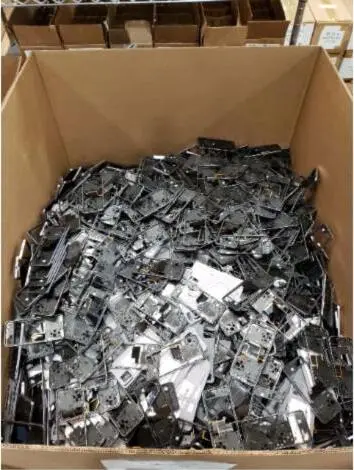
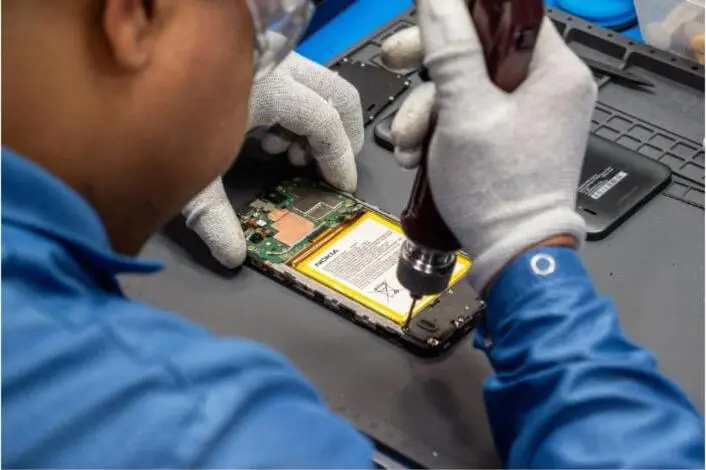
Achieving these outcomes at enterprise scale requires OEM-authorized repair capabilities and certified downstream channels. Premier Logitech’s ASC-authorized repair network spans multiple OEM brands and makes reuse-first routing operationally viable at enterprise scale.
Devices that pass depot repair and certified refurbishment re-enter secondary market channels rather than the shredder, which maximizes both carbon avoidance and asset recovery value. Industry ITAD programs achieve strong reuse rates when assets undergo NIST 800-88-compliant data sanitization and flow through certified refurbishment channels.
Checklist for Evaluating an ITAD Partner
The regulatory landscape and ESG reporting requirements described above translate into specific operational capabilities that an ITAD partner must demonstrate. Use the following checklist when assessing any ITAD provider. Each item maps to a documented compliance or operational requirement established in the preceding sections.
- Chain-of-custody documentation: Serialized tracking at the device level from intake through final disposition. R2v3 Core Requirement 4 mandates chain-of-custody records tracked at the device level. Premier Logitech provides real-time serialized tracking and inventory reporting across all lifecycle stages.
- Downstream vendor audits: Multi-tier auditing of downstream processors for Focus Materials. R2v3 requires documented auditing of downstream vendors multiple tiers deep. Premier Logitech’s R2v3-aligned recycling partners maintain this downstream accountability.
- NIST 800-88 Rev. 2 data sanitization: Clear, Purge or Destroy selected by data sensitivity and media type, with certificates of sanitization listing serial number, method, tool, verification method and authorized signature. Rev. 2 requires both verification and validation. Premier Logitech performs secure data destruction.
- ESG reporting outputs: GRI 306-compliant landfill diversion data, reuse-rate metrics and Scope 3 Category 5/12 avoided-emissions calculations. Premier Logitech’s compliance reporting covers ISO, NIST and CMMC frameworks.
- Single-contract accountability: One partner responsible for repair, refurbishment, recycling, data destruction and reporting. Premier Logitech operates as a single-source lifecycle partner, which reduces the vendor fragmentation that creates compliance gaps.
- Government-grade compliance credentials: TAA, CMMC, SOC 2 and applicable CAGE Code registration. Premier Logitech maintains the government-grade credentials outlined earlier, including the CAGE Code registration required for federal procurement.
- ASC authorization: OEM-authorized service center status for the brands in the asset portfolio. Premier Logitech holds ASC status for multiple OEM brands, enabling warranty-compliant repair that preserves asset value.
Get a checklist-based assessment of the current ITAD program.
Common ITAD Pitfalls and Practical Fixes
Even organizations that understand the evaluation criteria in the previous section often encounter predictable traps during implementation. The following failure modes appear repeatedly in enterprise ITAD programs. Each carries measurable compliance, financial or reputational risk.
- Vendor fragmentation: Separate contracts for repair, logistics and recycling create handoff gaps where devices and accountability are lost. These handoff points are where chain-of-custody records break and compliance documentation becomes incomplete. To eliminate these gaps, consolidate under a single partner with end-to-end scope.
- Missing serialized tracking: Lot-level tracking cannot produce the device-level certificates of sanitization required by NIST 800-88 Rev. 2 or the chain-of-custody records required by R2v3. Require serialized intake and disposition records for every asset.
- Non-NIST data destruction: Degaussing has no effect on NAND flash or NVMe storage. NIST 800-88 Rev. 2 states that degaussing does not constitute a destroy sanitization technique. Verify that the sanitization method matches the media type and data sensitivity classification.
- Export violations: Shipping functional or partially functional devices to non-approved downstream markets creates legal exposure under U.S. export control regulations. e-Stewards applies stricter controls around downstream processing and export practices for organizations with elevated export-control requirements.
- Uncertified recycling partners: The EPA encourages all electronics recyclers to become certified under R2 or e-Stewards. Using uncertified downstream processors voids the chain-of-custody integrity required by R2v3 and relied upon for ESG reporting and breach-notification defense.
Planning the Next Phase of an ITAD Program
Organizations ready to move from fragmented ITAD to a single-vendor, reuse-first program can start with a structured assessment. Premier Logitech’s lifecycle experts map current asset volumes, compliance requirements and ESG reporting gaps to a program design that covers repair, refurbishment, certified recycling and data destruction under one contract.

Premier Logitech provides an ESG Metrics Template that helps benchmark reuse rates, landfill diversion and Scope 3 Category 5/12 avoided emissions against the current program. Those metrics then inform program design and executive reporting.
Request a tailored program assessment based on asset volumes and compliance requirements.
Frequently Asked Questions
What does environmentally responsible enterprise IT asset recycling require in 2026?
A responsible program in 2026 requires more than sending equipment to a recycler. It requires a documented reuse-first routing decision for every asset, NIST SP 800-88 Rev. 2-compliant data sanitization with device-level certificates of sanitization, R2v3 or e-Stewards certification for all downstream processors and ESG reporting outputs that meet GRI 306 and Scope 3 Category 5 and 12 disclosure requirements.
Chain-of-custody records must be maintained at the serial number level from intake through final disposition. Organizations that cannot produce those records face compliance gaps in breach-notification defense, government audits and ESG disclosures.
How does NIST SP 800-88 Rev. 2 differ from the previous version, and why does it matter for ITAD programs?
The updated standard, released in 2025, replaces the 2014 version. The key changes for ITAD programs include explicit coverage of cloud storage and logical storage environments, not just physical media.
The framework now shifts from device-specific sanitization appendices to an enterprise-wide media sanitization program. It also distinguishes verification, which confirms the sanitization operation completed, from validation, which confirms the data was effectively sanitized, and it requires both.
The updated certificate of sanitization now includes mention of validation. ITAD partners whose processes were built around Rev. 1 appendices may not meet Rev. 2 program-level requirements without updating documentation and verification workflows.
Why does a reuse-first approach produce better ESG outcomes than recycling-only ITAD?
Most of a device’s environmental footprint is created during manufacturing, not during use or disposal. Recycling recovers materials but does not replace a finished product or avoid the manufacturing emissions already embedded in the device.
Reuse and refurbishment extend the device’s functional life, which means the manufacturing carbon is amortized over more years and the organization avoids the emissions associated with purchasing a replacement device. This produces larger Scope 3 Category 12 avoided-emissions credits than recycling alone and supports stronger GRI 306-4 disclosures.
For organizations with Scope 3 reduction commitments, reuse-first routing functions as the higher-impact strategy.
What certifications should a government agency or large enterprise require from an ITAD partner?
At minimum, require R2v3 certification from all recycling processors in the downstream chain, NIST SP 800-88 Rev. 2-aligned data sanitization with device-level certificates and ISO 14001 environmental management system certification. For government programs, TAA compliance and CMMC certification at the applicable level are required for federal contracts, and CAGE Code registration confirms pre-vetting for federal procurement.
SOC 2 certification provides independent assurance over data handling controls. ASC authorization from the OEMs whose equipment is in the asset portfolio ensures that repair and refurbishment occur under warranty-compliant processes, which preserves asset recovery value.
How does a single-vendor ITAD model reduce compliance risk compared with managing multiple providers?
Fragmented ITAD programs create handoff points where chain-of-custody documentation breaks down, sanitization verification is not passed between vendors and no single party holds accountability for the full disposition record. When a breach-notification event or government audit requires documentation of every asset’s disposition, gaps between vendors become legal and reputational liabilities.
A single-vendor model maintains one chain-of-custody record, one sanitization verification workflow and one compliance reporting output across repair, refurbishment, recycling and data destruction. Premier Logitech operates as that single accountable partner, covering the full lifecycle under one contract with real-time serialized tracking at every stage.
