Last updated: August 10, 2026
Key Takeaways
- High-volume PCB assembly cost per unit combines BOM, fabrication, labor, overhead, NRE amortization, compliance adders and yield loss, and each element shifts across volume tiers.
- 2026 US benchmark data shows BOM and components usually represent the largest share of total per-unit cost, followed by bare board fabrication and assembly labor.
- Design decisions at the schematic and layout stages lock in 70–80% of total PCBA cost, so early cost modeling has the greatest impact.
- Offshore quotes often exclude US loaded labor premiums, Section 301 tariffs, inventory carrying costs, rework and yield loss, and compliance certification adders that shape total landed cost.
- Premier Logitech consolidates PCBA, box-build, testing, repair and fulfillment under a single program structure with DFW and nearshore Mexico operations to reduce per-unit cost and compliance risk; model program-specific savings with a lifecycle expert.
2026 Cost-Element Breakdown for High-Volume PCBA
Each cost element in a mid-complexity 4-layer turnkey PCBA program behaves differently as production volume increases. Percentages describe the share of total per-unit cost at each volume tier.
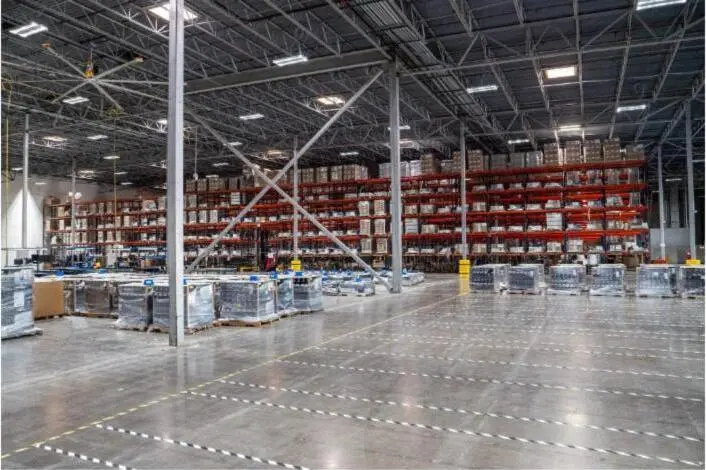
BOM and components usually represent the largest share of total cost, so component selection and sourcing decisions drive overall program economics. Bare board fabrication is typically the second-largest element, which makes layer count and panel utilization key levers for cost reduction. Assembly labor and overhead reflect US loaded rates and create the visible gap between domestic and offshore quotes. NRE and tooling amortize over volume, so their per-unit impact shrinks as production scales. Compliance, yield loss and rework depend on design maturity, and weak first-pass yield can erase savings gained from BOM and fabrication improvements.
Structure a program that controls these cost elements from the start with support from a Premier lifecycle expert.
How to Calculate Per-Unit Cost for High-Volume PCB Assembly
DFMA defines the standard formula as:
PCBA Cost = Fab + Assembly + Components + (NRE ÷ Volume)
Fab represents bare board fabrication cost per unit. Assembly covers placement, soldering and test. Components represent total BOM cost. NRE covers tooling and setup that amortize across the full production volume.
Because design decisions lock in most program cost, as noted above, cost modeling before design lock gives operations and procurement teams the strongest influence on long-term economics.
Hidden Costs in PCB Manufacturing That Generic Quotes Omit
Headline offshore and generic quotes often show only fabrication and assembly line items while omitting several elements that shape total landed cost for US programs in 2026.
US loaded labor premium reflects fully burdened rates rather than base wage alone. Section 301 tariffs apply to China-origin boards and add directly to landed cost. Inventory carrying costs grow when long offshore lead times require safety stock. Rework, scrap and yield loss increase when first-pass yield falls below target and can offset apparent per-joint savings. Freight, duties and brokerage further increase landed cost and can remove the advantage of low offshore rates on smaller or more variable runs.
After applying Section 301 tariffs and freight the offshore cost advantage for multi-layer builds compresses, and carrying costs for safety stock can narrow that advantage further in total cost of ownership models.
Cost Impact of 16-Layer PCB Designs at Scale
Layer count acts as a direct cost multiplier in PCB fabrication. Each additional layer pair adds core material, prepreg, lamination cycles and drilling time.
Surface finish selection further shapes per-unit cost at scale. ENIG finish adds a premium versus lead-free HASL at high volume. Programs that specify High-Tg FR-4 also carry a cost premium over standard FR-4 at volume.
BOM Optimization Tactics That Cut Per-Unit Costs
The BOM typically accounts for the majority of total PCB assembly expenses, so component selection and sourcing provide the strongest levers for cost reduction. Teams that apply systematic BOM optimization when scaling from low to high volumes often achieve meaningful BOM cost reductions.
The primary tactics are:
- Part consolidation: Reducing unique part count saves in pick-and-place feeder setup fees per production run.
- Multi-sourcing: Quoting across domestic and global distributors can reveal pricing variation on the same part.
- Preferred parts list (PPL) usage: Using a manufacturer PPL removes minimum buy quantities and reduces procurement complexity.
- SMT conversion: Converting through-hole components to SMD equivalents can reduce assembly cost by removing separate wave or hand-solder steps.
- Direct manufacturer negotiation: Direct negotiation with component manufacturers for top cost-driving ICs at volume often beats distributor pricing.
A critical caution remains. Many organizations optimize BOMs only for unit cost and neglect lifecycle compliance and geopolitical risks. Each component swap requires bench testing, thermal verification and a qualification batch before full production commitment.
Volume Scaling Behavior from 1k to 100k+ Units
Per-unit cost follows a predictable pattern across volume tiers for common board configurations, based on 2026 fabrication benchmark data. These ranges describe fabrication-only cost; full turnkey PCBA cost will be higher.
Per-piece pricing drops from prototype to high-volume runs as NRE and tooling costs spread across more units. Panel utilization adds another lever for cost control, and improving utilization can reduce per-unit PCB cost without design changes.
US Labor Premiums, Compliance Adders and Yield Risk
US domestic assembly follows a labor cost structure that differs sharply from offshore benchmarks. A production worker earning a base wage carries a fully loaded employer cost once benefits, payroll taxes, workers compensation, overtime and training are included.
Programs that serve government or regulated commercial markets must also budget for compliance adders:
- TAA compliance requires domestic or designated-country origin for components and assemblies entering federal supply chains, which restricts the lowest-cost offshore sourcing paths.
- CMMC certification imposes documented cybersecurity controls on manufacturers that handle controlled unclassified information and adds audit, documentation and process overhead.
- ITAR/EAR controls require domestic fabrication or restricted-access facilities for defense-related designs, and disqualify the lowest-cost fabrication path when export controls or customer flow-down clauses apply.
Yield loss often represents the most underestimated compliance-related cost. Inefficient assembly processes add hidden costs through rework, scrap and extra inspection. Many assembly defects originate from poor PCB design, so a DFM review before production functions as a direct cost-reduction tool. Many organizations detect compliance violations after design lock, when remediation costs and yield impacts reach their peak.
How Premier Logitech’s DFW Hub and Nearshore Operations Lower Per-Unit Costs
Fragmented sourcing that splits PCBA, box-build, testing, repair and fulfillment across multiple vendors adds coordination overhead, quality gaps and compliance risk at every handoff. Premier Logitech reduces those burdens by consolidating services under a single program structure that operates from three DFW facilities and nearshore operations in Laredo and Nuevo Laredo, Mexico.
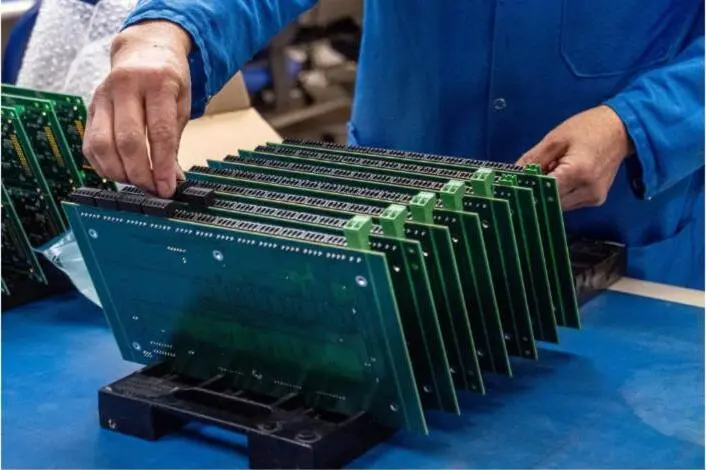
The single-vendor model addresses the cost drivers described throughout this guide:
- Contract manufacturing: PCBA, single and double-side SMT, through-hole, flex circuit assembly, sub-assembly, final assembly, box-build and electromechanical assembly run under one roof.
- Advanced processes: BGA reballing and modifications, burn-in and functional testing, integration, flashing and software loads support complex builds at scale.
- Repair and reverse logistics: High-volume repairs per week across L1–L4 depot repair with ASC authorization for multiple OEM brands remove a compliance barrier that fragmented repair networks cannot match.
- Compliance frameworks: TAA, TAPA, ISO, NIST, CMMC and SOC II certifications with CAGE Code coverage support federal and regulated programs.
- Nearshore cost structure: Mexico operations provide labor cost advantages over fully domestic assembly while maintaining proximity, communication and supply chain visibility that offshore programs often lack.
Vendor consolidation reduces carrying costs, expedite premiums and compliance gaps that inflate per-unit cost in fragmented programs. A single lifecycle partner that manages PCBA through repair and asset recovery also carries BOM optimization decisions into downstream serviceability, which siloed vendors cannot coordinate.
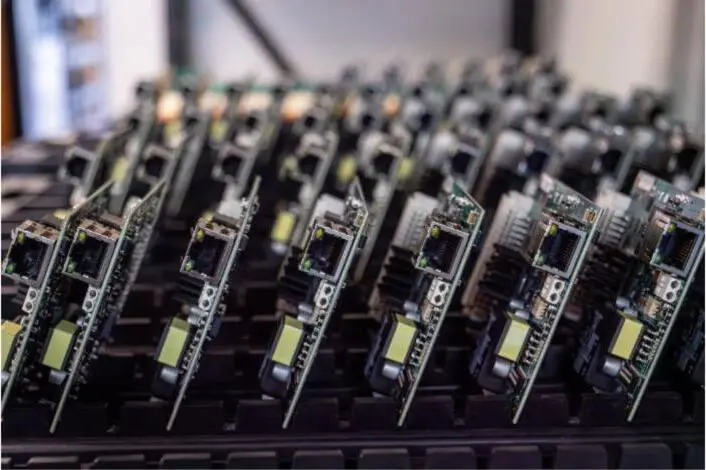
Model program-wide savings from consolidating PCBA, box-build and repair under Premier Logitech’s DFW and nearshore operations.
Conclusion and Next Steps for High-Volume PCBA Programs
High-volume PCB assembly cost per unit in 2026 depends on BOM, fabrication, labor and overhead, amortized NRE and compliance and yield factors. Each element responds to specific levers such as volume scaling, BOM refinement, panel utilization, DFM review and vendor consolidation.
US programs with TAA, CMMC or ITAR requirements rarely achieve the lowest total cost through the lowest offshore quote once tariffs, carrying costs, compliance adders and yield loss enter the model. Domestic and nearshore assembly with a single lifecycle partner often narrows the gap between quoted price and actual program cost.
Premier Logitech serves as that partner from PCBA and box-build through burn-in, BGA reballing, depot repair and asset recovery, supported by the compliance certifications and OEM authorizations that regulated programs require.
Request a program-specific cost model for a high-volume PCBA engagement from a Premier lifecycle expert.
Frequently Asked Questions
The standard formula for PCBA cost is PCBA Cost = Fab + Assembly + Components + (NRE ÷ Volume). Fab covers bare board fabrication per unit. Assembly covers SMT placement, soldering and test labor. Components represent total BOM cost. NRE, including stencils, test fixtures, programming setup and first-article inspection, is divided by total volume to produce a per-unit amortization. At high production volumes NRE amortization becomes a smaller share of total per-unit cost. A complete model also includes yield loss and scrap, which increase effective per-unit cost when first-pass yield falls below target, along with freight, duties and any compliance certification adders relevant to the program end market.
What hidden costs do generic PCB assembly quotes typically omit?
Generic quotes most often omit US loaded labor premiums, Section 301 tariffs on China-origin boards, inventory carrying costs for safety stock driven by long offshore lead times, rework and scrap from yield loss, ICT fixture tooling amortization and compliance certification adders for TAA, CMMC or ITAR programs. Freight, duties and customs brokerage on East Asia orders also add meaningfully to landed cost and are frequently excluded from headline per-board pricing. A line-item quote that separates bare board cost, BOM cost by category, assembly labor, testing and compliance adders provides the minimum standard for accurate total cost of ownership modeling in 2026.
Layer count acts as a direct fabrication cost multiplier. Each additional layer pair adds core material, prepreg, lamination cycles and drilling time. At high-volume production runs, in Chinese factories 4-layer boards cost 30–80% more than 2-layer boards while US factories charge 200–300% more. Higher layer counts increase fabrication costs further. These multipliers apply to fabrication cost only. The BOM and assembly labor components of total PCBA cost are not directly driven by layer count, although higher-layer designs often carry more complex component sets that increase BOM cost independently.
What BOM optimization tactics deliver the largest per-unit cost reductions at scale?
The highest-impact tactics include part consolidation to reduce unique SKU count, multi-source qualification to create pricing competition across distributors and direct manufacturer channels, use of a contract manufacturer preferred parts list to remove minimum order quantity premiums and conversion of through-hole components to SMT equivalents to remove separate soldering steps. Direct negotiation with component manufacturers for top cost-driving ICs and connectors at production volumes often beats distributor pricing. Each substitution requires bench testing, thermal verification under load and a qualification batch before full production commitment. BOM optimization decisions made before design lock have the greatest impact, while changes after design freeze carry remediation costs that can offset savings.
What compliance certifications should a US PCBA partner hold for government and regulated commercial programs?
Programs that enter federal supply chains require Trade Agreements Act compliance, which governs component and assembly origin. Defense and sensitive government programs may require CMMC certification, ITAR-compliant facilities and CAGE Code registration. Broader quality and security frameworks include ISO 9001, NIST cybersecurity standards, SOC II and TAPA for physical security. ASC authorization from OEM brands is a separate but related requirement for programs that include depot repair or warranty service alongside manufacturing. A partner that holds all relevant certifications under one program structure removes compliance gaps and audit overhead that appear when manufacturing, repair and fulfillment are split across multiple vendors.
