Last updated: August 7, 2026
Key Takeaways for OEM Contract Manufacturing Decisions
- US-based OEM contract manufacturing supports domestic production of electronic hardware, sub-assemblies and complete systems while the OEM retains ownership and IP.
- Mid-volume programs gain the most from domestic partners that combine flexible manufacturing, strong compliance and integrated lifecycle services.
- ITAR, TAA, NIST, CMMC, SOC 2 and FCC frameworks define eligibility for government and enterprise programs and must be verified at the partner level.
- Domestic and nearshore production under USMCA provide shorter lead times, stronger IP protection and tariff advantages compared with Asia-based production for US-bound hardware.
- Schedule a program review with Premier Logitech to assess compliance, scalability and single-source lifecycle integration across six critical dimensions.
Scope of US-Based OEM Contract Manufacturing
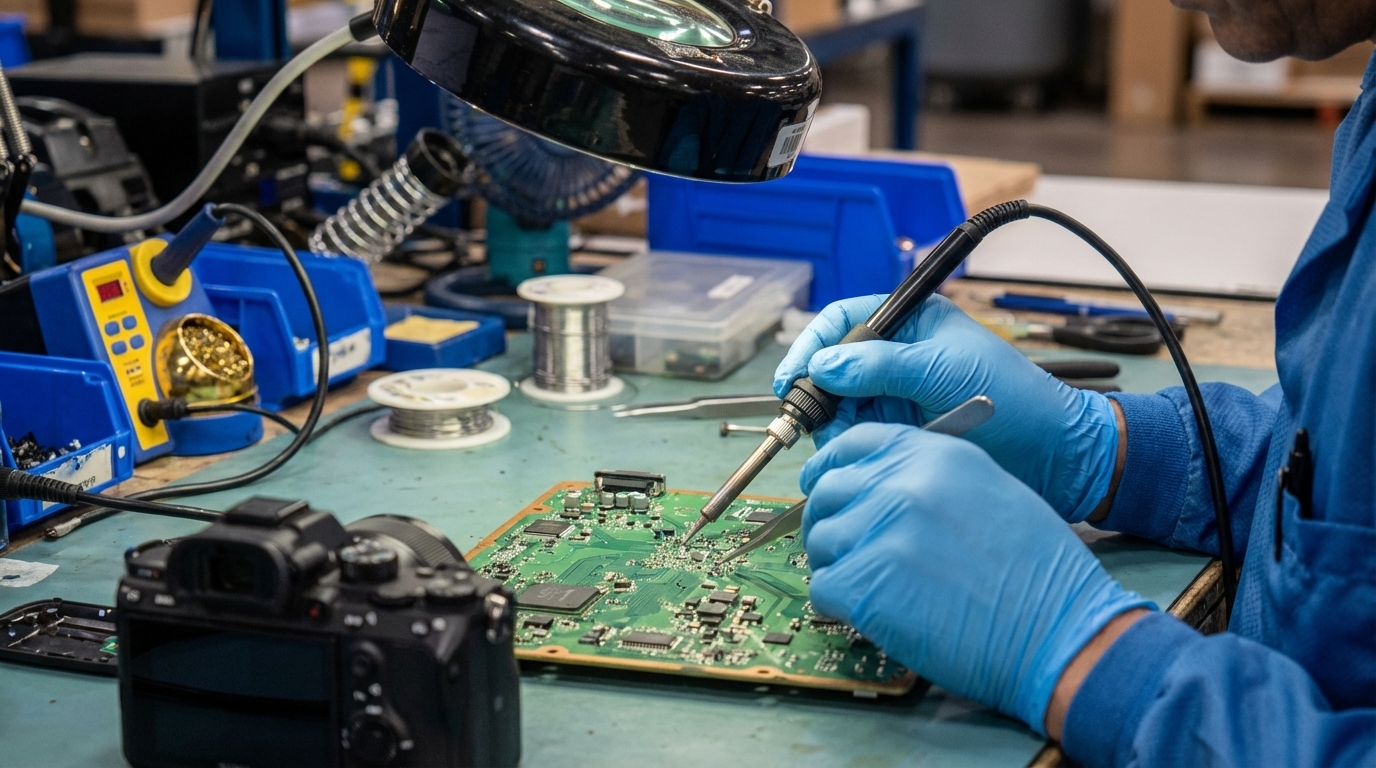
US-based OEM contract manufacturing covers PCBA, sub-assembly, box build, firmware loading, burn-in testing and final integration on domestic soil. The OEM retains product ownership and IP, and the contract manufacturer supplies capacity, process expertise and compliance infrastructure.
Provider types vary by volume tier and compliance focus, and these categories help OEMs align program needs with the right partner model. Boutique domestic EMS shops support prototype and low-volume programs with intensive engineering engagement. Mid-market domestic manufacturers focus on high-mix, mid-volume programs where compliance, IP protection and engineering agility carry the most weight. Large global EMS providers such as Jabil, Flex and Sanmina concentrate on high-volume, stable designs and often require longer commitment horizons. Nearshore manufacturers operating under USMCA in Mexico offer tariff-free US market access and shorter transit times than Asia for higher-volume, stable programs. Single-source lifecycle partners combine manufacturing with reverse logistics, depot repair and asset recovery, which reduces vendor fragmentation across the full product lifecycle.
Finding Qualified US-Based Electronics Manufacturers
A structured search process identifies capable domestic manufacturers more effectively than directory listings. The checklist below outlines core verification steps for US-based OEM programs.
- Confirm physical US manufacturing facilities with verifiable addresses and documented production capacity.
- Verify current quality certifications such as ISO 9001 and IPC workmanship standards.
- Request customer references from programs with comparable volume and complexity.
- Assess NPI support capabilities including DFM review, BOM validation and pilot production.
- Confirm supply chain visibility tools that provide real-time inventory tracking and order management.
- Evaluate single-source capability across manufacturing, configuration, fulfillment and reverse logistics.
- Check CAGE Code registration to confirm eligibility for government programs.
Qualified domestic capacity remains concentrated, which means OEMs must qualify domestic partners early in the design cycle to secure production slots before capacity fills.
Mid-Volume US Contract Manufacturing for Tech Hardware
Mid-volume programs form the most underserved segment in domestic EMS and require specific partner capabilities. The checklist below highlights what mid-volume OEM programs need from a contract manufacturer.
- Proven performance with high-mix, mid-volume production without quality degradation.
- Flexible capacity that scales with demand forecasts without rigid long-term volume commitments.
- Engineering support for frequent design changes and structured engineering change order management.
- Component sourcing with multi-source strategies and BOM risk analysis.
- Integrated configuration, kitting and fulfillment that reduce handoff points.
- Reverse logistics and depot repair capabilities that support post-sale lifecycle requirements.
- Real-time production visibility and reporting accessible to OEM program managers.
Domestic US production is most competitive for high-mix, low-to-mid-volume programs with significant tariff exposure, IP-sensitive content or frequent engineering changes. These factors narrow the apparent labor cost gap when total cost of ownership is modeled. Offshore quality escapes add cost through rework, scrap, incoming inspection and warranty claims, and corrective action cycles extend program timelines. Premier Logitech’s mid-volume manufacturing capabilities span PCBA, box build, electromechanical assembly and full system integration, with integrated configuration and fulfillment services that remove vendor handoffs that slow mid-volume programs.
ITAR-Compliant Contract Manufacturers in the United States
ITAR registration functions as a legal requirement rather than a marketing credential. Any US manufacturer of defense articles listed on the US Munitions List must register with the State Department’s Directorate of Defense Trade Controls under 22 CFR 122.1, even for domestic-only production. The checklist below outlines ITAR compliance verification steps for contract manufacturing partners.
- Confirm active DDTC registration with a current DS-2032 filing and a designated empowered official.
- Verify a documented Technology Control Plan that governs technical data access and foreign-national personnel.
- Assess physical security controls, IT system controls and visitor management procedures.
- Confirm subcontractor compliance verification processes for Tier 2 and Tier 3 suppliers.
- Review export licensing procedures and deemed-export risk management protocols.
- Verify TAA compliance documentation at the part-number level through manufacturer attestations.
- Confirm FCC compliance support, including EMC evaluation and Declaration of Conformity procedures.
Civil penalties for ITAR violations reach over $1.2 million per violation, with criminal exposure that can include imprisonment up to 20 years, which makes partner verification essential. Beyond ITAR, TAA compliance functions as a country-of-origin and procurement eligibility requirement documented at the SKU level, not a general quality standard, and it must be verified at the partner level. Premier Logitech holds TAA compliance, NIST, CMMC, SOC 2 and ISO certifications and operates with a CAGE Code (4WAJ9) that identifies the company as a pre-vetted partner for US federal government programs, covering the full compliance stack these requirements demand.
Domestic and Nearshore Cost and Lead-Time Tradeoffs
Domestic and nearshore production both provide meaningful advantages over Asia-based manufacturing for US-bound hardware. The right choice depends on program characteristics rather than a single cost metric.
Domestic US manufacturing delivers short lead times that support faster engineering feedback cycles, earlier market entry for products with frequent design changes and lower pipeline inventory carrying costs. Durability and reliability standards are easier to maintain when production remains geographically close to the OEM’s engineering team. IP protection, compliance documentation and corrective action cycles also move faster when the manufacturer operates under US jurisdiction.
The nearshore option mentioned earlier delivers these advantages through USMCA’s tariff treatment and geographic proximity. Mexico qualifies as TAA-compliant under USMCA, which makes final assembly there a recognized compliance path for North American tech hardware. Premier Logitech operates nearshore facilities in Laredo and Nuevo Laredo, Mexico, alongside three DFW-area US facilities, which gives OEM partners access to both domestic and nearshore production within a single-source model.
Volume-Based Decision Matrix for Production Runs
Production volume serves as the primary variable that determines which contract manufacturing model fits an OEM program. Each tier carries distinct requirements for engineering support, compliance infrastructure and partner type.
Prototype and NPI programs require engineering-intensive partners that provide DFM review, BOM validation, pilot production capability and fast iteration cycles. Boutique domestic EMS providers and vertically integrated single-source partners with NPI programs fit these needs best. The priority centers on speed to first article and engineering collaboration, not unit cost.
As programs scale beyond prototype into sustained production, requirements shift toward repeatability and lifecycle support. Programs in the mid-volume tier need partners that combine manufacturing flexibility with compliance infrastructure, integrated configuration and fulfillment and reverse logistics capability. Domestic and nearshore production is most competitive at this tier when tariff exposure, IP sensitivity and engineering change frequency factor into total cost of ownership. Premier Logitech’s kitting and repair capacity support mid-volume programs that require integrated forward and reverse supply chains.
High-volume programs with stable designs and infrequent engineering changes align better with large global EMS providers or high-volume nearshore facilities optimized for automation and throughput. At this tier, unit cost and line utilization dominate the decision. Schedule a program evaluation to determine which production tier aligns with specific requirements.
Compliance Checklist for Government and Enterprise Programs
Each compliance framework addresses a distinct risk category, and contract manufacturers must satisfy all applicable requirements before production begins.
- TAA: Requires final assembly or substantial transformation in the US or a designated country, documented at the SKU level, and applies to GSA Schedule contracts regardless of order size.
- ITAR: Requires DDTC registration, Technology Control Plans and export licensing procedures for any manufacturer of USML-listed defense articles or components.
- FCC: Box build specifications for US-bound electronics must address FCC electromagnetic compatibility evaluation and Declaration of Conformity obligations.
- NIST: NIST SP 800-171 governs protection of Controlled Unclassified Information in nonfederal systems and applies to defense and government supply chain participation.
- CMMC: Cybersecurity Maturity Model Certification applies to Department of Defense contractors and subcontractors that handle Federal Contract Information or CUI.
- SOC 2: Demonstrates that a service organization maintains controls over security, availability, processing integrity, confidentiality and privacy of customer data.
Premier Logitech maintains the full compliance stack these frameworks require, which supports eligibility for complex enterprise and government OEM programs.

Red Flags When Vetting Contract Manufacturers
Common vetting failures consume time, erode margin and threaten compliance standing. The red flags below signal structural weaknesses in a contract manufacturing partner.
- Fragmented vendor networks: Partners that outsource repair, fulfillment and recycling to separate vendors create handoff delays, accountability gaps and data security exposure. Premier Logitech’s single-source model consolidates manufacturing, configuration, fulfillment, reverse logistics and asset recovery under one program.
- Limited inventory visibility: OEMs increasingly expect real-time inventory visibility and integration with planning systems. Partners without operational visibility tools create forecast errors and carrying cost overruns.
- Unclear data-security ownership: Partners without SOC 2 or NIST compliance cannot support programs that handle CUI, customer data or government-regulated information. Data security ownership must be contractually defined before production begins.
- No reverse logistics capability: A manufacturing partner without depot repair, RMA management and rapid exchange programs forces OEMs to manage a separate reverse supply chain vendor, which increases cost and complexity.
- Unverified compliance certifications: Risk and compliance KPIs should target full regulatory compliance with verified certification scope and validity. Expired or out-of-scope certifications create program eligibility risk.
- No NPI-to-production process: Suppliers that participate in NPI often become preferred suppliers for subsequent production runs. Partners without a structured NPI handoff process introduce quality and schedule risk at launch.
Conclusion: Applying the Evaluation Framework
Selecting a US-based OEM contract manufacturing partner requires evaluation across six dimensions. These include the compliance certification stack, mid-volume scalability and engineering support, domestic and nearshore production options, single-source lifecycle integration, real-time supply chain visibility and reverse logistics capability.
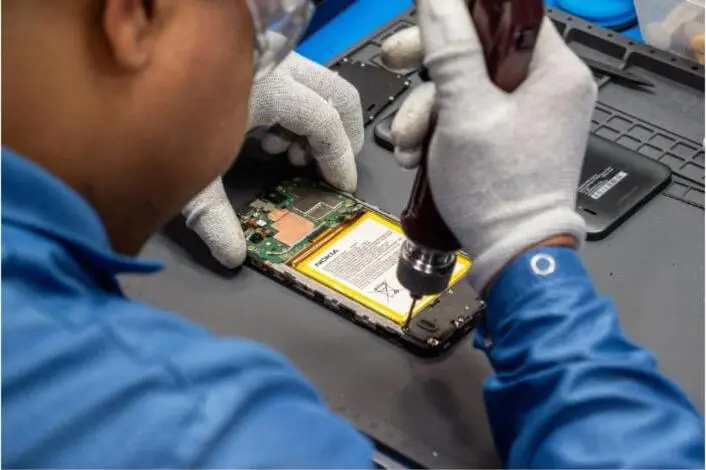
Global EMS providers support high-volume, stable programs. Boutique domestic shops support prototype and NPI. The mid-volume segment, where compliance, IP protection, engineering agility and lifecycle integration carry the most weight, benefits most from a single-source partner that combines manufacturing and reverse logistics capabilities.
Premier Logitech serves OEMs, telecom providers and government agencies. The company combines contract manufacturing, configuration, fulfillment, depot repair, rapid exchange and asset recovery under one program, which removes fragmented vendor networks that slow mid-volume programs and create compliance exposure. With three DFW facilities, nearshore operations in Mexico and a full compliance certification stack, Premier Logitech focuses on the programs that global EMS providers often underserve.
Frequently Asked Questions
What compliance certifications should a US-based OEM contract manufacturer hold for government and enterprise programs?
At minimum, a contract manufacturer serving government and enterprise OEM programs should hold TAA compliance documentation at the SKU level, active ITAR registration with the State Department’s DDTC, NIST SP 800-171 compliance for programs involving Controlled Unclassified Information, CMMC certification for Department of Defense supply chain participation, SOC 2 for data security assurance and ISO 9001 as a baseline quality management standard. FCC compliance support is also required for finished hardware sold into the US market. As noted earlier, Premier Logitech’s certifications cover the complete compliance requirements for government and enterprise programs.
How does a single-source lifecycle partner differ from a standard contract manufacturer?
A standard contract manufacturer handles production, including PCBA, assembly, testing and sometimes fulfillment. A single-source lifecycle partner integrates manufacturing with the full downstream supply chain, including configuration, kitting, warehousing, transportation, reverse logistics, depot repair, rapid exchange and asset recovery. For OEMs that manage both forward and reverse supply chains, a single-source model removes vendor fragmentation that creates accountability gaps, data security exposure and inventory visibility failures. Premier Logitech operates as both a single-source lifecycle partner and a modular services provider, which allows OEMs to engage the full program or individual services based on current needs.
What is the difference between domestic US manufacturing and nearshore manufacturing for mid-volume tech hardware programs?
Domestic US manufacturing offers short lead times, direct engineering collaboration, strong IP protection and the full compliance infrastructure required for government and defense programs. Nearshore manufacturing in Mexico under USMCA provides tariff-free US market access for qualifying goods, transit times shorter than Asia-based production and TAA-compliant production paths for programs that source components globally. The right choice depends on program volume, design change frequency, compliance requirements and total cost of ownership rather than unit labor cost alone. Premier Logitech operates domestic DFW facilities and nearshore operations in Laredo and Nuevo Laredo, which gives OEM partners access to both models within a single program relationship.
What should OEMs look for in a contract manufacturer’s NPI-to-production handoff process?
A structured NPI-to-production handoff includes DFM review before the first build, BOM validation and component risk analysis, pilot production with formal sign-off, documented process flow diagrams and control plans, work instructions and visual standards and a defined path from first article to repeat production. Partners that treat NPI as a controlled transition rather than a single release event reduce quality risk and schedule variance at launch. OEMs should also verify that the contract manufacturer assigns a dedicated program manager who coordinates across engineering, sourcing, production and quality throughout the NPI process.
How does reverse logistics integration benefit OEM contract manufacturing programs?
Reverse logistics integration allows OEMs to manage returns, warranty claims, depot repair, refurbishment and asset recovery through the same partner that handles forward production. This structure removes handoff delays, data security gaps and accountability ambiguity that arise when separate vendors manage manufacturing and returns. For OEMs with high return volumes or rapid exchange requirements, integrated reverse logistics shortens turnaround time and increases recovered asset value. Premier Logitech’s reverse logistics capabilities include RMA management, depot repair at multiple service levels, cosmetic refurbishment, grading, secure data destruction and responsible recycling, all within the same program framework as contract manufacturing and fulfillment.
