Last updated: August 7, 2026
Key Takeaways
- Small product companies often struggle to find US contract manufacturers that accept low-to-mid volume runs of 500 to 5,000 units because many facilities prioritize high-volume production.
- US-based manufacturing offers practical advantages including easier facility visits, same-time-zone engineering changes, stronger IP protection under US law and simplified compliance for regulated products.
- Evaluating potential partners works best with a clear checklist that covers MOQ flexibility, prototype support, IP ownership, compliance certifications, data security, scalability, communication and transparent pricing.
- MOQs vary by product category, with electronics and precision metalwork often accepting smaller runs while CPG and medical products typically require higher minimums because of complexity and compliance requirements.
- Premier Logitech provides a single US partner that consolidates manufacturing, configuration, fulfillment and reverse logistics services; talk to a lifecycle expert to explore how this integrated approach can streamline production and returns programs.
Finding US-Based Manufacturers That Fit Small Runs
Practical sourcing starts with established directories and industry networks. Thomasnet remains a comprehensive database of verified US industrial suppliers, searchable by process, material and geography. Trade associations, regional manufacturing extension partnerships and the Reshoring Initiative also maintain supplier networks focused on domestic production.
Domestic partners provide advantages that offshore options rarely match. Facility visits remain practical and affordable. Engineering change coordination happens in the same time zone. IP enforcement operates under US law. For regulated categories such as medical accessories, government-adjacent electronics and defense-adjacent components, domestic sourcing also simplifies compliance documentation and audit trails.
The Reshoring Initiative’s 2025 survey found that a larger and more skilled US workforce ranked as the top factor that would increase OEM reshoring, ahead of tariffs and other policies.
Eight-Point Checklist for Selecting a Contract Manufacturer
This eight-question checklist helps evaluate any US contract manufacturing partner. It highlights quality culture, compliance posture and scalability before a purchase order is signed.
- MOQ flexibility: Confirm that the manufacturer accepts trial or pilot orders at volumes that match the current production stage rather than demanding commitments that exceed near-term demand.
- Prototype support: Ask whether the manufacturer supports design-for-manufacturability reviews and first-article inspection before full production runs begin.
- IP ownership: Require an agreement that clearly assigns ownership of foreground IP, improvements, tooling and fixtures and that includes NDA coverage before technical discussions start.
- Compliance certifications: Treat ISO 9001:2015 as a minimum requirement and confirm any category-specific certifications such as FDA registration, RoHS, REACH or TAA compliance where relevant.
- Data security practices: Look for restricted design access on a need-to-know basis, encrypted file transfer and documented disposal procedures for obsolete technical documents.
- Scalability path: Confirm that the manufacturer can support volume growth without forcing a vendor transition and ask about JIT or kanban replenishment programs for repeat production.
- Communication cadence: Establish whether a dedicated account manager will support the program and whether the manufacturer responds to technical inquiries within 24 hours during quoting and onboarding.
- Total cost transparency: Request itemized pricing that separates tooling, setup, per-unit production and inspection costs, with a clear policy on out-of-tolerance parts.
As AMG Industries notes, ISO 9001:2015 certification serves as a baseline for quality management systems. Once a manufacturer meets these baseline criteria, the next practical constraint becomes whether it can support the production volumes a small company needs.
Typical MOQs for Small Production Runs
MOQs vary by product category, packaging complexity and automation level. The ranges below reflect general market conditions as of 2026 and serve as planning benchmarks. Each category breakdown outlines common services and a reality check on what drives MOQ floors so founders can set realistic volume expectations before requesting quotes.
Electronics and Wearables
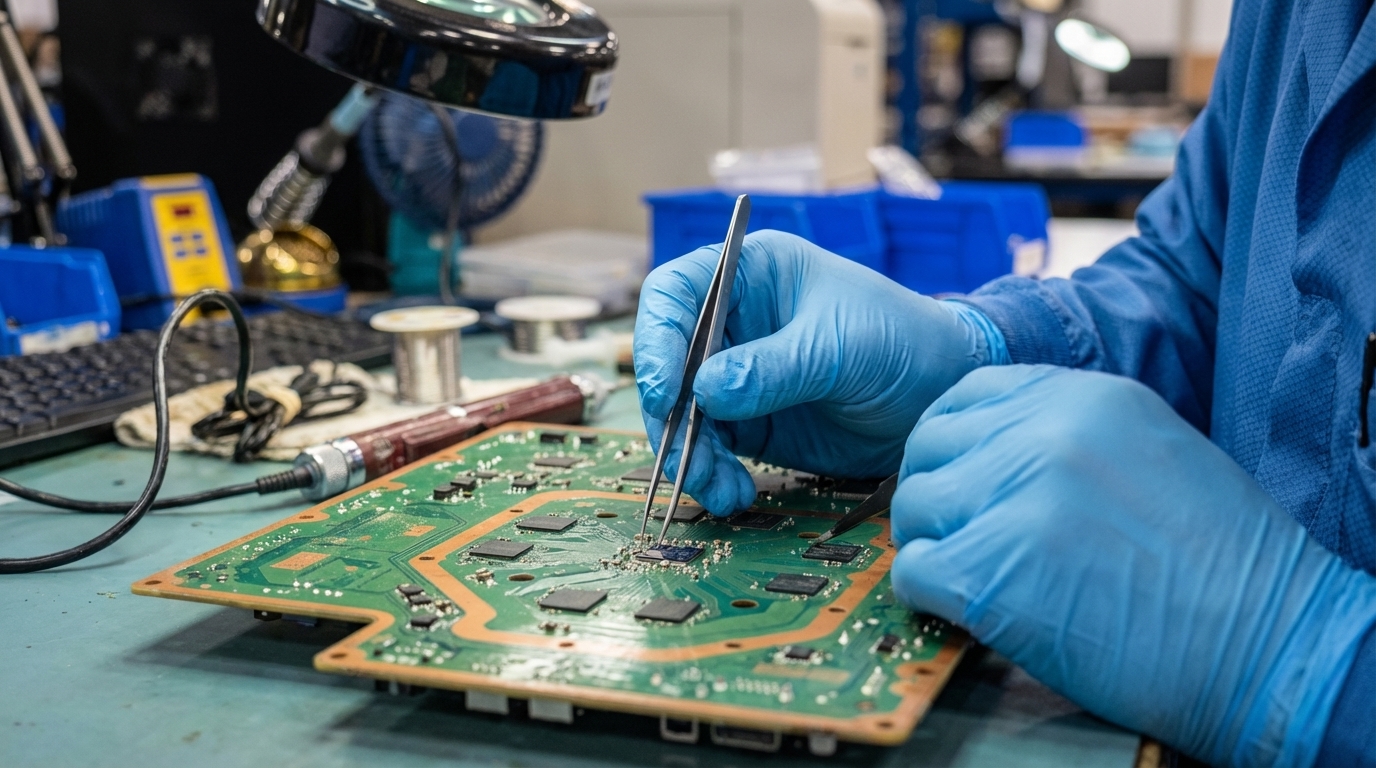
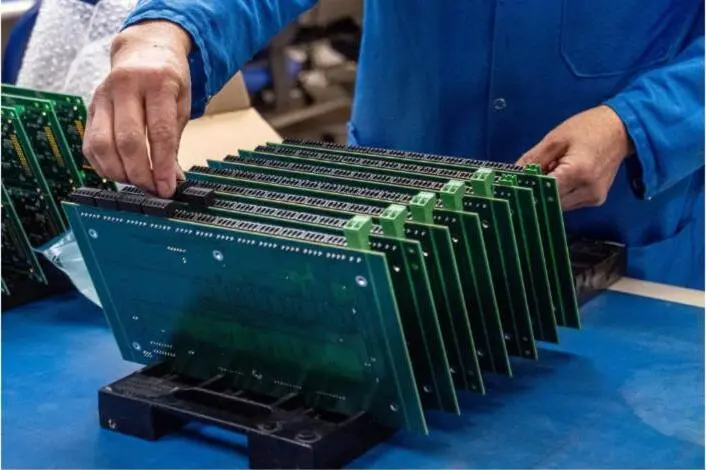
US contract manufacturers in this category typically offer PCB assembly (SMT and through-hole), enclosure fabrication, light mechanical assembly, kitting and compliance labeling. For complex or regulated builds, services often extend to burn-in testing, functional testing and BGA rework.
US manufacturers specializing in electronic assemblies often support low-to-medium volume, high-mix production when speed, communication, compliance or assembly complexity matter more than the lowest per-unit quote. MOQ reality check: many US electronics assemblers accept runs in the hundreds to low thousands of units, particularly for high-mix or regulated builds where overseas factories optimized for high volume may decline or quote unfavorably.
Smart-Home and IoT Devices
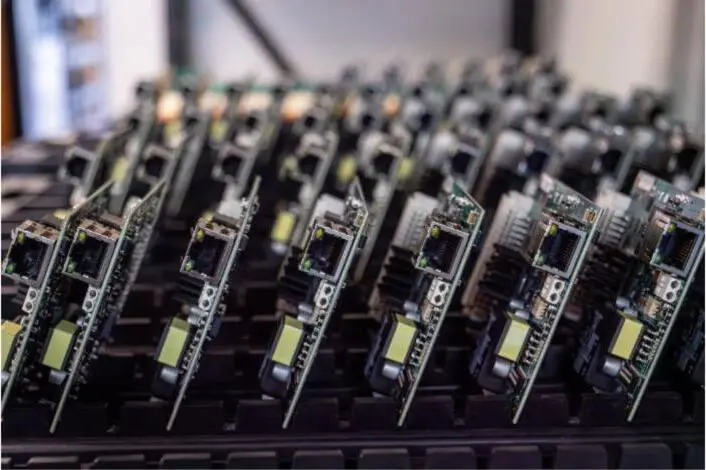
Smart-home and IoT programs often require PCB assembly, firmware flashing, SIM and IMEI pairing, connected configuration, functional testing and retail-ready kitting. Compliance labeling for FCC and UL marks typically appears on market-ready units.
MOQ reality check: IoT devices often involve configuration steps that remain labor-intensive at low volumes, which can raise per-unit costs compared with offshore options. US partners that bundle manufacturing with configuration and fulfillment reduce handoff overhead and can make domestic production economically competitive.
Consumer Packaged Goods
Across CPG categories, contract packaging MOQs often range from roughly 1,000 units for pilot or test runs to 25,000 or more for retail-ready, fully automated packaging formats. Food and beverage categories carry their own ranges; sauces and dressings often have lower MOQs than snacks and dry mixes.
MOQ reality check: CPG founders benefit from a clear distinction between private-label and custom-formulation programs. Custom formulations carry higher MOQs because of R&D amortization, and OTC products with FDA monograph requirements add compliance steps that extend timelines.
Medical and Wellness Accessories
Medical and wellness accessories often require electromechanical assembly, sub-assembly and final assembly, functional testing, compliance documentation and serialized asset tracking. FDA registration, ISO 13485 alignment and RoHS compliance represent standard expectations for market-ready medical accessories.
MOQ reality check: medical-grade production typically carries higher per-unit costs than consumer electronics because of documentation requirements, inspection rigor and traceability obligations. US production often serves this category well because of audit access, IP protection and regulatory proximity.
Industrial and Robotics Components
Industrial and robotics components often rely on CNC machining, sheet metal fabrication, welding, mechanical and electromechanical assembly, inspection and testing. Vertically integrated US manufacturers that keep these processes under one roof reduce supplier handoffs and coordination overhead for complex builds.
MOQ reality check: precision metalwork has deep US capability, particularly in the Midwest. The same volume flexibility seen in electronics assembly often applies here, with the added advantage that many metalwork shops own their tooling, which reduces setup barriers for small runs. For robotics components with unpredictable or limited demand, low-volume contract manufacturing avoids capital investment in underused internal capacity.
Common Downsides of Contract Manufacturing
Founders who have navigated contract manufacturing relationships consistently surface the same friction points. The most common and most operationally expensive issue involves fragmented vendor stacks.
Fragmented vendor stacks. Manufacturing, configuration, fulfillment and returns often land with separate vendors. Each handoff adds coordination overhead, lead time risk and accountability gaps when problems arise.
Surprise tooling fees. Tooling costs often appear as separate line items from per-unit pricing and can represent a significant upfront commitment before a single unit ships. Agreements that do not specify tooling ownership can create disputes at contract end.
Unclear revision policies. Engineering changes after first-article approval can trigger rework charges, tooling modifications or production delays. Contracts should require written approval for any engineering changes before implementation and should define cost responsibility clearly.
Compliance gaps. Small companies sometimes discover that a contract manufacturer lacks the certifications required for the target market, such as FDA registration, RoHS, TAA or CMMC, after production has begun. Verifying compliance posture before signing protects the program.
No reverse logistics support. Many contract manufacturers stop at the shipping dock. Returns, warranty claims, refurbishment and asset recovery then require a separate vendor relationship that founders must build independently.
How 2026 Policy and Market Shifts Affect Domestic Manufacturing
Recent policy changes and market dynamics are reshaping the economics of US-based production and making domestic and nearshore options more competitive than they were two years ago. The One Big Beautiful Bill Act (July 2025) provides permanent 100% bonus depreciation for new machinery, which shortens payback periods for automation investments that support domestic production competitiveness. Several US states continue to offer tax credits and grants that attract manufacturing operations.
At the same time, Mexico captured significant foreign direct investment through nearshoring, driven by USMCA advantages and short delivery windows to US distribution centers. That trend makes nearshore operations a practical complement to domestic manufacturing for cost-sensitive programs. Digital manufacturing platforms and AI-driven production workflows also compress lead times and reduce per-unit costs for low-volume runs in several categories.
Premier Logitech: Integrated Manufacturing and Lifecycle Support
Premier Logitech, founded in 2007, operates three facilities in the Dallas-Fort Worth area with nearshore operations in Laredo and Nuevo Laredo, Mexico. The company holds TAA, TAPA, ISO, NIST, CMMC and SOC 2 certifications and carries a CAGE Code (4WAJ9) as a pre-vetted federal government partner.
The manufacturing services portfolio covers PCB assembly (SMT and through-hole), flex circuit assembly, box-build and electromechanical assembly, sub-assembly and final assembly, burn-in and functional testing, BGA rework, integration and firmware flashing and compliance labeling. Configuration and fulfillment services include SIM and IMEI pairing, imaging, custom asset tagging, serialization, BOM-based kitting and direct-to-consumer or B2B distribution.

Premier Logitech differs from a standalone contract manufacturer through its lifecycle layer. The same partner that builds and configures a product also manages returns processing, RMA intake, depot repair (L1 through L4), sorting and grading, cosmetic refurbishment, secure data destruction and responsible recycling. Premier Logitech holds authorized service center status with more than 20 OEM brands, which keeps warranty repair and exchange programs within manufacturer-approved processes.
For founders who have experienced fragmented vendor stacks, this structure consolidates manufacturing, configuration, fulfillment, reverse logistics and asset recovery into a single accountable relationship. The modular service model also allows engagement at any stage, either through full lifecycle program management or through individual services selected on a standalone basis.
Next Steps for Small Product Companies
Before scheduling an introductory call, map the full production and returns flow for the product. Identify where units go after they leave the manufacturing floor, what happens when they come back and which compliance certifications the target market or customer base requires. List must-have certifications such as ISO 9001, TAA, FDA registration and CMMC and confirm that any prospective partner holds them before the first technical discussion.
Use the eight-question checklist above to evaluate two or three candidates. For orders above a meaningful threshold or for ongoing supply relationships, a factory visit or video tour combined with a trial order provides more signal than any questionnaire alone.
Premier Logitech’s team remains available to walk through production requirements, compliance needs and lifecycle program design in an introductory call. Talk to a lifecycle expert to map a manufacturing and returns program built for low-to-mid volume scale.
Frequently Asked Questions
What is a realistic MOQ for a first production run with a US contract manufacturer?
MOQs vary by product category, process complexity and the manufacturer’s cost structure. Electronics assemblers and precision metal shops often accept runs in the hundreds to low thousands of units, particularly for high-mix or regulated builds. Consumer packaged goods manufacturers typically start higher, with pilot runs in the low thousands and retail-ready formats that require larger commitments. The most reliable approach involves requesting itemized quotes from two or three manufacturers at the target volume and comparing total cost of ownership, including tooling, setup, inspection and per-unit production, rather than per-unit price alone.
How does Premier Logitech support small or mid-volume production programs?
Premier Logitech supports small and mid-volume programs through flexible engagement models. Founders can contract for full lifecycle management or select individual services such as assembly, kitting or compliance labeling based on current needs. The company’s DFW facilities and nearshore Mexico operations provide flexibility for programs that need domestic compliance posture alongside cost-competitive production. Configuration, fulfillment and reverse logistics services can be bundled with manufacturing, which removes the need for separate vendor relationships at each stage of the product lifecycle.
What compliance certifications should a small product company require from a US contract manufacturer?
ISO 9001:2015 serves as the baseline quality management certification and should function as a minimum requirement. Beyond that, relevant certifications depend on the product category and target market. Electronics destined for the EU require RoHS and REACH compliance. Products sold to US federal agencies or in government procurement channels require TAA compliance. Medical accessories require FDA facility registration and often ISO 13485 alignment. Defense-adjacent or cybersecurity-sensitive programs may require CMMC or NIST framework adherence. Verifying that a manufacturer holds the certifications relevant to the specific program before signing a contract prevents costly compliance gaps after production begins.
What are the most common contract manufacturing mistakes small product companies make?
Common mistakes include signing agreements without explicit IP ownership clauses, failing to verify compliance certifications before production begins and accepting vague pricing that does not separate tooling from per-unit costs. Many teams also build a fragmented vendor stack without a single accountable partner. Founders often underestimate the cost and complexity of returns. A product that sells well will generate returns, warranty claims and refurbishment needs, and a manufacturing partner that stops at the shipping dock leaves those programs unmanaged. Selecting a partner that covers both production and reverse logistics from the start reduces operational risk as volume grows.
How does nearshore manufacturing in Mexico compare to fully domestic US production?
Nearshore manufacturing in Mexico, particularly under USMCA, often provides shorter delivery windows to US distribution centers than overseas alternatives and lower labor costs than fully domestic production. It suits programs where cost competitiveness matters and where USMCA rules of origin satisfy trade compliance requirements. Fully domestic US production often works best when TAA compliance is required for federal procurement, when IP protection under US law is a priority or when the product category requires close engineering collaboration and frequent facility access. A partner with both domestic and nearshore capabilities, such as Premier Logitech’s DFW and Laredo and Nuevo Laredo operations, can support programs that benefit from both models depending on volume, compliance requirements and cost targets.
