Last updated: August 11, 2026
Key Takeaways
- Reliable U.S. SMT PCB assembly rests on three pillars: sector-specific certifications, unit-level traceability and scalable domestic production capacity.
- Procurement leaders can apply a seven-point checklist covering certifications, traceability, IPC Class 3 capability, authorized sourcing, turnkey services, lifecycle support and domestic or nearshore capacity before issuing RFQs.
- Full turnkey assembly shifts component-shortage and counterfeit-part risk to the manufacturer, which suits regulated aerospace, medical and defense programs.
- Domestic providers compress lead times by removing international logistics and customs delays, while nearshore TAA-compliant capacity adds cost-effective scale without offshore exposure.
- Premier Logitech delivers the complete reliability checklist through certified facilities, unit-level traceability and integrated lifecycle services; talk to a lifecycle expert to align program requirements.
SMT Assembly Steps and Quality Checkpoints
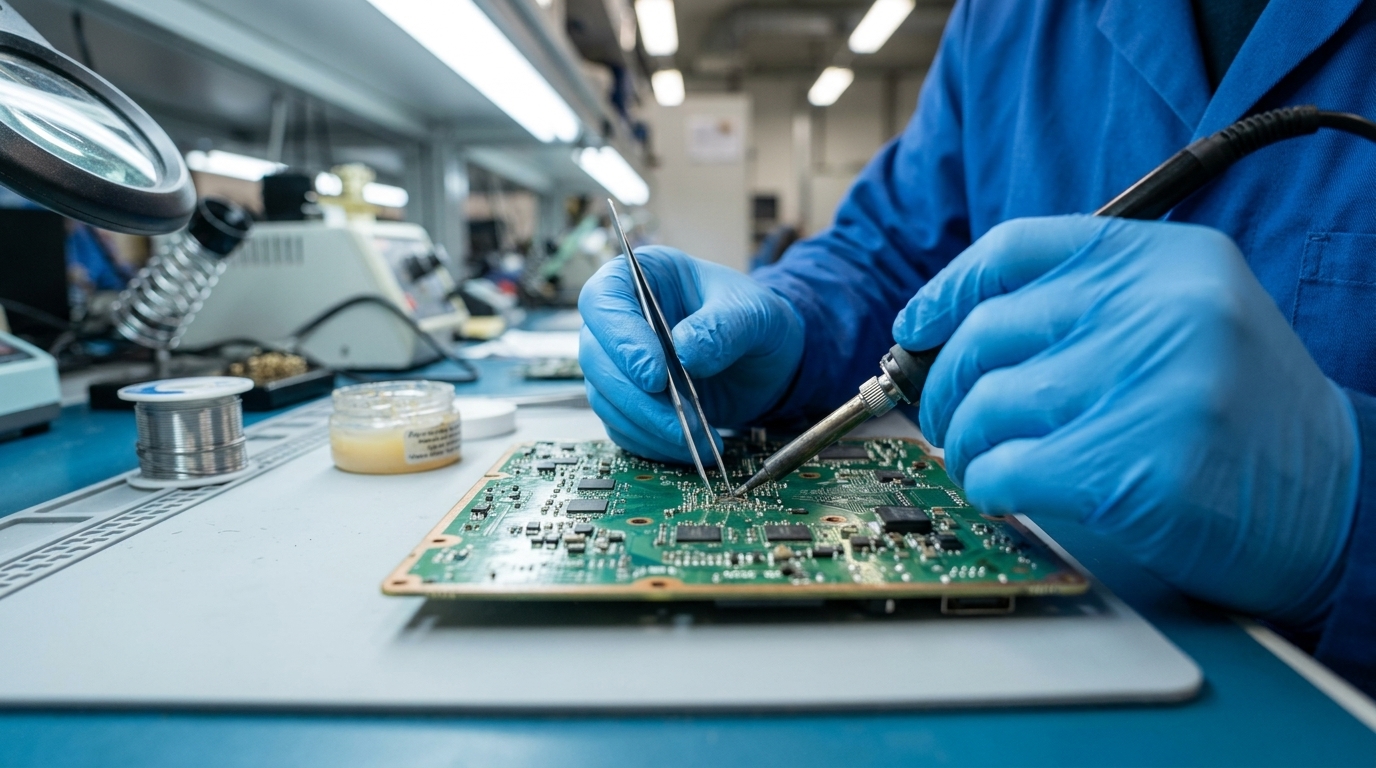
A high-reliability SMT assembly process follows a defined sequence of quality checkpoints. Each step generates data that feeds the traceability record.
- Incoming inspection. Incoming Quality Control verifies PCB warpage against IPC-TM-650 limits, surface finish quality, dimensional accuracy, MPN verification against the BOM, date code and MSL floor-life compliance, and visual inspection for counterfeit indicators.
- Solder paste printing with 3D SPI. Industry data shows 60–70% of all SMT defects originate at the solder paste printing stage, so 100% 3D SPI becomes a nonnegotiable quality checkpoint before placement. SPI measures volume, height, area and X/Y offset with real-time SPC.
- Component placement. Automated pick-and-place equipment positions components per the approved centroid file. The MES links each reel to the mounter event and records the one-to-many relationship between board serial numbers and used reels.
- Reflow profiling. Per-design thermal profiling with thermocouple verification on every batch and nitrogen reflow capability are required for IPC Class 3 assemblies.
- AOI and X-ray inspection. IPC Class 3 mandates 100% AOI and 100% X-ray for hidden joints such as BGAs and QFNs.
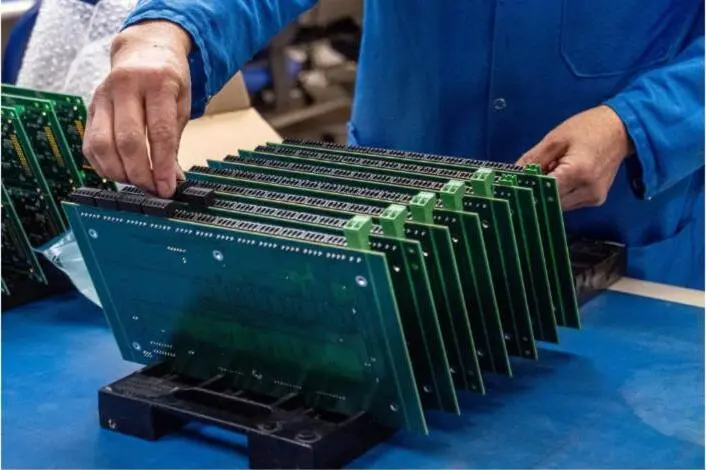
- Through-hole integration. Wave, selective or hand soldering completes mixed-technology boards. Premier Logitech supports single- and double-sided SMT, true through-hole, flex circuit assembly and BGA reballing and modifications.
- Testing. Burn-in and functional testing validate performance under operating conditions. ICT and FCT on all units are required for IPC Class 3 programs.
- Traceability capture. A single PCB serial number links to material and component lot data, SMT line and placement machine records, SPI, AOI, ICT and functional test results, repair history, final packing and shipment details, and RMA or field return records.
How Turnkey and Consigned Models Manage Risk
Understanding the assembly flow clarifies where quality controls occur, and sourcing models define who owns each risk. In full turnkey PCB assembly, the contract manufacturer procures bare boards, sources all components from authorized distributors, performs assembly and conducts quality testing before delivering finished boards. In consigned assembly, the OEM supplies all components and the manufacturer provides only labor and machine time.
Turnkey assembly shifts component-shortage risk and counterfeit-part liability to the manufacturer, which sources exclusively from authorized distributors and maintains lot-level traceability required for medical, aerospace and defense compliance. Consigned assembly reduces upfront cost but places sourcing risk, counterfeit exposure and coordination burden on the OEM procurement team.
High-reliability sectors such as medical devices and aerospace favor turnkey assembly with AS9100-certified, ITAR-registered U.S. manufacturers because it ensures authorized sourcing, incoming inspection and full documentation for regulatory traceability. Partial turnkey fits programs where the OEM must retain control of proprietary or firmware-loaded components.
Premier Logitech delivers full turnkey PCBA and box-build services under a single accountable owner, with trade-compliant product sourcing and integrated lifecycle management from procurement through asset recovery.
Domestic Lead Times from Prototype through Production
Domestic SMT providers compress lead times relative to offshore alternatives by removing international logistics, customs clearance and time-zone communication delays. The actual throughput each buyer receives depends on facility scale, line utilization, component availability and assembly complexity.
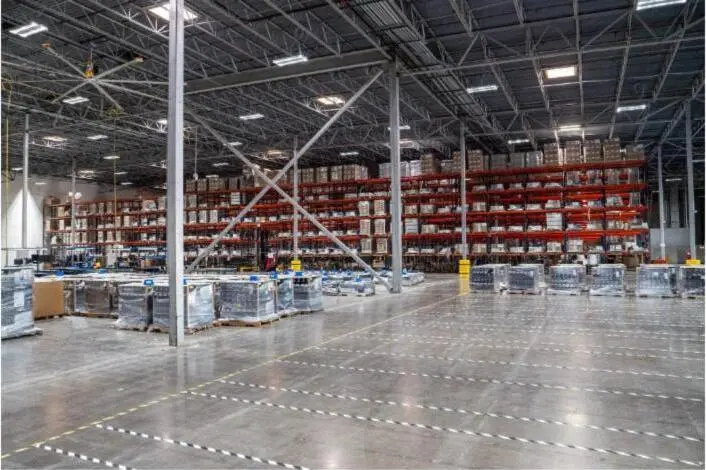
U.S. facility scale and regional distribution directly affect a provider’s ability to absorb demand surges without reducing quality controls. When demand spikes, a provider operating multiple SMT lines from a centralized logistics hub can shift capacity between lines without requalifying a new facility or accepting offshore exposure, which maintains throughput and compliance.
Premier Logitech operates three DFW facilities with nearshore operations in Laredo and Nuevo Laredo, Mexico. The DFW hub sits adjacent to one of the world’s busiest air cargo airports, which supports domestic distribution across North America. Nearshore operations provide cost-effective capacity that remains within a TAA-compliant supply chain and avoid the compliance and security risks associated with offshore manufacturing.
Certifications for Aerospace, Medical and Government SMT Programs
AS9100 certification is often required by prime contractors and OEMs such as Boeing for suppliers of parts, assemblies or services in the aerospace and defense supply chain. AS9100 builds on ISO 9001 and adds aerospace-specific requirements for product safety, reliability, configuration management, risk management, traceability and counterfeit-part prevention.
Medical device electronics manufacturing requires full traceability, validated processes and FDA compliance under ISO 13485 and 21 CFR Part 820. Aerospace and defense electronics manufacturing requires ITAR compliance and counterfeit prevention controls.
Government and public-sector programs add cybersecurity and data-handling requirements. CMMC and NIST SP 800-171 govern controlled unclassified information handling. SOC 2 Type II demonstrates operational security controls for enterprise and agency buyers. TAA compliance serves as a baseline requirement for any product or service procured under a U.S. government contract.
Premier Logitech holds TAA, ISO 9001/14001, NIST, CMMC, SOC 2 and TAPA certifications and carries CAGE Code 4WAJ9, which identifies the company as a pre-vetted, high-security partner for U.S. federal government programs. This credential set directly satisfies the compliance requirements of aerospace, medical device, telecom and public-sector buyers.
Talk to a lifecycle expert to review Premier Logitech’s full compliance portfolio against specific program certification requirements.
How Premier Logitech Aligns with the Reliability Checklist
The seven-point checklist at the opening of this guide maps directly to Premier Logitech capabilities and credentials.
- Sector-specific certifications: The full compliance portfolio described earlier supports federal, aerospace, medical, telecom and public-sector requirements.
- Unit-level traceability: MES-linked serial number tracking from incoming inspection through shipment, repair and field return, covering material lots, placement events, inspection records and test results.
- IPC Class 3-capable lines: Single- and double-sided SMT, through-hole, flex circuit assembly, BGA reballing, burn-in and functional testing with AOI and X-ray inspection.
- Authorized sourcing and counterfeit prevention: Trade-compliant product sourcing with vendor consolidation and aggregated procurement from authorized distribution channels.
- Full turnkey PCBA and box-build: End-to-end contract manufacturing from PCB-level builds through full system integration, subassembly and final assembly under a single accountable owner.
- Integrated lifecycle services: Depot repair (L1–L4), reverse logistics, RMA management, asset recovery, secure data destruction and compliance reporting within the same partner relationship.
- Domestic hub with nearshore capacity: Three DFW facilities and nearshore operations in Laredo and Nuevo Laredo provide scalable, TAA-compliant production without offshore exposure.
Comparing Pure-Play Shops, 3PLs and Lifecycle Partners
Pure-play SMT shops focus on board-level assembly and typically offer strong process depth for a narrow scope of work. These providers fit programs that require only PCBA with no downstream lifecycle requirements. Their limitation is scope, because programs that require reverse logistics, depot repair, asset recovery or government-grade compliance reporting force the OEM to engage additional vendors and manage integration risk between them.
Large 3PLs offer warehousing, fulfillment and transportation at scale but often lack IPC-certified SMT lines, counterfeit-prevention controls and sector-specific quality systems that regulated PCBA programs require. Compliance documentation and unit-level traceability rarely sit at the center of logistics-first provider capabilities.
Integrated lifecycle partners combine certified PCBA with reverse logistics, depot repair, asset recovery and compliance reporting under a single program structure. This model removes the vendor fragmentation that creates compliance gaps and traceability shortfalls. For OEMs that manage regulated programs across aerospace, medical, defense or public-sector channels, the integrated model reduces audit exposure, simplifies compliance reporting and provides a single point of accountability from first build through end-of-life disposition.
Premier Logitech operates as an integrated lifecycle partner. Clients can engage the full end-to-end program or select individual services on a modular basis, depending on gaps in the current supply chain.
Conclusion: Choosing a U.S. SMT Partner for 2026
Reliable U.S. SMT assembly in 2026 requires certifications that match the program’s regulatory environment, unit-level traceability that satisfies audit and recall requirements and domestic production capacity that scales without offshore risk. The seven-point checklist in this guide gives procurement and engineering leaders a structured framework for evaluating any domestic SMT provider.
Premier Logitech’s credential set, DFW logistics hub, nearshore Mexico operations and integrated lifecycle services address every criterion on that checklist. The company serves OEMs, defense contractors, medical device firms, telecom providers and government agencies from a single-source program structure that removes vendor fragmentation and compliance gaps.
Talk to a lifecycle expert to discuss how Premier Logitech SMT assembly and lifecycle services align with specific program compliance, traceability and capacity requirements.
Talk to a Lifecycle Expert
Premier Logitech’s team partners with operations, supply chain and engineering leaders to design compliant, scalable PCBA programs. Stakeholders can schedule a call to review requirements and receive a customized proposal.
Talk to a lifecycle expert and start the evaluation process.
Frequently Asked Questions
What certifications should a U.S. SMT PCB assembly partner hold for aerospace and defense programs?
Aerospace and defense programs typically require AS9100 certification, which builds on ISO 9001 and adds requirements for product safety, configuration management, counterfeit-part prevention and supply-chain traceability. ITAR registration is required for any program involving defense articles or technical data. For government contracts, TAA compliance and CMMC certification address trade and cybersecurity requirements. Premier Logitech holds TAA, ISO 9001/14001, NIST, CMMC, SOC 2 and TAPA certifications and carries CAGE Code 4WAJ9 for federal program eligibility.
What is the difference between turnkey and consigned PCB assembly, and which model suits regulated programs?
In turnkey assembly, the contract manufacturer procures all components from authorized distributors, performs assembly and delivers finished boards with full documentation. In consigned assembly, the OEM supplies all components and the manufacturer provides labor and machine time only. Regulated programs in aerospace, medical and defense sectors generally favor turnkey assembly because it places sourcing accountability, counterfeit-prevention controls and lot-level traceability documentation under a single owner. Partial turnkey arrangements fit programs where the OEM must retain control of proprietary or programmed components.
How does unit-level traceability work in SMT PCB assembly?
Unit-level traceability assigns a unique serial number to each board at the start of production. That serial number is scanned at every key station, including incoming inspection, pre-assembly, solder paste printing, placement, AOI, X-ray, ICT, functional test, repair and shipment. The MES links each scan event to material lot records, machine placement data, inspection results and test outcomes. The result is a complete build history for every board that supports defect analysis, regulatory audits and field return investigations without quarantining entire production lots.
What lifecycle services should an SMT assembly partner offer beyond board-level manufacturing?
A full lifecycle partner extends beyond PCBA to include reverse logistics, depot repair, RMA management, asset recovery, secure data destruction and compliance reporting. This integration removes the vendor fragmentation that creates traceability gaps and compliance risk when separate providers handle manufacturing and post-sale operations. Premier Logitech provides end-to-end lifecycle services from sourcing and contract manufacturing through configuration, fulfillment, depot repair and responsible recycling, operating as either a single-source program partner or a modular services provider depending on client needs.
Why does domestic U.S. SMT assembly reduce supply-chain risk for regulated OEMs?
Domestic assembly removes offshore compliance exposure, international logistics variability and time-zone communication delays that complicate quality management and audit readiness. U.S.-based facilities operating under TAA, CMMC, NIST and ISO frameworks provide documentation and chain-of-custody controls that government and regulated-sector buyers require. Nearshore operations in Mexico, when structured within a TAA-compliant supply chain, extend capacity without introducing the security or traceability risks associated with offshore manufacturing. Premier Logitech DFW and Laredo or Nuevo Laredo operations provide this combination of domestic compliance and scalable nearshore capacity.
