Last updated: August 1, 2026
Key Takeaways for ABC Tech-Asset Classification
- ABC inventory classification focuses strict controls and frequent audits on the 10–20% of tech assets that drive most financial and operational risk.
- Without differentiated controls, enterprises spend the same effort on high-value servers and low-risk peripherals, which inflates audit costs and leaves security gaps.
- Regulatory frameworks such as NIST SP 800-171, CMMC and PCI DSS require asset identification and risk-based controls that ABC classification directly supports.
- The six-step ABC process of inventory, criteria definition, category assignment, differentiated policy, lifecycle integration and ongoing review creates a repeatable framework for audit readiness and value recovery.
- Premier Logitech delivers end-to-end IT lifecycle and reverse logistics services aligned to each classification tier; talk to a lifecycle expert to evaluate current classification maturity.
The Operational Gap in Enterprise Tech-Asset Tracking
Most large enterprises manage technology assets with spreadsheets, disconnected CMDB records and manual audit cycles. This approach fragments visibility across teams. A Gartner 2025 report identifies hardware asset management policy as critical to controlling hardware usage, costs and compliance risk, yet many programs lack the classification layer that makes policy enforceable at scale.
The consequences are measurable. Unmonitored devices create security vulnerabilities. Defense contractors unable to produce an asset inventory aligned with NIST SP 800-171 risk losing federal contracts. PCI DSS noncompliance carries monthly fines of $5,000–$100,000 until gaps are closed. When programs skip differentiated controls, high-value servers and encrypted executive laptops receive the same handling as low-risk peripherals, which wastes resources and concentrates risk.
Why ABC Classification Matters for Technology Hardware
ABC analysis segments inventory into three tiers that reflect impact. Applied to technology assets, it groups hardware by financial value, operational criticality and data-sensitivity risk. This structure replaces uniform treatment with targeted control policies for each asset tier.
Regulatory drivers reinforce this need for differentiation. Asset identification supports compliance with GDPR, HIPAA, PCI DSS and ISO 27001 by documenting which systems fall within regulatory scope and what protections apply to each. NIST SP 800-88, CMMC and TAA requirements impose controls that vary by asset sensitivity, so a flat inventory policy cannot meet expectations in regulated environments.
Step 1: Build a Complete Technology Asset Inventory
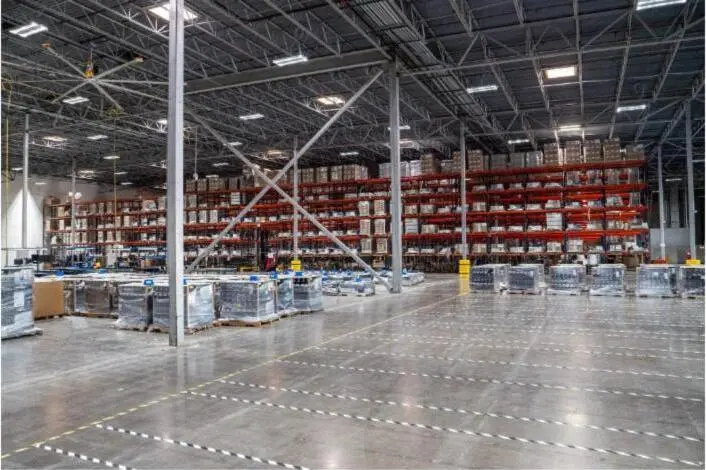
A complete, current asset inventory forms the foundation for any classification effort. Each device should be cataloged by serial number, asset tag, make, model and data classification level to create a master record for all future processing.
Key attributes to capture at this stage include:
- Purchase cost and current book value
- Data sensitivity level (regulated, confidential or public)
- Operational role (production, development, administrative or peripheral)
- Physical location and assigned user or team
- Remaining useful life and warranty status
- Applicable compliance scope (HIPAA, PCI DSS, CMMC, TAA)
A phased rollout starts with a comprehensive asset audit to establish baseline metrics, then defines standardized asset IDs, classifications and data requirements. Cross-functional touchpoints at this stage include IT, finance, procurement and facilities, and each group holds partial records that must be reconciled into a single source of truth.
Step 2: Create a Risk-Based Classification Scoring Model
Standard ABC analysis ranks items by consumption value alone. Technology assets require a scoring model that combines financial weight with operational and security risk. Enterprise asset criticality models in ISMS contexts typically score assets on business impact of failure, number of affected users or processes, recoverability and regulatory relevance.
A practical scoring matrix for technology assets evaluates each item on:
- Financial value (acquisition cost and residual market value)
- Data sensitivity (regulated data, confidential IP or no sensitive data)
- Operational criticality (production-tier, departmental or peripheral role)
- Recoverability (RTO and RPO requirements, replication status and backup coverage)
A RACI workshop with IT, security, finance and operations stakeholders aligns scoring weights before classification begins. Executive sponsorship at this stage prevents ownership disputes that slow implementation.
Step 3: Assign A, B and C Categories with Tech Examples
Once the scoring matrix is complete, teams apply it to each asset in the inventory. Assets with the highest combined scores across value, sensitivity, criticality and recoverability receive Class A designation. Those with moderate scores fall into Class B, and the remaining items become Class C.
- Class A: High-value, high-risk assets represent a small share of total inventory but most financial and security exposure. Examples include production servers, storage arrays, encrypted executive laptops, firewalls and devices holding regulated data. High-criticality assets are those whose failure or compromise would cause immediate severe business disruption, potential six-figure or higher financial damage, regulatory consequences or broad user impact.
- Class B: Midtier assets carry moderate value and manageable risk. Examples include standard employee laptops, departmental servers, monitors and VPN gateways. Medium-criticality assets cause noticeable operational impairment with available workarounds but no core business halt.
- Class C: Low-value, low-risk items make up the largest share of unit count but the smallest share of financial and security exposure. Examples include keyboards, mice, cables and print servers.
In a hypothetical federal agency refreshing 2,000 endpoints, Class A might include 200 encrypted executive laptops and 50 production servers. Class B might cover 1,200 standard workstations. Class C would account for the remaining peripherals. This segmentation directs the most rigorous controls to roughly 12 percent of the fleet and streamlines handling for the rest.
Step 4: Translate Classes into Control Policies
Critical systems identified through asset classification receive enhanced monitoring, more frequent security assessments, stricter access controls and additional layers of defense as part of a risk-based approach. Control policies should state those differences clearly.
A differentiated policy framework assigns controls that scale with risk exposure. Class A assets, which carry the highest financial and security risk, receive quarterly physical audits, continuous endpoint monitoring, multifactor authentication, patch prioritization within 24 to 48 hours of release and mandatory chain-of-custody documentation for any movement or transfer. Class B assets, with moderate risk profiles, follow semiannual audits, standard patch cycles, access controls aligned to role and documented approval for disposal or redeployment. Class C items, which represent the lowest risk tier, require annual audits, bulk tracking by location or department and streamlined disposal with basic documentation.
Tighter Class A controls increase per-unit management cost but reduce the larger cost of a breach or compliance finding. Streamlined Class C processes free resources to sustain those tighter controls where they matter most.
Step 5: Connect Classification to Lifecycle and Reverse Logistics
Classification delivers value when it drives concrete lifecycle actions. Class A assets require expedited recovery paths, witnessed data destruction and certified chain-of-custody documentation at every handoff.
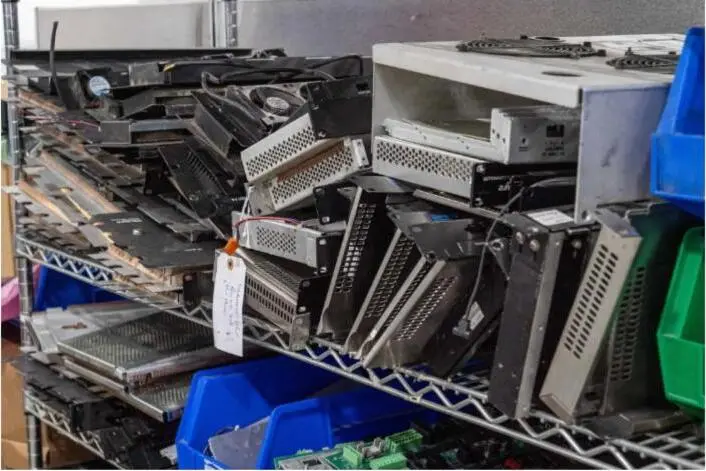
High-risk assets such as servers, storage arrays, executive laptops and devices holding regulated data map to on-site witnessed destruction with instant certification to reduce transport risk and provide immediate audit evidence. ISO 27001 Annex A 7.14 calls for controls proportionate to risk, which allows high-value or high-sensitivity assets to receive Destroy-level sanitization while lower-risk assets follow Clear or Purge methods.
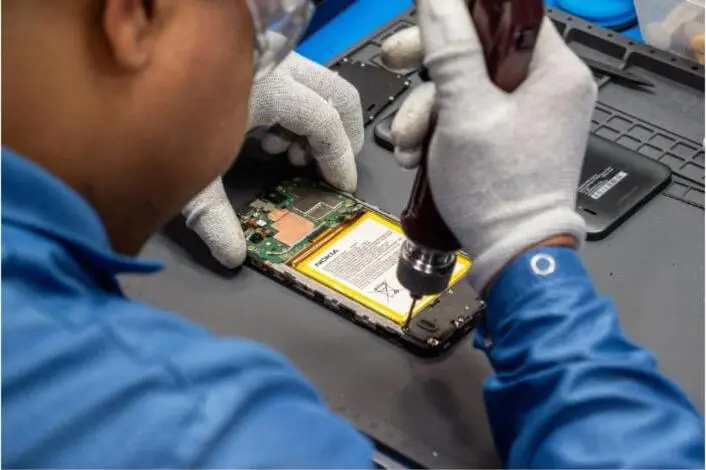
NIST SP 800-88 recommends prioritizing certified software wiping over physical destruction for Class B assets, which enables reuse or resale while maintaining compliance with GDPR, HIPAA and similar frameworks. The lowest-risk tier proceeds through bulk recycling with standard documentation, which concentrates effort on assets where security and value exposure justify tighter controls.

Talk to a lifecycle expert at Premier Logitech to map classification tiers to certified ITAD and reverse logistics workflows that meet NIST, CMMC and TAA requirements.
Step 6: Set Review Cadences for Reclassification
Dynamic market conditions and changing operational priorities can quickly make initial ABC categorizations obsolete, so regular reviews and adjustments keep the model effective. Technology refreshes, acquisitions and regulatory changes often trigger reclassification.
A sustainable review cadence includes:
- Quarterly dashboard reviews covering classification coverage, audit completion rates and exception flags
- Triggered reclassification when assets change operational role, data sensitivity or ownership
- Annual full-inventory reconciliation aligned to budget and refresh cycles
- Exception-based alerts when MDM or endpoint telemetry detects configuration drift on Class A items
Common Implementation Challenges and How to Address Them
ABC analysis programs often encounter data accuracy problems, where incomplete records of item costs, demand and turnover cause misclassification and weak inventory decisions. Technology asset programs also face unclear ownership across IT, finance and operations, along with inconsistent data quality across distributed sites.
Effective mitigations include:
- Data-cleansing sprints: Run focused efforts to reconcile CMDB, ERP and procurement records before classification begins.
- Executive sponsorship: Assign a named program owner with authority to resolve cross-functional ownership disputes.
- Phased rollout: Pilot on high-value or frequently misplaced assets before scaling to prove value and refine scoring criteria.
- Automation: Barcode and RFID technology streamline data collection for ABC analysis, which reduces manual effort and improves tracking accuracy.
Success Metrics for ABC Tech-Asset Programs
Program health depends on both leading indicators that signal process quality and lagging indicators that confirm business outcomes.
Leading indicators include classification coverage as a percentage of total asset inventory, audit completion rates by class and data-integrity scores from reconciliation checks. Lagging indicators include asset recovery value realized at end of life, reduction in compliance findings per audit cycle and incident response time for Class A events. Together, these metrics create a feedback loop that supports continuous improvement and executive reporting.
Advanced ABC Practices for Mature Programs
Mature classification programs can extend the framework in several directions. MDM and IoT telemetry support continuous, automated reclassification based on real-time usage and configuration data instead of periodic manual reviews. Higher-value or recoverable IT assets can move through refurbishment and remarketing for redeployment or resale, while lower-value or nonrecoverable assets proceed to data destruction and recycling, which creates a circular-economy model that aligns with ABC tiers.

Programs that are new to classification benefit from starting with Class A assets only. Teams can establish controls and review cadences for the highest-risk tier, then extend the framework to Class B and Class C items once the model proves effective.
Frequently Asked Questions
How often should ABC categories be reviewed?
Most programs benefit from quarterly dashboard reviews combined with event-triggered reclassification. Technology refreshes, organizational restructuring, regulatory changes and acquisitions often shift an asset’s financial value or operational role enough to require a category change. An annual full-inventory reconciliation aligned to budget cycles provides a structured checkpoint for the entire fleet.
What skills are required for program ownership?
Effective ABC classification programs rely on a cross-functional team rather than a single owner. IT asset management expertise covers inventory systems and lifecycle policy. Security knowledge ensures data-sensitivity scoring reflects actual risk. Finance participation validates cost and residual-value inputs. Operations or supply chain leadership manages reverse logistics integration. A named program lead with executive backing resolves disputes and maintains momentum across those functions.
How do U.S. regulations shape control policy design?
Regulations including NIST SP 800-171, CMMC, TAA, HIPAA and PCI DSS impose specific requirements on asset tracking, access control and data destruction. NIST frameworks position a complete, current hardware inventory as a foundational control. CMMC requires documented chain-of-custody and sanitization evidence for defense contractor environments. TAA compliance governs sourcing and procurement decisions for government programs. Mapping each regulation to the asset classes it affects, typically Class A and select Class B items, allows organizations to design proportionate controls instead of applying the most stringent requirements across the entire fleet.
When should an organization revisit its classification approach?
A classification approach warrants review when audit findings reveal recurring misclassification, when a technology refresh significantly changes the fleet, when the organization enters a new regulatory environment or when recovery value at end of life falls below program targets. Mergers and acquisitions are a common trigger because inherited assets often carry unknown risk profiles and require rapid assessment before integration into existing lifecycle controls.
How does ABC classification integrate with IT asset disposition?
Classification tiers map directly to disposition methods. Class A assets that hold regulated data or carry the highest residual value require the most rigorous sanitization and chain-of-custody documentation, including witnessed destruction and certificates tied to individual serial numbers. Class B assets typically follow certified software-based sanitization aligned to NIST SP 800-88, with eligible units routed to refurbishment and resale. Class C items proceed through bulk recycling with standard documentation. This tiered approach concentrates disposition cost and rigor where risk and value justify it and keeps processes efficient for most of the fleet.
Evaluate Tech-Asset Classification Maturity with Premier Logitech
ABC classification applied to technology hardware gives operations, supply chain and IT asset management leaders a repeatable framework for concentrating controls where financial and security exposure is highest. The six-step process of inventory, criteria definition, category assignment, differentiated policy, lifecycle integration and ongoing review creates a structured foundation for audit readiness, data-security compliance and end-of-life value recovery.
Premier Logitech delivers end-to-end IT lifecycle and reverse logistics services that align directly with each classification tier. From asset tagging and inventory management through certified data destruction, refurbishment and remarketing, the program supports NIST, CMMC, TAA and ISO compliance requirements for enterprises, OEMs and government agencies.
Talk to a lifecycle expert at Premier Logitech to evaluate current classification maturity and identify where a structured ABC framework can reduce risk and recover more value from the technology fleet.
