Last updated: August 15, 2026
Key Takeaways for Tech-Focused 3PL Selection
- Tech logistics 3PLs must deliver white-glove handling, serialized tracking and compliance with TAA, NIST, CMMC and SOC 2 standards that standard freight providers cannot match.
- Evaluation criteria for 2026 include service scope, technical capabilities, quality and compliance, scalability, visibility and data, and network coverage that support nationwide tech deployments.
- Top providers differentiate by use case: data-center deployments need climate-controlled sequencing, enterprise device programs require configuration and kitting, and reverse logistics demands integrated RMA, repair and recycling under one contract.
- Premier Logitech stands out with its authorized repair network, TAA, TAPA and SOC 2 certifications, TMS platform and single-vendor consolidation that removes chain-of-custody gaps across the full lifecycle.
- Organizations seeking a compliant, consolidated tech logistics program should talk to a Premier Logitech lifecycle expert to map capabilities to specific requirements.
Six-Dimension Evaluation Framework for 2026 Tech 3PLs
A rigorous 3PL evaluation for tech logistics applies six dimensions, with each one carrying different weight based on the deployment scenario.
Service Scope covers the full range of capabilities a provider delivers under one contract. For tech logistics, that scope includes transportation, warehousing, configuration, repair and asset disposition, not transportation alone. Armstrong & Associates analysis of thousands of 3PL customer relationships shows supplier consolidation favoring integrated partners that deliver cross-border, end-to-end solutions.
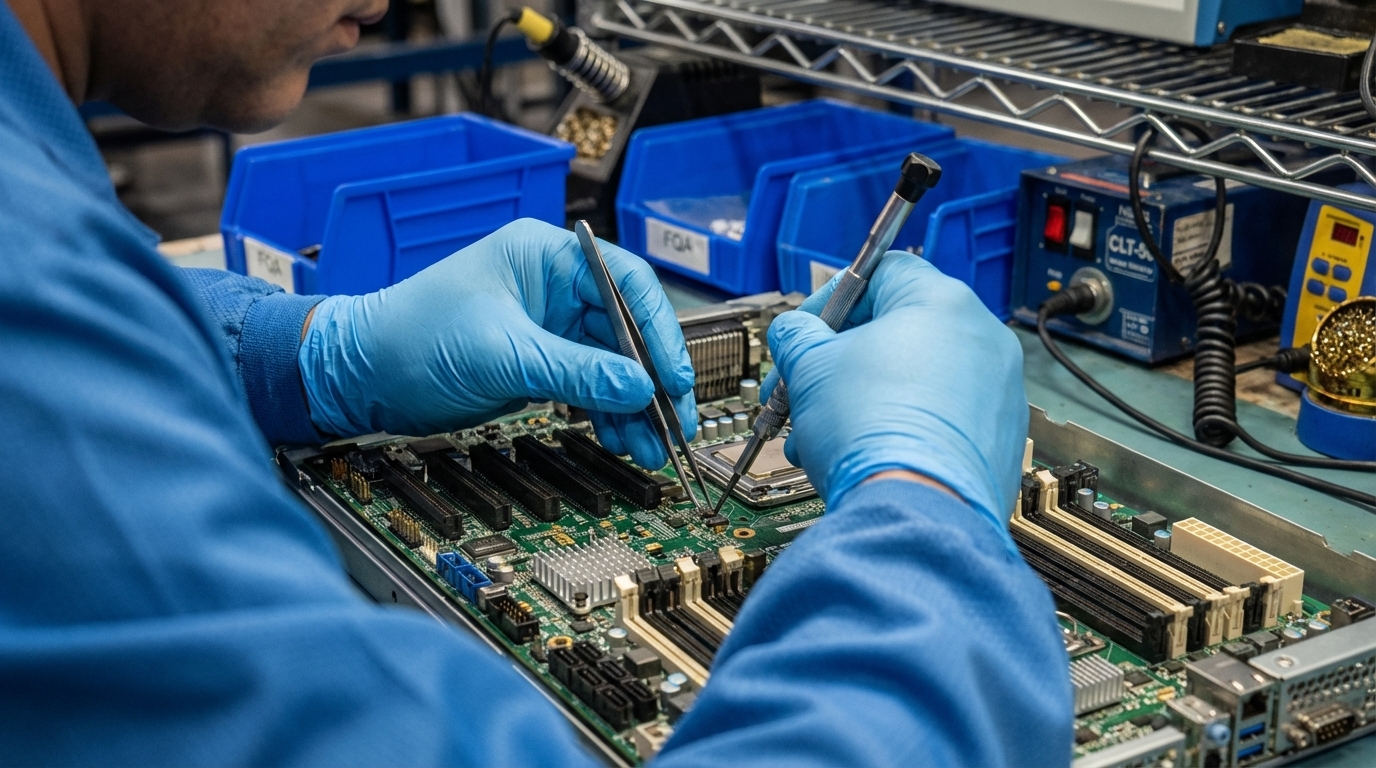
Technical Capabilities include white-glove delivery protocols, ESD-safe handling, climate-controlled transport and authorized repair capacity. Effective white-glove protocols begin with pre-move site surveys that identify access constraints and handling requirements. These surveys inform controlled transport plans that minimize handoffs and reduce damage risk. Each handoff requires documented chain-of-custody transfers, creating an audit trail that culminates in final-mile inside delivery with equipment placement.
Quality and Compliance separates general freight providers from tech-specialized 3PLs. Government and enterprise programs require TAA-compliant sourcing, NIST SP 800-171 controls, CMMC alignment and SOC 2 Type 2 certification. Compliance burdens appear as a major challenge for 3PL respondents in the Inbound Logistics Perspectives report, which reinforces the need for providers with mature compliance programs.
Scalability and Flexibility determines whether a provider can absorb volume surges, seasonal device refreshes, large government deployments or high-volume return cycles without service degradation. Scalability evaluation should cover the ability to adjust storage, labor and transportation capacity in response to seasonality or growth, with clear examples of past peak performance.
Visibility and Data now function as baseline expectations. Supply chain visibility remains a primary technology gap, with shippers citing it as an area needing improvement. A capable TMS must deliver real-time tracking, post-shipment analytics and ERP integration. Modern TMS platforms extend beyond routing and execution to include analytics that connect transportation data with downstream financial and operational processes.
Network and Coverage evaluates carrier depth, geographic reach and proximity to key logistics hubs. A provider LTL carrier network, nearshore capabilities and staging warehouse locations directly affect deployment speed and cost structure. The following section applies these six evaluation dimensions to leading providers, organized by the three most common tech logistics use cases.
Strong Shortlist by Tech Logistics Use Case
Data-Center Deployments
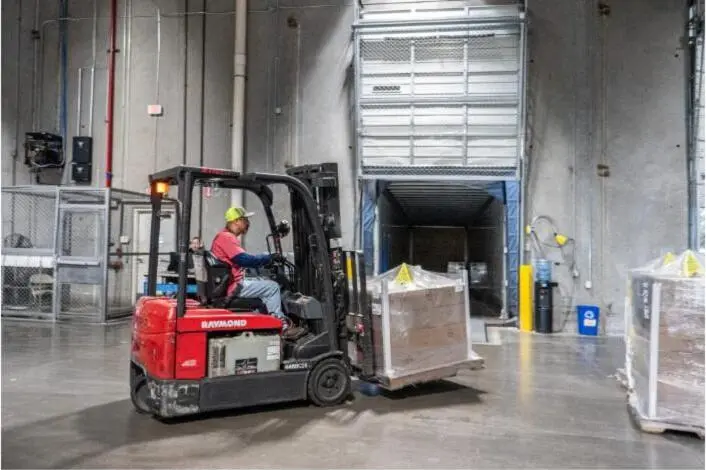
Data-center logistics requires heavy-haul transport, just-in-time sequenced delivery and climate-controlled staging. Phoenix Logistics specializes in sequenced material delivery for hyperscale data center construction and manages gate access for high volumes of inbound trucks daily with real-time ETA adjustments. SEKO Logistics provides cleanroom-certified facilities and white-glove handling for server racks and telecom gear, coordinating site access, compliance documentation and installation scheduling for global data center deployments. TransPak offers closed-loop packaging programs engineered for data center and semiconductor supply chains, with hub-and-spoke recovery networks across multiple countries. Premier Logitech delivers white-glove final mile, ESD-safe staging and TMS-tracked transport for data center equipment across its national carrier network, with nearshore operations that support cross-border deployments.
Data-center logistics places the greatest emphasis on sequencing, climate control and site access coordination. Enterprise device programs shift focus toward configuration, kitting and direct-to-user fulfillment.
Enterprise Device Distribution
Enterprise device programs demand configuration, kitting, imaging and direct-to-user fulfillment at scale. Ingram Micro Logistics operates broad fulfillment infrastructure for enterprise device programs and supports large refresh cycles. SEKO supports ERP integrations and API connectivity for contract manufacturing and technology supply chains, which enables synchronized order and inventory data. Premier Logitech combines configuration, BOM-based kitting, new-hire kit assembly, device imaging and BIOS configuration with its transportation network, creating a single-vendor path from configuration through final-mile delivery.
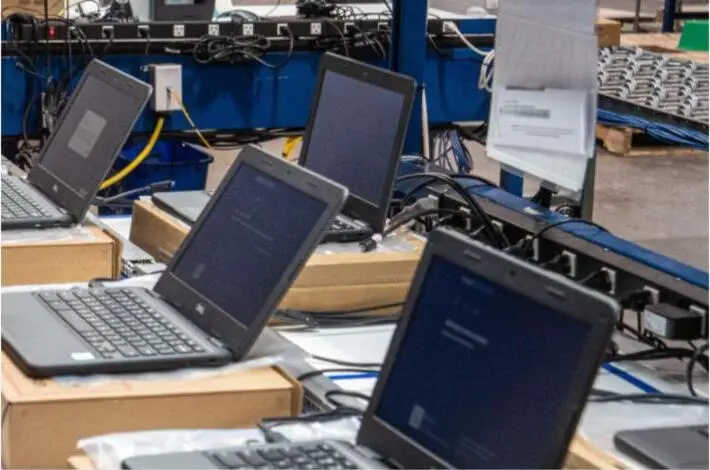
Enterprise device distribution centers on forward deployment and user readiness. Reverse logistics programs focus on recovery, compliance and value capture at the end of the asset lifecycle.
High-Volume Reverse Logistics
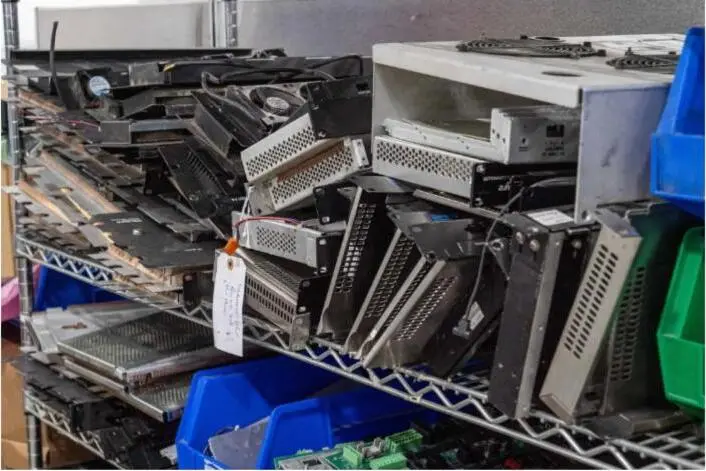
Reverse logistics for tech assets extends well beyond transportation, encompassing project planning, asset collection, secure transportation, inventory tracking, data sanitization, testing and grading, refurbishment, redeployment, resale, parts recovery, recycling and final reporting. This complexity creates a common problem, as fragmented handling by separate vendors for packing, transportation, data destruction and recycling causes visibility breakdowns between stages and leads to asset delays and misaligned processing. Reconext focuses on enterprise-scale IT asset recovery and refurbishment but operates within this fragmented model. Premier Logitech takes a different approach and consolidates RMA management, depot repair across multiple service levels, sorting and grading, secure data destruction and responsible recycling under one contract, which removes the fragmentation that undermines chain-of-custody compliance.
These use-case examples highlight how the same evaluation framework applies differently across deployment, distribution and recovery programs.
How Premier Logitech Aligns With Tech-Specific Criteria
Premier Logitech has operated as a lifecycle-native partner for technology OEMs, enterprises and government agencies since 2007, building capabilities that address each dimension of the 2026 evaluation framework directly.
Authorized Repair Network: Premier Logitech holds Authorized Service Center status with more than 20 OEM brands and enables warranty-compliant depot repair across service levels from basic diagnostics through board-level repair. This authorization creates a compliance barrier that general freight 3PLs cannot replicate.
Compliance Certifications: Premier Logitech maintains TAA compliance, TAPA certification, ISO quality frameworks, NIST alignment, CMMC readiness and SOC 2 certification. CMMC requirements could be included in new DoD solicitations starting November 10, 2025, with Phase II originally scheduled for November 10, 2026, before suspension in July 2026. Premier Logitech also holds CAGE Code 4WAJ9, which identifies it as a pre-vetted partner for U.S. federal government procurement.
TMS Platform and Visibility: Premier Logitech Transportation Management System provides real-time tracking, freight audit and logistics analytics across its carrier network of more than 120 vetted North American LTL carriers. Clients gain control-tower visibility across inbound and outbound movements without managing multiple vendor portals.
Single-Vendor Consolidation: Premier Logitech operates as both a full lifecycle partner and a modular services provider. Organizations can engage the full program, including sourcing, configuration, transportation, repair and recycling, or select individual services. This structure removes the vendor fragmentation that creates chain-of-custody gaps and compliance risk in multi-vendor programs.
Operational Scale: Three DFW facilities and nearshore operations in Laredo and Nuevo Laredo position Premier Logitech near one of the world busiest air cargo hubs and support both domestic deployments and cross-border programs.
Map these capabilities to program requirements in a consultation with the Premier Logitech team.
RFP Scoring Checklist for Tech Logistics 3PLs
The evaluation framework and provider analysis above translate into specific RFP requirements. Directors building a 3PL RFP for tech logistics should score each provider against the following criteria, which turn the six evaluation dimensions into measurable selection factors:
- Documented chain-of-custody protocols from pickup through final disposition
- White-glove final-mile delivery with inside placement and debris removal
- Serialized asset tracking integrated with client ERP or WMS systems
- TAA-compliant sourcing and handling for government programs
- NIST SP 800-171 and CMMC alignment for DoD or CUI-adjacent freight
- SOC 2 Type 2 certification covering security, availability and confidentiality
- OEM Authorized Service Center status for warranty-compliant depot repair
- Reverse logistics capabilities including RMA management, grading, data destruction and recycling
- TMS platform with real-time visibility, freight audit and post-shipment analytics
- LTL carrier network depth and geographic coverage for nationwide programs
- Scalability to absorb volume surges without service degradation
- Single-vendor consolidation option replacing fragmented repair, fulfillment and recycling providers
- Nearshore or cross-border capabilities for international program components
- Secure data destruction with compliance reporting for retired assets
Frequently Asked Questions
Who are the top 3PL providers for tech logistics?
The strongest providers for technology logistics combine transportation management with tech-specific capabilities such as white-glove delivery, serialized tracking, authorized repair and compliance certifications. General freight 3PLs such as XPO, Ryder and Echo Global Logistics serve broad markets but lack OEM repair authorizations and government compliance stacks. Tech-specialized providers, including SEKO Logistics, Ingram Micro Logistics and Premier Logitech, build programs around chain-of-custody, lifecycle services and regulatory requirements. The best fit depends on use case, since data-center deployment, enterprise device distribution and high-volume reverse logistics each prioritize different capabilities.
What compliance certifications do tech 3PLs need for government contracts?
Government and DoD-adjacent programs require a specific certification stack. TAA compliance governs product sourcing and handling. CMMC Level 2 or higher is required for contractors handling Controlled Unclassified Information under DoD contracts, with implementation timelines subject to regulatory updates. NIST SP 800-171 controls underpin CMMC requirements. SOC 2 Type 2 certification demonstrates operating effectiveness of security controls over time. TAPA certification addresses physical cargo security for high-value electronics. A CAGE Code identifies a provider as pre-vetted for federal procurement. Providers missing any of these certifications create compliance gaps that can disqualify a program from government award.
What is chain-of-custody in tech logistics and why does it matter?
Chain-of-custody is the documented record of every transfer, handling event and location change for a technology asset from pickup through final disposition. Each handoff must be reconciled against expected records to produce audit-ready documentation. For enterprise and government programs, chain-of-custody documentation supports internal governance, external compliance reporting, data destruction verification and asset recovery accounting. Fragmented vendor arrangements, with separate providers for transportation, data destruction and recycling, create gaps in this record that expose organizations to compliance risk and asset loss.
How does reverse logistics differ from standard return shipping for tech equipment?
Standard return shipping moves a package from point A to point B. Reverse logistics for tech assets encompasses collection planning, packing standards, serialized inventory capture, secure transit, intake reconciliation, functional evaluation, data destruction, repair or refurbishment decisions, parts harvesting, recycling and final reporting. Each stage requires documented handoffs and compliance controls. A capable reverse logistics partner shapes the program before collection dates are set, owns customs and regulatory paperwork, matches each asset to the optimal recovery outcome, including redeployment, resale, repair or responsible recycling, and maintains chain-of-custody documentation throughout.
What should a TMS platform deliver for nationwide tech logistics programs?
A Transportation Management System for tech logistics must go beyond routing and carrier selection. It should provide real-time shipment visibility with proactive exception alerts, freight audit and analytics, ERP and WMS integration via API and post-shipment reporting that connects transportation data with inventory and financial systems. For reverse logistics programs, the TMS must track inbound returns alongside outbound deployments and give operations teams a unified view of asset movement across the full lifecycle. A unified dashboard covering all carrier relationships and shipment statuses now serves as a baseline expectation for enterprise and government programs and removes the need to log into multiple vendor portals for shipment updates.
Can a single 3PL partner handle both forward and reverse logistics for tech programs?
A single 3PL partner can handle both forward and reverse logistics and deliver measurable operational advantages. One provider removes the visibility breakdowns that occur when separate vendors handle outbound fulfillment, returns transportation, depot repair and recycling. It also simplifies compliance reporting, reduces chain-of-custody gaps and creates a unified data record across the full asset lifecycle. Premier Logitech operates as both a full lifecycle partner and a modular services provider, which allows organizations to consolidate transportation, configuration, repair and asset recovery under one contract or engage individual services as needed.
Next Steps for Building a 2026 Tech Logistics Program
Technology logistics programs in 2026 require more than carrier relationships and warehouse space. They require documented chain-of-custody, white-glove handling, OEM-authorized repair, government-grade compliance and TMS visibility, delivered by a partner that understands the full technology lifecycle. Premier Logitech brings these capabilities under one contract and serves OEMs, enterprises and government agencies across the United States.
Schedule a consultation to build a program tailored to specific operational requirements.
