Last updated: August 6, 2026
Key Takeaways
- Enterprise cloud PLM platforms must support deep BOM management, multi-CAD and ERP integration, and compliance traceability to meet 2026 requirements.
- Customization without upgrade lock-in, AI and digital-thread readiness, and predictable total cost of ownership now act as core selection criteria.
- Industry execution needs such as TAA sourcing, CMMC handling, and depot repair must align with PLM selection in aerospace, automotive, telecom, and government programs.
- Leading 2026 platforms include Siemens Teamcenter X, PTC Windchill+, Dassault 3DEXPERIENCE, Aras Innovator, SAP PLM, Oracle Cloud PLM, Arena PLM, and Autodesk Fusion Manage.
- Premier Logitech connects PLM data to physical execution through certified sourcing, kitting, repair, and reverse logistics services; work with a lifecycle expert to map requirements and build a tailored roadmap.
Seven-Criteria Evaluation Framework for Enterprise Cloud PLM
Enterprise PLM selection in 2026 benefits from a clear sequence of evaluation criteria.
BOM depth. BOM and configuration management carries significant weight in enterprise PLM evaluations because it determines whether engineering intent reaches manufacturing accurately. This work covers EBOM-to-MBOM transformation, multi-view BOMs, variant management, and where-used analysis. Platforms that cannot handle complex assemblies at scale create downstream manufacturing errors.
Multi-CAD and ERP integration. CAD data management accounts for substantial evaluation weight. Bidirectional support for NX, Creo, CATIA, SOLIDWORKS, Inventor and Altium now forms the baseline expectation. ERP connectivity, especially to SAP S/4HANA or Oracle Fusion, closes the loop between engineering change and procurement.
Compliance traceability. Regulated industries require audit trails, access governance, electronic signatures, and data-residency options as table-stakes features, not add-ons.
Customization versus upgrade resilience. Traditional on-premise PLM forces organizations to spend a significant portion of IT budgets on disruptive maintenance when custom code breaks during upgrades. Cloud platforms that store customizations as metadata, rather than code overrides, preserve upgrade continuity.
AI and digital-thread readiness. By 2026, the digital thread has become a concrete buying requirement. Buyers expect reliable connections from as-designed to as-planned, as-built, and as-maintained data.
Total cost signals. SaaS PLM can offer lower total cost of ownership than on-premises solutions. AI add-ons and uncapped escalation clauses in vendor contracts can erode that advantage quickly.
Implementation effort. Cloud-native PLM reduces time to go live compared to traditional on-premise deployments. Enterprise-grade platforms still require structured change management and physical execution readiness to deliver value.
Map requirements against these seven criteria with a lifecycle expert to build a tailored PLM-to-execution roadmap.
The following sections apply this framework to four industries with distinct PLM requirements: aerospace and defense, automotive, telecom and electronics, and government programs.
Aerospace and Defense: PLM Platforms and Certified Execution
Siemens Teamcenter is the reference standard for large aerospace and defense programs. It provides multi-level configuration management, engineering change workflows, and a SaaS delivery path through Teamcenter X. Aras Innovator is used by mid-to-large manufacturers in aerospace and defense for its open architecture that preserves customizations through upgrades without vendor lock-in.
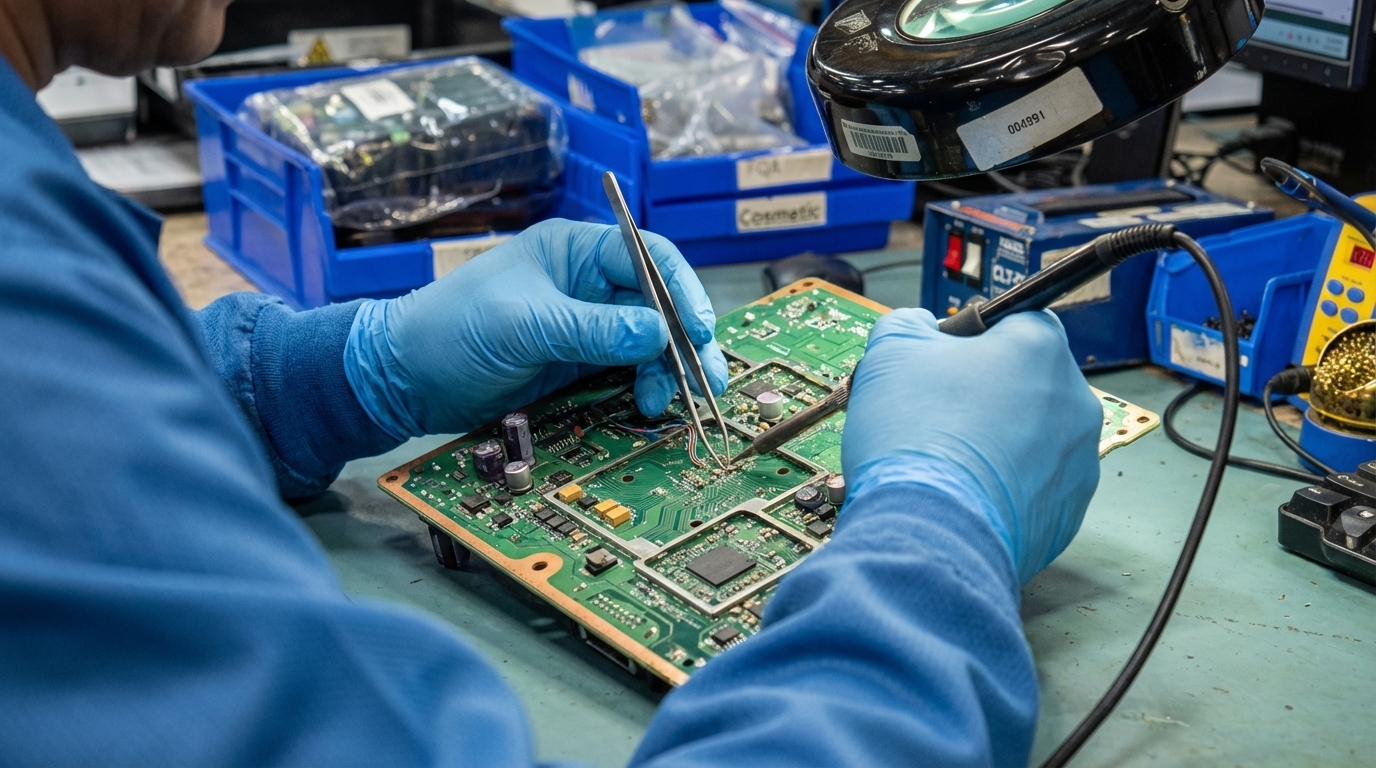
Digital PLM data alone does not satisfy aerospace compliance requirements. Physical execution must match TAA-compliant sourcing, NIST- and CMMC-aligned secure handling, and traceable repair and asset recovery. Premier Logitech holds TAA, NIST, CMMC, SOC 2, and ISO certifications alongside CAGE Code 4WAJ9, which positions it as a pre-vetted partner for federal and defense programs. With authorization across more than 20 OEM Authorized Service Centers, Premier Logitech closes the gap between what the PLM system records and what physically happens to the asset.
Automotive: PLM Platforms and High-Volume Operations
Automotive and transportation are a leading sector for PLM revenue. Growth comes from multi-CAD complexity, large-scale variant management, and tight ERP integration requirements. Dassault Systèmes 3DEXPERIENCE has particular strength in automotive through its shared data backbone that connects design, manufacturing processes, and in-service support.
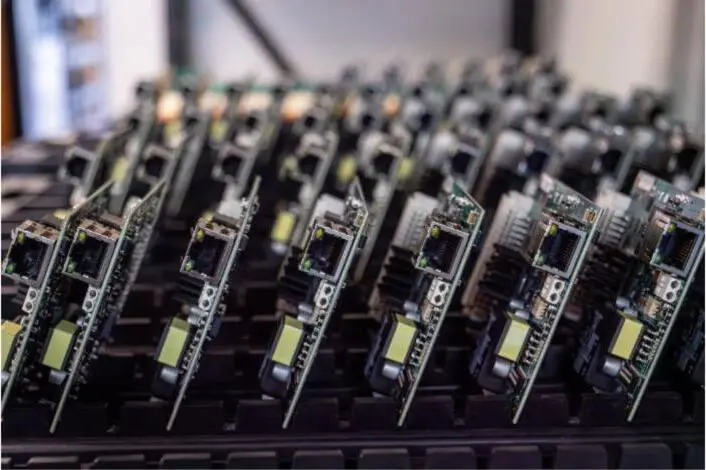
Automotive programs require physical execution at volume. Premier Logitech supports high-volume kitting and repair operations from its DFW facilities and nearshore operations in Laredo and Nuevo Laredo. This footprint enables OEMs to scale physical throughput in line with PLM-driven program changes.

Telecom and Electronics: PLM Platforms and Reverse Logistics
Arena PLM targets mid-market electronics and high-tech manufacturers managing complex supply chains with contract manufacturers and component suppliers. It offers strong supply-chain collaboration and an integrated QMS. Oracle Fusion Cloud SCM 26A introduced built-in AI for resilient supply chains as a response to telecom and electronics supply-chain volatility.
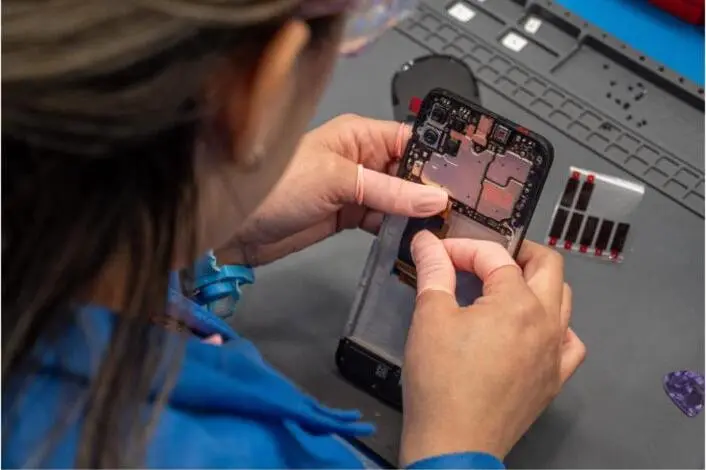
Rapid component changes require equally rapid physical response. Premier Logitech provides scalable reverse logistics, RMA management, depot repair at Levels 1 through 4, and rapid exchange programs that keep telecom and electronics programs moving when PLM records a change order.

Government and Public Sector: PLM Platforms and Security Credentials
Government programs require compliance documentation, single-vendor accountability, and pre-vetted security credentials. SAP PLM integrates directly with SAP S/4HANA, providing synchronization between product lifecycles and global logistical pipelines. This alignment suits large federal agencies already running SAP. Siemens Teamcenter X supports data-residency requirements for agencies with infrastructure mandates.
Premier Logitech’s CAGE Code 4WAJ9 identifies it as a pre-vetted, high-security partner for U.S. federal government programs. TAA-compliant sourcing, secure data destruction, and compliance reporting under ISO, NIST, and CMMC frameworks allow government buyers to consolidate lifecycle execution into a single, auditable partner.
Enterprise Cloud PLM Comparison 2026: Leading Platforms
Enterprise buyers in 2026 focus on a core group of PLM platforms. Selection depends on CAD environment, ERP stack, industry compliance requirements, and upgrade strategy.
- Siemens Teamcenter X: Broad PLM portfolio with deep NX and Simcenter integration for a design-through-manufacturing digital thread, delivered as SaaS.
- PTC Windchill+: Rigorous change and configuration management with full requirements-to-parts traceability.
- Dassault 3DEXPERIENCE / ENOVIA: Connects design, systems architecture, manufacturing, and in-service support on a single cloud data backbone with strength in aerospace and automotive.
- Aras Innovator: Stores customizations as XML metadata insulated from system updates, which enables upgrade-safe deep configuration.
- SAP PLM: Native integration with SAP S/4HANA connects engineering changes directly to manufacturing BOMs, procurement and finance without separate middleware.
- Oracle Cloud PLM: Product data, change orders, and quality records reside in the same cloud environment as ERP and SCM processes, which reduces integration overhead for Oracle-standardized organizations.
- Arena PLM (PTC): Cloud-native BOM management with controlled revision tracking, engineering change workflows, and an integrated QMS that targets electronics and medical-device manufacturers.
- Autodesk Fusion Manage: Real-time multi-user BOM collaboration with automated CAD integration and lifecycle status tracking from initial design through end of life.
Teamcenter X vs. Windchill+ for Complex Programs
Teamcenter is the most widely deployed PLM platform globally and the reference standard for large, complex product development organizations in aerospace, automotive, and defense. Its SaaS delivery through Teamcenter X preserves that functional depth while reducing infrastructure burden.
Windchill+ does not support modified out-of-the-box classes, point-to-point integrations, or Info*Engine. This constraint enforces standardization that enables seamless upgrades. Organizations with heavily customized Windchill on-premise deployments must rationalize those customizations before migrating to Windchill+.
Teamcenter X holds the advantage for programs that require the deepest multi-domain integration and a native NX environment. Windchill+ offers a more direct path for organizations that prioritize upgrade continuity and a clean SaaS transition from existing Windchill deployments.
Aras Innovator: Upgrade-Safe Customization at Enterprise Scale
Aras Innovator stores all customizations as metadata in XML definitions within its open modeling engine, keeping them insulated from system updates so they are not overwritten during platform upgrades. This architecture allows heavily tailored deployments to be upgraded in days or weeks rather than months.
Aras Enterprise SaaS, launched in 2023 on Microsoft Azure, delivers the full modeling and customization architecture as a managed cloud service. Configurable Web Services introduced in the 2024 release enable administrators to create custom RESTful API endpoints through a visual low-code editor while remaining within Aras’s upgrade-safe framework. For enterprises in aerospace, automotive, and defense that require deep workflow configuration without accepting upgrade lock-in, Aras presents a structurally distinct option from the major PLM vendors.
PLM with SAP or Oracle: Integration Tradeoffs for Enterprises
SAP PLM provides complete synchronization between product lifecycles and global logistical pipelines through data exchanges for organizations running SAP at the core. Engineering changes flow directly to manufacturing BOMs, procurement and finance without a separate integration layer.
Oracle Cloud PLM offers a comparable native advantage for Oracle-standardized organizations. Oracle Cloud PLM enables product data, change orders, and quality records to reside in the same cloud environment as ERP and SCM processes. Organizations not standardized on SAP or Oracle often select dedicated PLM platforms such as Teamcenter or Windchill+ and connect to both ERP stacks via certified integrations, which introduces ongoing maintenance overhead.
Multi-CAD Support in 2026 Cloud PLM Platforms
Enterprise PLM platforms must integrate bidirectionally with MCAD and ECAD tools including NX, Creo, CATIA, SOLIDWORKS, Inventor, and Altium while preserving versioning, where-used traceability, and faithful large-assembly handling. No platform in 2026 operates as fully CAD-agnostic. Native integration depth with the primary authoring tool remains the most important practical differentiator.
Teamcenter X is native to NX and Solid Edge. Windchill+ is native to Creo. 3DEXPERIENCE is native to CATIA and SOLIDWORKS. Autodesk Fusion Manage integrates with any CAD software, which makes it a practical option for mixed-CAD environments. Organizations running multiple CAD environments should evaluate visualization and neutral-format handling as a secondary criterion after native integration depth.
Common Buyer Objections and Premier Logitech Responses
Enterprise PLM evaluations surface three recurring objections.
Upgrade lock-in. Traditional on-premise PLM creates version lock where upgrading software breaks years of custom code. Cloud platforms with metadata-based customization architectures, Aras in particular, address this structurally. Premier Logitech’s modular service model mirrors this logic. Clients engage for end-to-end lifecycle management or select individual services, which avoids dependency on a single rigid program structure.
Data-security risk. Government and regulated-industry buyers require certified handling at every physical touchpoint, not only in the software layer. PLM software alone cannot satisfy this requirement because physical assets move through sourcing, repair, and logistics operations outside the software’s control. Premier Logitech’s certifications, detailed in the aerospace section above, extend data-security assurance from the PLM system into those physical operations.
Fragmented vendor stacks. PLM software decisions often expose a deeper problem. Multiple vendors handle sourcing, repair, kitting, reverse logistics, and recycling with no unified visibility. Premier Logitech consolidates those functions into a single partner with real-time tracking and lifecycle analytics, which replaces vendor sprawl with a single point of accountability.
Consolidate physical execution under one certified partner and schedule a discovery call to evaluate the current vendor stack.
Conclusion: Cloud PLM Choice and Execution Readiness
The seven-criteria framework outlined earlier provides a structured path through a crowded 2026 market. The global PLM software market reached substantial scale in 2026 and continues to expand, with cloud deployments capturing a growing share of that spend.
Platform selection forms the first decision. Execution readiness forms the second and often receives less attention. Premier Logitech delivers the physical thread that turns any PLM decision into measurable outcomes. Services include TAA-compliant sourcing, BOM-based kitting, depot repair, reverse logistics, secure data destruction, and asset recovery, all under one certified partner with CAGE Code 4WAJ9 and broad OEM service center authorization.
Schedule a discovery call to map current lifecycle flows and build a tailored PLM-to-execution roadmap.
Frequently Asked Questions
What is the difference between cloud PLM and on-premise PLM for enterprise programs?
Cloud PLM runs on vendor-managed infrastructure, with the vendor handling upgrades, security patches, and performance tuning. On-premise PLM runs on infrastructure the organization controls, which provides more flexibility for deep customization but requires internal resources to manage upgrades. The practical tradeoff is upgrade agility versus control. Cloud deployments typically reach production faster and stay current without large upgrade projects. On-premise deployments allow deeper integration with legacy systems but accumulate technical debt when customizations are not maintained. For most enterprise programs in 2026, cloud or hybrid deployment serves as the default starting point unless data-residency or security mandates require on-premise infrastructure.
How does Premier Logitech support enterprise PLM programs beyond software?
Premier Logitech operates as the physical execution layer for enterprise lifecycle programs. PLM software manages product data, change orders, and compliance records. Premier Logitech manages what happens to the physical asset. Services include TAA-compliant sourcing and procurement, BOM-based kitting and configuration, depot repair at Levels 1 through 4, reverse logistics and RMA management, secure data destruction, and asset recovery and remarketing. These services are available as an end-to-end program or as modular services selected individually. Premier Logitech holds TAA, NIST, CMMC, SOC 2, and ISO certifications and operates under CAGE Code 4WAJ9 for federal and defense programs.
Which cloud PLM platform is best for aerospace and defense programs?
Siemens Teamcenter X is the most widely deployed platform in aerospace and defense, with multi-level configuration management, engineering change workflows, and native NX integration. Aras Innovator offers a strong alternative for programs that require deep workflow customization without accepting upgrade lock-in, because its metadata-based architecture preserves customizations through platform upgrades. The right choice depends on the existing CAD environment, ERP stack, and whether the program requires FedRAMP or data-residency compliance. Physical execution requirements such as TAA sourcing, CMMC-aligned handling, and traceable repair must be addressed by a certified execution partner regardless of which PLM platform the program selects.
What are the main risks of PLM customization in cloud deployments?
The primary risk is upgrade lock-in. Customizations built on overridden platform classes or point-to-point integrations break when the vendor releases a new version. This pattern forces the organization to choose between staying on an outdated release or funding a costly rework. Windchill+ explicitly prohibits modified out-of-the-box classes and certain integration patterns to prevent this scenario. Aras Innovator addresses the risk architecturally by storing all customizations as XML metadata that is insulated from system updates. SAP and Oracle manage the risk through side-by-side extensibility on their respective integration platforms, which decouples custom logic from the transactional core. The safest approach across all platforms is to exhaust out-of-the-box configuration options before writing custom code.
How do AI capabilities in 2026 cloud PLM platforms affect enterprise buying decisions?
AI capabilities in 2026 PLM platforms range from generative AI chat interfaces for querying product data to multi-agent systems that handle change impact analysis, requirements traceability, and supplier data enrichment. PTC launched the Windchill AI Assistant in April 2026, which enables natural-language search across product data while enforcing existing access controls. Oracle Fusion Cloud SCM 26A introduced built-in AI for resilient supply chains. Independent guidance recommends that buyers evaluate architectural readiness, including knowledge graphs, vector-native search, and agent-ready data exposure, not only shipped AI features. Many enterprise platforms ship AI capabilities that are architecturally retrofit rather than native. AI add-ons also carry incremental cost that should be factored into total cost of ownership analysis.
