
Last updated: August 14, 2026
Key Takeaways for 500-Rack and Larger Data Centers
- Enterprise ITAD evaluations for 500-rack-plus data centers must address NIST SP 800-88 sanitization, TAA and CMMC compliance, ESG Scope 3 reporting and fast-closing GPU recovery windows.
- A seven-step weighted checklist covering certifications, logistics, value recovery, data security, ESG, scalability and total cost maps directly to RFP line items for defensible vendor scoring.
- Subcontractor gaps and chain-of-custody failures create breach liability equal to cyber incidents, so single-source certified providers reduce risk.
- Reference customer scale, current R2v3, NAID and ISO credentials, and NIST SP 800-88 Rev. 2-aligned certificates of destruction are non-negotiable for large US data center projects.
- Premier Logitech delivers a single-source lifecycle solution with nationwide US operations, DFW logistics, TAA, NIST, CMMC and SOC 2 certifications and 20-plus OEM ASC authorizations. Schedule a call with a Premier Logitech lifecycle expert to map a 2026 decommissioning program.
Seven-Step Checklist for Choosing an Enterprise ITAD Provider
Enterprise ITAD evaluation centers on seven pillars. A sample weighted scorecard assigns Information Security 25%, Data Erasure and Destruction 20%, Operational Capability 20%, Financial Transparency 20% and Compliance and Governance 15%, with sustainability and audit reporting completing the model. The seven steps below align those weights with RFP line items procurement teams can score on a 1-to-5 scale.
- Certifications and compliance. Verify active R2v3, NAID AAA, ISO 14001, ISO 9001, TAA, NIST, CMMC and SOC 2 credentials with defined scope, not just marketing references.
- Logistics capacity. Assess nationwide collection capability, multi-site phased support, GPS-tracked transport and loading-dock coordination for live facilities.
- Value-recovery transparency. Require itemized recovery reports by serial number, active remarketing channel disclosure and certified refurbishment documentation.
- Data-security controls. Confirm NIST SP 800-88-aligned sanitization methods, per-device certificates of destruction and onsite or witnessed destruction options for high-sensitivity assets.
- ESG reporting. Require landfill diversion rates, CO₂ avoidance data and documentation that supports Scope 3 reporting obligations.
- Scalability and flexibility. Evaluate capacity to handle compressed timelines, mixed asset types and concurrent live-facility operations without subcontracting gaps.
- Total cost of ownership. Compare net recovery value against logistics, processing and compliance documentation costs across the full project lifecycle.
Certification Stack for Large-Scale US Data Centers
The minimum certification stack for serious ITAD engagements is R2v3 or e-Stewards, NAID AAA and ISO 27001. For US enterprises with government-adjacent workloads, TAA compliance and CMMC alignment join that list. R2v3 certification requires facilities to document continuous liability for equipment through downstream partners, serialized asset tracking, secure data-bearing-device zones and NIST-aligned sanitization. E-Stewards certification forbids exports of hazardous e-waste to developing nations and requires concurrent NAID AAA and ISO 14001 certification.
Buyer-focused questions for RFP scoring should move from credential verification to facility-level implementation and government readiness.
- Can the provider supply current certificates with defined scope for every claimed credential?
- Beyond certificates, does the provider hold NAID AAA for both data erasure and physical destruction, with unannounced audit history?
- Are TAA, CMMC and SOC 2 controls documented at the facility level, not only at the corporate level?
- For government-adjacent programs, does the provider carry a CAGE Code or equivalent pre-vetting?
Premier Logitech maintains TAA, NIST, CMMC and SOC 2 certifications and operates under CAGE Code 4WAJ9, which supplies a pre-vetted compliance baseline for enterprise and public-sector programs.
Onsite De-racking Logistics in Live Facilities
With certifications verified, the next operational focus is physical logistics. A single data center rack can contain more than 2,000 pounds of equipment, so large-scale decommissions involve substantial hardware movement. Logistics planning becomes a core operational capability, not a secondary concern. In occupied or live facilities, ITAD vendors handle building-management approval, loading-dock slots, security check-in and escort coordination while keeping production workloads online. Enterprise data center decommissions typically require 2–6 months from planning through final disposition to support parallel live workload migration.

Buyer-focused questions for RFP scoring should test real-world logistics performance.
- Does the provider conduct pre-engagement site surveys covering trailer access, ramp grades, staging-area constraints and pallet-jack availability?
- Can the provider execute rack-by-rack methodology, including power-down, top-to-bottom unracking and disposition staging, without interrupting adjacent live infrastructure?
- Does the provider use GPS-tracked, tamper-evident sealed transport from loading-dock departure through receiving inspection?
- Can the provider coordinate multi-week pickup schedules across multiple facilities at the same time?
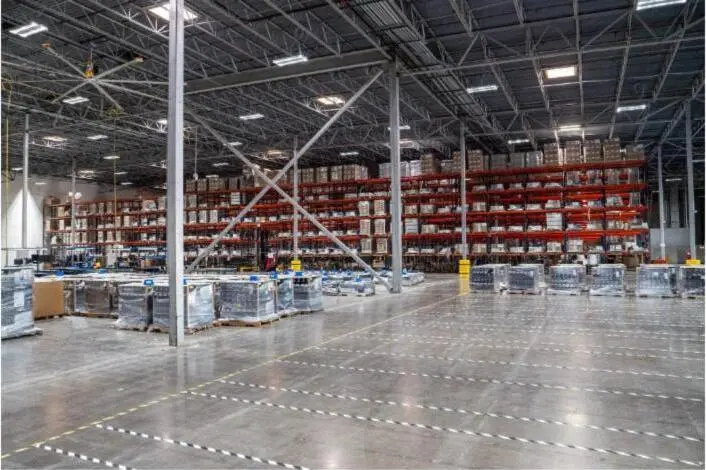
Premier Logitech’s DFW logistics hub and 120-plus vetted LTL carriers in North America support multi-site scheduling, white-glove de-racking and climate-controlled transport for remarketable hardware.
Value Recovery for Servers and GPUs
GPU-dense AI servers from deployments scaled between 2022 and 2024 will enter decommissioning cycles between 2026 and 2029. The recovery window remains time-sensitive. A two-year-old NVIDIA H100 typically retains about 45% of its original value, dropping to 25% to 35% by the three-year mark as hardware shifts from frontier training to standard inference workloads. Certified refurbished NVIDIA GPUs command a premium over used units with unknown provenance in the secondary market because buyers want documented chain-of-custody and service records.

The servers segment holds a significant share of the global data center ITAD market and is forecast to grow steadily, driven by residual value that supports remarketing and refurbishment.
Buyer-focused questions for RFP scoring should clarify how providers handle high-value hardware.
- Does the provider offer active remarketing channels for GPU-dense systems, not only bulk recycling?
- Are recovery reports itemized by serial number with disposition outcome and resale channel disclosed?
- Does the provider hold OEM ASC authorizations that support certified refurbishment and higher secondary-market pricing?
- Can the provider demonstrate experience processing high-density AI hardware with parts harvesting and grading capabilities?
Premier Logitech holds more than 20 OEM ASC authorizations and runs certified refurbishment and grading programs that support secondary-market resale at documented recovery values.
ESG Reporting and Scope 3 Data for Retired Hardware
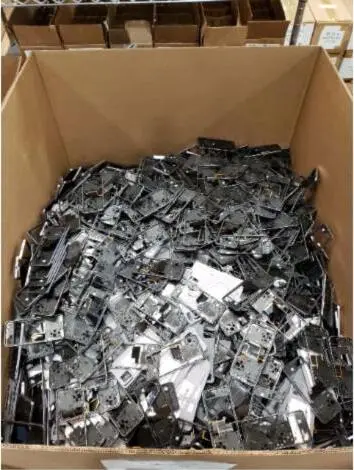
Large cloud operators and enterprises now request serialized tracking, compliance documentation and carbon-related reporting for retired AI hardware as part of lifecycle management. These requirements increasingly appear in standard ITAD scopes. ITAD providers must produce per-serial-number certificates of erasure or destruction, timestamped chain-of-custody logs, complete asset inventory reports and ESG metrics including landfill diversion rates and CO₂ avoidance data. A certified ITAD vendor’s waste transfer note or equivalent documentation supports ISO 14001 environmental compliance for electronic waste handling.
Buyer-focused questions for RFP scoring should confirm ESG data quality.
- Does the provider deliver landfill diversion rates and CO₂ avoidance data in a format compatible with Scope 3 reporting frameworks?
- Are environmental compliance certificates, such as R2v3 or e-Stewards, issued at the project level with asset-level traceability?
- Can the provider supply waste transfer notes and updated CMDB records showing retired status, disposal date and disposal method?
- Does the provider hold ISO 14001 certification with verifiable current scope?
Subcontractor Risk and Chain-of-Custody Controls
Subcontractor chains in data center environments create security risk when a primary supplier passes due diligence but its own supply chain does not meet the same standard. Regulators treat a data breach from an unwiped retired server the same as a cyberattack. Liability remains identical. Contracts should require vendors to apply equivalent security standards to subcontractors, provide notice of material subcontractor changes, accept responsibility for subcontractor acts and omissions and preserve audit and notification rights even when incidents originate downstream.
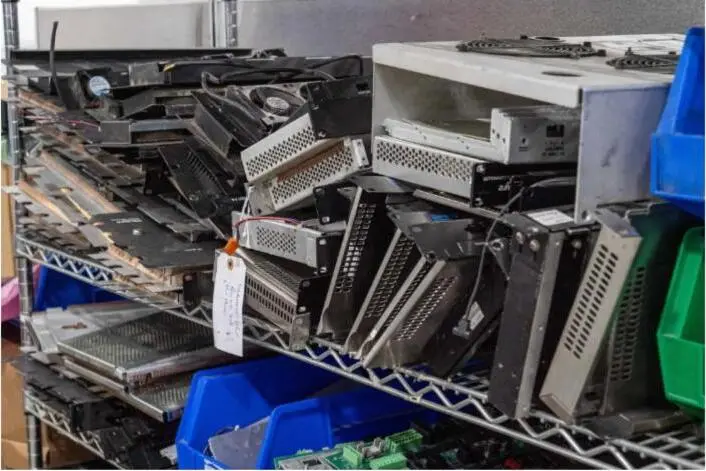
Serialized CMDB reconciliation closes the subcontractor gap at an operational level. Upon arrival at an ITAD facility, proper receipt and verification includes electronic scanning of each device’s serial number and issuance of a complete inventory reconciliation report matched against the master manifest. Bulk rack-level inventory procedures reduce documentation errors by 89% compared with individual asset tracking during high-volume decommissioning.
Buyer-focused questions for RFP scoring should connect directly to subcontractor risk and documentation strength.
- Does the provider perform serialized CMDB reconciliation at intake, matching every serial number against the pre-decommission asset manifest?
- Are subcontractors contractually bound to the same security and chain-of-custody standards as the primary provider?
- Does the provider deliver audit-ready chain-of-custody reports with timestamps and signatures at every handoff from rack removal through final disposition?
- Does the contract include liquidated damages clauses for chain-of-custody failures and active cyber liability insurance with named carriers?
Premier Logitech uses a single-vendor model that removes handoff gaps that create subcontractor exposure, with certified chain-of-custody protocols and compliance reporting across every stage of the disposition lifecycle.
Talk to a lifecycle expert at Premier Logitech about consolidating ITAD vendor relationships.
Reference Customer Scale and 2026 Certification Updates
NIST SP 800-88 Revision 2, released September 2025, supersedes Revision 1 and requires Certificates of Destruction to reference the updated standard, cite the sanitization method, and name the tool and version used. Procurement teams should confirm that provider certificate templates reflect this update before signing contracts. R2v3, NAID AAA and ISO 14001 certifications function as audited credentials rather than marketing badges, so scope verification and certificate expiration dates belong in every RFP.
Scalable reverse logistics is a core evaluation criterion because a provider that manages a 10-laptop pickup may not handle a large data center decommission with hundreds of servers on compressed timelines. Reference customer scale, measured in racks processed, sites managed at once and compressed-timeline projects completed, offers a practical proxy for operational readiness.
Buyer-focused questions for RFP scoring should confirm both certification currency and scale experience.
- Has the provider completed projects at 500-rack scale or larger, with documented multi-site coordination?
- Do provider certificate templates reference NIST SP 800-88 Rev. 2 with sanitization method and tool version?
- Are R2v3 and e-Stewards certificates current, with scope that includes data center hardware categories?
- Can the provider demonstrate compliance with emerging state-level e-waste and data destruction rules for the project’s facility locations?
Premier Logitech has served large enterprises, OEMs and government agencies since 2007, with operational scale across three DFW facilities and nearshore Mexico capacity that supports high-volume, multi-site programs.
Frequently Asked Questions
Onsite vs offsite data destruction for data center decommissioning
Onsite destruction means sanitization or physical shredding occurs within the data center facility before assets leave the building. Offsite destruction means assets travel under tamper-evident seals and GPS tracking to a certified facility for processing. Data classification drives the choice. High-sensitivity assets that contain regulated data or classified workloads typically require onsite witnessed destruction or sealed GPS-tracked transport with immediate intake reconciliation. Lower-sensitivity assets may qualify for certified offsite erasure with NIST SP 800-88-aligned wipe-to-resell programs. Both methods require per-serial-number certificates of destruction that reference the sanitization method and tool used.
Multi-site scheduling for a 500-rack or larger decommissioning program
Multi-site programs start with a pre-decommission IT disposition map that defines asset inventory, data classification, per-device destruction methods, logistics requirements and compliance obligations before any racks are touched. The ITAD provider then coordinates loading-dock scheduling, maintenance window alignment and phased pickup sequences across facilities to avoid bottlenecks in live operations. Each site functions as a discrete project with its own chain-of-custody documentation. Serialized CMDB reconciliation at intake closes the gap between what left each facility and what arrived at the processing center. The planning-to-disposition timeline mentioned earlier, typically 2–6 months, supports parallel live workload migration.
Resale channels for decommissioned GPU servers and recovery value
GPU-dense AI servers enter secondary markets through certified refurbishment and grading programs, parts harvesting and direct remarketing to enterprise buyers, cloud operators and research institutions. Certified refurbished units command a premium over units with unknown provenance because buyers want documented chain-of-custody and service records to manage thermal fatigue risk. Recovery value rises when disposition occurs before architectural transitions, such as the shift from H100-class to Blackwell-era systems, compress secondary-market demand. OEM ASC authorizations allow ITAD providers to certify refurbished hardware to manufacturer standards, which supports higher resale values than uncertified refurbishment channels.
How to interpret recovery rate figures when comparing ITAD providers
Recovery rate figures, often expressed as a percentage of original asset value or as a per-unit resale amount, vary based on asset age, configuration, condition, sanitization method and the provider’s active remarketing channels. A provider that quotes a high recovery rate without disclosing the asset mix, resale channel and certification basis does not provide a comparable figure. Procurement teams should require itemized recovery reports by serial number, disclosure of the remarketing channel used for each asset class and documentation of whether refurbishment occurred under OEM ASC authorization. Comparing net recovery value, which means gross resale minus logistics, processing and compliance documentation costs, gives a clearer picture than headline recovery percentages.
Required documentation package for audit readiness after a large-scale decommission
An audit-ready documentation package includes per-device certificates of data destruction that reference the sanitization method and tool version, timestamped chain-of-custody logs with signatures at every handoff and a complete asset inventory report showing make, model, serial number, diagnostics and disposition outcome. It also includes environmental compliance certificates such as R2v3 or e-Stewards, value recovery reports itemized by serial number and updated CMDB records showing retired status, disposal date and disposal method. For leased assets, lease compliance confirmation also belongs in the file. Organizations should retain a sanitization certificate, a chain-of-custody document from the ITAD vendor and a waste transfer note or equivalent for environmental compliance as the minimum documentation set.
Next Steps for 2026 Data Center Decommissioning Programs
The seven-step evaluation checklist covering certifications and compliance, logistics capacity, value-recovery transparency, data-security controls, ESG reporting, scalability and flexibility and total cost of ownership gives procurement and operations teams a repeatable framework for shortlisting enterprise ITAD providers. Each step maps to an RFP line item and a scoring dimension that CISO and CFO reviewers can validate independently.
The next step involves mapping current disposition flows against that checklist. Teams can identify subcontractor gaps, chain-of-custody documentation that falls short of NIST SP 800-88 Rev. 2 requirements and GPU recovery windows that close faster than refresh timelines. Performance data from existing providers, including recovery rates by asset class, certificate compliance rates and multi-site coordination track records, then supplies the baseline for a defensible vendor comparison.
Premier Logitech operates as a single-source partner for large-scale data center decommissioning, combining nationwide US operations, a DFW logistics hub, nearshore Mexico capacity, TAA, NIST, CMMC and SOC 2 certifications, more than 20 OEM ASC authorizations and certified chain-of-custody protocols across every stage of the disposition lifecycle. This consolidated program reduces subcontractor exposure, accelerates recovery value and produces the audit-ready documentation package that compliance teams expect.
Operations teams preparing RFPs for 500-rack or larger projects can use this framework to build a weighted scorecard, identify certification gaps in current vendor relationships and structure contract terms that preserve audit rights and subcontractor accountability. The evaluation process itself functions as a risk-management exercise, and the documentation it produces becomes part of the compliance record for the decommissioning program.
