
Last updated: July 28, 2026
Key Takeaways for Enterprise ITAD Buyers
- Enterprise ITAD programs deliver revenue recovery, data-security closure, regulatory compliance and audit-ready documentation that procurement, legal and ESG teams require.
- The eight-criterion evaluation framework covers certifications, data-security standards, revenue-recovery approach, refurbishment scale, logistics visibility, ESG reporting, regulatory compliance and total cost of ownership.
- Traditional 3PLs, OEM networks and regional recyclers each address only a subset of enterprise needs, while integrated lifecycle specialists consolidate all eight criteria under a single chain of custody.
- Reuse-first strategies can coexist with rigorous data destruction when NIST-aligned sanitization and per-serial-number Certificates of Destruction apply to every asset.
- Premier Logitech offers an OEM-authorized, single-source lifecycle program that meets all eight evaluation criteria; Talk to a lifecycle expert to map the framework to a current program.
Eight-Criterion Evaluation Framework for Corporate E-Waste Asset Recovery
Certifications and Chain-of-Custody Controls
R2v3 places stronger emphasis on data protection, reuse quality, downstream accountability and environmental health and safety, while e-Stewards focuses on data security, worker safety and responsible downstream processing. Both certifications function as baseline expectations for enterprise-grade programs. ISO 14001 confirms environmental management discipline and ISO 9001 confirms quality management consistency.
Data-Security Standards and Media Sanitization
NAID AAA certification requires unannounced audits, background-checked employees and documented destruction processes, serving as a benchmark for HIPAA and ITAR readiness. Providers should support software wiping, degaussing, crushing and in-house shredding, with on-site destruction options for high-sensitivity assets.
Revenue-Recovery Approach and Financial Transparency
Effective refurbishment operations extend device life and recover value through secondary markets. Providers should offer transparent revenue-sharing models with reporting that separates remarketed assets from those recycled or destroyed. Finance teams can then reconcile recovered value against logistics, processing and compliance costs.
Refurbishment and Repair Scale with OEM Authorization
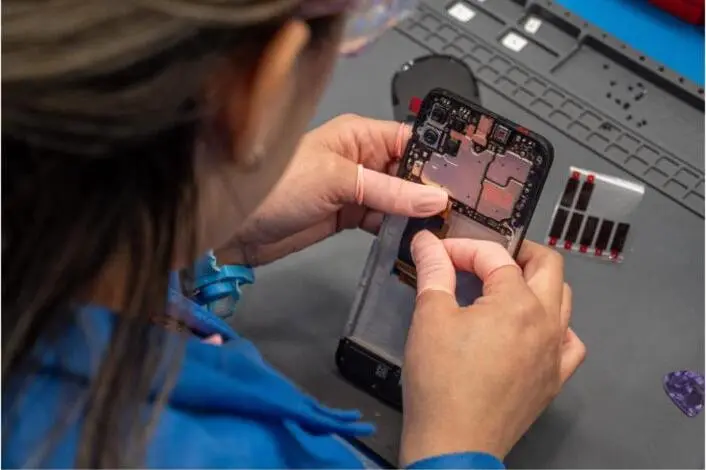
Many devices destroyed for data security reasons remain functional and represent significant lost recovery value. A reuse-first provider evaluates every asset for refurbishment and remarketing before routing it to recycling. OEM-authorized service center (ASC) status functions as a critical differentiator.

ASC authorization enables warranty-compliant repair that preserves resale value and satisfies OEM contractual requirements that non-authorized providers cannot meet. This structure supports higher recovery values and reduces contractual risk for enterprises with active OEM agreements.
Multi-Site Logistics and Real-Time Visibility
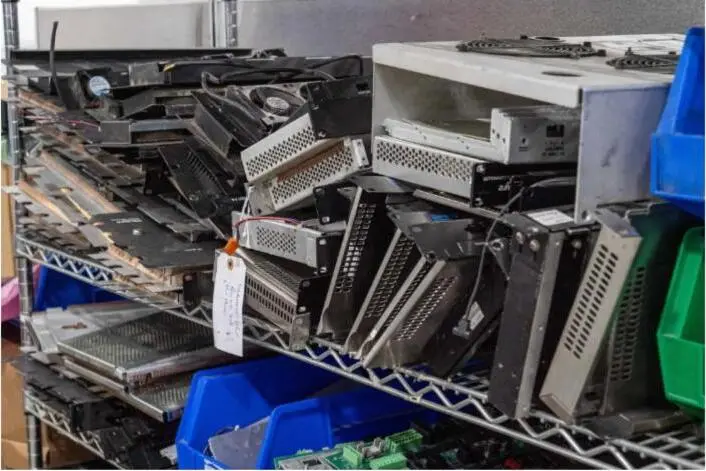
ITAD vendors must demonstrate operational fit for multi-site enterprises by confirming geographic coverage of all locations, secure logistics with GPS-tracked vehicles and locked containers and the ability to scale from single-office to full data-center decommissions. Real-time portal access to certificates of destruction, shipment records and asset-level data exportable for audit workflows now functions as a minimum expectation.
ESG and Carbon Reporting Support
Buyers should evaluate ITAD vendors on their ability to support corporate sustainability reporting such as Scope 3 emissions data. Reverse logistics performance monitoring increasingly includes carbon intensity metrics measured in kg CO2e per item processed. Providers should deliver environmental impact summaries that map directly to ESG disclosure frameworks.
Government and Regulatory Compliance Readiness
Government-adjacent and regulated-sector buyers require partners with documented TAA compliance, CMMC alignment, SOC 2 attestation and CAGE code registration for federal procurement eligibility. Organizations must align hardware disposal policies with both ISO 14001 environmental management standards and ISO 27001 information security frameworks to prevent data breaches while meeting sustainability goals.
Total Cost of Ownership for Asset-Recovery Programs
TCO analysis for an asset-recovery program must account for logistics costs, data-destruction method costs, revenue recovered through remarketing, avoided recycling fees and the cost of compliance documentation. Fragmented vendor networks inflate TCO by adding coordination overhead and creating gaps that generate downstream liability.
Industry Landscape: How Provider Types Compare
Traditional 3PLs offer broad logistics coverage but typically lack OEM-authorized repair capabilities, certified data destruction and the downstream transparency that regulated buyers require. These providers excel at transportation scale but rarely provide asset-level chain-of-custody documentation or revenue-sharing models that support finance teams.
OEM service networks provide authorized repair for their own product lines but do not manage multi-brand environments or reverse logistics at scale. These limits extend to end-of-life disposition. Enterprises operating mixed-brand fleets face coverage gaps and multiple vendor relationships that complicate governance.
Regional recyclers satisfy environmental disposal requirements for non-reusable material but are not structured to maximize reuse value. Many lack NIST 800-88-compliant data destruction across asset classes or the compliance documentation that enterprise and government buyers require.
Integrated lifecycle specialists consolidate sourcing, repair, refurbishment, logistics, data destruction and certified recycling under a single chain of custody. Refurbishment and remarketing should be the default consideration for any functional enterprise device, as three- to five-year-old hardware often retains commercial viability and generates financial returns that partially or fully offset disposal costs. A single-source specialist can execute a reuse-first model at enterprise scale while maintaining the compliance documentation each criterion requires.
Talk to a lifecycle expert to evaluate how Premier Logitech's single-source model maps to each of the eight criteria above.
Strategic Trade-Offs Enterprise Buyers Must Weigh
Reuse versus destruction represents the most consequential trade-off in corporate e-waste programs. Physical destruction eliminates data-breach risk but destroys asset value. Blancco's 2025 State of Data Sanitization report found that a significant share of laptops, desktops and data center assets were refurbished without certified erasure, which demonstrates that reuse-first programs carry real security risk when data sanitization is not independently verified.
Centralized versus distributed processing forms a second trade-off. Consumer electronics returns depreciate weekly, making distributed regional processing networks superior to centralized mega-facilities for minimizing value loss in IT asset recovery. Buyers with multi-site footprints should evaluate whether a provider's logistics network can reach all locations without value-eroding delays.

Single-source accountability versus best-of-breed specialization creates a third trade-off. Fragmented vendor networks distribute accountability across multiple parties and create chain-of-custody gaps that expose the originating organization to liability. A single-source partner concentrates accountability and simplifies audit documentation, while that partner must also demonstrate competency across all eight evaluation criteria.
Readiness Checklist Before Issuing an RFP
Before issuing an RFP for a corporate e-waste asset recovery program, operations and procurement teams should confirm the following:
- A complete, serialized asset inventory exists for all locations included in the program scope.
- Data classification levels are defined for all asset types, determining which destruction method is required per asset class.
- Compliance obligations are documented, including applicable frameworks such as HIPAA, SOX, CMMC, TAA, RCRA and state EPR laws.
- ESG reporting requirements are specified, including whether Scope 3 emissions data and environmental impact summaries are required.
- Multi-site logistics requirements are mapped, including satellite offices, data centers and any international locations.
- Revenue-recovery expectations are defined, including whether a revenue-sharing model is required and how settlements will be documented.
- OEM authorization requirements are identified for all device brands in the fleet.
- Audit documentation standards are specified, including certificate format, delivery timeline and required data fields per asset.
Common Pitfalls and How the Evaluation Framework Prevents Them
Financially distressed vendors may cut corners on data security, compliance and brand protection. The eight-criterion framework reduces this risk by requiring third-party certification evidence, not self-attestation, at the RFP stage.
The following pitfalls appear most often in large-enterprise programs:
- Accepting per-shipment certificates of destruction instead of per-serial-number documentation, which leaves individual assets unaccounted for in compliance audits.
- Selecting a provider based on recycling certifications alone without evaluating data-security standards, which creates exposure under HIPAA, SOX and CCPA.
- Failing to require downstream recycler disclosure, which transfers environmental liability to the originating organization under RCRA.
- Overlooking OEM authorization requirements, which can void warranties on devices returned to service and expose the organization to OEM contractual penalties.
- Omitting ESG reporting requirements from the RFP, which results in a provider relationship that cannot support Scope 3 disclosures or sustainability reporting.
The eight-criterion framework addresses each pitfall by making the corresponding requirement an explicit, scored evaluation dimension rather than an assumed capability.
Talk to a lifecycle expert at Premier Logitech to review an existing program against this framework before the next RFP cycle.
Frequently Asked Questions
What certifications should a corporate e-waste asset recovery partner hold?
At minimum, a partner serving large enterprises should hold R2v3 or e-Stewards certification for environmental and downstream accountability, ISO 14001 for environmental management, ISO 9001 for quality management and NAID AAA for data destruction. Government-adjacent programs add TAA compliance, CMMC alignment, SOC 2 attestation and CAGE code registration. ISO 27001 provides broad information security management assurance and is increasingly expected for programs handling regulated data. Each certification should be verified through current, third-party-issued documentation rather than self-reported claims.
How does a reuse-first strategy affect data security in an enterprise e-waste program?
A reuse-first strategy and rigorous data security can operate together within one program. As noted in the Data-Security Standards section, NIST SP 800-88 Rev. 1 guides sanitization method selection based on data sensitivity. The critical requirement is that every sanitization event produces a device-level Certificate of Data Destruction that includes the serial number, method applied, date and technician or facility name. Programs that skip certified erasure for refurbished assets create compliance exposure regardless of the reuse intent.
What operational metrics indicate a high-performing IT asset recovery program?
Leading programs track return processing time, product recovery rate, value recovery rate, reverse logistics cost as a percentage of original product cost and carbon intensity per item processed. High-performing programs focus on maximizing product and value recovery rates while keeping reverse logistics costs low relative to original product cost. Asset-level serialized tracking, real-time portal access to disposition records and Scope 3 emissions data distinguish enterprise-grade programs from commodity recycling services.
Why does OEM authorization matter in a corporate e-waste asset recovery program?
OEM Authorized Service Center status allows a provider to perform warranty-compliant repairs using approved parts, processes and tooling. For enterprises managing mixed-brand fleets, a partner with ASC authorization across multiple OEM brands can repair and refurbish devices to a condition that supports secondary market resale at higher recovery values than non-authorized refurbishment. Non-authorized repair can void OEM warranties, reduce resale value and create contractual exposure for enterprises with active OEM service agreements. ASC authorization functions as a structural barrier that most regional recyclers and traditional 3PLs cannot replicate.
How does single-source lifecycle management reduce compliance risk?
Fragmented vendor networks distribute chain-of-custody across multiple parties, each with its own documentation formats, certification levels and downstream practices. Each handoff between vendors introduces a potential gap in the audit trail. A single-source partner maintains one chain of custody from asset pickup through data destruction, refurbishment or recycling and final disposition reporting. This structure simplifies compliance audits, concentrates accountability and eliminates downstream transparency gaps that expose originating organizations to liability under RCRA, HIPAA, SOX and state data protection laws.
Conclusion: Using the Framework to Select the Right Partner
Applying this framework to vendor selection reveals a structural gap: traditional 3PLs, OEM-only networks and regional recyclers each address only a subset of enterprise requirements. The framework's value lies in making those gaps explicit and defensible during procurement.
Premier Logitech has delivered end-to-end IT lifecycle and reverse logistics services since 2007, operating as both a single-source lifecycle partner and a modular services provider for large enterprises, OEMs, telecom providers and government agencies. The company's ASC authorizations across more than 20 OEM brands, TAA and CMMC compliance posture, SOC 2 attestation and nationwide logistics network are structured to meet every criterion in this framework.
Talk to a lifecycle expert at Premier Logitech to apply this framework to an existing program or an upcoming RFP.
