Last updated: August 16, 2026
Key Takeaways for Small-Business Compliance
- IT asset management for compliance depends on continuous, documented evidence of asset visibility, lifecycle tracking and access controls for SOC 2, HIPAA and NIST audits.
- Five core compliance features, including automated audit trails, license tracking, accurate discovery, secure offboarding workflows and exportable evidence reports, form the baseline for any small-business ITAM tool.
- Software alone covers basic needs, but organizations facing TAA, CMMC, high-volume disposal or multi-state logistics benefit from a lifecycle partner that closes physical and compliance gaps.
- Snipe-IT, Lansweeper, ManageEngine AssetExplorer, NinjaOne and AssetSonar each provide distinct strengths, yet most environments still need supplemental processes or partners for full audit readiness.
- Premier Logitech delivers the physical and compliance layer that software cannot provide. Talk to a lifecycle expert to map current asset management gaps before the next audit.
Five Compliance Features Every Small-Business ITAM Stack Needs
Every candidate platform should cover five core capabilities before detailed evaluation begins.
- Automated audit trails. SOC 2 auditors require timestamped records of asset acquisition, assignment, updates and decommissioning. The tool must generate those records without manual input.
- License and subscription tracking. Granular tracking of software usage, entitlements and expiration dates helps prevent compliance violations and supports HIPAA evidence requirements for software that handles ePHI.
- Discovery and inventory accuracy. An asset not included in the inventory falls outside the risk analysis and therefore outside HIPAA compliance evidence coverage. Combined agentless and agent-based discovery reduces blind spots.
- Secure offboarding workflows. Auditors review offboarding events and look for evidence that remote assets were physically recovered or remotely wiped. Evidence includes shipping addresses, return tracking numbers and remote wipe confirmation logs.
- Exportable evidence reports. HIPAA compliance platforms require one-click export of audit workpapers that map controls to specific assets, timestamps and verification results.
Build Versus Partner for ITAM Compliance
The build-versus-partner decision depends on internal capacity, regulatory risk and growth trajectory.
Software alone works when asset counts are low, one team member can own ITAM processes, data handling stays within standard commercial environments and audit cycles occur annually instead of continuously. Outsourced lifecycle services become attractive when growth outpaces internal capacity, compliance requirements formalize, teams distribute across multiple locations or the business needs mature controls without adding IT headcount.
Regulated industries introduce additional pressure. Organizations subject to HIPAA must answer four specific audit questions on demand for every PHI-bearing system. They must identify which systems process or store PHI. They must show who has access and when access was last reviewed. They must document the security and patch status of each asset. They must prove how PHI-bearing assets are disposed of with documented sanitization. HIPAA audits under the Security Rule §164.310 examine whether organizations can prove physical safeguards are operating, not just documented on paper. Software logs the data, while a lifecycle partner manages the physical chain of custody.
These physical requirements create a natural decision point. The go or no-go checkpoint turns on whether the organization faces physical compliance demands that software cannot address. A lifecycle partner warrants evaluation when the organization handles TAA or CMMC requirements, disposes of assets at volume, operates across multiple states or cannot staff the physical recovery and sanitization steps that auditors require.
Talk to a lifecycle expert to map current asset management gaps against compliance requirements before the next audit cycle.
IT Asset Discovery Tools That Fit Small Teams
Snipe-IT is an open-source ITAM platform suited to lean teams that need a free starting point. It covers hardware and software inventory, asset assignment and basic audit trails. Free and open-source tools like Snipe-IT focus on basic hardware tracking with limited integrations, automation and lifecycle management, which fits small teams with straightforward environments. For SOC 2 or HIPAA evidence, Snipe-IT needs supplemental tooling to cover offboarding workflows and exportable compliance reports. One example comes from a 38-person virtual-care startup that uses Snipe-IT with Kandji and Jira Service Management to maintain one evidence chain covering procurement, enrollment, custody transfer and disposition for company-issued devices.
Lansweeper provides agentless network scanning that discovers hardware, software and cloud assets without deploying agents on every endpoint. Its discovery breadth helps organizations with mixed environments that include networked devices standard agent-based tools miss. The Lansweeper Starter plan starts at $239 per month, billed annually, for 2,000 assets. Pricing scales predictably but still requires budget planning as device counts grow. Compliance reporting exists but may need configuration to map directly to SOC 2 or HIPAA control narratives.
ManageEngine AssetExplorer targets mid-size IT environments and includes software license management, purchase order tracking and compliance reporting mapped to common frameworks. Its license tracking capabilities support HIPAA requirements for software that handles ePHI, and its audit trail features align with SOC 2 CC6 and CC7 criteria. The platform’s depth can extend implementation time compared with lighter tools, which matters for teams without dedicated IT staff.
NinjaOne combines endpoint management, patch management and asset inventory in a single agent. Small teams that need ITAM and endpoint security hardening in one platform reduce tool sprawl with this approach. Effective ITAM tools for small businesses combine hardware and software inventory with security checks such as patch status, firewall configuration and vulnerability exposure per device, which NinjaOne delivers natively. Its compliance reporting covers common frameworks, while physical asset lifecycle events still require supplemental process documentation.
AssetSonar is a 2026-relevant option built for compliance-oriented ITAM. AssetSonar’s ITAM plan starts at $0.75 per asset per month, billed annually, with software asset management available as an add-on. Its asset-based pricing model avoids penalizing organizations that add team members who need access. AssetSonar includes audit-ready reporting, software license tracking and integrations with identity providers that support joiner-mover-leaver automation.
Software License Tracking for HIPAA Programs
HIPAA-relevant ITAM features include role-based access controls tied to asset records, audit logging of PHI-system access, encryption tracking for portable devices, regular access reviews and documented disposal procedures for end-of-life equipment. Software license tracking connects several of these requirements.
The license tracking capabilities mentioned earlier appear in different forms across platforms. ManageEngine AssetExplorer and AssetSonar provide the most direct license compliance tracking, including entitlement mapping, renewal alerts and exportable license audit reports. Lansweeper’s discovery layer identifies unlicensed software installs across the network, which supports the HIPAA requirement to inventory all systems that create, receive, maintain or transmit ePHI. NinjaOne’s patch management data complements license tracking by confirming that licensed software runs current, supported versions.
Software asset management tools should auto-track software lifecycles, send renewal alerts and generate audit reports for SOC 2, ISO 27001 and other frameworks to support automated compliance and audit readiness. For HIPAA, the tool also must support Business Associate Agreement documentation for any vendor whose platform processes ePHI.
When ITAM Software Alone Cannot Meet Compliance
Several scenarios push compliance requirements beyond what software can address independently.
TAA and CMMC requirements. Organizations that supply the federal government or handle Controlled Unclassified Information must source hardware from Trade Agreements Act-compliant countries and meet Cybersecurity Maturity Model Certification standards. Software tools track assets but cannot certify procurement provenance or manage the physical supply chain to those standards.
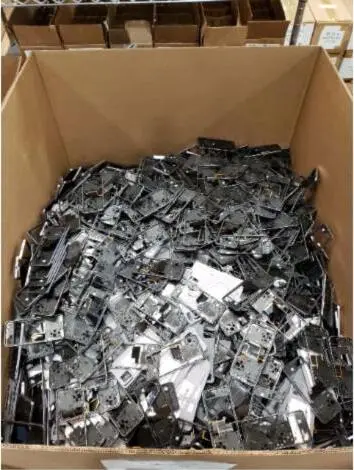
High-volume secure disposal. NIST 800-88 defines three sanitization levels, Clear, Purge and Destroy, with Purge required when assets leave organizational control and Destroy mandated for regulated data including PHI. SOC 2 auditors expect disposal certificates to map to specific asset serial numbers rather than batch records and to specify the sanitization method used for each individual asset. Generating those certificates at volume requires physical infrastructure, not just software.
Multi-state logistics and offboarding. Recovering assets from distributed or remote employees across multiple states requires a logistics network, not just a workflow ticket. For small teams managing offboarding, HIPAA evidence requirements include the ability to cross-reference asset recovery with HR termination dates to show that devices were retrieved when employees separate.

Premier Logitech addresses these gaps as an end-to-end lifecycle partner. With ASC-authorized repair capabilities across more than 20 OEM brands, TAA-compliant sourcing, CMMC and SOC 2 certifications and a logistics network spanning more than 120 North American carriers, Premier Logitech supplies the physical and compliance layer that software cannot provide. Organizations can engage Premier Logitech for full lifecycle program management or for specific services such as secure disposal, depot repair or configuration and fulfillment.
Talk to a lifecycle expert about secure disposal, offboarding logistics or TAA-compliant procurement for regulated environments.
30-Day Checklist for Implementing Audit-Ready ITAM
This 30-day checklist outlines the minimum steps to move from manual tracking to audit-ready ITAM.
- Days 1–5: Discovery scan. Deploy the selected tool’s agent or run an agentless network scan. Export the initial asset list and reconcile it against existing spreadsheets or procurement records.
- Days 6–10: Policy documentation. Document asset classification criteria, acceptable use and offboarding procedures. Assign an owner to each asset class in the tool.
- Days 11–15: License inventory. Map all software licenses to assigned users and systems. Flag unlicensed installs or expired entitlements for immediate remediation.
- Days 16–20: Evidence collection baseline. Confirm that the tool generates timestamped audit trails for asset assignments, changes and access events. Run a sample compliance report and verify that it maps to the relevant framework controls.
- Days 21–25: Offboarding workflow test. Simulate an employee offboarding event. Confirm that the workflow captures asset recovery, access revocation and data sanitization steps with exportable evidence.
- Days 26–30: Go or no-go checkpoint. Review the evidence package against the five core compliance features listed above. If physical disposal, TAA sourcing, CMMC requirements or multi-state logistics create gaps the software cannot close, begin evaluating an external lifecycle partner.
Talk to a lifecycle expert if the go or no-go checkpoint reveals gaps that internal tools and staff cannot address before the next audit.
Frequently Asked Questions About ITAM Compliance
What is the difference between IT asset management software and a lifecycle partner?
IT asset management software tracks, inventories and reports on assets within a digital environment. A lifecycle partner handles the physical stages of the asset lifecycle, including procurement, configuration, repair, secure disposal and logistics, along with the documentation those stages require for compliance. Software and a lifecycle partner work together. Software generates the audit trail, and a lifecycle partner executes and documents the physical events that auditors examine.
Can a small business achieve SOC 2 compliance using only free or open-source ITAM tools?
Free tools such as Snipe-IT can support SOC 2 evidence collection for basic hardware and software inventory. These tools typically lack built-in offboarding workflows, automated compliance reporting and integrations with identity providers that SOC 2 auditors expect to see operating continuously. Most small businesses that pursue SOC 2 certification supplement open-source tools with additional platforms for endpoint management, identity and workflow ticketing. Organizations benefit from implementing the chosen toolset at least three to six months before an audit to establish the historical documentation auditors require.
What HIPAA-specific evidence does IT asset management software need to produce?
HIPAA audits under the Security Rule require organizations to show that physical safeguards operate in practice, not just in policy documents. The evidence package for hardware assets must include a complete device inventory with serial numbers, assigned users, locations and encryption status. It must also include signed assignment records, movement logs, proof of access termination cross-referenced against HR termination dates and certificates of destruction for retired devices that contained PHI. As noted in the disposal discussion, the sanitization method must be documented per device, not per batch, and must meet NIST SP 800-88 standards for assets leaving organizational control.
When should a small business consider outsourcing IT asset lifecycle management?
Outsourcing becomes practical when specific conditions appear. These conditions include federal contracts that require TAA or CMMC compliance, asset disposal volume that exceeds what internal staff can document and certify individually and employee distribution across multiple states that makes physical asset recovery complex. Outsourcing also helps when compliance frameworks require continuous audit evidence that internal tools and staffing cannot sustain. A single lifecycle partner with government-grade certifications, an authorized repair network and national logistics coverage can replace fragmented vendor relationships across repair, fulfillment and recycling.
How does NIST SP 800-88 affect IT asset disposal for small businesses?
The NIST sanitization framework mentioned earlier establishes when each level applies. Clear suits internal reuse of low-risk data. Purge is required when assets leave organizational control. Destroy is mandated for regulated data including PHI, PII and PCI data, or for damaged media. For small businesses subject to HIPAA or handling sensitive customer data, every retired device must be sanitized at the Purge or Destroy level with a certificate that maps to the specific asset serial number. Software tools can log the sanitization event, while the physical sanitization and certification require either internal capability or an authorized third-party service provider.
