Last updated: August 13, 2026
Key takeaways for tech-focused TMS decisions
- Tech equipment carriers need a TMS that delivers five core capabilities: security and compliance, white-glove handling, real-time chain-of-custody, tech-specific routing and lifecycle integration.
- Alignment with TAA, NIST, CMMC, SOC 2 Type II and ISO 27001 protects against audit exposure and preserves federal contract eligibility.
- Serialized proof-of-delivery, real-time telemetry and tamper-evident condition tracking reduce cargo theft risk and handling damage for high-value electronics.
- Route planning for fragile electronics must factor vibration, handling events, data-center access windows and high-theft corridors, not only distance and cost.
- Premier Logitech delivers a compliance-ready TMS with end-to-end lifecycle integration; start a tech-equipment TMS review with the Premier Logitech team for nationwide programs.
Security and compliance standards for tech equipment carriers
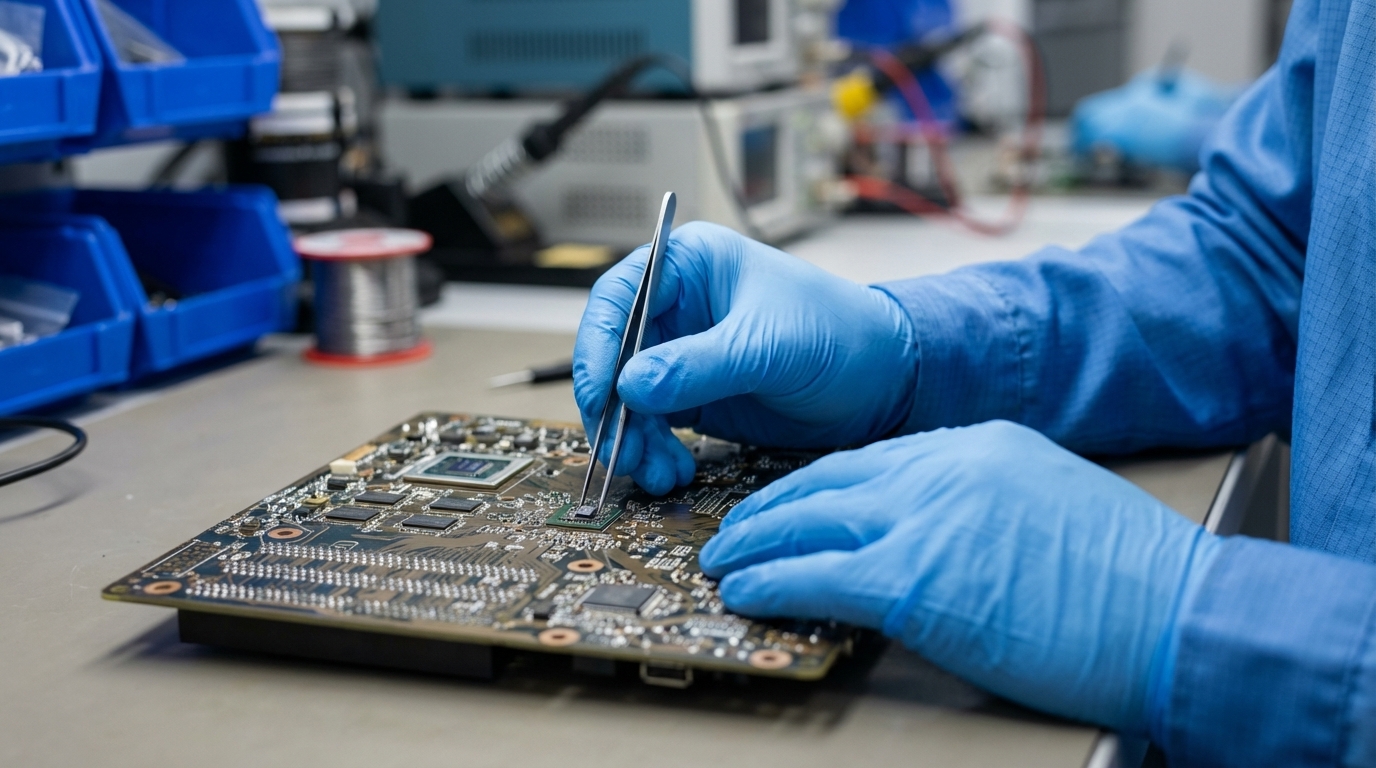
Tech equipment carriers serving government and enterprise clients operate in a layered compliance environment. Relevant frameworks include TAA, NIST SP 800-82, CMMC, SOC 2 Type II and ISO 27001. A TMS that does not align with these standards creates audit exposure and can disqualify carriers from federal contract eligibility.
SOC 2 Type II certification is the baseline expectation for SaaS TMS vendors and validates that security controls operated effectively over a defined audit period. While SOC 2 addresses operational controls, ISO 27001 extends the framework to organization-wide risk assessment, access control and incident management. These certifications must be backed by technical controls, so enterprise TMS platforms should enforce TLS 1.3 for data in transit and AES-256 encryption for data at rest across shipment records, carrier contracts and driver PII.
Ransomware recovery costs for transportation companies can be substantial when fleet management systems are compromised. The IBM Cost of a Data Breach Report 2025 places the average global breach cost at $4.44 million, and supply chain incidents involving third-party integrations often exceed that figure. For carriers handling government or enterprise tech equipment, a TMS vendor’s security posture becomes a direct operational risk factor.
Premier Logitech holds TAA, TAPA, ISO, NIST, CMMC and SOC 2 certifications, along with CAGE Code 4WAJ9, which identifies the company as a pre-vetted, high-security partner for U.S. federal government programs. These certifications are embedded in Premier Logitech’s TMS and lifecycle operations.
White-glove TMS capabilities for high-value electronics
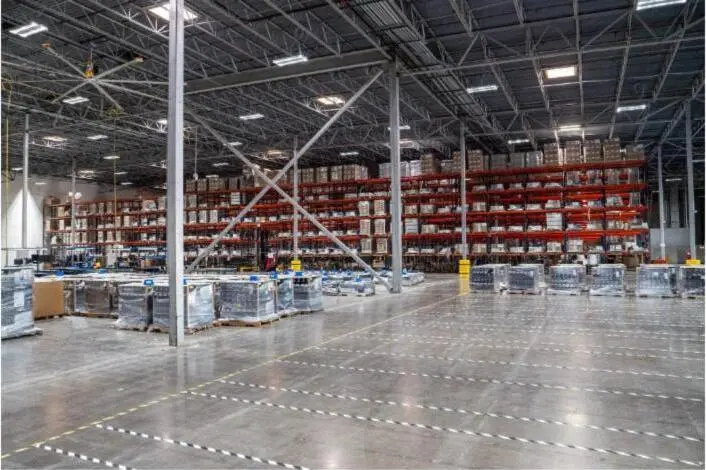
Beyond security and compliance, tech equipment carriers must evaluate how a TMS supports specialized handling requirements. White-glove delivery for tech equipment goes beyond careful handling. It includes two-person crews, lift-gate requirements, installation-site protocols, photographic condition confirmation and customer signature capture at the stop level. A standard TMS supports basic shipment tracking, but white-glove delivery workflows require deeper stop-level execution, customer communication features and chain-of-custody tracking that a traditional TMS usually lacks.
For final-mile white-glove technology equipment delivery, the TMS must coordinate vehicle type, lift-gate availability and driver certification for each load. Data-center deliveries add further requirements such as scheduled access windows, escort protocols and equipment staging documentation. Generic enterprise platforms address broad freight management but often do not support serialized proof-of-delivery or data-center delivery workflows in a native way.
Premier Logitech’s white-glove delivery service operates within its TMS framework and connects final-mile execution to upstream lifecycle and reverse-logistics workflows. The company’s 120-plus vetted North American LTL carriers are selected and scored against electronics-specific handling standards, not general freight benchmarks.
Chain-of-custody tracking and real-time visibility for tech assets
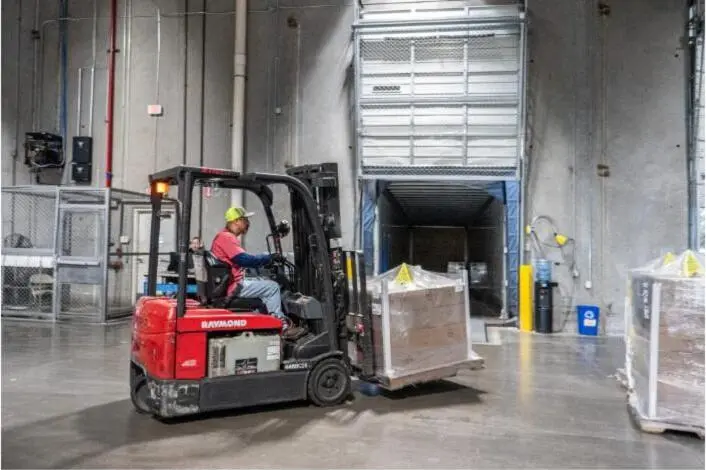
White-glove handling protocols are most effective when paired with rigorous custody tracking. Chain-of-custody documentation for tech equipment requires more than carrier milestone updates. U.S. and Canadian cargo theft losses reached roughly $725 million in 2025, up about 60% from the prior year, with the average value per theft climbing to roughly $274,000. Verisk CargoNet’s 2025 annual analysis found the average cargo theft value rose 36% to $273,990 per incident, which highlights the need for real-time intervention capabilities on electronics lanes.
To mitigate these theft and loss risks, a compliant chain-of-custody program must implement three foundational elements:
- Identification via serial number, barcode or RFID assigned to each individual asset
- Timestamped transfer logs capturing handler identity, time and location at every handoff
- Condition tracking through photos, tamper-evident seals and sensor data at dispatch and delivery
A TMS handling high-value electronics must ingest real-time telemetry and exception events, including shock impacts, light and motion alerts and route deviations, from independent multi-sensor devices rather than rely on static carrier milestone updates. Serialized logistics tracking assigns a unique identifier to each asset, which allows companies to track individual devices throughout the logistics process rather than only containers or pallets.
Premier Logitech’s TMS supports serialized proof-of-delivery, real-time tracking and audit-ready reporting across its carrier network. This capability provides the documentation layer that government and enterprise clients require for compliance and asset accountability.
Route planning for delicate electronics and tech-specific routing
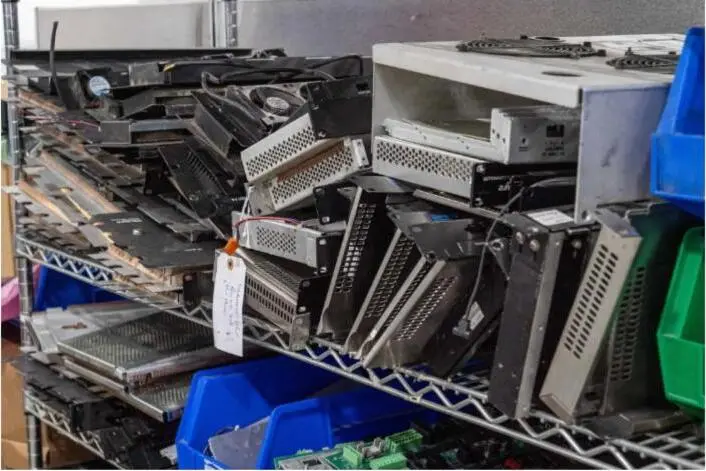
Electronics shipments face damage risks from vibration, electrostatic discharge, environmental exposure and excessive handling events. Cross-dock routing that reduces handling to one or two touches per shipment, compared with three to five terminal transfers in traditional LTL, lowers damage exposure for fragile, high-value electronics.
Route optimization for delicate cargo must account for more than distance and cost. To protect high-value electronics from these damage risks, tech-specific routing must address five operational factors:
- Minimizing terminal transfers and handling events
- Matching vehicle type and suspension specifications to cargo sensitivity
- Scheduling delivery windows aligned with data-center or enterprise site access requirements
- Avoiding high-theft corridors identified through cargo intelligence data
- Flagging GPS spoofing risk on known electronics lanes
High-value cargo routes involving electronics shipments represent a primary practical threat vector for GPS spoofing and signal manipulation attacks, which can enable cargo diversion through false location data in TMS and telematics platforms. A TMS purpose-built for tech equipment carriers incorporates route intelligence and spoofing awareness that generic platforms often do not prioritize.
Decision framework for fleet size, operation type and TMS fit
The right TMS choice depends first on fleet size and operation type. Carriers operating 100 or more trucks require enterprise features, custom workflows and multi-terminal support. Mid-size fleets of 25 to 100 trucks need full fleet management, driver apps and accounting integration. Third-party logistics providers and brokers require multi-client management, capacity access and settlement capabilities that differ from asset-based carrier needs.
The generic-versus-niche decision matters most for tech equipment carriers. A practitioner’s TMS buyer’s guide identifies five core evaluation dimensions: mode and network fit, optimization depth, integration and data, total cost and commercial model, and viability and operating model. Generic enterprise platforms score well on breadth but often fall short on serialized proof-of-delivery, data-center delivery protocols and reverse-logistics integration for electronics.
Three commercial models define TMS deployment options and shape how carriers engage with the technology:
- Licensed or SaaS software operated in-house
- Network or multi-tenant platforms connecting shippers and carriers
- Managed transportation that bundles software with an external operating team
Request a fleet-specific TMS evaluation to determine the right deployment model for each operation.
Integrating TMS with repair, refurbishment and reverse logistics
A TMS that handles forward shipments without connecting to reverse-logistics workflows creates a visibility gap that reduces asset-recovery value. For tech OEMs and carriers managing warranty returns, depot repair and refurbishment programs, the TMS must pass serialized asset data downstream to repair and grading workflows without manual re-entry.
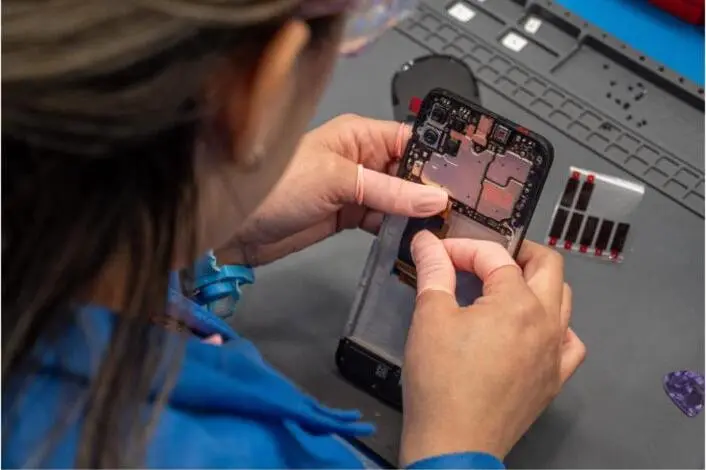
Premier Logitech operates as both a TMS provider and an authorized service center network with ASC status for more than 20 OEM brands. Repair capacity supports high-volume programs, and the company’s vetted North American LTL carrier base is integrated into the same lifecycle platform that manages returns processing, RMA management, depot repair at levels one through four, sorting and grading and responsible recycling.

This integration replaces fragmented vendor relationships that force operations teams to reconcile data across separate repair, fulfillment and recycling providers. A single platform with serialized asset tracking from first-mile pickup through final disposition reduces reconciliation errors and accelerates return-to-inventory cycles.
Step-by-step implementation checklist for nationwide tech carriers
Before committing to a TMS vendor, operations and logistics leaders can follow a structured evaluation sequence. Start by defining must-have features such as serialized POD, chain-of-custody logging, white-glove routing and compliance certifications. Once requirements are clear, confirm mode and network fit by verifying native support for LTL, TL, intermodal and final-mile white-glove across required geographies.
With functional fit established, audit security certifications and require SOC 2 Type II, ISO 27001 and documentation of TLS 1.3 and AES-256 implementation. Next, validate integration depth by confirming bidirectional API connectivity with existing ERP, WMS and reverse-logistics platforms. For tech carriers, assess reverse-logistics readiness by verifying that the TMS passes serialized asset data to repair and grading workflows without manual re-entry.
After technical validation, request references and speak with customers at comparable scale operating in electronics or tech equipment logistics. Run a pilot to test the platform on actual lanes and shipment data before signing a multiyear contract. Finally, calculate five-year total cost of ownership, including implementation, integration, training and change-management costs alongside the license fee.
Cost and ROI from risk reduction and asset recovery
The business case for a purpose-built TMS in tech equipment logistics rests on risk reduction and asset-recovery value, not only freight-cost savings. Freight-cost reductions of 5 to 15 percent are well supported by TMS implementations, with additional value from freight-audit recovery, reduced detention and accessorials and labor savings.
For tech carriers, the risk-reduction return is equally significant. Cargo theft, handling damage, compliance penalties and disconnected reverse-logistics workflows each carry measurable cost. As noted earlier, cargo theft represents a material risk factor for electronics carriers, which makes real-time tracking and route intelligence essential TMS capabilities. Covert GPS tracking integrated with a TMS mitigates strategic cargo theft and fictitious pickup losses by a material margin for high-value freight including electronics. Companies with advanced TMS capabilities recover from freight disruptions significantly faster than those without, according to McKinsey Supply Chain research.
Asset-recovery value compounds when the TMS connects to refurbishment and remarketing workflows. Devices returned with complete chain-of-custody documentation and accurate condition grading command higher secondary-market value than those arriving with incomplete records. Premier Logitech’s certified refurbishment and grading programs, supported by its TMS, are structured to maximize that recovery value across high-volume return programs.
Frequently asked questions about tech-focused TMS platforms
What differentiates a tech-focused TMS from a general enterprise TMS?
A general enterprise TMS manages freight planning, carrier selection and cost control across broad mode and geography combinations. A TMS purpose-built for tech equipment carriers adds serialized proof-of-delivery at the individual asset level, chain-of-custody logging at every handoff, white-glove final-mile execution workflows, data-center delivery protocols and native integration with repair and reverse-logistics platforms. These capabilities rarely appear as standard features in platforms built for general freight management.
Which compliance certifications should a TMS vendor hold for government and enterprise tech shipments?
At minimum, a TMS vendor serving government and enterprise tech carriers should hold SOC 2 Type II attestation and ISO 27001 certification. For programs that involve federal contracts, TAA compliance, NIST alignment and CMMC certification are relevant depending on the contract vehicle. TAPA certification addresses physical security standards for high-value cargo. Premier Logitech holds TAA, TAPA, ISO, NIST, CMMC and SOC 2 certifications and carries CAGE Code 4WAJ9 for federal program eligibility.
How does TMS integration with reverse logistics improve asset-recovery value?
When a TMS passes serialized asset data directly to repair intake, grading and remarketing workflows, the returned device arrives with a complete condition and custody record. That documentation supports accurate grading, reduces dispute resolution time and enables higher secondary-market pricing. Without TMS integration, reverse-logistics teams re-enter data manually, which introduces errors that reduce grading accuracy and slow return-to-inventory cycles. Premier Logitech’s end-to-end platform connects forward TMS operations to depot repair, refurbishment and asset recovery within a single program.
What fleet size or shipment volume justifies a dedicated TMS for tech equipment logistics?
Logistics consultants generally recommend a TMS when an organization ships 50 or more loads per month across multiple carriers and modes. For tech equipment carriers, the threshold can be lower when shipments involve high-value serialized assets, compliance documentation requirements or white-glove final-mile delivery. At that point, the risk exposure from manual tracking and fragmented carrier management outweighs the cost of a purpose-built platform regardless of volume.
Can a TMS support both owned-fleet and brokered carrier operations for electronics shipments?
Modern TMS platforms support asset-based carrier operations, brokered freight and hybrid models within the same system. For tech equipment carriers that use a mix of owned assets and vetted LTL partners, the TMS should enforce consistent chain-of-custody and handling standards across both. Premier Logitech’s North American LTL partner network operates within its TMS framework and applies the same serialized tracking and white-glove handling standards whether the move is asset-based or brokered.
Conclusion: building a unified TMS and lifecycle strategy
Generic enterprise TMS platforms often leave nationwide tech equipment carriers exposed to compliance gaps, handling damage and disconnected reverse-logistics workflows. The five criteria that matter most, security and compliance, white-glove handling, real-time chain-of-custody, tech-specific routing and lifecycle integration, require a platform and partner built specifically for high-value electronics logistics.
Premier Logitech delivers a compliance-ready TMS backed by the certifications outlined earlier, a vetted North American LTL carrier network, ASC authorization for more than 20 OEM brands and end-to-end lifecycle services from sourcing through responsible recycling. Operations and supply-chain leaders managing nationwide tech equipment programs gain a single-source partner that connects forward logistics to repair, refurbishment and asset recovery without fragmentation.
