Last updated: August 16, 2026
Key Takeaways
- A centralized IT asset database unifies financial, operational and service data into one authoritative source, replacing fragmented spreadsheets and closing compliance gaps.
- The implementation roadmap covers outcomes definition, layered data modeling, canonical schema design, automated ingestion with deduplication and lifecycle state tracking with data-quality scoring.
- Separating asset records, configuration items and business services prevents data-quality failures and supports accurate service-impact analysis through relationship modeling.
- Automated ingestion from multiple authoritative sources combined with a five-level deduplication hierarchy improves accuracy and prevents duplicate records at enterprise scale.
- Premier Logitech helps organizations operationalize this roadmap through end-to-end lifecycle services that keep the database accurate and audit-ready.
Defining Database Outcomes and Required Answers
The database must align with the business and compliance questions it will resolve before any field is modeled. Representative questions include which assets are deployed, to whom and where. Other core questions cover which software licenses are consumed versus purchased, which configuration items support a given business service and which assets fall in scope for a regulatory audit.
NIST SP 1800-5 establishes IT asset management as a foundational security control and requires a continuously updated inventory of hardware and software assets with ownership, location and configuration data. The ServiceNow Common Service Data Model (CSDM) extends this requirement by mapping assets and configuration items to the business services they support, which enables impact analysis, change governance and service-level accountability. Scoping the database against both frameworks at the outset reduces the risk of costly re-architecture later.
Layered Data Model for Assets, CIs and Business Services
A governed IT asset database separates three distinct entity layers. Conflating these layers is a frequent cause of data-quality failures at enterprise scale.
ServiceNow asset management documentation defines the separation clearly. Assets track the financial aspects of owning property, while configuration items stored in the CMDB track operational availability and user access. The CSDM adds a third layer, the business service, which maps operational CIs to the outcomes they deliver.
- Asset record (alm_asset): purchase date, cost, vendor, contract, depreciation schedule and disposal method
- Configuration item (cmdb_ci): hostname, serial number, install status, location, assigned user and support group
- Business service: service name, owning team, dependent CIs and SLA commitments
Separation across these layers only works when records remain synchronized. ServiceNow synchronizes asset and CI records bidirectionally through business rules, but only when the records are logically mapped to each other. Fields such as serial number, location, assigned user, vendor and warranty expiration synchronize automatically. Cost flows one way from the asset record to the CI. Asset state and CI install status are not mapped one to one. Logical counterparts are used instead, such as an asset state of “In Stock – Pending disposal” mapping to a CI install status of “In Disposition.”
When the CSDM Lifecycle plugin is active, lifecycle changes propagate across all three layers simultaneously. An asset state change to “In use” sets the corresponding CI to “Installed/In use” and the Install Base Item to “Operational/In use.”
Canonical Schema Design and Normalization Rules
A canonical schema defines the authoritative field set, data types, allowed values and normalization rules that every ingestion source must follow before writing to the master record. Canonical data models eliminate translation overhead by establishing one agreed structure that all source systems map to, instead of allowing each system to define its own format.
Premier Logitech works with organizations to define schemas that include field types, data formats and normalization rules that reconcile data from multiple source systems across enterprise environments. These schemas support consistent ingestion, reporting and lifecycle tracking across asset classes.
Talk to a lifecycle expert about mapping this schema to an existing environment.
Relationship Modeling with the ci_relationship Table
Relationship modeling enables service-impact analysis that flat asset records cannot provide. A directed graph layer connects CIs, assets and business services through typed edges stored in a relationship table, such as ci_relationship in the ServiceNow CMDB.
ServiceNow BYOL CMDB documentation defines explicit relationship types including Hosted on::Hosts, Runs on::Runs and Virtualized by::Virtualizes. Every dependent entity must include both the parent entity and the explicit relationship in the same payload for successful import.
Premier Logitech supports relationship modeling by implementing solutions tailored to operational requirements, including dependency mapping for service-impact analysis and change governance. These models increase CMDB health scores and improve incident and change outcomes.
BMC Helix CMDB and Virima both emphasize relationship depth as a primary differentiator between a governed CMDB and a flat asset register. Relationship coverage functions as a core health-score dimension.
Automated Ingestion Sources and Source Authority
A layered ingestion architecture assigns source-of-truth ownership by field domain and reconciles conflicts through a central engine. No single source system holds complete, accurate data for every field.
A governed reconciliation architecture ingests signals from multiple source layers.
- Physical identity: barcode, QR and RFID scans at receiving, transfer and disposal events
- Technical signal: MDM and network discovery for hostname, MAC address and last-seen data
- Workflow: ITSM change and request records for deployment and reassignment events
- People and organization: HRMS for user identity, department, cost center and offboarding triggers
- Finance: ERP and procurement systems for purchase cost, vendor, PO number and depreciation
- Service relationship: CMDB for CI-to-service dependency mapping
- Reporting: aggregated views for compliance, audit and financial reporting consumers
Premier Logitech helps organizations define source-authority strategies that assign one system of record per object type and field domain. Every object type requires one designated system as the source of truth and one defined mechanism to keep its data current.
Every object type must have one designated system as the source of truth and one defined mechanism to keep its data current before the object type is modeled. Configuring automated imports before the CMDB goes live reduces data drift that manual maintenance cannot recover from.
Change data capture (CDC) using tools such as Debezium reads database transaction logs to capture inserts, updates and deletes in near real time with negligible source-system impact. Idempotent UPSERT or MERGE operations keyed on the stable enterprise_asset_id ensure that pipeline replays do not create duplicate records.
Deduplication Logic and Stable Enterprise ID
Duplicate records represent a common failure mode in enterprise asset databases. A five-level matching hierarchy should govern every inbound record before it touches the master dataset.
Matching logic operates on a five-level hierarchy:
- Level 1: Exact trusted match (asset tag plus serial number), auto-update permitted
- Level 2: Strong system match (serial number plus MDM or finance ID), trigger conflict check
- Level 3: Probable match (two of three: hostname, MAC address, asset tag), route to exception queue
- Level 4: Weak match (single identifier only), require manual review
- Level 5: No match, create a found-not-recorded exception and route to SACM for back-fill
Confidence scoring combines identifier signals into a single decision. A serial number match contributes the highest weight, while a hostname match contributes less. A combination of hostname plus MAC address can justify a high-confidence merge. Lifecycle status conflicts and duplicate identifier flags reduce the score and block automatic updates. Records above the auto-update threshold proceed without human intervention. Records below the escalation threshold remain in a review queue.
Normalization resolves manufacturer values such as “Hewlett Packard,” “HP” and “HP Inc.” to one canonical form before matching runs. This step prevents the same physical asset from appearing as multiple records due to formatting inconsistencies.
Lifecycle State Tracking and Data-Quality Scoring
A governed hardware asset state machine defines states with explicit allowed transitions. Each state carries mandatory field requirements. The Deployed state requires an assigned user and assignment date. The Disposed state requires a disposal date, disposal method and sanitization certificate reference for regulated data. The In Repair state requires a ticket reference to prevent ghost assets.
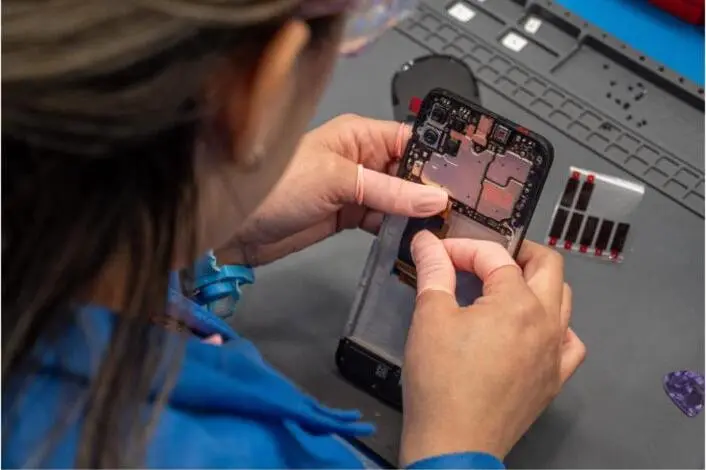
Decommissioned CI records must be retained with metadata including decommission date, reason for retirement, approving team member and linked disposal records. Deletion of records breaks audit chains required by ISO 27001, SOC 2 Type II, CMMC and the NIST Cybersecurity Framework.
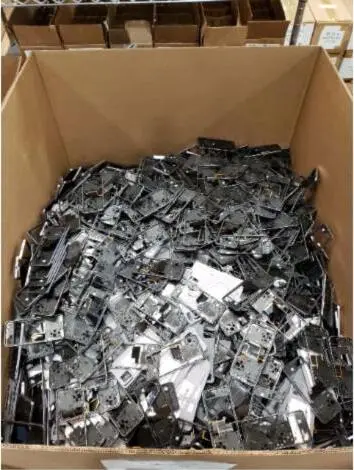
A CMDB health score aggregates data-quality dimensions into a composite metric. Premier Logitech collaborates with organizations to establish scoring frameworks that reflect operational priorities and regulatory obligations.
Common Challenges and Practical Mitigation
Four failure patterns account for most centralized database breakdowns in enterprise environments.
Duplicate records originate from multiple ingestion sources writing to the same database without a deduplication layer. Mitigation requires a stable enterprise_asset_id assigned at receipt and a five-level matching hierarchy applied to every inbound record before any write operation.
Conflicting data sources arise when two systems hold different values for the same field with no defined authority. Mitigation requires a source-authority matrix that assigns field-level ownership before integration is built, not after conflicts appear.
Unclear ownership leaves CIs without an accountable person or team, which disrupts incident routing, change governance and audit accountability. Mitigation requires ownership as a mandatory field with a workflow block that prevents state transitions on unowned CIs.
Compliance gaps result from deleted or incomplete decommission records, as discussed in the lifecycle state tracking section. Best practice combines automated flagging from discovery data with a human approval step to avoid false positives while preserving audit defensibility.
Measuring Database and Business Outcomes
Leading indicators reflect the health of the database itself. Lagging indicators reflect the business outcomes the database enables.
Leading indicators include data-quality score by dimension, such as completeness, accuracy, staleness, relationship coverage and ownership coverage. Other leading indicators include source-coverage percentage by ingestion layer, duplicate rate and exception queue age.
Lagging indicators include audit findings attributable to asset data gaps, software audit penalties, asset-utilization rates and mean time to detect unmanaged assets.
Data contracts enforce metrics by embedding checks for schema stability, row count, freshness, uniqueness and validity into version-controlled files that gate pipelines before bad data reaches consumers. Reporting cadence should be weekly for data stewards, monthly for data owners and governance councils and quarterly for executive leadership.
Advanced Asset Intelligence and Emerging Types
Premier Logitech works with organizations to extend asset management capabilities as new technologies emerge and new asset types enter scope. This work includes modeling cloud resources, SaaS subscriptions and AI-related assets within existing governance frameworks.
ServiceNow Context Engine fuses the CMDB, Knowledge Graph and a cyber asset graph into a single intelligence substrate, which enables AI agents to reason across operational, identity and asset data simultaneously. This graph-like architecture represents the direction enterprise asset intelligence platforms are moving, away from flat records toward typed relationship networks.
Premier Logitech focuses advanced asset management programs on building a governed, relationship-centric asset database that serves as the prerequisite data layer for reliable automation.
Frequently Asked Questions
How long does it take to build a centralized IT asset database for a large enterprise?
Implementation timelines vary based on the number of source systems, the current state of asset data and the scope of the initial rollout. Organizations that begin with a clean identity layer, including standardized asset tags, serial numbers and stable enterprise identifiers, and limit the initial scope to one asset class or one site typically reach a functional, governed database faster than those attempting a full-estate rollout simultaneously. A phased approach that starts with the highest-value asset classes and expands incrementally delivers more reliable outcomes than a single large-scale cutover.
What compliance frameworks does a centralized IT asset database support?
A governed asset database with complete lifecycle state tracking, decommission records and sanitization certificate references can support compliance with frameworks such as ISO 27001, SOC 2 Type II and the NIST Cybersecurity Framework. Each framework requires documented evidence of asset inventory, configuration control and disposal. A database that retains full lifecycle history, including decommission date, approving team member and disposal method, provides the audit trail these frameworks require. Organizations subject to multiple frameworks benefit from a single database that satisfies overlapping requirements rather than maintaining separate records per framework.
What is the difference between an asset record and a configuration item?
An asset record tracks the financial aspects of owning a piece of technology, including purchase cost, vendor, contract, depreciation schedule and disposal method. A configuration item tracks the operational aspects, including hostname, install status, location, assigned user and support group. Both records can exist for the same physical device and can link through a shared serial number and asset tag. Changes to financial fields flow from the asset record to the CI, while changes to operational fields flow bidirectionally. Separation between the two prevents financial data from polluting operational views and the reverse, which often causes data-quality failures in environments that use a single flat record for both purposes.
When should an organization revisit its database architecture?
Three conditions typically trigger an architecture review. The first condition occurs when the estate expands into a new asset class, such as cloud instances, SaaS applications or AI tools, that the existing schema cannot represent without significant field repurposing. The second condition appears when data-quality scores decline consistently across multiple dimensions despite active remediation, which indicates that the ingestion or deduplication architecture no longer fits the volume or variety of sources. The third condition arises when a regulatory audit reveals gaps in lifecycle history or relationship coverage that the current model cannot close without structural changes. Organizations that build the database on a canonical schema with explicit relationship modeling and source-authority rules tend to require fewer architectural overhauls because the model accommodates new asset classes through extension rather than replacement.
How does a lifecycle services partner fit into database operationalization?
A lifecycle services partner operationalizes the database by ensuring that physical events such as receiving, deployment, repair, return and disposal generate the data the database requires instead of creating exceptions that require manual cleanup. When a device arrives at a depot, a scan at receiving creates or updates the asset record with a verified serial number, asset tag and location. When a device is repaired, the repair ticket reference updates the In Repair state and prevents the device from becoming a ghost asset. When a device is disposed, the partner provides the sanitization certificate reference that closes the Disposed state and satisfies compliance requirements. Without a partner whose physical operations integrate with the database, lifecycle events often become data gaps instead of data points.
Conclusion: Operationalizing the Database with Premier Logitech
A centralized IT asset database built on canonical schemas, source-authority rules and lifecycle state tracking delivers the single source of truth that enterprise IT, operations and compliance teams require. The roadmap of outcomes definition, layered data modeling, canonical schema design, automated ingestion with deduplication and lifecycle state tracking with data-quality scoring provides a prescriptive path from fragmented spreadsheets to a governed, relationship-centric repository.
Premier Logitech operationalizes this database through end-to-end lifecycle services that generate accurate, timely data at every physical touchpoint. From asset tagging and inventory reporting at receiving, through depot repair and rapid exchange, to secure data destruction and sanitization certification at disposal, Premier Logitech operations feed the fields the database requires. Clients engaged in full lifecycle programs benefit from a single partner whose physical and data workflows align, which reduces the gap between what the database records and what actually happens to the asset.
Founded in 2007 and operating across three DFW facilities with nearshore operations in Mexico, Premier Logitech supports enterprises, OEMs, telecom providers and government agencies under TAA, ISO, NIST, CMMC and SOC 2 compliance frameworks. The company holds a CAGE Code for pre-vetted federal government engagement and maintains authorized service center status with multiple OEM brands.
Talk to a lifecycle expert to discuss how Premier Logitech services integrate with a centralized IT asset database program.
