Key Takeaways
-
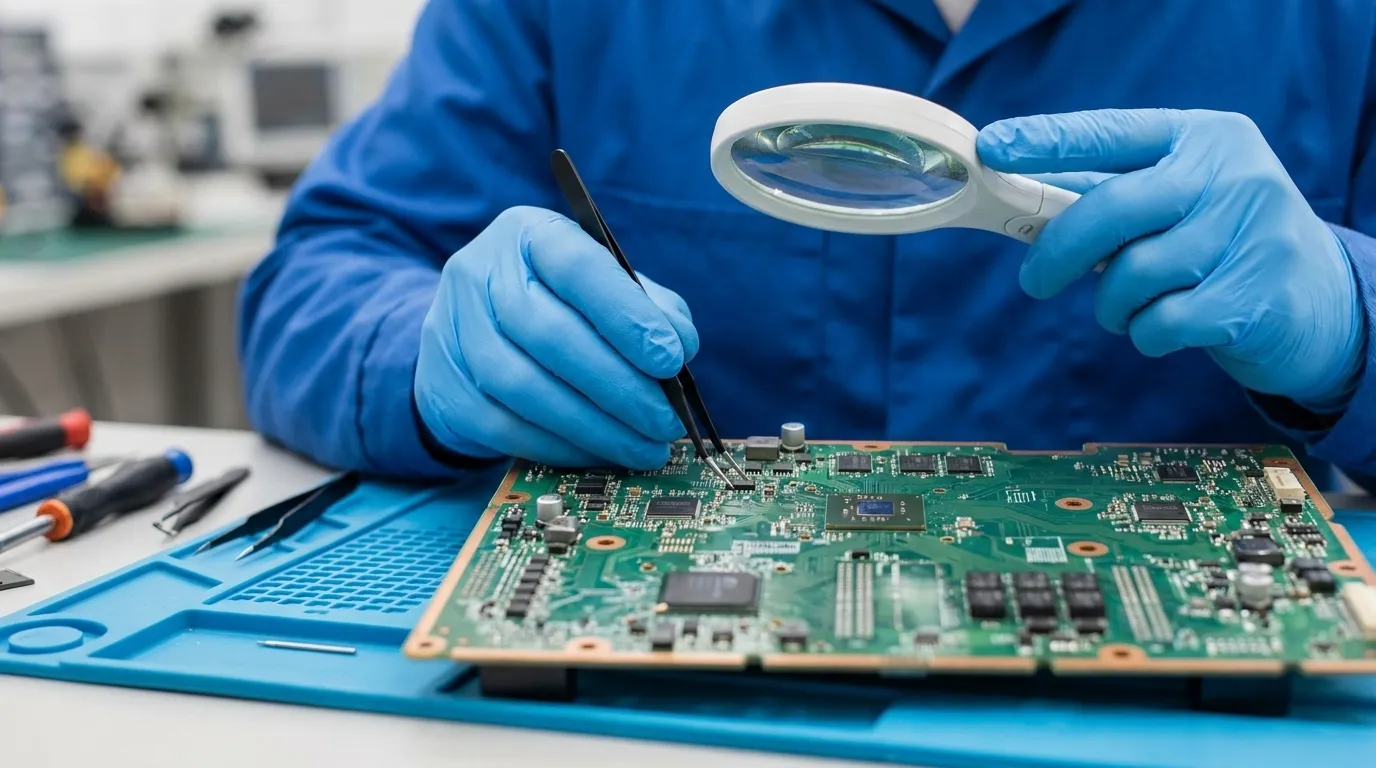
Certified refurbishment restores returned IT assets to defined functional and cosmetic standards through documented inspection, repair, data sanitization and testing for compliant resale.
-
Organizations that follow certified ITAD protocols recover more value and cut data breach risk compared to non-certified channels that buyers discount for uncertainty.
-
Key U.S. certifications include NAID AAA, R2v3, NIST SP 800-88 Rev 2 and ISO 14001, which together address data destruction, environmental management and downstream accountability.
-
Grading tiers, serialized chain-of-custody records and OEM-authorized service center status shape pricing transparency, warranty terms and eligibility for B2B or government resale channels.
-
Premier Logitech delivers end-to-end certified refurbishment and IT asset recovery under TAA, NIST, CMMC and ISO frameworks, and can evaluate a tailored program for complex environments.
How Certified Refurbishment Drives Secondary Market Value
Certified ITAD programs recover meaningful asset value while reducing data breach risk. Buyers pay more when risk is documented and controlled.
Premier enterprise laptops from tier-one manufacturers that follow certified data sanitization can retain 30 to 40 percent of original value after three years on the secondary market. That retention window narrows quickly. Devices retired after four years often retain 15 to 25 percent, while five-year-old devices may recover 5 to 10 percent. Earlier disposition captures more value than late-stage liquidation.
Companies that follow a structured IT asset disposition schedule recover more value than those using sporadic disposal methods. The structure alone does not create buyer confidence. Certification provides third-party verification that the schedule, processes and controls were followed, which makes programs defensible to auditors and attractive to downstream buyers.
Remarketing and value recovery form the fastest-growing segment in the ITAD market and are projected to account for a significant share of the market by 2025, according to Future Market Insights. The market signal is clear. Secondary-market buyers pay a premium for assets with documented provenance, consistent grading and verifiable sanitization.
Start a conversation about building a refurbishment program that captures these value windows.
Safety and Compliance in Certified Refurbished Enterprise Resale
Assets enter refurbishment only after secure data removal and confirmation of resale potential. Safety for enterprise and government buyers rests on three controls: data sanitization method, chain-of-custody documentation and provider certification scope.
Serialized certificates of data destruction that document the IEEE 2883-2022 sanitization level, device serial number and technician identification are mandatory in high-compliance environments such as federal, healthcare and financial sectors. Batch certificates do not satisfy these audit expectations.
Many organizations fail their first ITAD compliance audit when handling the process internally because they lack the documentation infrastructure and process controls that auditors expect. Engaging a credentialed provider with explicit certification scope covering the asset types and jurisdictions involved is the standard mitigation. Certification scope must cover the specific asset types and operating locations, not only the provider headquarters. A provider certified for desktop PCs in California may not hold certification for network equipment or for operations in Texas.
Certification Standards and Refurbishment Warranties
Four certifications define a practical compliance baseline for certified refurbishment resale in the United States. Together they address data destruction, environmental management and downstream accountability.
NAID AAA, issued by i-SIGMA, requires vetted and background-checked personnel, GPS-tracked chain of custody and unannounced third-party audits for secure data destruction providers. It serves as the primary standard for data-bearing assets destined for remarketing.
Warranty terms follow grade assignment and channel requirements. Certified refurbished IT components undergo laboratory functionality testing, full refurbishment to manufacturer standards and configuration to defined user specifications, and typically carry a standard one-year warranty. OEM-authorized service centers can extend warranty coverage that aligns with original manufacturer terms and unlocks additional procurement channels.
Grading Tiers and Testing Protocols for Resale Readiness
Grading determines pricing, warranty terms and channel eligibility, which directly influence asset recovery rates. Clear grading criteria also support consistent buyer expectations.
Refurbished grading systems classify devices by cosmetic condition on a scale from Grade A, which reflects near-mint condition with minimal signs of prior use, to Grade C, which reflects noticeable scratches, scuffs and wear. All grades undergo the same testing, cleaning and functionality confirmation, so cosmetic differences do not change core performance standards.
Full refurbishment follows five stages. Technicians perform inspection and diagnosis, then complete detailed cleaning. They repair or replace defective components with certified parts. Teams apply secure data erasure with fresh operating system installation, then complete testing and certification that includes stress tests, benchmarking and compatibility checks.
R2v3 certification sets consistent standards for inspection, repair and grading. These standards ensure that devices are evaluated against technical criteria rather than subjective impressions, which improves reliability and supports stronger remarketing value.
Compliance Frameworks for Enterprise and Government Disposition
Enterprise and government programs must map each asset disposition path to the applicable regulatory framework before remarketing begins. This mapping guides channel selection, documentation and vendor choice.
Basel Convention amendments effective Jan. 1, 2025, extended the Prior Informed Consent framework to all nonhazardous e-waste and updated controls on hazardous e-waste for cross-border shipments. These rules require advance notification and consent for cross-border movement of decommissioned IT equipment. Domestic certified refurbishment often provides the most practical compliance path for U.S.-based programs that manage sensitive assets.
Platform Requirements for B2B and Government Resale
Online distribution channels account for a substantial share of global refurbished hardware sales. Platforms such as Back Market and Amazon Renewed provide scalable, trust-anchored access for certified refurbished hardware in consumer segments.
Consumer marketplaces, however, impose grading and warranty requirements that focus on retail buyers and may not align with enterprise documentation needs. B2B and government resale channels require platform capabilities that consumer marketplaces rarely prioritize, including serialized chain-of-custody records, complete compliance documentation packages and buyer-specific contractual warranties. Compliance and chain of custody form a core platform function that provides end-to-end visibility and governance for sensitive corporate and government IT assets during recovery and resale.
OEM-authorized service center status determines which channels remain accessible. Providers with ASC authorizations can supply refurbished assets with OEM-backed warranty terms, which opens procurement channels that remain closed to nonauthorized resellers.
Discuss how Premier Logitech’s platform integrations support B2B and government resale requirements.
Risk Mitigation and Value Recovery Strategy
Timing and process design shape both risk exposure and value recovery. Delays in decommissioning reduce asset value and can complicate compliance.
Organizations spend years managing hardware carefully and then default to destruction at retirement because they never built a condition assessment step into the process. This pattern leaves real money on the table at end of lease. The core issue is timing. By the time an asset reaches retirement, the decision to destroy or refurbish often becomes reactive.
Condition assessment at intake, not at retirement, is the operational change that captures this value. Early assessment allows teams to route assets to the highest-value disposition path from day one instead of discovering resale potential only after depreciation has already occurred.
Organizations also need to validate vendor certifications, including R2, e-Stewards, ISO 14001 and NAID, before launching an IT asset recovery program. This validation confirms that providers meet required standards for data handling, environmental management and downstream accountability.
Implementation Checklist for Certified Refurbishment Programs
-
Define asset classes, retirement timelines and target resale channels for enterprise and government programs.
-
Map each asset class to applicable frameworks such as NIST SP 800-88 Rev 2, Basel Convention rules, TAA and CMMC.
-
Select ITAD and refurbishment partners with NAID AAA, R2v3 and ISO 14001 certifications that match asset types and jurisdictions.
-
Establish intake procedures that capture serial numbers, condition grades and ownership records at the point of receipt.
-
Implement documented data sanitization workflows with serialized certificates and technician attribution.
-
Standardize A/B/C grading criteria, warranty terms and channel eligibility rules across all facilities.
-
Integrate chain-of-custody tracking and compliance reporting into asset management and resale platforms.
-
Review performance quarterly, including recovery rates, audit findings and downstream vendor performance.
Conclusion: Partner Evaluation and Next Steps
Certified refurbishment secondary market resale delivers measurable value recovery when programs align standards, timing and channels. NIST SP 800-88 Rev 2 guides sanitization. R2v3 and NAID AAA support provider credentialing. Standardized grading supports pricing transparency, and TAA and CMMC alignment support government-channel eligibility.
An effective evaluation framework for certified refurbishment partners focuses on five criteria that work together. Certification scope must match asset types and jurisdictions. Data destruction documentation must be serialized and audit ready. Grading methodology should follow documented criteria. OEM authorization status should unlock warranty-backed resale channels. Compliance reporting capability must support frameworks such as NIST, HIPAA and GDPR.
Premier Logitech operates as an authorized service center for more than 20 OEM brands and delivers end-to-end lifecycle services from intake and grading through certified refurbishment, secure data destruction and secondary-market remarketing under TAA, NIST, CMMC and ISO frameworks. The program serves OEMs, large enterprises and government agencies that manage high-volume returns and prefer a single credentialed partner instead of fragmented vendor relationships.
Evaluate whether Premier Logitech’s certified programs align with compliance and recovery goals.
Frequently Asked Questions
What is the difference between certified refurbished and manufacturer-refurbished IT assets?
Manufacturer-refurbished assets are restored and warranted directly by the original equipment manufacturer. Certified refurbished assets are processed by an authorized third-party service center or credentialed ITAD provider that operates under standards such as R2v3, NAID AAA and NIST SP 800-88 Rev 2. Both categories require documented testing, data sanitization and grading.
The key distinction is authorization. An OEM-authorized service center can issue warranty terms that align with the manufacturer program, while a nonauthorized refurbisher cannot. For enterprise and government buyers, compliance documentation such as serialized certificates of data destruction, chain-of-custody records and test reports often carries equal or greater weight than the refurbishment source.
How does Premier Logitech support compliance requirements for government and regulated-industry customers?
Premier Logitech holds certifications and operates under frameworks including the Trade Agreements Act, NIST, CMMC, ISO quality and environmental standards, SOC 2 and TAPA. The company holds a CAGE Code (4WAJ9), which identifies it as a pre-vetted partner for U.S. federal government programs.
For regulated industries such as healthcare and financial services, Premier Logitech’s secure data destruction and chain-of-custody documentation processes are designed to satisfy HIPAA, GDPR and NIST SP 800-88 Rev 2 audit requirements. Compliance reporting is available as part of the end-to-end lifecycle program or as a standalone service.
What grading tiers does Premier Logitech apply to returned IT assets?
Premier Logitech applies standardized A/B/C cosmetic and functional grading tiers to returned assets as part of its sorting and grading services. Grade assignment follows documented criteria that cover cosmetic condition, functional test results, battery health where applicable and component integrity.
Each grade tier corresponds to defined resale channel eligibility and warranty terms. Grading occurs after data sanitization is complete, which ensures that no asset enters the grading workflow before it meets the applicable sanitization standard. Detailed testing reports accompany graded assets to support buyer confidence and downstream compliance documentation.
Can Premier Logitech handle high-volume returns from OEM warranty programs?
Premier Logitech’s reverse logistics infrastructure supports high-volume OEM and enterprise programs. The company operates multiple facilities in the Dallas-Fort Worth area with nearshore operations in Laredo and Nuevo Laredo, Mexico, and maintains ASC authorization for more than 20 OEM brands.
Services include RMA management, depot repair at levels L1 through L4, cosmetic refurbishment, grading and secondary-market remarketing. The program replaces fragmented vendor relationships across repair, fulfillment and recycling with a single lifecycle partner, which reduces processing bottlenecks and improves asset recovery rates for high-volume return streams.
What happens to IT assets that cannot be refurbished for resale?
Assets that do not meet functional or cosmetic thresholds for secondary-market resale move to responsible disposition pathways. Premier Logitech’s e-waste reduction programs include parts reclamation and harvesting, responsible recycling and disposal, and secure data destruction for assets that require physical destruction rather than logical sanitization.
All downstream disposition is documented to support R2v3 and e-Stewards requirements for downstream vendor accountability. Assets subject to Basel Convention cross-border movement restrictions are handled through domestic certified recycling channels to maintain compliance with Prior Informed Consent requirements effective January 2025.
