
Last updated: August 22, 2026
Key Takeaways
- Fragmented vendor relationships and outdated compliance frameworks create measurable regulatory and financial risk for organizations retiring IT assets.
- A seven-step selection framework helps procurement and compliance leaders systematically evaluate IT asset recovery providers on certifications, data destruction protocols, chain-of-custody controls and downstream vendor oversight.
- Serial-level tracking, NIST 800-88 Rev. 2 compliance and operator, not broker, status are non-negotiable requirements for defensible chain-of-custody documentation.
- Organizations must verify insurance coverage, indemnification terms and escalation procedures before engaging any ITAD provider to mitigate strict liability under CERCLA and other regulations.
- Premier Logitech delivers end-to-end IT asset recovery services that meet the strictest compliance, tracking and reporting requirements outlined in this guide through its lifecycle services team.
Key Terms for IT Asset Recovery Decisions
- ITAD (IT Asset Disposition): The controlled process of retiring IT hardware through secure data destruction, logistics, refurbishment, resale, donation or certified recycling.
- R2v3: The third version of the Responsible Recycling standard, requiring responsible repair, reuse, recycling, chain of custody, equipment tracking, legal compliance and downstream material management.
- e-Stewards: An electronics recycling certification emphasizing environmental and data security standards for ITAD providers.
- NIST 800-88 Rev. 2: Published September 26, 2025, this revision updates media sanitization guidance for SSDs, NVMe drives, M.2 media, eMMC, UFS flash storage and self-encrypting drives, and requires per-asset records tied to serial number, method, technician, facility and date.
- Serial-level tracking: Documentation that ties every disposition event, including pickup, sanitization, transfer and final disposition, to a specific device serial number rather than a batch or pallet.
- Downstream vendor: Any subcontractor, recycler or reseller that handles assets after the primary ITAD provider takes custody.
- Operator vs. broker: An operator performs all ITAD work in-house under documented controls. A broker subcontracts work to third parties, which can break chain-of-custody integrity.
- Certificate of Data Destruction: A per-device document linking asset identifiers to the sanitization method, outcome, technician, date and final disposition path.
Step 1: Map Asset Volumes, Disposition Paths and Compliance Obligations
Provider selection starts with a clear inventory and compliance map. Before issuing an RFP, build a complete picture of what is being retired. Catalog asset types, volumes, data classification levels and applicable regulatory frameworks such as HIPAA, GDPR, CMMC, CCPA or sector-specific mandates.
Data classification drives sanitization requirements and narrows the pool of qualified providers. Assets carrying PHI, PII or classified data require stricter sanitization methods under NIST 800-88 Rev. 2. Disposition paths such as resale, donation, recycling or destruction further refine provider requirements, since not every operator supports each outcome.
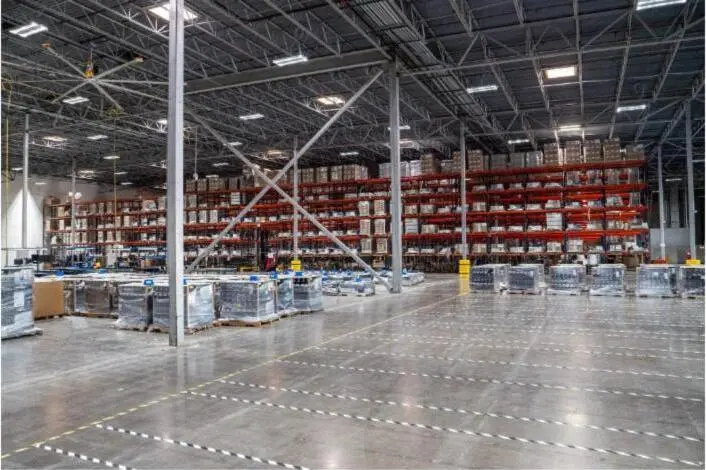
This baseline separates non-negotiable capabilities from preferred features. Premier Logitech supports end-to-end lifecycle mapping across enterprise, OEM and government programs, with compliance frameworks including TAA, NIST, CMMC and SOC 2.
Step 2: Verify Certifications and Match Scope to Program Needs
Once compliance obligations and asset types are documented, certification scope becomes the next filter. Certifications only protect the program when they match the work performed. ITAD vendors should hold R2v3 certification for electronics recycling and data security, NAID AAA certification for data destruction and chain-of-custody controls, and ISO 14001 for environmental management.
Request the actual certificate, confirm the issuing body and verify the expiration date and covered facility locations. Certification scope is facility specific, so a provider certified at one location is not automatically certified at all facilities where work occurs. Geographic coverage must align with the planned service footprint.
Scope verification also covers asset types and disposition methods. Ask whether certifications include the specific media, devices and downstream processes relevant to the program. An R2v3 certificate that excludes certain media types or downstream processes leaves gaps that create liability.
Step 3: Confirm NIST 800-88 Rev. 2 Data Destruction and Reporting
NIST SP 800-88 Rev. 2 restructures the standard around a formal Media Sanitization Program concept and tightens the per-asset documentation requirements defined earlier. Generic batch certificates covering a pallet have no forensic value under this framework.
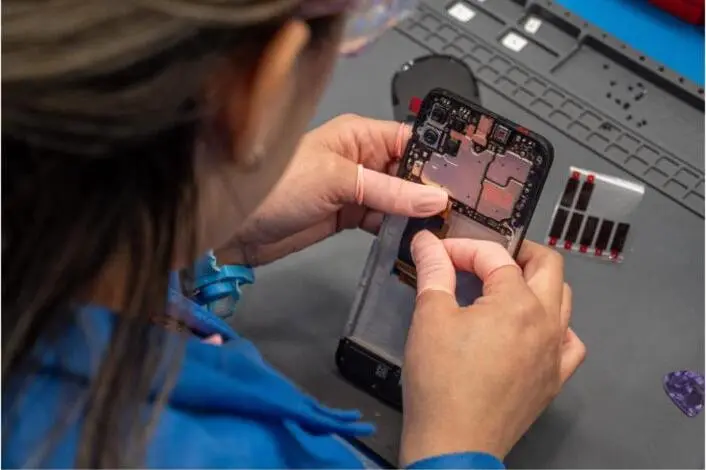
Providers must demonstrate how they handle SSDs, NVMe drives and self-encrypting drives under Rev. 2 guidance. Rev. 2 aligns with IEEE 2883-2022 and strengthens Cryptographic Erase as a sanitization method for self-encrypting drives. Confirm that audit-ready reports are generated at the device level and can be produced on demand for regulatory review.
Step 4: Assess Downstream Chain of Custody and Red Flag Indicators
Downstream handling now represents a major share of breach and compliance risk. Verizon’s 2025 DBIR reports that third-party involvement in breaches doubled year over year, rising from 15% to approximately 30%. Black Kite’s 2026 Third-Party Breach Report found that every vendor breach now affects an average of 5.28 downstream victims, the highest level recorded.
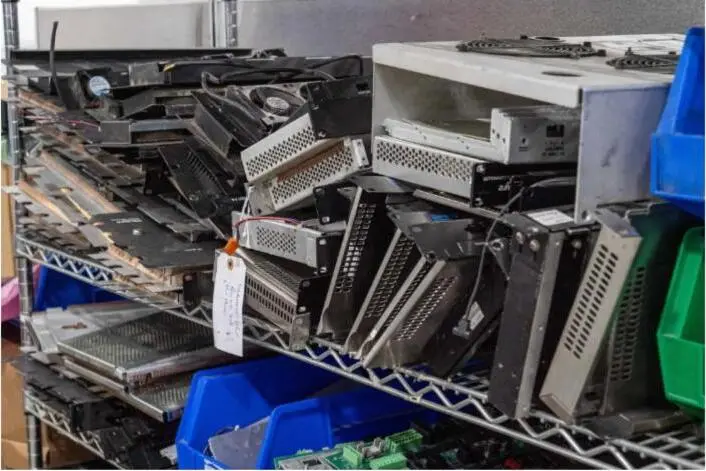
A broker that subcontracts ITAD work can break the chain of custody that R2v3 certification is designed to protect, increasing compliance and liability risks for the customer. Red flags include vague subcontractor disclosures, batch-level certificates and an inability to name downstream recyclers by facility. Non-negotiable contract terms include data-use limitations, annual audit rights, pre-approval of all subcontractors, immediate breach notification with defined timeframes and explicit liability terms for compliance failures.
Step 5: Analyze Recovery Economics, Fees and Liability Caps
Chain-of-custody controls and compliance frameworks protect against regulatory risk, and financial performance must match that rigor. Enterprise equipment retains roughly 40% to 60% of its original value in the first two years; after that, assets lose 3% to 5% of remaining value per month, which makes disciplined timing of disposition critical for net value recovery. Disposition should be priced as net of recovered value, with transparent calculation of buyback amounts shared back to the customer.
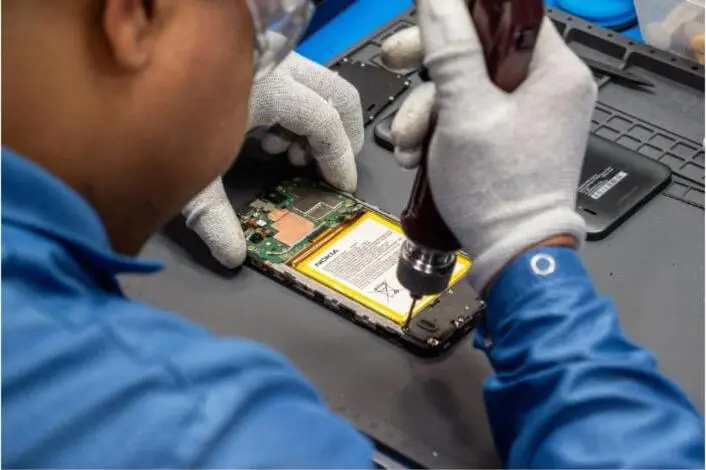
Evaluate whether the provider treats disposition as a cost center or a value recovery program. Request itemized fee structures, resale channel documentation and historical recovery rates by asset category. Confirm that liability caps in the contract reflect actual risk exposure, not just the service fee paid.
Step 6: Require Serial-Level Visibility and System Integration
Tracking and integration convert process controls into usable evidence. A defensible enterprise ITAD program requires a serialized inventory listing serial number, asset tag, make, model, condition and receipt status for each asset to establish a baseline for reconciliation and exception review. Serial-level tracking must persist from pickup through final disposition, with every custody event logged and timestamped.
Ask whether the provider’s system integrates with existing CMDB, ERP or asset management platforms. Establishing rigorous chain-of-custody documentation and real-time metrics from vendors is essential for organizational transparency and reporting in IT asset recovery. Providers that cannot deliver API-level integration or real-time reporting create manual reconciliation burdens and audit gaps.
Premier Logitech delivers operational visibility through real-time tracking and lifecycle analytics, with inventory reporting and device traceability built into its service model.
Evaluate serial-level tracking and integration options in a Premier Logitech system demo.
Step 7: Confirm Insurance Coverage, Indemnification and Escalation Plans
Insurance and escalation planning close the control framework by addressing residual risk. Under CERCLA, liability for illegal dumping of IT equipment is strict, joint and several; an organization can be held responsible for full cleanup costs even after paying a vendor in good faith, and indemnification clauses do not shift this regulatory duty. Insurance coverage must be verified, not assumed.
Request certificates of insurance covering cyber liability, professional liability and environmental liability, and confirm coverage limits align with program risk. Escalation procedures should be defined in the contract before work begins. Confirm breach notification timelines, incident response contacts and remediation commitments.
Weighted Evaluation Scorecard for ITAD Provider Selection
The scorecard below converts the seven selection steps into a single evaluation tool. Each criterion reflects a core compliance, tracking or financial requirement, with higher weights assigned to certifications, data destruction controls and chain-of-custody integrity. Use this scorecard to compare providers on a consistent basis. Score each criterion from 1 to 5, multiply by the weight and sum for a total weighted score.
Ready-to-Use RFP Question List Mapped to the Framework
The questions below translate the seven-step framework into RFP language. Each item targets a specific compliance, tracking or financial control discussed earlier, so responses can be scored against the same criteria. Procurement teams can copy these questions directly into an ITAD RFP.
- Provide current R2v3, NAID AAA and ISO 14001 certificates with facility scope and expiration dates.
- Describe data destruction procedures for SSDs, NVMe drives and self-encrypting drives under NIST 800-88 Rev. 2.
- Provide a sample Certificate of Data Destruction showing serial number, method, technician, date and disposition path.
- List all downstream vendors and recyclers by name and facility, and describe how their compliance is monitored.
- Describe serial-level tracking capabilities from pickup through final disposition and available system integrations.
- Provide a sample net value recovery statement showing gross recovery, fees and net return to the customer.
- Describe insurance coverage types and limits, breach notification timelines and escalation contacts.
- Confirm whether work is performed in-house or subcontracted, and identify which processes are subcontracted.
Operator vs. Broker: Liability Impact of Provider Model
The operator and broker distinction defined earlier has direct liability implications. When a broker subcontracts physical processes such as collection, data destruction, resale and recycling, documentation gaps and unvetted subcontractors become structural risks rather than edge cases.
Morgan Stanley paid $101.5 million in ITAD-related penalties and settlements between 2020 and 2023 after hiring a moving and storage company with no data destruction experience to decommission data centers. The subcontractor sold intact drives on an internet auction site, and liability remained with Morgan Stanley regardless of the vendor contract.
Brokered downstream handling introduces multiple undocumented transfer points that break evidentiary integrity, increasing risks of data exfiltration, regulatory penalties and litigation exposure compared to direct operator-controlled chains with continuous documentation. Operator status functions as a liability management decision, not a simple sourcing preference.
Frequently Asked Questions
NIST 800-88 Rev. 2 vs. Rev. 1 in ITAD Contracts
NIST SP 800-88 Rev. 2, published in September 2025, replaces the 2014 Rev. 1 version. The core sanitization methods, Clear, Purge and Destroy, remain, but Rev. 2 adds detailed guidance for modern storage media including SSDs, NVMe drives, M.2 form-factor media, eMMC, UFS flash storage and self-encrypting drives. It also tightens documentation requirements, mandating per-asset records tied to serial number, method, technician, facility and date. Contracts referencing Rev. 1 are now outdated, so organizations should update vendor agreements and audit criteria to reflect Rev. 2 requirements, particularly for data center decommissioning and device refresh programs.
Verifying Whether an ITAD Provider Operates or Brokers
Organizations can verify operator status through direct observation and contract language. Request a facility tour or virtual audit and ask the provider to identify which processes are performed in-house versus subcontracted. Require the names and certifications of all downstream vendors. Review the Certificate of Data Destruction template; if it references a third-party facility that has not been vetted, the provider functions as a broker for that process. R2v3 certification requires downstream material management controls, but certification alone does not confirm that all work occurs in-house. Direct questions about subcontracting practices, combined with contract language requiring pre-approval of all subcontractors, provide the most reliable verification.
Documentation to Retain After an ITAD Project
Organizations should retain per-device Certificates of Data Destruction or Sanitization, the serialized asset inventory reconciliation report, chain-of-custody logs covering every custody event from pickup through final disposition, downstream vendor transfer records and the disposition and recovery report showing final outcomes by asset. Chain-of-custody documentation should be retained for a minimum of seven to ten years to support regulatory investigations or civil litigation. Organizations subject to HIPAA, GDPR or CCPA should align retention periods with data retention policies plus the applicable statute of limitations.
When to Revisit ITAD Provider Selection
Provider selection merits review when regulatory frameworks change, as with the NIST 800-88 Rev. 2 update in 2025, when asset volumes or device types change materially, when a provider’s certifications lapse or their scope changes, or when a downstream incident occurs involving the provider or its subcontractors. Annual audit rights should appear in every ITAD contract, and the weighted scorecard above can be reapplied at each review cycle to maintain a defensible selection record.
Premier Logitech Support for Government and Enterprise ITAD
Premier Logitech operates under compliance frameworks including TAA, TAPA, ISO, NIST, CMMC and SOC 2, and holds a CAGE Code (4WAJ9) as a pre-vetted partner for U.S. federal government programs. The company provides secure data destruction, compliance reporting and asset recovery services as part of its end-to-end lifecycle model. Premier Logitech’s authorized service center status across more than 20 OEM brands supports repair, refurbishment and remarketing workflows that maximize net recovery value while maintaining documented chain-of-custody controls throughout.
Conclusion: Applying the Seven-Step ITAD Selection Framework
The seven-step process, mapping compliance obligations, verifying certifications, confirming NIST 800-88 Rev. 2 protocols, investigating downstream controls, evaluating recovery economics, demanding serial-level visibility and reviewing insurance and indemnification, creates a defensible, repeatable framework for provider selection.
Premier Logitech satisfies the criteria this framework rewards. With ASC authorizations across more than 20 OEM brands, CMMC and SOC 2 compliance, TAA-compliant operations, serial-level asset tracking and nationwide scale anchored by three DFW facilities and nearshore operations in Mexico, Premier Logitech operates as a true end-to-end lifecycle partner, not a broker.
Request a customized proposal and apply the scorecard to Premier Logitech’s capabilities.
