Last updated: August 6, 2026
Key Takeaways
- Linear IT lifecycles inflate costs, compliance risk and lost asset value. Circular IT asset management recovers, repairs and redeploys hardware to close the loop.
- A 10-step roadmap, 5 Rs lifecycle table, KPI dashboard and RACI governance model create a repeatable playbook for cross-functional execution.
- Certified data destruction, ISO 14001 recycling and traceable asset tracking turn disposition into measurable ESG and regulatory compliance outcomes.
- Consolidating to a single lifecycle partner with TAA, NIST, CMMC and OEM-authorized credentials reduces fragmentation and increases cost recovery.
- Premier Logitech delivers end-to-end circular IT services and helps organizations launch compliant, cost-effective programs today through a simple onboarding process.
Why Circular IT Asset Management Outperforms Linear Models
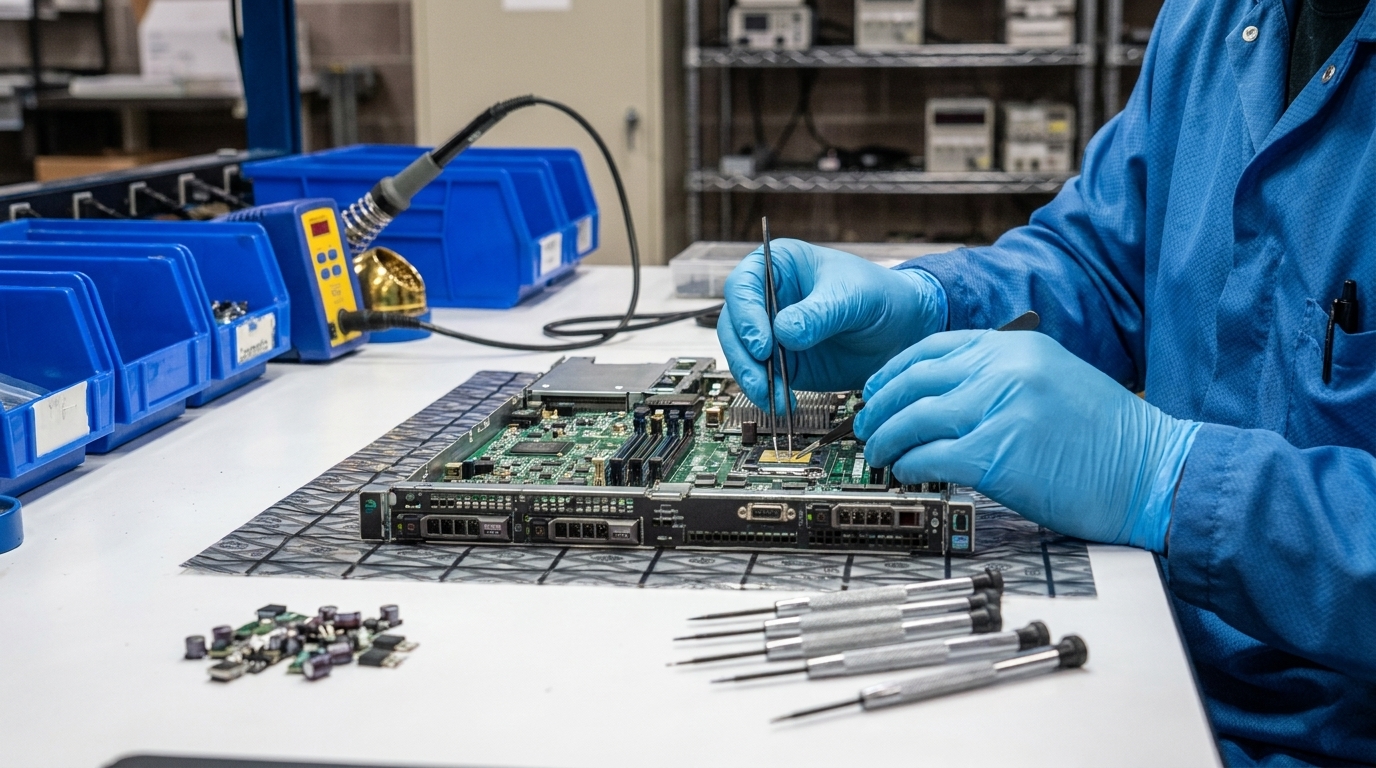
Circular IT lifecycles keep assets productive longer and reduce waste. A linear lifecycle moves assets in one direction: source, deploy, discard. A circular lifecycle redirects end-of-life assets back into productive use through repair, refurbishment, redeployment or certified recycling. Circular programs recover residual asset value, reduce e-waste disposal costs, extend hardware refresh cycles and generate auditable data for ESG and regulatory reporting.
The business case centers on three outcomes. Cost savings come from recovered and refurbished assets that offset new procurement spend. Risk reduction comes from certified data destruction and compliant disposition that remove data breach and regulatory liability. ESG performance improves as hardware diverts from landfill and new manufacturing demand falls, which supports scope 3 emissions targets and circular economy commitments from investors and regulators.
The 10-Step Circular IT Asset Management Roadmap
- Audit the current asset base. Catalog every active and inactive asset by age, condition and location. IT asset management owns this step. Upfront effort improves accuracy for recovery and reporting.
- Define circular procurement criteria. Require TAA compliance, refurbished-device acceptance policies and end-of-life take-back commitments from vendors at sourcing. Procurement owns this policy work.
- Standardize hardware configurations. Reduce SKU proliferation to simplify repair, parts harvesting and redeployment. IT and procurement share responsibility for standardization.
- Implement asset tagging and traceability. Assign unique identifiers at intake and track assets through every lifecycle stage in a centralized system. IT asset management and operations manage this system.
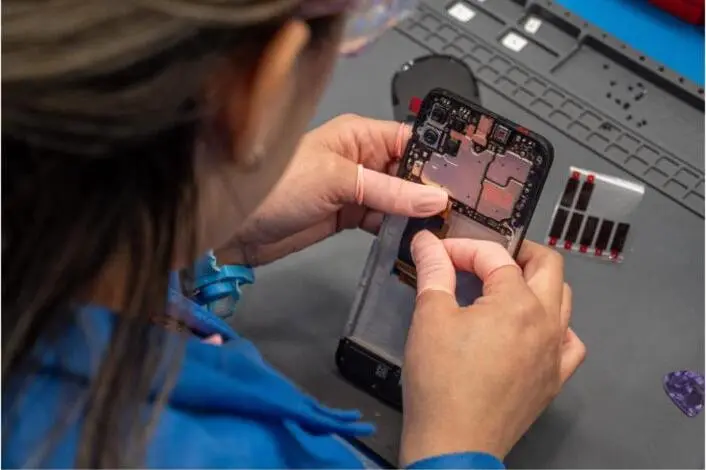
- Establish a tiered repair and refurbishment program. Route returned assets through triage at L1 user-level, L2 depot-level, L3 board-level and L4 component-level repair before disposition. Reverse logistics and operations lead this work.
- Build a redeployment pipeline. Maintain a pool of refurbished, tested assets for internal redeployment or secondary market resale before new procurement. IT asset management and finance coordinate this pipeline.
- Integrate returns management. Standardize RMA intake, triage and routing so returned assets enter repair or redeployment flows instead of accumulating in storage. Reverse logistics owns this process.
- Execute certified data destruction. Apply NIST 800-88-aligned data sanitization at every disposition point and generate certificates of destruction for compliance records. IT security and operations share responsibility.
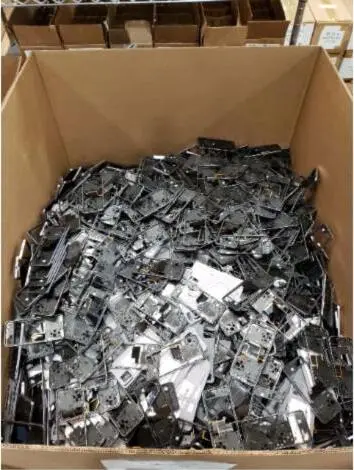
- Manage responsible recycling. Route assets that cannot be repaired or resold to ISO 14001-certified recyclers and track e-waste diversion volumes for ESG reporting. Sustainability and operations manage this step.
- Close the loop with reporting. Aggregate asset recovery value, e-waste diversion rates, repair yield and redeployment rates into a quarterly circular IT scorecard. Finance, sustainability and IT jointly own this reporting.
How the 5 Rs Align with IT Asset Touchpoints
The 10-step roadmap defines the sequence of work. The 5 Rs framework provides a strategic lens for decisions at each touchpoint. The 5 Rs framework maps directly to IT asset activities across procurement, use and disposition.
Refuse applies at procurement by declining noncompliant vendors. Reduce applies at procurement and deployment by standardizing SKUs and extending refresh cycles where performance allows. Reuse applies at utilization and disposition by redeploying refurbished assets internally or through secondary market channels. Repair applies at returns and depot by executing L1 to L4 depot repair and cosmetic refurbishment before disposition. Recycle applies at end of life by routing irreparable assets to ISO 14001-certified recyclers and documenting diversion.
KPI Dashboard Template for Circular IT Programs
A focused KPI set keeps circular IT programs aligned with cost, risk and ESG goals. Leading indicators signal program health in real time. Lagging indicators confirm outcomes over each reporting period.
| Metric | Type | Cadence | Target Direction | What it reveals |
|---|---|---|---|---|
| Asset utilization rate | Leading | Monthly | Increase | Shows whether deployed hardware stays active or sits idle. |
| First-pass repair yield | Leading | Monthly | Increase | Shows whether triage and routing protocols work as designed. |
| Redeployment rate | Leading | Monthly | Increase | Shows how many refurbished assets return to productive use. |
| Asset recovery value | Lagging | Quarterly | Increase | Quantifies financial return from resale and reuse. |
| E-waste diversion percentage | Lagging | Quarterly | Increase | Measures how much hardware avoids landfill. |
| Data destruction compliance rate | Lagging | Quarterly | Maintain | Confirms alignment with NIST 800-88 and internal policy. |
| Cost avoidance from redeployment | Lagging | Quarterly | Increase | Shows procurement savings from reuse of existing assets. |
Build a KPI program that tracks what matters
RACI Governance for Circular IT Execution
Clear governance keeps circular IT programs on track. The RACI model defines who owns each activity across IT, procurement, finance, sustainability and operations.
Asset audit and inventory assigns responsibility to IT asset management, accountability to operations and consultation to procurement. Circular procurement policy assigns responsibility to procurement, accountability to finance and consultation to IT and sustainability. Repair and refurbishment execution assigns responsibility and accountability to operations with consultation from IT. Data destruction and compliance assigns responsibility to IT security and accountability to operations. ESG and circular IT reporting assigns responsibility to finance and accountability to sustainability. Vendor qualification and oversight assigns responsibility to procurement and accountability to finance.
R means responsible. A means accountable. C means consulted. I means informed.
Vendor Selection Criteria for Circular Procurement
Vendor capabilities determine whether the circular loop stays intact. Each lifecycle stage needs partners that meet clear technical and compliance standards.
- TAA compliance: Required for federal and regulated-industry procurement and confirms country-of-origin standards.
- OEM Authorized Service Center (ASC) status: Ensures repair work meets OEM specifications and preserves warranty integrity.
- NIST 800-88-aligned data destruction: Mandatory for any vendor that handles storage media at disposition.
- ISO 14001 certification: Confirms environmental management systems for recycling and e-waste handling.
- ISO 9001 certification: Confirms quality management systems for repair and refurbishment operations.
- CMMC and SOC 2 readiness: Required for defense and regulated-sector clients that handle sensitive data.
- End-to-end service scope: A single-source partner from sourcing through certified recycling reduces handoff gaps and fragmented accountability.
- Scalable capacity: Confirms the vendor can absorb high return volumes and seasonal spikes without service degradation.
Common Operational Pitfalls in Circular IT Programs
- Fragmented asset data: Assets tracked in disconnected systems create blind spots in utilization and recovery reporting. Mitigation: implement a single asset management platform with mandatory intake tagging at every lifecycle stage.
- Unclear disposition ownership: When IT, operations and sustainability teams assume another group manages end-of-life routing, assets accumulate in storage or reach unqualified recyclers. Mitigation: enforce the RACI model and assign a named disposition owner for every asset class.
- Inconsistent repair routing: Sending all returns to one repair tier wastes capacity on simple fixes and delays complex repairs. Mitigation: implement a triage protocol that routes assets to the appropriate repair level at intake.
- Compliance documentation gaps: Missing certificates of data destruction or recycling create audit exposure. Mitigation: require documentation at every disposition event and store records in a centralized compliance repository.
- Vendor fragmentation: Using separate vendors for repair, fulfillment and recycling multiplies handoff risk and reduces end-to-end visibility. Mitigation: consolidate to a single lifecycle partner with verified credentials across all service categories.
Identify fragmentation and compliance gaps in a current program
Frequently Asked Questions
How long does it take to implement a circular IT asset management program?
Implementation timelines depend on the size of the asset base, the maturity of existing tracking systems and the number of stakeholders. Most organizations complete an initial audit and governance framework within the first quarter. Full program operationalization, including vendor integration and KPI reporting, typically follows over subsequent quarters. A defined pilot scope, such as one asset class or one facility, accelerates learning and reduces rollout risk.
What are the primary cost drivers in a circular IT program?
The largest cost drivers are asset tracking infrastructure, repair and refurbishment labor and logistics for returns and redeployment. These costs are offset by recovered asset value from refurbished hardware resale, reduced new procurement spend through redeployment and avoided disposal costs. Programs that consolidate vendors and standardize hardware configurations tend to see stronger cost performance over time.
What regulatory requirements apply to enterprise IT disposition in the United States?
Federal and regulated-sector organizations must comply with NIST 800-88 for data sanitization and destruction. Defense contractors are subject to CMMC requirements. Organizations that handle personal data must align disposition practices with applicable state and federal privacy regulations. ISO 14001-certified recycling supports environmental compliance and ESG reporting obligations. TAA compliance governs procurement for federal contracts and many enterprise supply chains.
When should an organization revisit its circular IT partner strategy?
Partner strategy reviews make sense when return volumes outpace current repair capacity or when new compliance requirements emerge. ESG reporting that demands more granular disposition data also triggers review. Fragmented vendors that create visibility gaps signal a need to reassess. Hardware refresh cycles or expansion into new geographies provide additional points to confirm that current partners can scale.
How does Premier Logitech support a circular IT program end to end?
Premier Logitech operates as a single-source lifecycle partner covering sourcing, configuration, fulfillment, depot repair at L1 through L4, refurbishment, certified data destruction and responsible recycling. The company holds TAA, ISO 9001, ISO 14001, NIST, CMMC and SOC 2 credentials and maintains ASC authorizations across more than 20 OEM brands. Organizations can engage Premier Logitech for full lifecycle program management or select individual services on a modular basis.
Conclusion: Turning the Playbook into Operational Reality
Circular IT asset management functions as an operational model that reduces total cost of ownership, closes compliance gaps and delivers measurable ESG outcomes. The 10-step roadmap, 5 Rs lifecycle table, KPI dashboard and RACI model in this playbook give cross-functional teams a shared framework for execution. The next steps involve assigning ownership, auditing the current asset base and selecting a partner with the credentials and capacity to execute every stage of the lifecycle.
Premier Logitech has delivered end-to-end IT lifecycle and reverse logistics services since 2007, serving large enterprises, OEMs, telecom providers and government agencies across the United States.
