
Last updated: August 6, 2026
Key Takeaways
- Circular economy IT lifecycle strategies replace linear buy-use-discard models with closed-loop systems that extend asset value and reduce Scope 3 emissions while satisfying U.S. security and trade regulations.
- Four core principles, use before replacement, repair before replacement, reuse before recycling, and recycle only when reuse is no longer viable, drive measurable outcomes in cost recovery, risk reduction and ESG reporting.
- Enterprise-grade circular IT programs track four key KPIs, asset recovery value, first-pass repair yield, data-sanitization verification rate and landfill diversion percentage.
- Compliance embeds from procurement through disposition with TAA-compliant sourcing, NIST SP 800-88 sanitization, CMMC documentation and chain-of-custody records at every stage.
- Premier Logitech delivers a single authorized partner model that consolidates vendors, maintains unified compliance and supports measurable circular IT outcomes, get started today.
Four-Stage Circular IT Hierarchy for Asset Decisions
Circular IT programs apply a four-stage prioritization hierarchy that governs every asset decision. The sequence matters because each stage preserves more asset value and avoids more embodied carbon than the next stage. Skipping directly from use to recycle bypasses repair and reuse, which deliver the strongest financial and environmental returns.
- Use before replacement. Retirement decisions rely on functional, security and ergonomic criteria, not fixed refresh schedules. Extending a device life from a three-year cycle to five or more years reduces capital expenditure and lowers embodied carbon per unit of output.
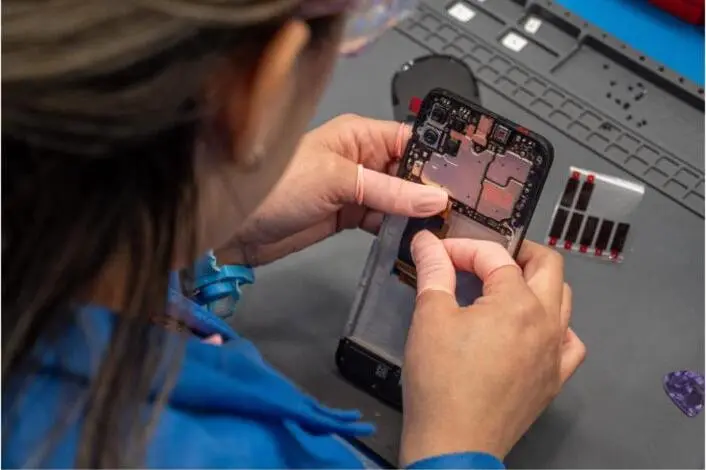
- Repair before replacement. Standardizing device configurations simplifies repair workflows and raises first-pass repair yield. Enterprises with authorized depot repair capacity across L1 through L4 resolve faults faster and avoid unnecessary procurement.
- Reuse before recycling. After secure data wiping and refurbishment, assets route to internal redeployment, a spare pool or secondary markets. Prioritizing refurbishment of still-functional devices before recycling extends usable life and reduces Scope 3 emissions from new hardware manufacturing.
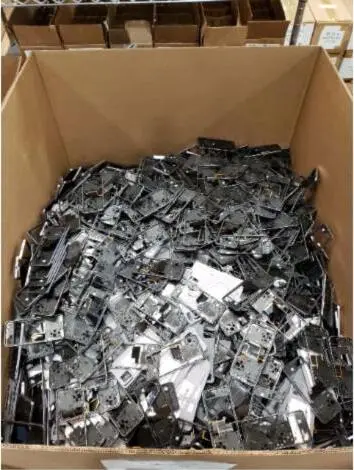
- Recycle only when reuse is no longer viable. Recycling serves as the last option in the circular IT cycle. Certified demanufacturing recovers metals and plastics while maintaining no-landfill and no-illegal-export compliance.
These principles translate into measurable enterprise outcomes. Strong IT asset recovery delivers better financial returns through resale and reuse, enhanced data security through certified destruction and reduced e-waste. Refurbishing a single laptop can avoid substantial CO2 emissions by bypassing the manufacturing phase, which accounts for a large share of a device total lifetime carbon footprint.

Talk to a lifecycle expert about building a circular IT program aligned to ESG targets.
KPIs That Define Circular IT Program Performance
The four principles above define what a circular IT program does. Measurement defines whether the program delivers results. A circular IT program without measurement remains unverifiable. Key measurability indicators for circular IT systems include reuse rate, average usage duration per device category, repair rate, grading distribution of returns, time-to-return and share of traceably documented end-of-life cases. From these indicators, four KPIs anchor an enterprise-grade dashboard.
- Asset recovery value. Tracks the financial return from the resale and redeployment outcomes described above, including cost savings from life extension and disposal cost avoidance.
- First-pass repair yield. Measures the percentage of returned devices restored to full function without secondary intervention. Higher yield signals process maturity and reduces per-unit repair cost.
- Data-sanitization verification rate. Confirms the percentage of retired assets with documented, auditable sanitization records. A CMMC assessor requires per-asset evidence including Certificates of Destruction that list serial number, sanitization method, NIST 800-88 level achieved, technician, date and facility, plus chain-of-custody records.
- Landfill diversion percentage. Quantifies the share of retired assets diverted from landfill through reuse, remarketing or certified recycling. Global e-waste reached a record 62 billion kg in 2022, yet only 22.3% was formally collected and recycled in an environmentally sound manner.
Premier Logitech real-time tracking and lifecycle analytics feed these KPIs into a single operational view. Inventory reporting, device traceability and asset tagging create the data foundation that ESG disclosures and compliance audits require. The Global Circularity Protocol, released in November 2025, offers a structured approach for businesses to measure, manage and communicate circularity progress.
Enterprise and Government Compliance Requirements
The KPIs above show whether a circular IT program delivers results. Those results matter only when the program can withstand an audit. Compliance does not sit as a post-program consideration. It forms the foundation on which circular IT programs are built. The six-step roadmap below embeds regulatory checkpoints at every stage.

- Establish a compliant procurement baseline. Source hardware through TAA-compliant channels. At the point of purchase, evaluate repairability, total cost of ownership and recycled content because these factors determine whether an asset can enter a circular program or will require early retirement. ITU circular ICT procurement guidance structures sustainable sourcing around policy, practical conditions and on-the-ground procurement processes.
- Deploy with lifecycle tracking enabled. Assign asset tags and serial numbers at deployment. Capture configuration, warranty status and repair history from day one. NIST SP 800-53 and CISA asset management controls require this baseline for federal and critical-infrastructure programs.
- Authorize repair through OEM-certified channels. Unauthorized repair voids warranties and creates compliance gaps. ASC-authorized repair meets OEM standards and supports CMMC audit trails for defense contractors.
- Execute data sanitization to NIST SP 800-88 Rev. 1 standards. FAR 52.204-21 and CMMC 2.0 Level 1 require documented sanitization or destruction for all media types before disposal or reuse, with evidence retained for the contract lifecycle plus three years. Clear, purge or destroy methods must match media type and data classification.
- Document chain of custody for every retired asset. Agencies must maintain sanitization records including what media was sanitized, when, the amount, the method used, verification performed and final disposition. SOC 2 Type II audits and CMMC assessments both require this documentation trail.
- Consolidate into a single authorized partner. Fragmented vendor relationships create compliance gaps, audit inconsistencies and missed recovery value. A single partner with TAA, NIST, CMMC, CISA alignment and SOC 2 compliance delivers a unified chain of custody and a single compliance record across all lifecycle stages.
Map compliance requirements to a single-partner execution plan with Premier Logitech.
Vendor-Selection Checklist for Circular IT Partners
Selecting a lifecycle partner requires capabilities that operationalize the compliance roadmap above. The following checklist maps directly to those regulatory and operational requirements.
- TAA-compliant sourcing. Confirm the partner sources hardware through trade-compliant channels for government and enterprise programs.
- OEM ASC authorizations. Verify the partner holds Authorized Service Center status across the OEM brands in the asset portfolio. Premier Logitech holds ASC authorizations across multiple OEM brands.
- NIST, CMMC and SOC 2 compliance. Require documented policies, procedures and audit evidence for data sanitization, chain of custody and media protection controls.
- End-to-end service scope. Confirm the partner covers sourcing, configuration, depot repair, returns processing, remarketing and certified recycling.
- Real-time asset visibility. Require a Transportation Management System and lifecycle analytics platform that provides inventory reporting and device traceability at every stage.
- Scalable repair capacity. Evaluate L1 through L4 repair capability and the ability to handle high return volumes without creating bottlenecks.
- Nearshore and domestic logistics infrastructure. Assess proximity to major logistics hubs. Premier Logitech operates multiple DFW facilities with nearshore capacity in Laredo and Nuevo Laredo, Mexico, supporting cost-effective, rapid processing.
- ESG and compliance reporting outputs. Require Certificates of Destruction, chain-of-custody documentation, landfill diversion reports and asset recovery value statements for ESG disclosures.
Conclusion and Next Steps
The checklist above defines the capabilities a lifecycle partner must provide to support circular IT at scale. In 2026, organizations shift focus from whether to adopt circular IT strategies to how to implement them without increasing risk. A compliance-first, single-partner model connects every lifecycle stage from TAA-compliant procurement to certified end-of-life disposition under one operational and audit framework.
Fragmented vendor relationships produce fragmented compliance records, missed asset recovery value and ESG reporting gaps. A single authorized partner closes those gaps by maintaining a continuous chain of custody, unified KPI reporting and regulatory alignment across TAA, NIST, CMMC, CISA and SOC 2 requirements.
Premier Logitech has delivered end-to-end IT lifecycle and reverse logistics services since 2007. With ASC authorizations across multiple OEM brands, multiple DFW facilities, nearshore operations in Mexico and certifications spanning TAA, ISO, NIST, CMMC and SOC 2, Premier Logitech serves as a single authorized partner for enterprises, OEMs and government agencies executing circular IT programs at scale.
Start building a compliant, measurable circular IT program with Premier Logitech today.
Frequently Asked Questions
What is a circular economy IT lifecycle strategy?
A circular economy IT lifecycle strategy replaces the traditional buy-use-discard model with a closed-loop system that extends asset value at every stage. Instead of retiring hardware on fixed schedules, organizations apply a prioritization hierarchy. They use assets longer based on functional criteria, repair before replacing, reuse through internal redeployment or secondary markets and recycle only when reuse is no longer viable. The strategy connects procurement, deployment, maintenance, returns, remarketing and end-of-life disposition into a single managed program with measurable KPIs and compliance documentation at each stage.
How does Premier Logitech support compliance requirements for circular IT programs?
Premier Logitech holds certifications and operates under compliance frameworks including TAA, TAPA, ISO quality standards, NIST, CMMC and SOC 2. The company CAGE Code 4WAJ9 identifies it as a pre-vetted partner for U.S. federal government programs. For data sanitization, Premier Logitech follows NIST SP 800-88 Rev. 1 procedures and generates Certificates of Destruction, chain-of-custody records and compliance reports that satisfy CMMC assessor requirements and SOC 2 audit standards. This documentation supports internal governance and external ESG disclosures.
What KPIs should organizations track to measure circular IT program success?
A circular IT KPI dashboard covers four core areas. Asset recovery value measures residual value returned through resale and redeployment. First-pass repair yield tracks the percentage of returned devices restored without secondary intervention. Data-sanitization verification rate confirms the share of retired assets with auditable destruction records. Landfill diversion percentage quantifies assets diverted from landfill through reuse or certified recycling. Supporting metrics include reuse rate, average device lifecycle length, grading distribution of returns, repair rate and chain-of-custody completeness rate. These metrics feed ESG reporting frameworks including GRI, SASB and CDP.
Why does vendor consolidation matter in circular IT lifecycle management?
Fragmented vendor relationships create compliance gaps, inconsistent audit trails and missed asset recovery value. When separate providers handle procurement, repair, remarketing and recycling, chain-of-custody documentation breaks between handoffs and no single partner holds accountability for the full compliance record. Consolidating into one authorized partner with end-to-end service scope, OEM ASC authorizations and unified compliance reporting eliminates those gaps. Consolidation also reduces operational overhead, improves asset visibility and provides a single point of contact for program management across all lifecycle stages.
What makes Premier Logitech different from other IT lifecycle service providers?
Premier Logitech combines the capabilities outlined in the conclusion above, ASC authorizations, nearshore logistics infrastructure and end-to-end service scope, under a single compliance framework. The difference comes from integration. Most providers offer these services separately, which requires clients to manage multiple vendors and stitch together compliance records across handoffs.
