Key Takeaways
- The data security IT lifecycle spans seven stages: Create, Store, Use, Share, Archive, Destroy and Monitor. Each stage needs clear, enforceable controls.
- Physical IT assets carry sensitive data from deployment through retirement. Weak controls at any stage, especially Destroy, create major breach risk.
- Regulatory frameworks such as GDPR, HIPAA and NIST CSF 2.0 require continuous accountability, documented controls and evidence across all lifecycle stages.
- Improper disposal of retired hardware remains a leading breach cause, with recoverable data found on up to 40% of used drives sold on secondary markets.
- Premier Logitech delivers certified, end-to-end ITAD and lifecycle security services that close these gaps. Request a lifecycle security review today.
Why the Data Security IT Lifecycle Matters
Every piece of data an organization creates carries risk from creation through destruction. The data security IT lifecycle provides a structured way to manage that risk across systems, locations and physical assets. Regulations such as GDPR, HIPAA and sector mandates expect accountability across the entire lifecycle, including where data originated, how it moved, who accessed it and how it was disposed of.
The seven stages of the data security IT lifecycle are:
- Create
- Store
- Use
- Share
- Archive
- Destroy
- Monitor
Monitor acts as a continuous thread that binds all other stages. It runs in parallel with every stage and provides the audit evidence regulators expect.
Why Seven Stages Instead of Five
Many frameworks describe five or six stages. The model here uses seven. Archive and Monitor appear as distinct stages because archived data can remain sensitive for long periods and most organizations lack continuous oversight, a gap that a five-stage model leaves unnamed. The seven-stage model treats both as first-class security controls and supports a complete operational program.
The 7 Stages of the Data Security IT Lifecycle
1. Create: Classify Before Collecting
Data enters the environment through applications, sensors, forms and system logs. Classifying data at or near creation ensures sensitive datasets inherit retention, review and deletion rules from the start. This approach reduces reliance on periodic cleanup and manual discovery.
Controls at this stage include:
- Data classification at creation (public, internal, confidential, restricted)
- Data minimization that collects only necessary attributes
- Named data owners assigned per dataset
- Purpose definition established before collection begins
2. Store: Encrypt and Govern at Rest
Data resides in databases, data lakes, cloud buckets and on physical media such as end-user devices. Central storage architectures like data lakes often duplicate sensitive information. That duplication forces protection of the same data across multiple locations.
Controls at this stage include:
- Encryption at rest using AES-256 through FIPS 140-3 validated modules
- Approved storage locations defined and enforced by policy
- Data Security Posture Management (DSPM) for continuous discovery and classification
- Key management with rotation and monitoring
3. Use: Enforce Least Privilege
Authorized users access, process and manipulate data. Over-permissioned accounts often provide attackers with convenient entry points. Microsoft’s Zero Trust guidance states that access decisions must remain continuous, not static.
Controls at this stage include:
- Role-based access control (RBAC) and least privilege
- Multi-factor authentication (MFA)
- Conditional access and session monitoring
4. Share: Control Every Boundary
Data moves between departments, vendors, partners and cloud services. Uncontrolled data sharing ranks among the fastest paths for sensitive data leaks.
Controls at this stage include:
- Data loss prevention (DLP) across endpoint, email and cloud channels
- Encryption in transit using TLS 1.3
- Approved sharing methods with logging and expiry
- Third-party risk management and Business Associate Agreements (BAAs) where required
5. Archive: Protect What Is Kept
Older data moves to long-term storage for compliance, legal or business reasons. Archived data often receives the least attention yet can remain sensitive for months or years.
Controls at this stage include:
- Access restrictions that match active data where sensitivity persists
- Automated retention policies with defined end dates
- Periodic access reviews
- Encryption for all archived media
6. Destroy: Sanitize and Prove It
Data reaches end of life and must be permanently removed from all media. Approximately 40% of used hard drives sold on secondary markets still contain recoverable data, and up to 15% of data breaches are linked to improper disposal. The reason is simple: deletion does not mean data is gone. Recovery tools can restore files from hard drives, SSDs, copiers and networking equipment.
Controls at this stage include:
- NIST SP 800-88 Rev. 2 sanitization methods: Clear, Purge or Destroy
- Cryptographic erase using FIPS 140-3 validated modules
- Physical destruction for end-of-life media
- Certificates of Sanitization with serial-level traceability
7. Monitor: Audit Everything, Continuously
Continuous oversight spans all stages and supports early detection of drift and misuse. Only 33% of UK businesses monitor user activity, which leaves many organizations unable to detect unauthorized access or policy violations in real time.
Controls at this stage include:
- Audit logging with full identity attribution
- User activity monitoring
- Automated compliance reporting
- Regular access reviews and vulnerability scanning
Compliance and Regulatory Alignment Across the Lifecycle
Compliance is a continuous process. Regulators expect evidence of controls, not just written policies. The major frameworks map directly to lifecycle stages.
CCPA/CPRA: Deletion rights map to the Destroy stage. Retention disclosures apply at Archive.
Secure Data Destruction and IT Asset Disposition (ITAD)
The Destroy stage often carries the highest residual risk in the data security IT lifecycle. NIST SP 800-88 Rev. 2, published as the final official revision on September 26, 2025, reframes media sanitization as an ongoing organizational program. It provides a Clear, Purge and Destroy framework and explicitly covers cloud storage, virtual machines and shared infrastructure.
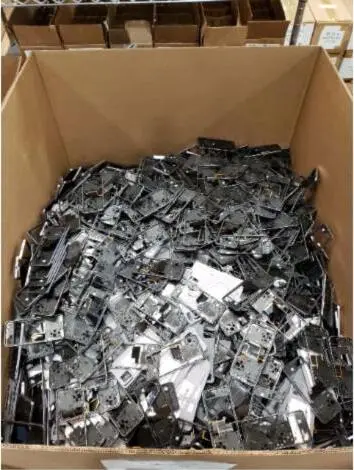
The updated standard tightens cryptographic erase requirements with FIPS 140-3 alignment. It also requires every sanitization event to have a structured, traceable digital record that includes validation status, manufacturer, model, serial number and method.
Physical destruction remains required for end-of-life media. This applies when software-based methods cannot be verified. A 2026 Blancco Technology Group report found that more than one-third of surveyed organizations experienced data leaks in the last year, and one in eight breaches was tied to sensitive data left on redeployed devices or drives. This occurred even though 94% of respondents expressed confidence in their end-of-life data management practices.
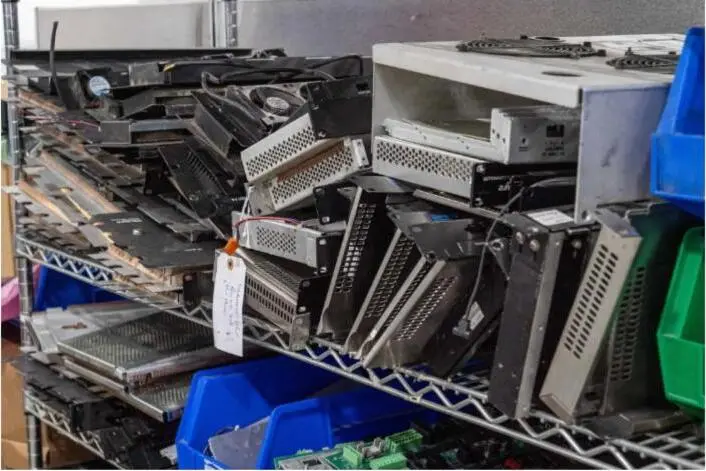
A 2025 survey found that 39% of organizations had a formal storage room where retired IT equipment accumulated for more than 12 months before disposal, and 62% of those organizations could not produce a complete inventory of what was stored.
Premier Logitech provides certified, end-to-end ITAD services for government and enterprise clients. Certifications include TAA, ISO, NIST, CMMC and SOC 2. Premier Logitech holds CAGE code 4WAJ9 as a pre-vetted partner for U.S. federal work, with secure handling and chain-of-custody documentation at every step.
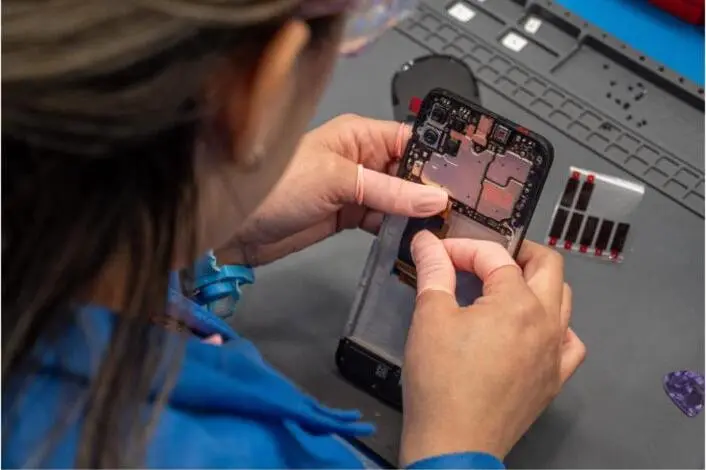
Schedule an ITAD program consultation with Premier Logitech to close the gap at the Destroy stage.
Common Pitfalls and Practical Best Practices
The most common failures in data security lifecycle management tend to be operational rather than technical. They include:
- Treating disposal as an afterthought instead of a defined security control
- Allowing retired assets to accumulate in storage rooms without inventory or oversight
- Maintaining vendor relationships without BAAs or data processing agreements
- Assuming deletion provides effective destruction
Several practical best practices address these pitfalls and strengthen lifecycle security:
- Quarterly e-waste purges with certified pickup and documentation
- Complete, current asset inventories including printers, copiers and networking equipment
- Per-device Certificates of Destruction with serial-level traceability
- Chain-of-custody documentation from retirement through final disposition
- Annual audits of retention schedules, access controls and destruction records
How to Build a Data Security Lifecycle Policy
A defensible policy combines written standards with operational controls. The steps below provide a practical sequence.
- Conduct a data inventory and risk assessment across all systems and asset types.
- Classify data by sensitivity using FIPS 199 or internal tiers.
- Assign named owners for every data store.
- Define retention periods mapped to legal and regulatory requirements.
- Select enforcement mechanisms such as automated deletion, archival policies or storage lifecycle rules.
- Choose certified ITAD partners for end-of-life disposition.
- Document all processes and review them annually or after any material change.
Why Partner With Premier Logitech for Lifecycle Security
Fragmented vendor relationships often create security gaps across the IT lifecycle. Premier Logitech operates as a single-vendor solution from sourcing through recycling and reduces the handoff points where data exposure risk concentrates.
Premier Logitech holds certifications including TAA, ISO, NIST, CMMC and SOC 2, which support government and enterprise compliance requirements. Deep OEM integration and authorized service center status across more than 20 brands mean teams handle assets with direct manufacturer relationships at every stage.
For IT security managers, compliance officers and operations directors who manage the full asset lifecycle, a single certified partner provides the audit trail, chain-of-custody documentation and verified destruction records that regulators expect.
Request a lifecycle security assessment from Premier Logitech to build a program that covers every stage from procurement to destruction.
Frequently Asked Questions
What Are the 5 Stages of the Data Security Lifecycle?
Many frameworks describe five or six stages, but the comprehensive model for enterprise IT includes seven: Create, Store, Use, Share, Archive, Destroy and Monitor. The five-stage model typically combines or omits Archive and Monitor. Archive matters because retained data remains subject to access controls and regulatory obligations long after it leaves active use. Monitor matters because continuous oversight, not periodic audits, aligns with expectations from NIST CSF 2.0 and GDPR Article 30. The seven-stage model gives IT and compliance teams a complete operational framework rather than a simplified summary.
What Are the 7 Layers of Security?
The seven layers of security reflect a defense-in-depth model: physical, perimeter, network, endpoint, application, data and human. Each layer must be addressed across the IT lifecycle. Physical security covers facilities and hardware handling. Perimeter and network controls govern traffic flows. Endpoint controls protect devices throughout their operational life and at retirement. Application controls govern how software accesses and processes data. The data layer applies classification, encryption and access governance. The human layer addresses training, awareness and insider risk. A data security IT lifecycle strategy must engage all seven layers because physical asset mishandling at retirement bypasses every digital control above it.
How Does ITAD Fit Into the Data Security Lifecycle?
IT asset disposition provides the operational execution of the Destroy stage. When a device reaches end of life, ITAD covers secure data destruction using methods aligned to NIST SP 800-88 Rev. 2, asset recovery and remarketing where appropriate, and responsible recycling of hardware that cannot be redeployed. ITAD functions as the physical enforcement of the data security lifecycle’s final stage. Without certified ITAD, the controls applied at every earlier stage can be undone by a single improperly retired device. Certified ITAD partners provide the chain-of-custody documentation, Certificates of Destruction and serial-level traceability that compliance frameworks require as evidence.
What Standards Apply to Secure Data Destruction?
NIST SP 800-88 Rev. 2, finalized in September 2025, serves as the primary standard for media sanitization. It defines three sanitization categories: Clear, Purge and Destroy, and defers media-specific technical methods to IEEE 2883-2022. Together, these two standards form a two-layer system. NIST SP 800-88 Rev. 2 provides program structure and risk classification, while IEEE 2883-2022 provides technical execution guidance for specific media types. GDPR Article 17, HIPAA’s Security Rule and SOC 2 trust services criteria all impose destruction requirements that a NIST SP 800-88 Rev. 2-aligned program can satisfy. NIST SP 800-53 and ISO/IEC 27040 provide the surrounding organizational controls framework.
How Do Organizations Choose a Certified ITAD Partner?
The criteria that matter most include certified compliance, documented chain of custody, per-device Certificates of Destruction and demonstrated experience with enterprise or government clients. Certifications to review include TAA compliance for federal work, ISO quality frameworks, NIST and CMMC alignment and SOC 2 attestation. A CAGE code indicates pre-vetting for U.S. federal government work. Beyond certifications, the partner should provide serial-level traceability for every asset processed, formal data processing agreements or BAAs where required and audit-ready records that satisfy GDPR, HIPAA and SOC 2 requirements. Vendor consolidation that uses one partner for the full lifecycle instead of separate vendors for repair, fulfillment and recycling reduces the handoff points where documentation gaps and security risks emerge.
Conclusion
The data security IT lifecycle spans seven stages: Create, Store, Use, Share, Archive, Destroy and Monitor. Controls at the first six stages protect data while it remains active. The Destroy stage protects it permanently and often receives the least rigorous treatment. Recoverable data on retired hardware, missing asset inventories and undocumented destruction turn decommissioning into a breach vector.
Premier Logitech provides certified, end-to-end lifecycle services that close those gaps. From sourcing and configuration through secure data destruction and responsible recycling, Premier Logitech delivers the chain-of-custody documentation, compliance certifications and operational scale that enterprise and government clients require.
Connect with a Premier Logitech specialist to assess the current lifecycle security posture and identify where controls can be strengthened.
