Key Takeaways
- IT lifecycle management services span six stages: procurement, deployment, asset visibility, repair, compliance and disposition, with a single vendor reducing coordination gaps and compliance risk.
- Procurement and sourcing gain from TAA-compliant consolidation that reduces vendor contracts, simplifies documentation and improves traceability across hardware, software and peripherals.
- Deployment and configuration services cover imaging, kitting and direct-to-site fulfillment, with Premier Logitech supporting high-volume rollouts through DFW and nearshore Laredo facilities.
- Repair and reverse logistics benefit from ASC-authorized depot repair at Levels 1 through 4 and structured RMA triage that increase asset recovery value and reduce warranty-channel delays.
- Premier Logitech delivers end-to-end IT lifecycle management with TAA, NIST, CMMC, SOC 2 and ISO certifications; talk to a lifecycle expert to map programs against the six stages.
Procurement and Sourcing for Regulated IT Environments
HPE’s ITAM framework positions procurement as the stage where vendor selection, contract negotiation and inventory intake converge. For government agencies and regulated enterprises, that process must also satisfy Trade Agreements Act requirements, which restrict sourcing to designated countries and mandate documented supply chain provenance.
Aggregated procurement through a single partner consolidates purchase volume, reduces the number of active vendor contracts and simplifies compliance documentation. Premier Logitech provides TAA-compliant sourcing across hardware, software and peripherals, supported by open-market and channel distribution that give operations teams flexibility while maintaining traceability.
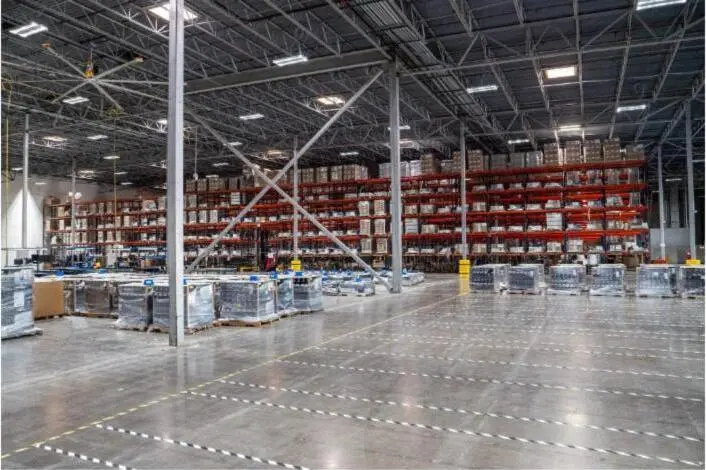
Vendor consolidation at the sourcing stage also reduces the administrative overhead that accumulates across fragmented supplier networks. Organizations managing multiple IT vendors spend a significant portion of IT time on vendor relationship management alone, which consolidation redirects toward operational priorities.
Deployment and Configuration of Enterprise Assets
Once assets are procured and compliance documentation is in place, deployment moves those assets into operational use. At enterprise scale, that includes imaging, BIOS configuration, SIM and IMEI pairing, software installation and custom asset tagging, all completed before devices reach end users or field sites.
Workflow automation at the deploy stage reduces provisioning time and error rates for cloud resources, applications and hardware. Premier Logitech supports modern provisioning alongside traditional imaging, with BOM-based kitting, new-hire kit assembly and direct-to-site fulfillment across national programs.
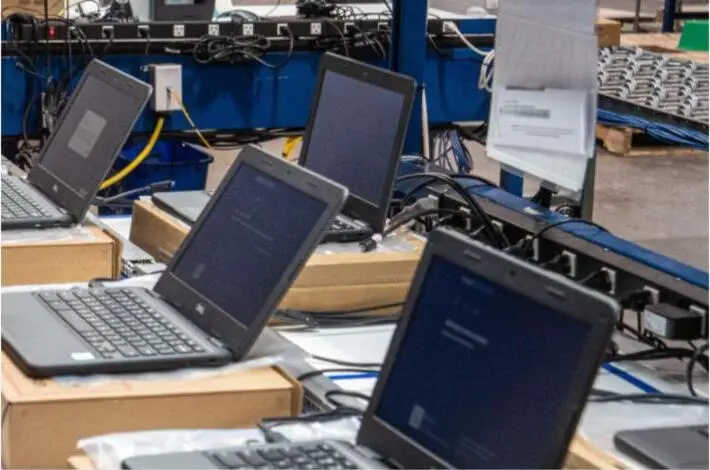
Kitting capacity at Premier Logitech’s DFW facilities supports high-volume rollouts for OEMs, telecom providers and government agencies that require consistent, repeatable configuration at scale. Nearshore operations in Laredo and Nuevo Laredo extend that capacity for cost-sensitive programs that still require predictable service levels.
Asset Management and Real-Time Visibility
The monitor stage of IT asset lifecycle management focuses on increasing visibility into asset usage, identifying risks and capturing data to inform future strategy. Without real-time tracking, operations teams cannot accurately forecast refresh cycles, identify underutilized assets or demonstrate compliance to auditors.
Premier Logitech provides inventory reporting, device traceability, asset tagging and lifecycle analytics through an integrated platform. That visibility layer connects receiving, exchange, staging, returns and retirement into a single operational view and removes blind spots that fragmented vendor networks create.
Best-practice lifecycle models assign IT leadership responsibility for refresh cycles and budget planning, which requires accurate, current asset data. Real-time reporting from a single partner makes that data available without manual reconciliation across multiple vendor portals.
Repair and Reverse Logistics That Recover Value
Repair and reverse logistics form the stage where fragmented vendor networks create the most operational drag. Inconsistent triage standards, misaligned SLAs and duplicate shipping costs accumulate quickly across multi-vendor repair chains.
Premier Logitech operates depot repair at Levels 1 through 4, with ASC authorization from more than 20 OEM brands. That authorization status serves as a structural differentiator because repair providers without OEM authorization cannot perform warranty-valid repairs, which forces enterprises to route devices through separate channels and absorb the related delays and costs.
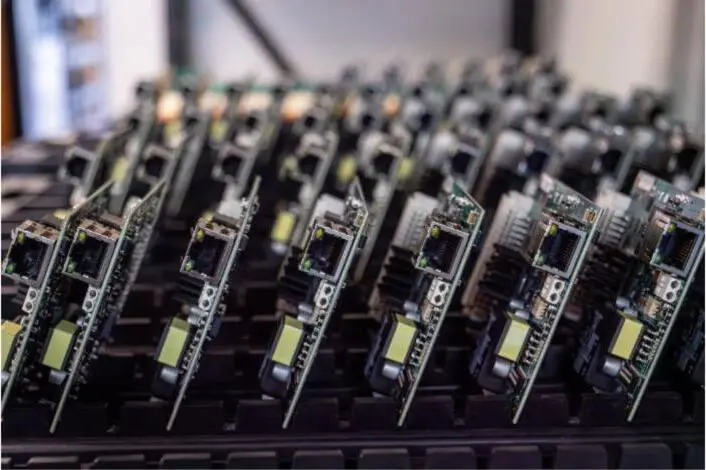
Industry data indicates that a majority of consumer electronics returns are classified as No Fault Found, which means most returned units carry recoverable value when processed through a structured program. Premier Logitech’s reverse logistics workflow covers RMA intake, triage, refurbishment grading, cosmetic restoration and redeployment to secondary market channels.
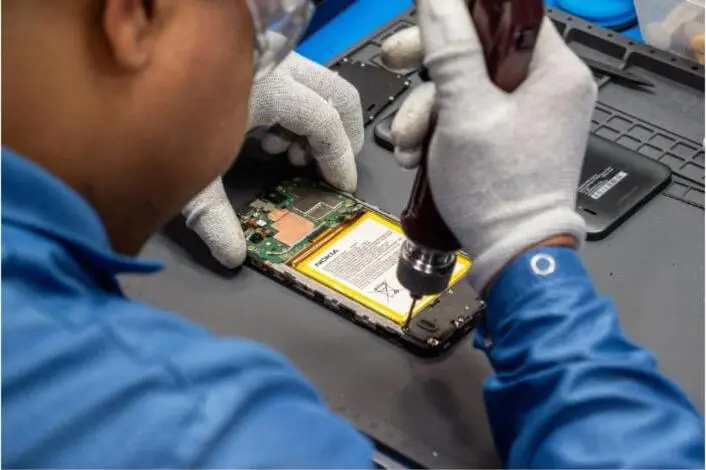
That end-to-end workflow depends on four operational capabilities that separate high-performing programs from fragmented approaches.
- RMA triage: Structured intake and diagnostic routing that separates warranty claims, out-of-warranty repairs and NFF units at intake rather than downstream.
- Depot repair: L1 through L4 repair capacity that handles component-level work without routing devices to external facilities.
- Refurbishment grading: Standardized cosmetic and functional grading that produces sellable B-stock inventory for secondary market channels.
- Asset recovery value: Remarketing programs that convert recovered units into revenue rather than write-offs.
Compliance and Security Across the Lifecycle
Compliance requirements for IT lifecycle programs expanded materially after 2024. The Department of Defense’s final CMMC rule was issued on October 15, 2024 and ties contract eligibility to demonstrated cybersecurity maturity. The rule also extends audit requirements through the defense industrial base through contractual flow-downs to subcontractors and suppliers, and inaccurate CMMC certifications carry heightened False Claims Act risk even without a cyber incident.
The DOJ Data Security Program became enforceable as of July 9, 2025 and restricts bulk transfers of U.S. sensitive personal data to countries of concern including China, Russia and Iran. The program also imposes audit and recordkeeping obligations that directly affect vendor selection and disposal chain management.
NIST Cybersecurity Framework 2.0 requires documented incident response playbooks that integrate legal, compliance and executive leadership with technical teams and third-party service providers. For IT lifecycle programs, that requirement means the repair, refurbishment and disposition vendor must demonstrate documented controls, not just assert compliance.
Premier Logitech holds certifications across TAA, TAPA, ISO 9001 and 14001, NIST, CMMC and SOC 2. The company’s CAGE Code 4WAJ9 identifies it as a pre-vetted partner for U.S. federal government programs. Secure data destruction and compliance reporting sit inside the disposition workflow, not as optional add-ons.
Disposition and Recycling That Close the Loop
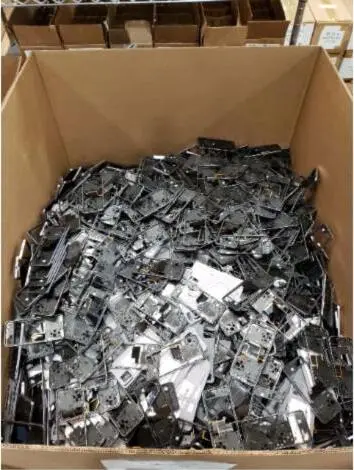
Those compliance requirements become particularly critical at the final lifecycle stage, where certified ITAD services close the loop by converting end-of-life assets into documented, compliant outcomes. The 2026 Gartner Market Guide for IT Asset Disposition identifies data security and responsible electronics recycling as the two largest ITAD challenges facing enterprise organizations, with AI-enabled asset identification and process automation reshaping how providers deliver traceability across the disposition process.
Value recovery rates for enterprise IT equipment vary depending on asset age, condition and market timing. Structured refurbishment and grading programs capture that value rather than surrendering it to recycling streams.
ITAD programs are gaining CxO-level attention as organizations seek to reduce Scope 3 emissions and meet sustainability goals through asset reuse and lifecycle extension. Premier Logitech’s disposition services include responsible recycling, e-waste reduction programs, parts reclamation and secure data destruction with compliance reporting aligned to ISO and NIST requirements.
How Enterprises Choose an IT Lifecycle Partner
Evaluating IT lifecycle management services providers requires a structured framework that goes beyond service catalogs. The following criteria translate the six-stage lifecycle model into concrete evaluation questions and reflect the operational and compliance requirements that VP-level buyers at large enterprises, OEMs, telecom providers and government agencies consistently prioritize.
- Service scope: Confirm the provider covers all six lifecycle stages under one contract. Gaps in scope force supplemental vendor relationships that reintroduce fragmentation.
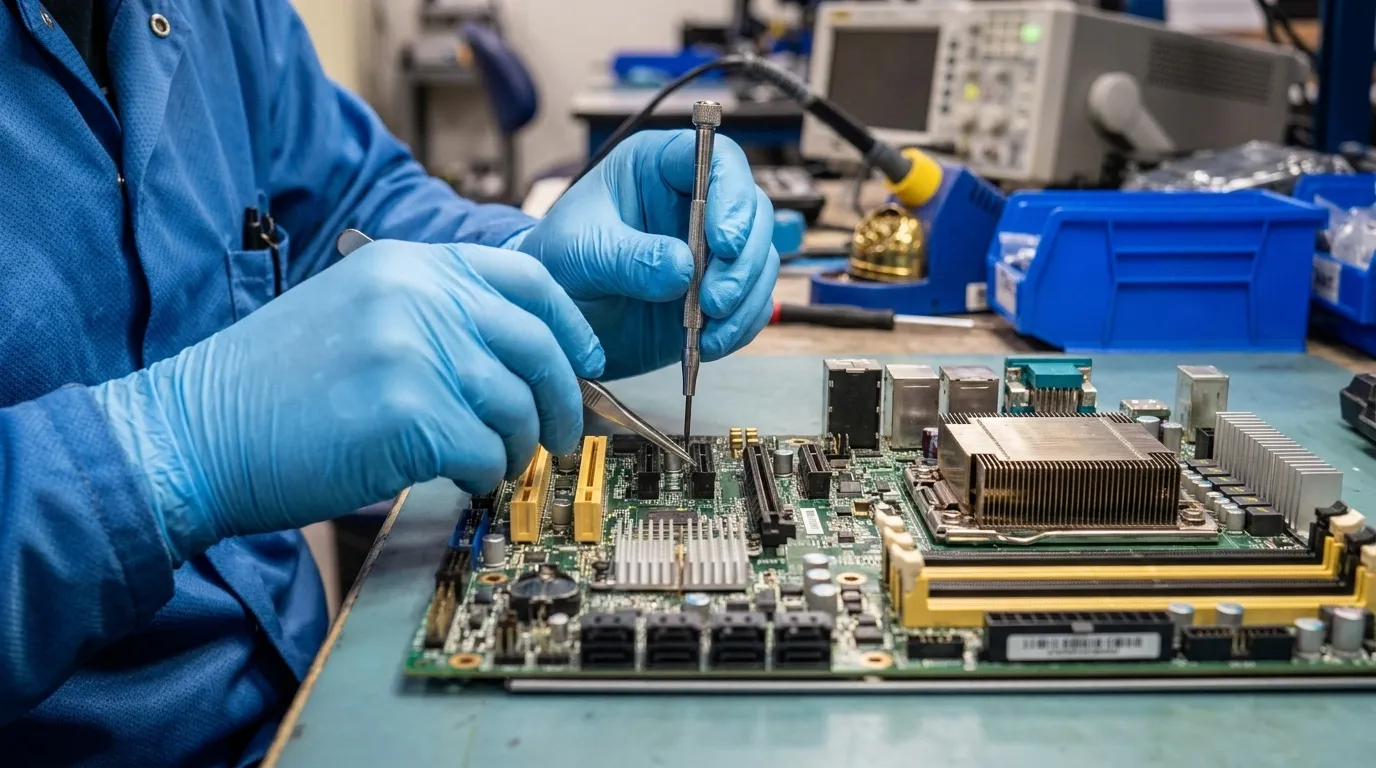
- Technical capabilities: Assess L1 through L4 repair depth, configuration capacity, imaging infrastructure and manufacturing capabilities such as PCBA and sub-assembly for OEM programs.
- Quality and compliance certifications: Require documented TAA, NIST, CMMC, SOC 2 and ISO certifications. For government programs, verify CAGE Code registration and ASC authorization status for relevant OEM brands.
- Scalability: Evaluate whether the provider can absorb volume spikes without degrading service quality. Modular engagement models allow programs to scale individual services independently.
- Visibility tools: Require real-time inventory reporting, device traceability and lifecycle analytics accessible through a single platform rather than multiple vendor portals.
- Network coverage: Confirm domestic facility footprint, carrier network depth and nearshore or international capabilities for programs with cross-border logistics requirements.
- Total cost of ownership: Compare consolidated pricing against the full cost of managing fragmented vendors, including coordination overhead described in the procurement stage, SLA misalignment penalties and missed asset recovery value.
Common Pitfalls in IT Lifecycle Programs
Three operational failures account for most IT lifecycle program underperformance and often compound one another when left unaddressed.
- Lack of visibility: Programs without real-time asset tracking cannot accurately report inventory positions, forecast refresh needs or demonstrate compliance. Mitigation requires a single-platform reporting layer that spans all lifecycle stages from a single provider.
- Unclear compliance ownership: When compliance responsibilities are distributed across multiple vendors, accountability gaps emerge during audits. The CMMC flow-down requirements outlined in the compliance section make this particularly consequential for defense contractors. Mitigation requires a primary partner that holds the relevant certifications and accepts documented compliance responsibility.
- Poorly defined SLAs: Multi-vendor environments produce SLA misalignment and delayed issue resolution because no single party owns the end-to-end outcome. Mitigation requires master SLAs that cover the full lifecycle scope, with escalation paths that do not require the buyer to coordinate between vendors.
Frequently Asked Questions
What are the six stages of IT lifecycle management services
The six stages are procurement and sourcing, deployment and configuration, asset management and visibility, repair and reverse logistics, compliance and security, and disposition and recycling. Most enterprise programs follow this sequence, though individual stages may be expanded or customized based on industry requirements, asset types and regulatory obligations.
What certifications should an IT lifecycle partner hold for government programs
Government and regulated-industry programs typically require TAA compliance for sourcing, NIST alignment for cybersecurity controls, CMMC certification for defense contractor supply chains, SOC 2 for data handling and ISO 9001 and 14001 for quality and environmental management. A CAGE Code registration confirms pre-vetting as a federal government supplier. ASC authorization from relevant OEM brands is also necessary for warranty-valid depot repair.
What is the difference between ITAD services and reverse logistics
Reverse logistics covers the full return flow of assets from end users back through triage, repair, refurbishment and redeployment. ITAD, or IT asset disposition, specifically addresses the end-of-life stage, including secure data destruction, certified recycling, parts reclamation and value recovery from assets that will not be redeployed. A comprehensive lifecycle program integrates both, with reverse logistics feeding assets into either redeployment or ITAD workflows based on condition and remaining value.
What are the primary benefits of consolidating to a single IT lifecycle vendor
Single-vendor consolidation eliminates coordination overhead between fragmented providers, creates a unified compliance and reporting structure and establishes clear SLA accountability across all lifecycle stages. Consolidation also reduces the administrative burden of managing multiple contracts, billing cycles and escalation paths. For programs with repair and refurbishment components, a single ASC-authorized partner removes the need to route devices through separate warranty and out-of-warranty channels.
How does Device as a Service relate to IT lifecycle management
Device as a Service is a subscription model that bundles procurement, configuration, deployment, support and end-of-life disposition into a fixed per-device fee. The model converts hardware from a capital expenditure to an operational one and embeds lifecycle management into the service contract. DaaS programs depend on the same six lifecycle stages as traditional IT asset management but shift ownership of refresh cycles, compliance and disposition to the service provider. Organizations evaluating DaaS should confirm that the provider holds the same certifications and capabilities required of a traditional lifecycle partner.
What compliance risks does the DOJ Data Security Program create for IT lifecycle programs
The DOJ Data Security Program, enforceable since October 2025, restricts bulk transfers of U.S. sensitive personal data to countries of concern including China, Russia and Iran. For IT lifecycle programs, this affects vendor selection for repair, refurbishment and disposition services that involve devices containing sensitive data. Providers must demonstrate that data handling, cross-border processing and disposal chains comply with the program’s audit and recordkeeping requirements. Noncompliance carries civil and criminal penalties.
How should enterprises evaluate asset recovery value in a lifecycle program
Asset recovery value depends on device age, condition at return, refurbishment grade and secondary market demand at the time of disposition. Structured triage and grading at intake separate units with redeployment or resale potential from those destined for recycling, which maximizes the proportion of returned inventory that generates revenue rather than disposal cost. Programs that lack standardized grading or route all returns to recycling by default leave recoverable value unrealized. A lifecycle partner with certified refurbishment capabilities and secondary market channels captures that value systematically.
Next Steps for IT and Operations Leaders
Before engaging IT lifecycle management services providers, operations and supply chain leaders benefit from mapping current lifecycle flows against the six stages outlined above. That mapping exercise identifies which stages are managed internally, which are outsourced to single or multiple vendors and where visibility gaps or compliance exposures exist.
Gathering performance data on repair cycle times, asset recovery rates, compliance audit outcomes and vendor coordination costs provides the baseline needed to evaluate provider proposals on a total-cost basis rather than line-item pricing alone. With that foundation in place, the evaluation framework in this guide supports a structured provider selection process that accounts for service scope, certifications, scalability and accountability.
