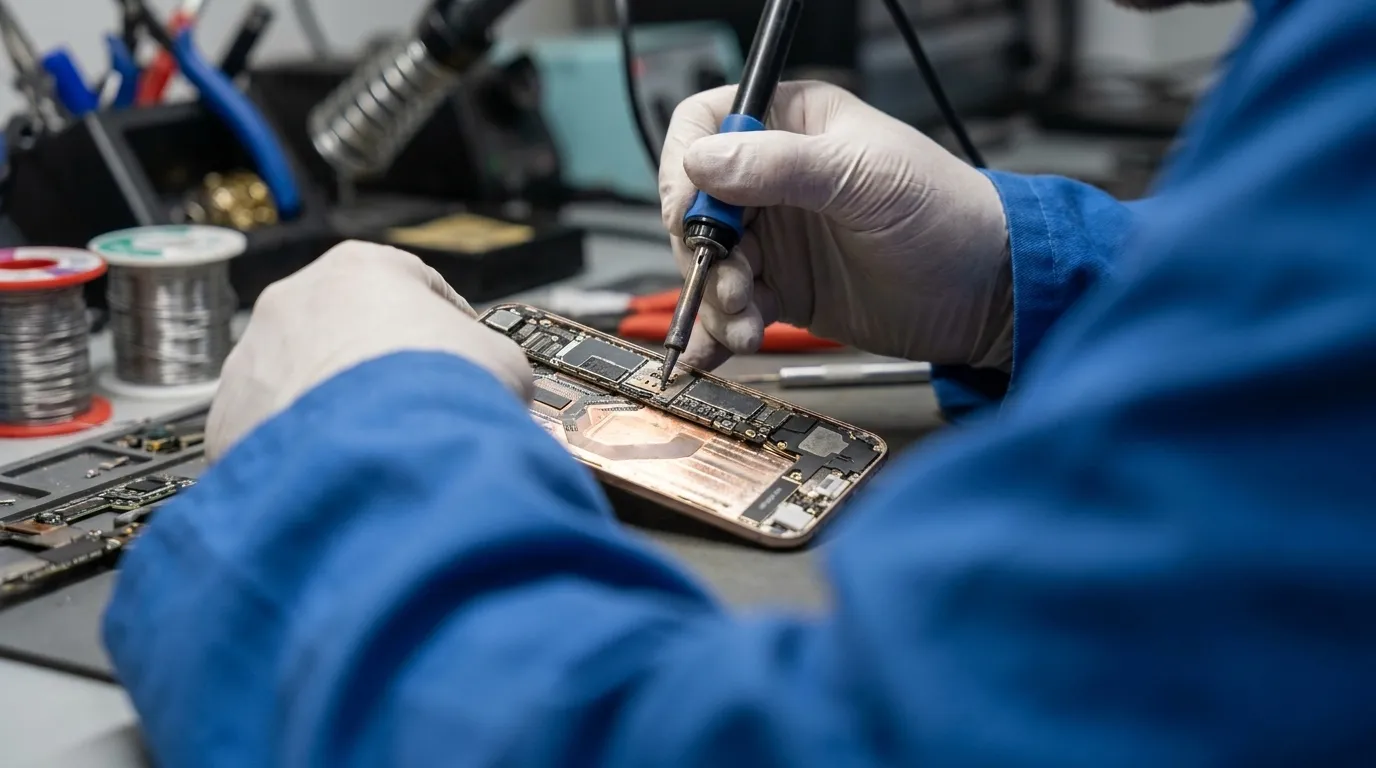
Key takeaways for 2026 mobile ITAD planning
- Right-to-repair statutes in Colorado, Washington and Texas expand parts and documentation access, raise secondary-market values and require granular chain-of-custody records.
- ASC-authorized repair capability converts expanded parts access into compliant, warranty-preserving repairs that reach higher resale grades.
- Per-device NIST SP 800-88 sanitization certificates and continuous chain-of-custody documentation function as mandatory compliance requirements under the new state statutes.
- Single-vendor consolidation of intake, L1–L4 repair, data sanitization, grading and remarketing closes documentation gaps and accelerates value recovery.
- Premier Logitech combines more than 20 OEM ASC authorizations, NIST/CMMC/SOC 2 controls and a DFW-plus-nearshore footprint to deliver compliant, high-recovery mobile ITAD programs, and lifecycle experts are available for program design support.
2026 right-to-repair statutes and resale dynamics
As of mid-2026, seven U.S. states have enacted right-to-repair statutes covering consumer electronics and other equipment: New York, California, Minnesota, Colorado, Oregon, Massachusetts and Washington. Three statutes directly affect enterprise mobile fleets and their ITAD programs.
Colorado’s HB24-1121 took effect Jan. 1, 2026, and requires manufacturers to provide parts, tools and repair documentation for phones, tablets, laptops and similar devices. Lawmakers rejected a broad critical-infrastructure exemption, so the statute remains fully in force.
Washington’s HB 1483 took effect July 27, 2025, and covers digital electronics first sold or used on or after July 1, 2021. The statute also prohibits parts-pairing practices that reduce device functionality after independent repair.
Texas H.B. 2963 takes effect Sept. 1, 2026, and requires manufacturers to make documentation, parts and tools available to independent repair providers on fair and reasonable terms for digital electronic equipment sold in Texas on or after that date.
On the resale side, Recommerce’s 2026 Trade-In Index reports the average smartphone trade-in value reached €189, a more than 10% increase from €170 in 2025. In the U.S. market, OEM-certified and carrier-certified refurbished devices command a substantial share of total refurbished smartphone market value, reflecting strong enterprise preference for warranty-backed units. Enterprise and B2B bulk procurement of refurbished device fleets continues to grow and represents a significant share of unit volume.
Intake and triage for compliant mobile ITAD
A compliant 2026 mobile ITAD intake process starts before devices leave the enterprise. MDM unenrollment from platforms such as Microsoft Intune, Jamf Pro or VMware Workspace ONE must occur at the client site before device wipe. Performing the wipe first leaves iOS devices Activation Locked and Android devices subject to Factory Reset Protection, which blocks resale and complicates compliance.
At intake, each asset is recorded by serial number, asset tag, make, model and condition, which creates a serialized manifest for reconciliation and exception review. With that baseline inventory established, IMEI and status checks then identify blocked, blacklisted, reported-lost, financed or locked devices that carry commercial risk. Early identification keeps those units out of resale workflows and reduces downstream liability.
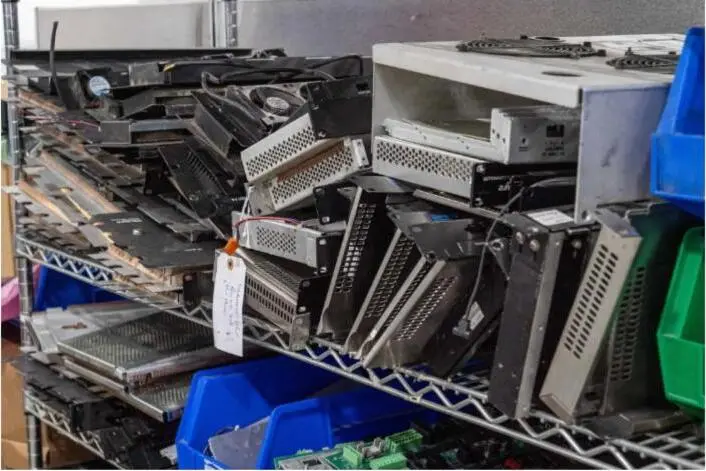
Under the new state statutes, chain-of-custody continuity from collection through final disposition functions as a compliance requirement rather than a best practice. Texas ITAD programs must produce continuous chain-of-custody records with timestamps and operator names, structured for rapid retrieval during examinations by the Texas attorney general.
Meeting these multi-state chain-of-custody requirements at enterprise scale requires a logistics footprint that supports collections across all active statute jurisdictions while maintaining unified tracking. Premier Logitech operates three DFW facilities with nearshore operations in Laredo and Nuevo Laredo, providing that footprint for multi-site enterprise collections. Real-time tracking connects every intake event to a device-level record from the moment custody transfers.
Depot repair depth and ASC authorization
Right-to-repair statutes expand parts and documentation access, but access alone does not produce compliant, warranty-preserving repairs. Authorized Service Center status determines whether a repair uses genuine parts, manufacturer-approved tooling and trained technicians. Because resale buyers and remarketing channels verify these factors when grading devices, ASC-authorized repairs directly affect the grade a device achieves at resale and whether OEM warranty coverage survives the repair.
Because ASC-authorized repairs preserve OEM warranty coverage and use genuine parts, devices that previously moved to scrap for compliance reasons can now qualify for higher resale grades. Right-to-repair laws enacted across multiple states expand parts access, which allows investment recovery teams to shift units from scrap into higher-grade resale channels where they resell for more and remain in service longer. Capturing that uplift requires repair capability at L1 through L4 depth, from cosmetic and battery work through board-level diagnostics, performed under OEM authorization.
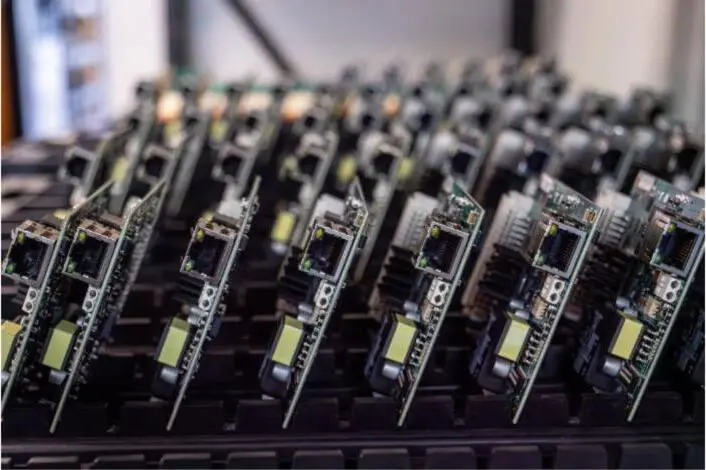
Premier Logitech holds more than 20 OEM ASC authorizations and processes more than 40,000 repairs per week across its DFW facilities. That scale supports enterprise programs running concurrent device refreshes across multiple OEM brands while keeping the workflow with a single provider.
Secure data wipe aligned to NIST 800-88
NIST SP 800-88 is the standard most U.S. government agencies and much of the private sector rely on for media sanitization, defining Clear, Purge and Destroy categories with guidance for mobile devices. IEEE 2883, referenced directly in the current version of NIST 800-88, provides specific guidance for SSDs, flash memory and hybrid drives.
NIST 800-88 logical sanitization for mobile devices requires cryptographic erasure or full overwrite using software that produces a per-device erasure report meeting R2v3 Appendix B traceability requirements, not a manual factory reset or batch certificate. Each mobile device must receive an individual certificate of sanitization documenting the IMEI or serial number, sanitization method, date performed and pass or fail verification result.
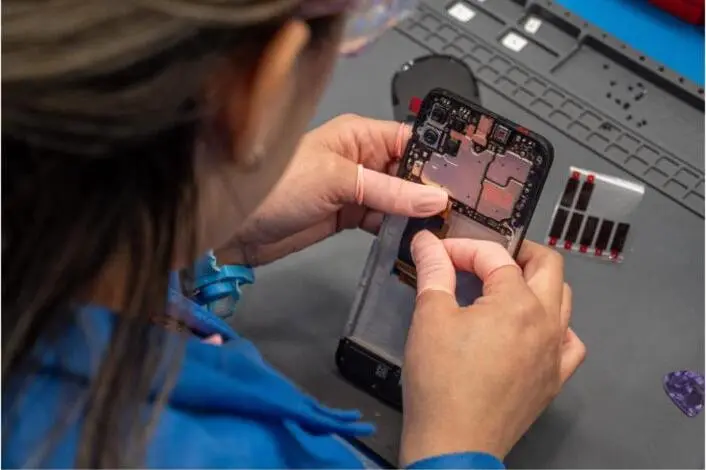
Premier Logitech’s data sanitization operations follow SOC 2 and CMMC controls, which support the documentation requirements of government agency clients and telecom carriers operating under federal contract obligations. These controls align per-device certificates with broader security and compliance frameworks.
Grading standards and refurbishment outcomes
Expanded parts access under 2026 statutes directly affects grading outcomes. Devices that previously could not reach a higher cosmetic or functional grade can now be restored to Grade A or B condition, which increases secondary-market value and extends useful life.
Automated diagnostic and grading technologies support high yield rates for refurbished output, which means more devices reach resale-ready condition instead of moving to scrap. Because devices lose resale value as they age, grade uplift through authorized repair acts as a direct lever on net recovery value. The difference between a Grade B device and a scrap unit can represent significant value per asset.
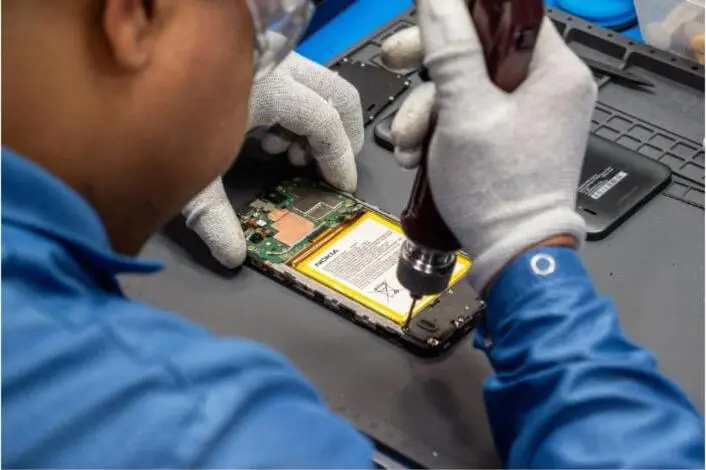
Premier Logitech applies defined grading standards aligned to OEM warranty compliance requirements and attaches device-level grade records to each serial number before secondary-market release. This structure gives remarketing channels and enterprise buyers clear, consistent quality signals.
Remarketing channels and redeployment options
Recommerce data shows that consumers recover substantial value when trading in newer device models. Enterprise fleets that cycle devices on two- to three-year schedules align their refresh timing with this same peak recovery window, which supports stronger financial outcomes.
The U.S. refurbished smartphone market is projected to grow substantially in 2026, with the product mix shifting toward higher-grade and newer models. Premier Logitech routes eligible devices through remarketing channels that support TAA-compliant redeployment for government and enterprise clients, along with secondary-market resale for devices exiting service. This mix balances compliance needs with revenue recovery.
Compliance reporting for audit-ready ITAD
Documentation in repair-enabled ITAD workflows must include chain-of-custody records from intake through final disposition, certificates of data destruction and repair records describing what was fixed, with which parts and to what standard. These elements create a traceable history for every asset.
Final reporting must show what was received, how each asset was processed and how data-bearing devices were handled, including a serialized inventory, chain-of-custody log, data sanitization report, Certificate of Data Destruction and disposition and recovery report. Together, these reports provide a complete compliance picture.
Premier Logitech produces audit-ready records linking every serial number to its sanitization event, repair history and final disposition path. Reporting aligns to CMMC, NIST and SOC 2 frameworks, which supports clients subject to federal contract requirements, state attorney general examinations and internal ESG reporting obligations.
Lifecycle experts can walk through Premier Logitech’s compliance reporting capabilities for enterprise mobile ITAD programs.
Questions for evaluating any ITAD provider
Lifecycle and supply-chain leaders can use the following questions when evaluating a mobile ITAD partner for 2026 programs:
- Does the provider hold ASC authorizations for the OEM brands in the enterprise fleet, and can those authorizations be verified directly with the manufacturer?
- Does the provider produce per-device sanitization certificates referencing IMEI or serial number, sanitization method and verification result, meeting R2v3 Appendix B requirements?
- Can the provider consolidate repair, data sanitization, grading and remarketing under a single contract with unified chain-of-custody documentation?
- Does the provider maintain compliance certifications that satisfy the reporting requirements of government agency and telecom carrier clients?
- Has the provider updated its intake and documentation workflows to reflect the 2026 right-to-repair statutes in Colorado, Washington and Texas, including parts traceability for authorized repairs?
Frequently asked questions about Premier Logitech
How does Premier Logitech handle enterprise mobile-device volumes under 2026 right-to-repair laws?
Premier Logitech processes enterprise mobile device programs through its DFW facilities and nearshore operations, with repair capacity that supports large-scale concurrent refreshes. The intake workflow captures each device by serial number and IMEI at receipt, verifies MDM unenrollment status and routes units through triage before repair or sanitization begins. Under 2026 right-to-repair statutes in Colorado, Washington and Texas, parts and documentation access has expanded for authorized providers, and Premier Logitech’s ASC authorizations for more than 20 OEM brands support repairs using genuine parts and manufacturer-approved processes. This structure produces the repair records and chain-of-custody documentation those statutes and enterprise compliance programs require.
Does Premier Logitech maintain OEM warranty compliance for repaired devices?
Premier Logitech holds Authorized Service Center status with more than 20 OEM brands, so repairs use genuine parts, manufacturer-approved tooling and trained technicians under the terms of each OEM authorization. Device-level grade records attach to each serial number before secondary-market release, and repair documentation references the parts used and the standard applied to the repair. This approach supports OEM warranty compliance for devices that remain within their original warranty period and meets the documentation expectations of enterprise remarketing channels that require warranty-backed inventory.
Can Premier Logitech consolidate repair, data sanitization and remarketing into one contract?
Premier Logitech operates as a single-vendor lifecycle partner that covers intake, MDM unenrollment support, L1–L4 depot repair, NIST SP 800-88-aligned data sanitization, cosmetic grading, refurbishment and remarketing or TAA-compliant redeployment under one program. Clients receive unified chain-of-custody documentation linking every serial number from intake through final disposition, with compliance reporting aligned to NIST, CMMC and SOC 2 frameworks. This consolidation removes multi-vendor handoffs that introduce documentation gaps and slow value recovery on enterprise mobile fleets.
Conclusion: single-vendor programs for 2026 mobile ITAD
The 2026 right-to-repair statutes in Colorado, Washington and Texas have expanded parts and documentation access in ways that directly improve mobile device recovery rates for enterprise ITAD programs. Rising secondary-market values, documented by Recommerce’s 2026 Trade-In Index, strengthen the financial case for repair-first workflows that keep devices in service longer and in higher grades.
Realizing that opportunity requires ASC-authorized repair capability, per-device NIST-compliant sanitization and audit-ready compliance reporting, delivered through a single national partner that scales to enterprise volumes. The capabilities described throughout this article, including ASC authorizations across major OEM brands, compliance controls aligned to federal frameworks and a national operational footprint, converge in Premier Logitech’s single-vendor mobile ITAD program.
Talk to a lifecycle expert to assess how Premier Logitech’s model fits an enterprise mobile ITAD strategy for the 2026 right-to-repair landscape.
