Key Takeaways
-
Smartphone battery replacement costs in 2026 vary by brand and service channel, with official service centers typically charging more than third-party authorized shops.
-
Apple, Samsung and Google Pixel each have distinct pricing tiers, with Pixel service often costing more than iPhone or Galaxy models.
-
Battery health below 80% is the standard threshold for replacement, with most devices needing service after two to three years of daily use.
-
Professional repair at authorized centers preserves warranty and compliance documentation, while DIY options carry risks such as voided warranties and safety concerns.
-
Premier Logitech offers OEM-authorized, compliance-certified battery replacement programs that help enterprises extend device lifecycles and reduce total cost of ownership; connect with a lifecycle specialist to get started.
Phone vs. Car Battery Replacement: Confirming Search Intent
Search results for battery replacement cost frequently surface car battery content alongside smartphone results. The two categories share no meaningful overlap in pricing, process or parts.
Car battery replacement for a standard sedan costs more than smartphone service, involves a 12V lead-acid or AGM unit and on newer luxury vehicles often requires dealer-level BMS reprogramming. In contrast, smartphone battery replacement is a precision electronics service performed on a lithium-ion cell inside a sealed chassis, with different tools, skills and cost drivers. Readers seeking car battery pricing should use a dedicated automotive resource instead of this guide.
Apple iPhone Battery Replacement Costs 2026
Apple Store and Apple Authorized Service Provider pricing for out-of-warranty iPhone battery replacement varies by model. Independent shops charge less and DIY kits represent the lowest upfront cost with added complexity.
These out-of-warranty rates apply only when no coverage is active. AppleCare+ covers battery replacement at no cost when Maximum Capacity falls below 80%. Without coverage, official service includes a genuine Apple battery and labor.
Samsung Galaxy Battery Replacement Costs 2026
Samsung official service and authorized providers price battery replacement based on model tier. Foldable devices carry higher costs because the chassis design increases labor time and complexity.
Google Pixel Battery Replacement Costs 2026
Google Pixel battery service at authorized shops costs more than Apple and Samsung flagship rates, typically $100–$180 versus $69–$119 for Apple and $79–$129 for Samsung. Higher pricing reflects parts availability, device design and a smaller authorized service network.
Signs a Phone Battery Needs Replacement
Battery degradation follows a measurable pattern that affects runtime and reliability. When battery health drops below 80% daily runtime falls and overnight standby drain rises. At this threshold, performance issues become persistent and replacement restores normal operation.
These symptoms signal that battery capacity has degraded to the point where replacement will restore normal performance:
-
Battery health reading below 80% in device settings
-
Unexpected shutdowns at low reported charge
-
Device running hot during routine tasks
-
Charging to 100% but draining within a few hours
-
Swollen or bulging back panel
Expected Smartphone Battery Lifespan
iPhone lithium-ion batteries are rated for a set number of full charge cycles before degrading to 80% capacity on models through iPhone 14 and more cycles on iPhone 15 and newer. For most users that translates to the timeline mentioned above.
Some models are designed to reach 80% capacity within a defined cycle count or about three years even under careful use. Heat shortens this window by accelerating chemical wear. Gaming while using a fast charger increases annual capacity degradation compared to normal-temperature use, so heavy workloads at high temperatures bring replacement forward.
Evaluating Battery Replacement Value in 2026
Dead batteries and cracked screens, not new model launches, are the primary drivers of US smartphone purchases according to Recon Analytics data tracking more than 104000 US respondents. A battery service often defers a device purchase and keeps hardware in service longer.
The decision framework depends on several factors that relate device age, coverage and fleet strategy:
-
Device age under three years: Battery replacement is almost always cost-effective.
-
Device age three to five years: Weigh battery cost against current resale value and software support timelines.
-
Device age over five years: Replacement may be justified only if the device is otherwise fully functional and software updates continue.
-
Active warranty or AppleCare+: Check coverage before paying out of pocket.
-
Enterprise or fleet devices: Depot-level battery service at scale reduces total cost of ownership significantly versus bulk device replacement.
For organizations managing large device fleets the calculus shifts further toward repair. Explore fleet battery refresh programs that extend device life across thousands of units.
DIY Battery Replacement Risks vs. Professional Service
DIY iPhone battery replacement with a quality aftermarket battery and basic tool kit costs less than professional service. The savings come with trade-offs that affect safety, reliability and long-term value.
DIY risks include:
-
Voiding remaining manufacturer warranty
-
Damaging flex cables, display connectors or waterproofing seals
-
Lithium-ion puncture risk if tools slip during adhesive removal
-
No warranty on parts or labor
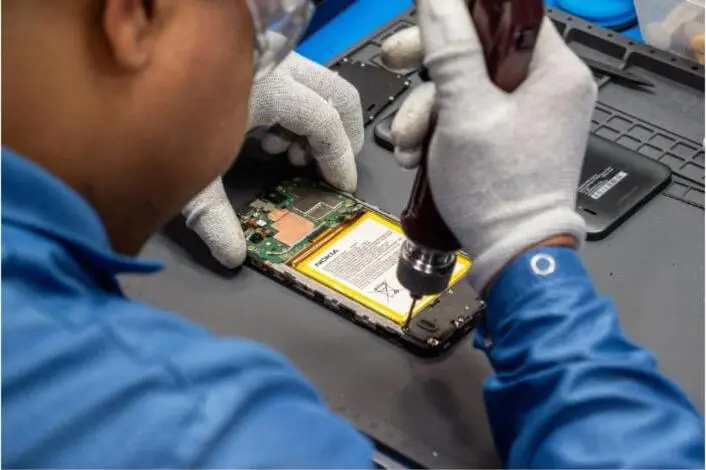
Professional repair at an authorized service center preserves warranty status by using OEM-grade or certified parts and creates a documented service record that supports enterprise asset management and government compliance programs.
Selecting an Authorized Service Provider
Not all repair shops carry the same credentials or process controls. For individual consumers the minimum standard is an OEM-authorized service center with certified technicians and a parts warranty. For enterprises, carriers and government agencies the requirements extend further to include security, compliance and scale.
These criteria form a practical checklist for evaluating a service provider in a consistent sequence from authorization to reporting:
-
OEM Authorized Service Center (ASC) status for the relevant brand
-
Documented chain of custody for devices containing sensitive data
-
Compliance certifications relevant to the organization’s requirements (TAA, ISO, NIST, CMMC, SOC II)
-
Capacity to handle volume, not just walk-in single-unit service
-
Secure data handling and destruction capabilities
-
Transparent repair reporting and asset tracking
Premier Logitech holds ASC authorizations for multiple OEM brands and operates under TAA, ISO 9001/14001, NIST, CMMC and SOC II frameworks. The company’s depot repair capabilities span Level 1 through Level 4 service with secure chain of custody and compliance reporting built into every program. Premier Logitech serves OEMs, telecom providers, enterprises and federal agencies from three DFW facilities with nearshore operations in Mexico.
For organizations that need a single partner across repair, refurbishment, returns processing and asset recovery Premier Logitech operates as both a full lifecycle manager and a modular service provider. Assess which service model fits your program based on scale and compliance requirements.
Conclusion and Next Steps
Smartphone battery replacement in 2026 is a cost-effective alternative to device replacement for most users. Official service center pricing varies depending on brand and model. Third-party authorized shops offer lower rates with comparable quality when properly vetted. DIY suits technically confident users on older, lower-value devices that no longer carry warranty coverage.
For enterprises, carriers and government agencies managing device fleets the decision centers on program design, authorized repair channels, compliance documentation, secure data handling and asset recovery value rather than single-unit pricing.
Premier Logitech delivers that program infrastructure at scale with the OEM authorizations, compliance certifications and repair capacity to support high-volume battery refresh and reverse logistics programs nationwide. Build a battery replacement program that reduces costs and extends fleet life.
Frequently Asked Questions
What is the average cost of smartphone battery replacement in 2026?
Out-of-warranty battery replacement at manufacturer service centers averages between iPhone, Samsung Galaxy and Google Pixel models. Third-party authorized shops typically charge less than official service centers. DIY kits with parts and tools represent the lowest upfront cost but carry warranty and safety trade-offs. Consumers with active AppleCare+ or Samsung Care+ coverage may qualify for no-cost or reduced-cost battery service if health falls below 80%.
How does Premier Logitech support enterprise battery replacement programs?
Premier Logitech provides depot repair services at Level 1 through Level 4, including battery replacement, for enterprise and government device fleets. The company holds ASC authorizations for more than 20 OEM brands, ensuring repairs meet manufacturer standards. Programs include secure chain of custody, compliance reporting under TAA, ISO, NIST, CMMC and SOC II frameworks, asset tracking and recovery and rapid exchange capabilities. Organizations can engage Premier Logitech for end-to-end lifecycle management or for battery and depot repair as a standalone service.
When should a smartphone battery be replaced rather than the entire device?
Battery replacement is generally the better financial decision when the device is under three years old, the hardware is otherwise functional and software updates from the manufacturer continue. For devices three to five years old, the decision depends on current resale value, remaining software support and the cost of replacement. For enterprise fleets, battery refresh programs extend device lifecycles and reduce total cost of ownership compared to bulk device replacement cycles.
What are the risks of using a non-authorized repair shop for battery replacement?
Non-authorized shops may use aftermarket batteries that do not meet OEM specifications, which can affect battery health reporting, device performance and safety. Repairs at non-authorized providers typically void remaining manufacturer warranty. For enterprise and government devices, non-authorized repair may also create compliance gaps in chain-of-custody documentation and data security handling. Authorized service centers use certified parts, provide documented service records and maintain compliance with OEM and regulatory requirements.
How long does a smartphone battery typically last before needing replacement?
Most smartphone batteries are rated to retain 80% of original capacity after a set number of full charge cycles, which for average daily users translates to roughly two to three years. Usage patterns significantly affect this timeline. Frequent fast charging at high temperatures, gaming under load and overnight charging habits all accelerate degradation. Once battery health falls below 80% users typically experience noticeably shorter runtime, unexpected shutdowns and increased overnight drain. At that threshold replacement restores near-original performance at a fraction of device replacement cost.
