Key takeaways for NIST-traceable depot repair
- NIST does not certify repair facilities. Buyers need documented NIST-traceable calibration with unbroken measurement chains and quantified uncertainty.
- Verification depends on ISO/IEC 17025:2017 accreditation, explicit traceability statements on certificates and documented technician training and environmental controls.
- Compliant partners hold overlapping credentials including ISO 9001, ISO 14001, CMMC, SOC 2, TAA compliance and OEM ASC authorizations.
- High-volume programs require proven throughput, geographic footprint and chain-of-custody procedures that satisfy CMMC and NIST SP 800-88 requirements.
- Premier Logitech consolidates compliance, authorization and capacity requirements under one program. Discuss depot repair needs with a lifecycle expert.
What “NIST certified depot repair” actually represents
No U.S. government body issues a “NIST certification” to repair facilities. NIST disseminates traceability through calibrated reference standards, interlaboratory comparisons and participation in the CIPM Mutual Recognition Arrangement, not through facility approvals. When a vendor claims NIST certification, buyers should treat that language as marketing shorthand and request documented calibration certificates instead.
How NIST traceable calibration supports depot repair
NIST traceability is a documented unbroken chain of calibrations that links a measurement result back to NIST or another recognized national metrology institute. Each link in that chain contributes to the total measurement uncertainty, which must be documented and included in the reported uncertainty.
In a depot repair context every test instrument used to validate a repaired IT asset must carry calibration certificates that show that chain. Maintaining that chain requires documented measurement uncertainty at each level, which depends on appropriate accuracy ratios for standards, competent personnel following documented procedures and controlled environmental conditions during calibration.
For enterprise and government IT assets this matters because test results that cannot be traced to a national standard are legally and contractually unverifiable. Agencies operating under CMMC, TAA or SOC 2 frameworks require defensible measurement records, not informal vendor assurances. Given these stakes, buyers benefit from a systematic approach to verification.
Discuss program traceability requirements with a lifecycle expert.
Steps to verify NIST traceability in a repair provider
Buyers evaluating depot repair vendors can follow a structured verification process. The following steps establish whether a provider’s traceability claims are substantiated.
- Request calibration certificates for all test equipment used in the repair workflow and confirm each certificate includes an explicit traceability statement and quantified uncertainty values.
- Verify that the calibration laboratory supplying those certificates holds ISO/IEC 17025:2017 accreditation from an ILAC MRA signatory such as A2LA or ANAB for the specific measurement parameters and ranges used.
- Confirm that the scope of accreditation covers the parameters relevant to the equipment being repaired. A certificate issued outside the accredited scope remains traceable but is not accredited.
- Review the provider’s equipment master list for unique IDs, calibration intervals and records of out-of-service instruments.
- Check for technician training records and environmental condition logs, which regulatory agencies such as the FDA and FAA require in addition to traceability documentation.
Common non-conformances include missing traceability statements on certificates, broken chains from expired reference standards, use of unaccredited providers and inadequate measurement uncertainty analysis. Procurement specifications should explicitly require ISO/IEC 17025:2017 accreditation rather than accepting vague “NIST traceable” language.
Service scope and OEM ASC authorizations
NIST traceability addresses measurement integrity. OEM Authorized Service Center status addresses whether a provider is contractually and technically qualified to repair specific branded equipment. These remain separate requirements and both carry weight.
An ASC authorization means the OEM has vetted the provider’s technicians, tooling, parts sourcing and quality processes for that brand. Repairs performed outside an authorized network may void warranties, create liability exposure and fail audit requirements for government programs.
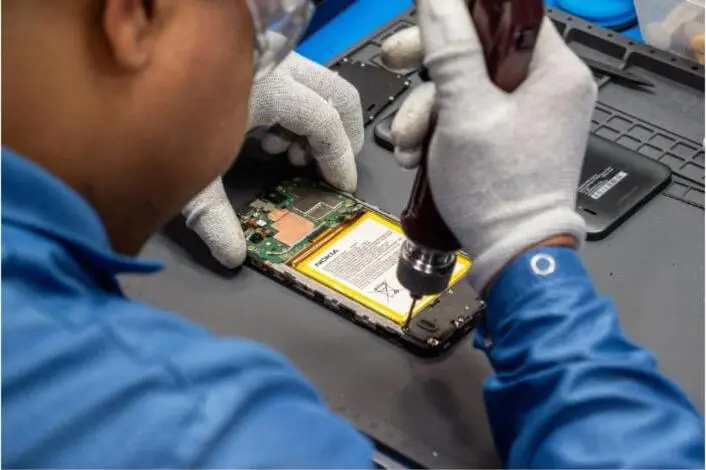
Premier Logitech holds ASC authorizations from more than 20 OEM brands. That breadth allows enterprise and government buyers to consolidate multi-brand device fleets under a single compliant repair partner instead of managing separate vendor relationships for each OEM.
Quality and compliance frameworks for depot repair
A compliant depot repair partner must satisfy multiple overlapping frameworks at the same time. The following credentials represent a current baseline for enterprise and government programs.
- ISO 9001: Quality management system that covers process consistency, corrective action and documented calibration with uncertainty.
- ISO 14001: Environmental management system that governs responsible handling of electronic waste and hazardous materials.
- NIST traceability: Documented calibration chain for all test and measurement equipment used in repair workflows.
- CMMC: Cybersecurity Maturity Model Certification required for contractors that handle controlled unclassified information in the defense supply chain.
- SOC 2: SOC 2 Type 2 evaluates the design and operating effectiveness of controls relevant to the applicable Trust Services Criteria (security mandatory, others optional) over a period typically six to twelve months.
- TAA compliance: Trade Agreements Act requirements for government procurement that ensure products and services originate from designated countries.
Premier Logitech maintains TAA compliance, ISO quality frameworks, NIST traceability and CMMC and SOC 2 credentials and holds CAGE Code 4WAJ9 as a pre-vetted partner for U.S. federal government programs.
Scalability and volume capacity for large programs
Compliance credentials create value only when a provider can absorb enterprise or government repair volumes without degrading quality or turnaround. Outsourced depot repair typically delivers meaningful operational savings compared to in-house repair once the complete cost picture including tooling, parts inventory, training and surge capacity is considered. Those savings disappear when a provider lacks the infrastructure to scale.
Evaluation criteria for volume capacity include weekly repair throughput, geographic footprint for inbound and outbound logistics and the ability to handle multi-brand, multi-category device fleets under one program.
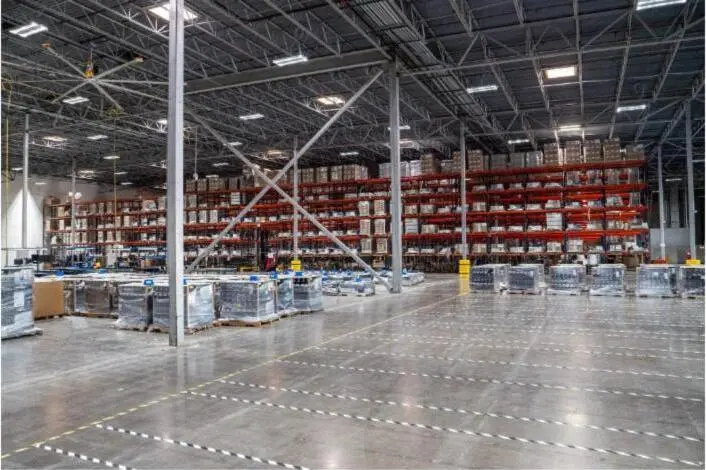
Premier Logitech processes more than 40,000 repairs per week across three DFW facilities with nearshore operations in Laredo and Nuevo Laredo, Mexico. That footprint provides proximity to one of the world’s busiest air cargo hubs and cost-effective capacity for high-volume programs.
Consult a lifecycle expert to evaluate current repair volume against available capacity.
Operational visibility and data security controls
Chain-of-custody documentation and data sanitization sit at the core of enterprise and government programs. Data breaches cost an average of $4.44 million per incident globally, which drives adoption of NIST SP 800-88 sanitization in reverse logistics programs.
Best-practice programs use locked bins, GPS tracking, tamper-evident materials and serial-level chain-of-custody documentation with timestamps and signatures. Premier Logitech applies NIST SP 800-88 media sanitization across repair and ITAD workflows and operates under SOC 2 controls that govern access logging and incident response.
NIST SP 800-171 maintenance controls require prior authorization and supervision of personnel lacking appropriate clearances, encryption and multi-factor authentication for remote maintenance sessions and comprehensive logging of all maintenance actions. Premier Logitech’s CMMC posture aligns with these requirements for programs that involve controlled unclassified information.
End-to-end lifecycle integration benefits
Fragmented vendor stacks create compliance gaps, visibility gaps and cost inefficiencies. A provider that handles sourcing, repair, configuration, fulfillment and ITAD under one program reduces handoff risk and simplifies audit trails.
Premier Logitech operates as both a single-source lifecycle partner and a modular services provider. Clients can engage the full lifecycle from procurement through recycling or select individual services such as depot repair, configuration or transportation on a standalone basis. That flexibility allows programs to consolidate over time without a disruptive cutover.
Accreditation and verification checklist
Before awarding a depot repair contract, buyers should confirm that the provider holds current documentation for each credential outlined in the compliance frameworks section above. Buyers should also verify the following operational requirements.
- NIST-traceable calibration certificates with explicit traceability statements and quantified uncertainty values for all test equipment
- ISO/IEC 17025:2017 accreditation from an ILAC MRA signatory (A2LA or ANAB) for relevant measurement parameters
- OEM ASC authorizations that cover every brand in the device fleet
- NIST SP 800-88 sanitization procedures with certificates of data destruction
- Serial-level chain-of-custody documentation with timestamps and signatures
- CAGE Code registration for federal programs
Vendor comparison framework for depot repair
Most depot repair providers satisfy one or two dimensions of this checklist. Calibration-focused labs may hold ISO/IEC 17025 accreditation but lack OEM ASC authorizations or the volume capacity for enterprise programs. Regional repair shops may hold ISO 9001 but have no CMMC posture or SOC 2 report. Large 3PLs may offer scale but lack OEM relationships and government compliance credentials that federal buyers require.
The practical gap is consolidation. A buyer that works with separate providers for calibration, OEM-authorized repair, data sanitization and ITAD must manage multiple audit trails, multiple compliance attestations and multiple points of failure. Premier Logitech addresses five evaluation dimensions traceability, OEM authorization, compliance frameworks, volume capacity and data security under one program with a single point of contact and unified reporting.
Frequently asked questions
Does NIST certify depot repair facilities
NIST does not certify depot repair facilities. NIST accredits calibration laboratories through its NVLAP program but provides no information on certifications or services for repair facilities. NIST disseminates measurement traceability through calibrated reference standards and interlaboratory comparisons. Buyers should require NIST-traceable calibration, which means documented certificates that show an unbroken chain of comparisons back to national standards, not a facility certification that does not exist.
What is the difference between NIST traceability and ISO/IEC 17025 accreditation
NIST traceability is a property of a measurement result. It asserts that a chain of comparisons with documented uncertainty links a device’s reading to a NIST-maintained standard. ISO/IEC 17025 accreditation is an independent third-party validation of laboratory competence, process rigor and measurement uncertainty management. These remain separate requirements. For defense and regulated procurement, accreditation provides the stronger and more verifiable requirement.
What compliance frameworks apply to government depot repair programs
Government depot repair programs typically require TAA compliance for product sourcing, CMMC certification for work that involves controlled unclassified information, NIST SP 800-88 sanitization for data-bearing media and ISO 9001 quality management documentation. Federal programs also require a CAGE Code for vendor registration. SOC 2 Type 2 is the standard enterprise buyers request for 3PL and reverse logistics providers that handle sensitive assets.
How does NIST SP 800-88 apply to depot repair
NIST SP 800-88 defines three sanitization methods: Clear, Purge and Destroy. In a depot repair workflow any device that leaves the customer’s custody must be sanitized before repair begins and again before return if data-bearing components were accessed. Providers should issue certificates of data destruction with serial numbers for every device processed, which supports audit readiness under CMMC, HIPAA, GDPR and CCPA requirements.
What should buyers ask when evaluating a depot repair vendor’s data security posture
Buyers should request the vendor’s most recent SOC 2 Type 2 report and review the trust service criteria covered. Buyers should also request documented NIST SP 800-88 sanitization procedures, chain-of-custody logs with serial-level tracking and evidence of CMMC certification if the program involves CUI. Buyers should confirm that the vendor’s maintenance policies define scope by data classification, require preapproval for work that could expose sensitive data and embed confidentiality and breach-notification obligations into subcontractor agreements.
Conclusion: Selecting a compliant depot repair partner
The compliance landscape for depot repair continues to grow more demanding. Supply chain breach rates are rising, CMMC enforcement is expanding and NIST SP 800-88 sanitization now functions as a baseline expectation rather than a differentiator. Buyers that rely on vague “NIST certified” claims without verifying the underlying documentation face audit exposure, warranty voidance and data liability.
Premier Logitech satisfies every item on the accreditation and verification checklist above, including NIST-traceable calibration, ISO 9001 and 14001, CMMC, SOC 2, TAA compliance, CAGE Code registration, more than 20 OEM ASC authorizations and the volume capacity to support enterprise and government programs at scale.
Connect with a lifecycle expert for a compliance-focused assessment of a depot repair program.
