Last updated: August 18, 2026
Key Takeaways for IT Hardware Transportation
- IT hardware supply chains face unique risks including fragmented visibility, elevated damage rates, compliance exposure and reduced asset recovery value that generic freight guidance does not address.
- A seven-step operating model maps asset flows, builds total landed-cost models, establishes service-tier rules, deploys IoT tracking, embeds compliance checkpoints, integrates forward and reverse logistics and measures outcomes through targeted KPIs.
- Real-time IoT visibility, tamper-evident chain-of-custody controls and NIST-aligned data sanitization reduce theft, damage and regulatory risk while protecting high-value electronics during transit.
- Control-tower integration of forward and reverse flows removes duplicated costs, visibility gaps and unresolved handoff failures that arise when multiple vendors manage packing, transport and disposition separately.
- Premier Logitech serves as a single-source lifecycle partner that applies this framework for OEMs, enterprises and government agencies; talk to a lifecycle expert to build a compliant, cost-effective IT hardware logistics program.
Step 1: Map End-to-End Asset Flows and SKU-Level Logistics Requirements
Effective optimization starts with a complete picture of how assets move across the network. Without that view, service-tier decisions and carrier selections rest on assumptions rather than data.
Key inputs for the mapping exercise include:
- SKU catalog with unit value, weight, fragility classification and regulatory status
- Origin and destination nodes such as manufacturing, depots, end-user sites and return centers
- Dwell-time data at each node
- Handoff ownership at every custody transfer point
- Applicable trade-compliance flags such as TAA, ITAR and EAR
Key outputs include a lane-level flow map, a custody-transfer register and a risk-ranked list of lanes by asset value and handoff frequency. Cross-functional teams in procurement, IT operations, compliance and finance should validate the map before any downstream decisions. Gaps in the map become gaps in control.
Step 2: Build a Total Landed-Cost Model for IT Hardware
Total landed cost for IT hardware extends far beyond the freight rate. Packaging, insurance, compliance overhead and value-erosion risk all influence the true cost of each move.
A complete cost model should itemize:
- Base freight rate by mode and lane
- Packaging materials and labor
- Insurance premiums based on declared value
- Compliance documentation and filing costs
- Value erosion from delays, damage or extended storage
Modeling these components at the lane and SKU level reveals where cost-reduction levers have the most impact. It also highlights where underinvestment in packaging or tracking creates downstream liability.
Step 3: Align Service-Tier Rules and Carrier Criteria with Cost Models
Once total landed costs are mapped by lane and SKU, the next step is determining which assets justify premium handling. Not all IT hardware requires the same transportation treatment.
A service-tier framework matches mode, packaging and carrier requirements to asset characteristics based on the cost and risk profile defined in Step 2. Once tiers are defined, carrier selection must align with the exposure level of each tier.
For Tier 1 and Tier 2 assets, where theft and damage exposure is highest, carrier-selection criteria should include C-TPAT certification status, damage claim history by lane and the ability to provide GPS-tracked, sealed transport with tamper-evident seals and background-checked drivers. These requirements address the elevated security and handling risks that justify premium service tiers.
Step 4: Deploy Real-Time Visibility and IoT Tracking on High-Risk Lanes
High-value IT hardware requires more than generic carrier tracking. IoT sensor-based visibility captures location, temperature, humidity, shock, light exposure and route deviation in real time, then sends data to centralized platforms for continuous monitoring.
Documented outcomes from IoT visibility programs include fewer cargo theft incidents and fewer handling damage claims across high-value supply chains. For electronics, IoT sensors monitor humidity to prevent static discharge and corrosion and detect shock impacts that drive transportation damage. Operational gains include faster issue resolution through shorter investigation time.
A practical adoption sequence for IoT tracking includes:
- Identifying the three to five highest-risk lanes by asset value and carrier handoff count
- Configuring per-lane shipment templates with alert thresholds appropriate to the hardware type
- Setting higher alert frequencies through known high-theft corridors
- Scaling across the network after validating alert-response workflows
Real-time condition monitoring and structured alert-response workflows reduce risk for high-value assets. The financial motivation for targeted cargo theft remains strong as server markets grow and AI GPU modules command high resale and black-market prices.
Step 5: Embed Security and Compliance Checkpoints in the Transport Flow
IT hardware transportation intersects several U.S. regulatory frameworks, so compliance checkpoints must sit inside the operating model. Post-shipment cleanup creates gaps and audit exposure.
Key frameworks and requirements include the following categories and references.
- Trade compliance: The Automated Commercial Environment (ACE) is the mandatory U.S. platform for processing imports and exports, and it requires detailed shipment data for all cross-border IT hardware movements. TAA compliance governs product sourcing for government contracts.
- Data security at disposition: NIST Special Publication 800-88 Revision 1 provides guidance for sanitization decisions based on confidentiality categorization of information and media types. Sanitization decisions should be finalized before assets leave the originating site.
- Chain-of-custody documentation: The HIPAA Security Rule (45 CFR Part 164 Subpart C), the FTC Safeguards Rule (16 CFR Part 314) and the FACTA Disposal Rule (16 CFR Part 682) impose direct duties on the disposal event for IT hardware, which makes chain-of-custody a controlled compliance requirement.
- CMMC and NIST for defense supply chains: Organizations supporting DoD programs must document handling procedures and access controls across the transportation lifecycle.
- Certificate of Data Destruction: HIPAA requires certain documents related to the disposal of protected health information to be retained for six years, but does not mandate specific certificates detailing asset serial numbers, sanitization methods or operators.
Talk to a lifecycle expert about compliance checkpoint design for a specific program.
Step 6: Integrate Forward and Reverse Flows Through a Control-Tower Framework
Forward and reverse logistics for IT hardware share lanes, carriers and compliance requirements, so separate programs often create visibility gaps, duplicated costs and unresolved handoff failures.
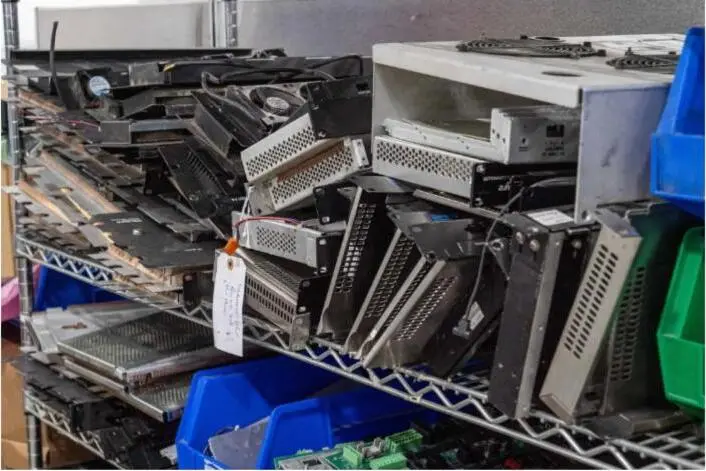
A control-tower framework provides a single operational view across both flows by connecting four critical integration points. Each point represents a handoff where fragmented systems often lose visibility or misroute assets.
- RMA management: RMA intake should begin with a portal that collects SKU identifiers, quantity, reason codes and a recommended disposition path before generating a traceable label. After intake, returns should follow a standardized grading system with rules that auto-generate next-step instructions.
- Depot repair linkage: Repair routing decisions at intake determine recovery value. Misrouting a resaleable asset to shredding destroys revenue, while pushing a failed drive into resale creates compliance risk.
- Asset recovery and remarketing: A value-first hierarchy should prioritize internal redeployment, then resale, component harvesting and responsible recycling to recover a portion of each asset’s value.
- Refresh-cycle alignment: Return journeys should be pre-booked against refresh cycles so retired equipment moves immediately rather than sitting in storage, which prevents value loss from quarterly delays.
Fragmented vendor models in which separate providers handle packing, transportation, data destruction and recycling often produce visibility breakdowns, duplicated records and unresolved handoff issues between stages. A single accountable partner operating under one chain of custody reduces these failure points.
Step 7: Pilot, Measure and Refine IT Hardware Transport Performance
Implementation should begin with a defined pilot scope, such as one asset class, one lane set or one business unit, before broader rollout. Performance tracking should use a balanced set of leading indicators that predict future outcomes and lagging indicators that measure results already achieved.
The table below organizes eight core KPIs by type, target direction and recommended review frequency.
| KPI | Type | Target Direction | Review Cadence |
|---|---|---|---|
| In-transit visibility coverage rate | Leading | Increase | Weekly |
| Alert-response time (IoT threshold breach to action) | Leading | Decrease | Weekly |
| Chain-of-custody compliance rate | Leading | Increase toward 100% | Weekly |
| Damage claim rate by lane and carrier | Lagging | Decrease | Monthly |
| Asset recovery rate (resale + redeployment) | Lagging | Increase | Monthly |
| Average return cycle time (RMA creation to disposition) | Lagging | Decrease | Monthly |
| Total landed cost per unit by tier | Lagging | Decrease | Quarterly |
| Sellable recovery rate (returns returned to sellable inventory) | Lagging | Increase | Monthly |
Quarterly reviews should assess whether service-tier rules, carrier assignments and IoT alert thresholds remain calibrated to the current asset mix and lane risk. The framework functions as a living operating model that evolves with the business.
Challenges and Mitigation in IT Hardware Transportation
Organizations encounter recurring challenges when implementing structured IT hardware transportation frameworks, and targeted mitigation improves results across programs.
Inaccurate asset data at shipment origin often stems from disconnected inventory systems and manual entry errors. Requiring serialized, item-level inventory capture at pickup and reconciling against expected records at intake before transport begins reduces these issues.
Unclear ownership at custody handoff points typically results from split responsibilities across multiple vendors. As noted in Step 6, fragmented models create visibility and handoff failures, so defining custody-transfer ownership in carrier and vendor contracts and using tamper-evident seals and timestamped digital logs at every handoff clarifies responsibility.
Non-compliant disposition of retired assets occurs when sanitization decisions are deferred until after transport or when methods are mismatched to media type. Finalizing sanitization method selection before assets leave the originating site and requiring per-device Certificates of Data Destruction aligned to NIST SP 800-88 Rev. 1 standards addresses this challenge.
Frequently Asked Questions on IT Hardware Logistics
How long does it take to implement a structured IT hardware transportation framework?
Implementation timelines depend on program scope, existing data quality and the number of lanes and asset classes involved. A focused pilot covering one asset tier and a defined lane set can often be operational within weeks. Full enterprise deployment, including control-tower integration and reverse logistics alignment, follows a phased approach. Data-center decommissioning projects, as a reference point, typically require several weeks from planning through final documentation.
What are the primary cost drivers in IT hardware transportation improvement?
The largest cost drivers include packaging specification, carrier selection by tier, in-transit damage rates, compliance overhead for cross-border or government shipments and asset value erosion from delays in the reverse logistics cycle. Total landed cost modeling, which accounts for all of these components together rather than freight rate alone, forms the foundation for identifying where investment in visibility, packaging or process redesign delivers the strongest return.
What skills or internal capabilities support this operating model?
Effective operation requires cross-functional alignment among logistics, IT operations, compliance and finance. Key capabilities include the ability to interpret IoT alert data and act on threshold breaches, familiarity with applicable regulatory frameworks such as NIST, HIPAA, TAA and CMMC and access to a transportation management system with freight audit and analytics functions. Organizations that lack these capabilities internally often engage a single-source lifecycle partner to provide them as a managed service.
How do U.S. regulatory requirements shape transportation decisions?
U.S. regulations affect transportation at multiple points across the lifecycle. Trade compliance requirements, including ACE filing and TAA sourcing rules, govern cross-border movement and government procurement. Data-security regulations, including the HIPAA Security Rule, the FTC Safeguards Rule and FACTA, impose chain-of-custody and sanitization requirements that must sit inside the transportation workflow, not after delivery. NIST SP 800-88 defines the sanitization methods that must match each media type before assets leave the originating site. For defense supply chains, CMMC requirements extend to documentation and access controls across the full transportation lifecycle.
When should an organization revisit its partner strategy for IT hardware logistics?
Partner strategy should be reviewed when fragmented vendors produce visibility gaps or unresolved handoff failures, when damage or theft incidents increase on high-value lanes, when compliance audits reveal chain-of-custody documentation gaps or when a major technology refresh or data-center decommissioning event approaches. Organizations managing high return volumes, warranty claims or government contracts with strict compliance requirements are strong candidates for consolidating to a single accountable lifecycle partner.
Next Steps for IT Hardware Transportation Programs
The seven-step framework described here is designed for sequential implementation, with each step building on the outputs of the previous one. The operational gap between generic freight management and IT-hardware-specific logistics appears in measurable damage rates, compliance exposure and lost asset recovery value.
Premier Logitech operates as a single-source lifecycle partner for OEMs, enterprises and government agencies, managing the full technology lifecycle from transportation and configuration through depot repair, reverse logistics and certified disposition. With a network of vetted LTL carriers, government-recognized compliance certifications including TAA, NIST, CMMC and SOC 2 and repair and kitting operations at scale, Premier Logitech can apply this framework across forward and reverse flows under one chain of custody.
Talk to a lifecycle expert to discuss how this framework applies to a specific program.
