Last updated: August 20, 2026
Key Takeaways for PLM-Driven Lifecycle Programs
- PLM serves as the operational backbone connecting every function and data layer for large electronics, semiconductor and telecom OEMs.
- Disconnected spreadsheets and siloed ERP systems create compliance exposure and leave recoverable asset value on the table.
- PLM systems create the data foundation that Premier Logitech converts into compliant, scalable reverse-logistics outcomes.
- Benefits span faster time to market, SKU complexity management, engineering change control, supply chain resilience, closed-loop quality and real-time reverse logistics at scale.
- Premier Logitech operationalizes PLM data for OEMs seeking measurable ROI, talk to a lifecycle expert to get started.
PLM as the Backbone for Large Manufacturer Operations
Large tech OEMs operate across thousands of SKUs, dozens of contract manufacturers and multiple regulatory jurisdictions simultaneously. When lifecycle data lives in disconnected spreadsheets, shared drives and siloed ERP instances, the consequences compound quickly.
Engineering change request delays can cause production schedule disruptions and customer delivery failures. These delays often signal a deeper process issue, where teams still rely on spreadsheets and shared drives alongside advanced quality systems. That fragmented approach creates compliance exposure across RoHS, WEEE, TAA and NIST frameworks.
The downstream cost is recoverable asset value left on the table. Without a connected product record, end-of-life devices cannot be graded, refurbished or remarketed at scale. Fragmented data produces fragmented recovery.
PLM Plus Premier Logitech as a Connected Lifecycle Solution
PLM systems create the data foundation that unifies product definition, change history and compliance evidence. Premier Logitech converts that foundation into compliant, scalable reverse-logistics outcomes. The six benefits below trace that connection from engineering through asset recovery.
Talk to a lifecycle expert about connecting PLM data to authorized end-of-life programs.
1. Faster Time to Market with Integrated PLM Workflows
PLM compresses the concept-to-production flow by automating design handoffs, BOM generation and supplier synchronization. Integrated workflows replace manual file transfers and disconnected document systems.
Manufacturers that replace disconnected CAD and document systems with integrated PLM platforms achieve measurable reductions in time to generate new CAD models and engineering change cycle time. Shorter cycles reduce launch risk and free engineering capacity for new development.
Semiconductor companies using unified PLM and QMS see improvements in ECO cycle times, qualification activities and overall product launch schedules. These gains matter in a market where global semiconductor revenue continues to grow and product windows remain tight.
Premier Logitech bridge: Faster launches require a fulfillment and repair partner ready at product introduction. Premier Logitech provides BOM-aligned kitting, configuration and weekly repair capacity that supports high-volume launches without adding vendor complexity.
2. Controlling SKU Complexity Through Central Product Records
SKU proliferation creates structural risk for large OEMs. Each variant adds supplier relationships, compliance declarations and inventory exposure. PLM governs variant configuration centrally and links each SKU to its approved vendor list, material declarations and change history.
This centralized governance prevents costly errors and late surprises. PLM platforms centralize supplier information, approved vendor lists and component specifications, allowing teams to identify potential sourcing issues early and respond proactively. A single change in semiconductor development can cost up to a million dollars or more, potentially causing delayed tape-outs, yield reduction, product recalls, compliance violations or supply chain disruptions.
Premier Logitech bridge: Premier Logitech asset tagging, serialization and inventory reporting services extend PLM SKU governance into the physical supply chain. That extension maintains traceability from warehouse receipt through end-of-life disposition.
3. PLM vs. ERP for Engineering Change Management in Tech Hardware
ERP systems manage transactions such as purchasing, inventory counts, financials and order management. PLM manages product definition and change control across the lifecycle. This division of responsibility becomes critical when engineering change orders must move across engineering, procurement, quality and manufacturing at the same time.
In environments processing many ECRs per month, email-based routing takes longer than PLM-native workflows. Manufacturers that deploy automated ECR routing reduce rework caused by unapproved changes. Organizations with automated change management workflows also reduce change implementation errors compared with manual routing.
Premier Logitech bridge: Engineering changes that affect repair procedures, spare parts or refurbishment criteria flow directly into Premier Logitech depot operations through BOM-aligned service documentation. That connection keeps authorized repair aligned with current product definition.
4. PLM-Driven Digital Thread for Supply Chain Resilience
Resilience engineering is becoming part of standard PLM workflows and supports rapid scenario analysis. In 2026, resilience engineering becomes embedded within PLM workflows, enabling organizations to answer critical questions quickly such as “What can we build, certify and support under scenario X?” Supply chain volatility now functions as a product definition challenge that PLM addresses at the BOM level.
PLM-enabled visibility strengthens that resilience. PLM-driven supply chain visibility enables organizations to avoid last-minute sourcing decisions, reduce supply chain disruptions and maintain production schedules. A broken digital thread becomes costly during field failure investigations or customer recalls, when tracing affected units requires manual searches across disconnected spreadsheets instead of queries against connected data.
Premier Logitech bridge: Premier Logitech Transportation Management System provides real-time visibility across more than 120 vetted North American LTL carriers. That visibility extends the digital thread from the factory floor into forward and reverse logistics lanes.
5. Closed-Loop Quality and Compliance Through PLM
Manufacturing organizations often struggle to stay current with regulatory changes and devote substantial compliance time to audit preparation and new requirement research. Closed-loop PLM reduces that burden by eliminating manual reconstruction of product history and compliance evidence.
Premier Logitech bridge: Premier Logitech L1–L4 depot repair operations align with OEM-authorized service procedures. Quality events captured in the field feed back into the product record and support CAPA workflows and warranty claim substantiation.
6. Real-Time PLM Data Powering Reverse Logistics at Scale
Inconsistencies in asset tracking produce incomplete lifecycle records and poor maintenance histories that ultimately reduce an asset resale value during refurbishment and remarketing. PLM-maintained records preserve that value by keeping configuration and service data accurate.
Premier Logitech bridge: Premier Logitech sorting, grading, cosmetic refurbishment and secondary-market remarketing programs depend on accurate as-built and as-maintained records. PLM data makes those programs scalable and defensible.
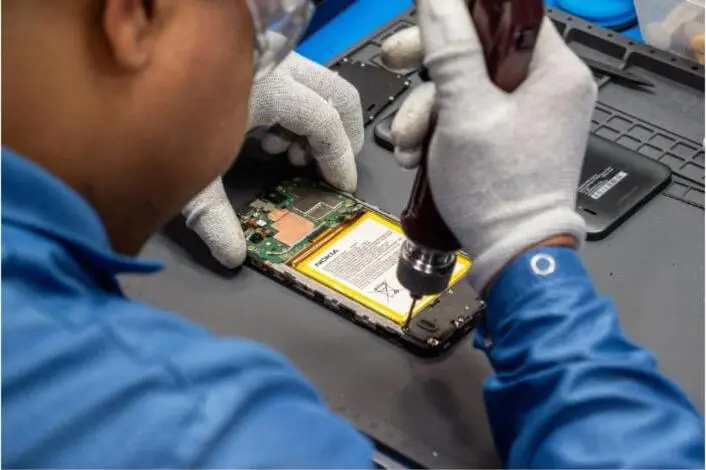
Digital Thread Extending into Reverse Logistics Operations
A digital thread is the connected record of a product data across its entire lifecycle, including design, engineering change, manufacturing process, quality inspection and field service, linked so that any point in that chain can be traced back to any other.
Premier Logitech operationalizes that traceability across depot operations. When a returned device arrives at a Premier Logitech depot, the as-built record determines repair scope, refurbishment grade and disposition path. That path may involve L1–L4 repair, cosmetic refurbishment, secondary-market resale or responsible recycling.
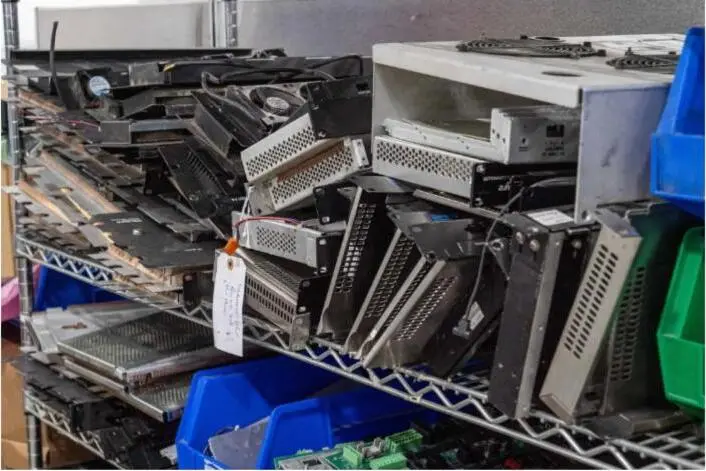
Premier Logitech holds more than 20 OEM ASC authorizations that ensure every repair action remains within the authorized service boundary. That alignment protects warranty integrity and resale value.
PLM-ALM convergence provides traceability spanning requirements and architectures, multi-domain BOMs, software versions and OTA updates, and compliance and verification artifacts for software-defined products. For OEMs managing connected devices, that traceability extends through the entire service life and into end-of-life programs.
Compliance and Traceability for Global Tech Supply Chains
The compliance integration described earlier extends across global regulatory frameworks and complex product structures. PLM maintains a single source of truth for regulated product data by linking material declarations, test reports, certifications and substance restriction statements directly to the affected part, document, assembly, revision, supplier and change history.
These PLM-driven compliance capabilities require a reverse logistics partner with matching certification depth. Premier Logitech compliance infrastructure spans TAA, TAPA, ISO 9001/14001, NIST, CMMC and SOC 2. For government and enterprise OEM programs, that certification posture means returned assets are handled, processed and disposed of within a documented chain of custody that satisfies federal and commercial audit requirements.
CAGE Code 4WAJ9 identifies Premier Logitech as a pre-vetted partner for U.S. federal programs and simplifies onboarding for public sector initiatives.
Decision-Making Checklist for Selecting a Lifecycle Partner
Operations and supply chain leaders evaluating a lifecycle partner can use four decision dimensions. Together, these dimensions cover lifecycle scope, risk management, OEM alignment and operational control.
- Scope of services: Assess whether the partner covers the full lifecycle from sourcing and configuration through repair, refurbishment and recycling or only discrete segments.
- Compliance posture: Confirm that the partner holds certifications relevant to the program regulatory environment, including TAA, NIST, CMMC and ISO frameworks.
- OEM repair authorizations: Verify that the partner holds ASC status with the OEM brands in the program and keeps repairs within authorized service boundaries.
- Operational visibility: Require real-time tracking across transportation, depot and inventory functions with data that connects to existing PLM and ERP systems.
Frequently Asked Questions
What is the difference between PLM and ERP for electronics manufacturers?
PLM governs product definition, engineering changes, compliance evidence and lifecycle traceability. ERP governs transactions such as purchasing, inventory counts, financials and order management. The two systems work together in a complementary way.
PLM creates the controlled product record and maintains change history. ERP executes against that record and manages day-to-day operations. Large electronics OEMs benefit from both systems, with integration points that allow engineering changes in PLM to propagate into procurement and production planning in ERP without manual re-entry.
How does PLM support RoHS and WEEE compliance for global tech manufacturers?
PLM centralizes material declarations, substance restriction statements and supplier certifications at the part and BOM level. When a component changes, the system flags whether a compliance impact review is required before the change can be released.
This control prevents restricted substances from entering production through cost-down substitutions or supplier changes. At end of life, the same material records support WEEE take-back documentation and responsible recycling reporting without manual reconstruction of product history.
How does a digital thread enable profitable asset recovery at end of life?
A digital thread links the as-designed, as-built and as-maintained configurations of a specific serialized unit. When that unit is returned, the connected record shows what components are present, what repairs have been performed and what the current compliance status is.
That information determines whether the unit qualifies for refurbishment and secondary-market resale, depot repair and redeployment, parts harvesting or responsible recycling and at what recovery value. A connected digital thread also supports faster grading decisions by combining configuration data with inspection results.
What should large OEMs look for in an authorized reverse logistics partner?
The most important criteria are OEM ASC authorizations, certified compliance infrastructure and operational scale. ASC status keeps repairs within the OEM authorized service boundary and protects warranty integrity and resale value.
Compliance certifications such as TAA, NIST, CMMC and SOC 2 ensure that asset handling meets government and enterprise program requirements. Operational scale, measured in repair capacity, carrier network depth and facility footprint, determines whether the partner can absorb high return volumes without creating bottlenecks. Premier Logitech holds multiple OEM ASC authorizations, operates at high weekly repair capacity and maintains certified compliance across TAA, NIST, CMMC and SOC 2 frameworks.
Can a single vendor manage both forward and reverse lifecycle services for a large tech OEM?
Single-vendor lifecycle management is operationally achievable when the partner holds the necessary authorizations, certifications and service capabilities across the full lifecycle. The primary advantage is a unified data model that tracks the asset from sourcing and configuration through deployment, repair and end-of-life disposition.
That continuity eliminates handoff gaps that create traceability failures and compliance exposure. Premier Logitech operates as both a single-source lifecycle partner and a modular services provider, which allows OEMs to consolidate vendors or engage specific services based on program requirements.
