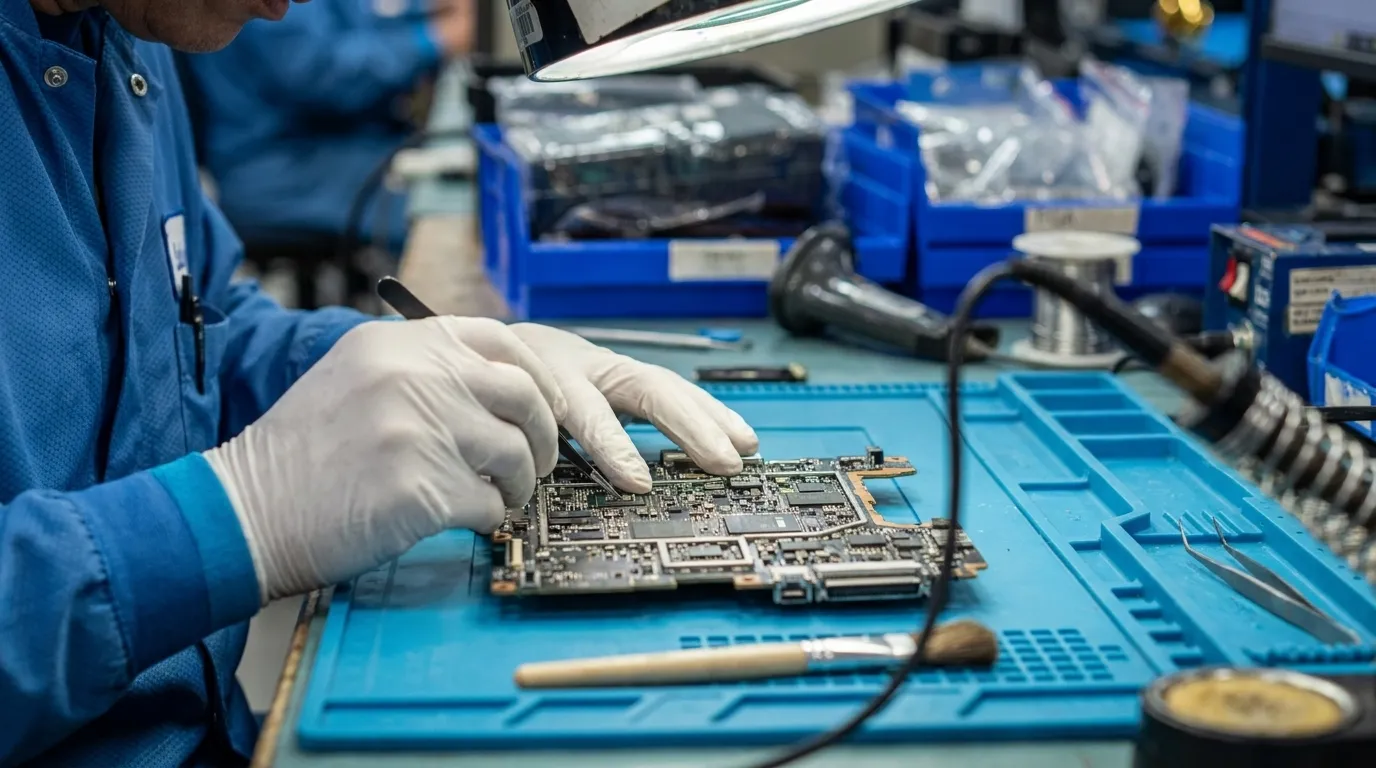
Key Takeaways for Refurbished Enterprise Fleets
- Enterprise refurbished-device configuration follows a 7-step checklist covering provenance verification, IMEI validation, NIST-aligned data sanitization, hardware grading, secure baseline imaging, MDM enrollment and asset tagging.
- Authenticity verification relies on supplier documentation, serial number checks and cryptographic integrity validation to keep counterfeit hardware out of the fleet.
- Secure configuration baselines include full-disk encryption, MFA enforcement, approved app allowlists and minimum OS patch levels to align with multiple compliance frameworks.
- Scaling configuration to tens of thousands of units requires certified processes, infrastructure and documentation that exceed typical internal IT capacity.
- Premier Logitech operates three DFW facilities with TAA, NIST, CMMC and SOC 2 certifications, delivering end-to-end refurbished-device configuration services; request a configuration assessment.
7-Step Enterprise Refurbished-Device Configuration Checklist
This 7-step checklist outlines the full configuration sequence for enterprise refurbished fleets, from intake through deployment-ready kitting.
- Provenance and authenticity verification. Confirm device origin, ownership history and chain-of-custody records. NIST SP 800-53 SR-04 requires documented provenance baselines, cryptographic integrity checks and SBOM records for every acquired component. Input: supplier manifest and purchase records. Output: signed chain-of-custody document. Decision point: reject devices with unresolvable ownership gaps.
- IMEI and serial number validation. Cross-reference IMEI against carrier blacklists and manufacturer databases. Confirm the serial number matches the device chassis. Input: device IMEI and serial. Output: carrier-unlock confirmation and authenticity record.
- Data sanitization with verified audit trail. Apply the appropriate sanitization method, Clear, Purge or Destroy, per NIST SP 800-88 Rev. 2. That standard calls for digitally signed, tamper-evident audit trails for every sanitization event. Input: device with prior data state. Output: certificate of sanitization with validation status. Decision point: escalate to physical destruction for media that cannot be verified.
- Hardware inspection and grading. Assess cosmetic condition, functional components and firmware integrity. Grading processes include verification of activation lock status, malware presence and secure wipe confirmation before devices enter redeployment channels. Input: sanitized device. Output: grade classification and repair disposition.
- Secure baseline configuration. Apply OS image, BIOS settings, encryption policy and approved application stack. Consistent mobile security baselines, including full-disk encryption, MFA enforcement, automatic screen lock and minimum OS patch levels, must be applied across every managed device before deployment. Input: approved configuration profile. Output: imaged, policy-compliant device.
- MDM enrollment and identity binding. Enroll the device through zero-touch or QR-code methods and bind it to a verified user identity. Zero-touch enrollment treats the enrollment policy as a trust boundary that binds the device to verified identity and policy state before it interacts with internal services. Input: MDM tenant and user directory. Output: enrolled, policy-enforced device.
- Asset tagging, serialization and kitting. Apply a durable unique identifier, confirm the tag against the master asset record and assemble the device into a deployment kit. Best practice includes a tag-and-verify step where the tag is scanned, the device serial number is confirmed and the physical tag is matched to the digital record by a second reviewer. Input: enrolled device and BOM. Output: serialized, kitted unit ready for distribution.
Authenticity Checks for Refurbished Devices
Step 1 of the checklist, provenance and authenticity verification, underpins every subsequent control in the program. Without confirmed device origin, sanitization certificates and MDM enrollment records lose value because the hardware itself may be counterfeit.
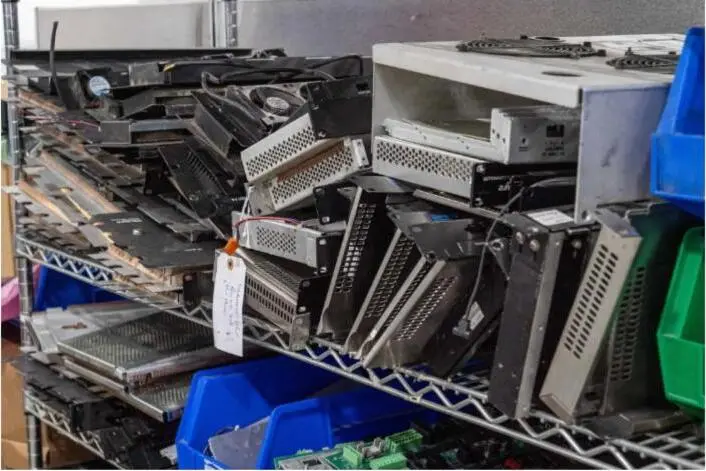
Authenticity verification starts with supplier documentation because every later step depends on accurate origin data. Request a bill of lading, original purchase order and any prior asset-management records that establish the device ownership history. After that baseline exists, cross-check the device serial number against the manufacturer lookup portal to confirm the unit came from the stated OEM and has not been reported stolen.
A 2019 report from the Defense Systems Information Analysis Center estimated that 15% of spare and replacement parts for DoD equipment are counterfeit, including memory units and integrated circuits in military systems. Counterfeit hardware can ship with modified firmware, hardcoded credentials or undocumented remote access capabilities that evade software-based security tools.
NIST SP 800-53 SR-04 converts implicit vendor trust into verified trust through documented provenance baselines and cryptographic integrity checks. Supplement supplier self-attestation with independent hash validation and review of third-party audit reports such as SOC 2 Type II before accepting devices into the fleet.
IMEI Validation for Refurbished Mobile Devices
An IMEI check confirms that a mobile device carries a legitimate manufacturer-assigned identifier and has not been reported lost, stolen or blacklisted by a carrier. The process queries the GSMA Device Check database or a carrier-specific blacklist registry using the 15-digit IMEI printed on the device or retrieved from the settings menu.
For enterprise fleet intake, IMEI validation also confirms carrier-unlock status. A device locked to a prior carrier cannot be provisioned with a new SIM or enrolled in a corporate carrier plan without an unlock request, which adds processing time. SIM and IMEI pairing records belong in the device chain-of-custody file to support future audits and redeployment decisions.
Secure Configuration for Refurbished Fleet Devices
Secure configuration applies a documented, repeatable baseline to every device before it enters service. The Security Framework Crosswalk maps Baseline Configuration Management to CMMC Level 2 CM.L2-3.4.1, NIST CSF 2.0 PR.PS-01, ISO 27001:2022 A.8.9 and SOC 2 CC5.2, so one well-documented configuration standard can support several compliance frameworks.
The baseline described in step 5 becomes the enforcement boundary for every device. Beyond the core encryption and authentication controls, role-based provisioning maps predefined device profiles to job functions and standardizes applications and access privileges by department. Every configuration change should be logged with a timestamp and technician identifier to support audit trails and incident investigations.

Activation and MDM Enrollment for Refurbished Devices
Activation confirms that the device is carrier-ready and manufacturer-unlocked. MDM enrollment registers the device with the enterprise management platform and establishes the policy relationship that governs security enforcement, app deployment and remote wipe capability throughout the lifecycle.
Corporate-owned devices enrolled through zero-touch methods give IT full management authority, including the ability to prevent users from removing the MDM profile and to place devices into supervised mode for deeper controls like silent app installation. For refurbished devices that cannot register through a zero-touch portal, QR-code enrollment provides a technician-friendly alternative. Technicians factory-reset the device, invoke the enrollment flow, scan the MDM-generated QR code and validate that policy, apps and Wi-Fi apply correctly before scaling.
Effective device offboarding removes identity access, locks the device and deprovisions apps as one coordinated revocation sequence to eliminate residual access paths. That outcome depends on correct enrollment at intake.
Android and iPhone Configuration Considerations
Android and iOS follow distinct enrollment architectures that shape how refurbished devices are provisioned at scale.
For Android, enterprise fleet enrollment decisions start with choosing the enrollment mode: fully managed for full organizational control, work profile on company-owned device for limited personal use alongside IT control and dedicated or kiosk mode for single-purpose shared devices. Samsung Knox adds hardware-backed encryption and Knox Mobile Enrollment as an alternative zero-touch mechanism for Samsung fleets. Android Enterprise Recommended certified devices guarantee security patches within 90 days and consistent zero-touch support, which makes AER certification a relevant selection criterion for refurbished Android procurement.
For iPhone and iPad, Apple Automated Device Enrollment through Apple Business Manager assigns devices to an MDM server before first boot. Microsoft Intune supports automated device enrollment for Apple iOS and iPadOS as a scalable enterprise method, with options for requiring multifactor authentication at enrollment. Refurbished Apple devices must be removed from the prior owner Apple Business Manager or personal Apple ID before ADE assignment is possible, so suppliers must confirm that step before intake.
Configuration at Scale with Premier Logitech
Scaling refurbished-device configuration from dozens to tens of thousands of units requires infrastructure, certified processes and compliance documentation that most internal IT teams are not staffed to maintain. The gap between what the checklist requires and what typical IT departments can deliver creates three common failure modes.
Inconsistent technician execution compounds across thousands of devices and turns every support call into an exercise in rediscovering prior configurations. Incomplete compliance documentation surfaces during audits and slows contract renewals. Capacity constraints turn routine deployments into bottlenecks that delay projects and frustrate stakeholders.
Organizations facing these constraints can either build the full stack of certifications, tooling and process documentation in-house or consolidate with a certified lifecycle partner. Premier Logitech operates three DFW facilities with nearshore operations in Mexico, supporting repair capacity of more than 40,000 units per week and kitting capacity of 500,000 units per month.
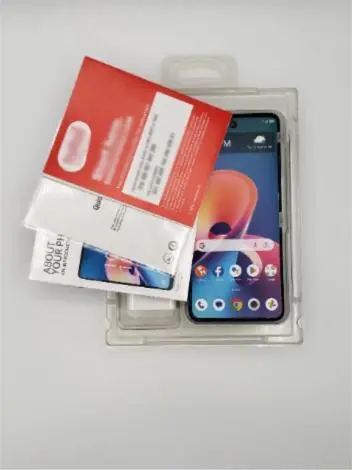
The company holds TAA, TAPA, ISO, NIST, CMMC and SOC 2 certifications and maintains CAGE Code 4WAJ9 as a pre-vetted federal partner. Configuration services include imaging, BIOS configuration, SIM and IMEI pairing, connected provisioning, asset tagging, serialization and BOM-based kitting. Services operate as a single-source program or as modular services integrated into an existing workflow.

Discuss fleet requirements with Premier Logitech’s configuration team.
Compliance Checklist for Refurbished Device Programs
Enterprise refurbished-device programs must satisfy overlapping requirements across data sanitization, asset traceability and trade compliance. The following items represent the minimum documentation and process controls for TAA, NIST, CMMC and SOC 2 alignment.
- Data-wipe verification. Apply sanitization per NIST SP 800-88 Rev. 2 and retain digitally signed, tamper-evident certificates for every device. Only 32% of organizations follow software-based data sanitization with verification for mobile devices, which creates direct audit exposure.
- Provenance documentation. Maintain chain-of-custody records from prior owner through redeployment per NIST SP 800-53 SR-04, including procedures for transferring provenance records during ownership changes.
- Asset serialization and tagging. Assign a durable unique identifier to every device, tie it to a master asset record and audit a sample of installed tags post-deployment with verification performed by a second reviewer.
- Trade-compliant sourcing. Confirm country of origin and substantial transformation for every hardware unit to satisfy TAA requirements. TAA compliance is a three-layer test of threshold, country of origin and substantial transformation that requires manufacturer and supplier evidence before hardware reaches a contracting officer.
- Baseline configuration documentation. Record the approved configuration profile, software version and policy state applied to each device. The Security Framework Crosswalk maps Media Sanitization and Disposal to CMMC Level 2 MP.L2-3.8.3, NIST CSF 2.0 PR.DS-01, ISO 27001:2022 A.7.14 and SOC 2 CC6.5, which enables a single control implementation to support multiple frameworks.
- MDM enrollment audit trail. Log enrollment events, policy assignments and identity bindings with timestamps. Organizations maintain full lifecycle visibility by tracking enrollment status, security posture, role-based configuration changes and complete audit trails of provisioning events.
- Counterfeit and supply-chain risk controls. For defense and government contractors, counterfeit or refurbished hardware originating from a prohibited manufacturer can create compliance exposure under NDAA Section 889 restrictions and CMMC requirements for managing technology supply chains.
Frequently Asked Questions
What is the difference between clearing, purging and destroying a refurbished device?
These are the three sanitization categories defined by NIST SP 800-88 Rev. 2. Clearing applies logical techniques, such as overwriting, that protect against standard data recovery tools. Purging applies more rigorous methods, including cryptographic erasure or block erase commands, that protect against laboratory-grade recovery attempts.
Destroying renders the media unusable through physical means such as shredding or disintegration. The appropriate method depends on the data classification of what was stored on the device, the media type and whether the device will be reused or retired. For enterprise refurbished fleets, Purge is the most common standard because it allows reuse while satisfying regulatory requirements.
Which compliance frameworks apply to refurbished device configuration in government and defense programs?
Federal and defense programs typically require alignment with NIST SP 800-88 Rev. 2 for data sanitization, NIST SP 800-53 SR-04 for supply-chain provenance, CMMC Level 2 for CUI protection and TAA for trade-compliant sourcing. SOC 2 Type II audit reports from configuration service providers serve as third-party evidence that controls operate effectively.
ISO 9001 and ISO 14001 certifications address quality management and environmental handling. Organizations subject to NDAA Section 889 also screen hardware for prohibited manufacturers before accepting refurbished units into the supply chain.
What triggers a workflow review for an existing refurbished device configuration program?
Several conditions should prompt a review. A change in the applicable regulatory framework, such as a new NIST revision or updated CMMC requirements, is one trigger. A data incident traced to a redeployed device or a significant increase in fleet volume that strains current staging capacity also warrants review.
The addition of a new device platform, such as expanding from laptops to mobile, or a change in MDM vendor or enrollment method should prompt reassessment as well. Annual audits of a sample of deployed devices, comparing physical asset tags to digital records and verifying policy compliance, form a baseline governance practice regardless of triggering events.
What skills and tools does an enterprise configuration program require?
A complete program requires expertise across several disciplines. Teams need skills in supply-chain provenance verification, data sanitization with certified tooling, OS imaging and BIOS configuration and MDM platform administration such as Microsoft Intune, Jamf or VMware Workspace ONE.
Asset tagging, inventory system management and compliance documentation also matter. At high volumes, automated zero-touch enrollment, barcode or RFID scanning for asset verification and integration between the MDM platform and the HR or ITSM system help maintain consistency. Organizations that lack in-house depth across these areas often consolidate with a single lifecycle partner to reduce coordination overhead and compliance risk.
How does outsourcing refurbished device configuration affect compliance accountability?
Outsourcing configuration services does not transfer compliance accountability, so the organization remains responsible for ensuring that its service provider meets applicable standards. Vendor selection should include a review of provider certifications such as NIST, CMMC, SOC 2 and TAA, along with a request for sanitization certificates and chain-of-custody documentation.
Contracts should include requirements for audit access. SOC 2 Type II reports from the provider offer independent evidence that controls operated over a defined period. For government contractors, the provider CAGE code and any relevant federal authorizations serve as additional verification points.
Conclusion: Building a Repeatable Refurbished Device Program
Enterprise refurbished-device configuration functions as a documented, multi-step process that spans provenance verification, certified data sanitization, secure baseline imaging, MDM enrollment, asset serialization and compliance reporting. With 51% of organizations now purchasing refurbished devices for enterprise use, scalable programs rely on repeatable workflows with auditable outputs at every stage.
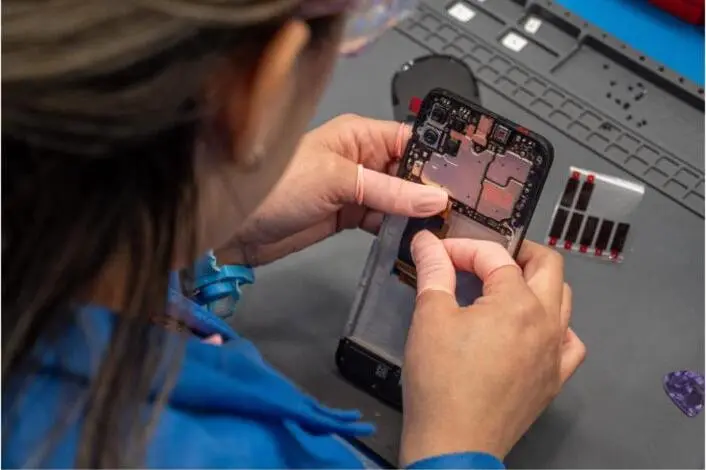
Premier Logitech delivers these capabilities. Services range from IMEI validation and NIST-aligned sanitization through zero-touch MDM enrollment and BOM-based kitting. Premier Logitech serves as a single certified partner for enterprises, OEMs and government agencies.
Start building a certified refurbished device program with Premier Logitech.
