
Key Takeaways
- A scalable IT deployment partner manages the full hardware lifecycle under one accountable structure, which reduces hand-offs and compliance exposure.
- Scalability must cover both forward and reverse logistics so programs handle demand spikes and irregular returns without rebuilding processes.
- Seven characteristics define a scalable partner: end-to-end scope, modular services, real-time visibility, certified compliance, authorized repair, scalable capacity and single-point accountability.
- Structured evaluation with compliance checklists and SLA validation helps organizations identify capability gaps before contract execution.
- Premier Logitech delivers end-to-end lifecycle services with TAA, CMMC, NIST, SOC 2 and ISO certifications. Talk to a lifecycle expert to start a deployment program.
Defining Scalable IT Deployment
Scalable IT deployment expands or contracts hardware rollout operations across sites, volumes and timelines without rebuilding the process. A scalable IT deployment partner absorbs demand spikes such as new-hire waves, facility refreshes and government contract awards without requiring additional vendors or internal headcount.
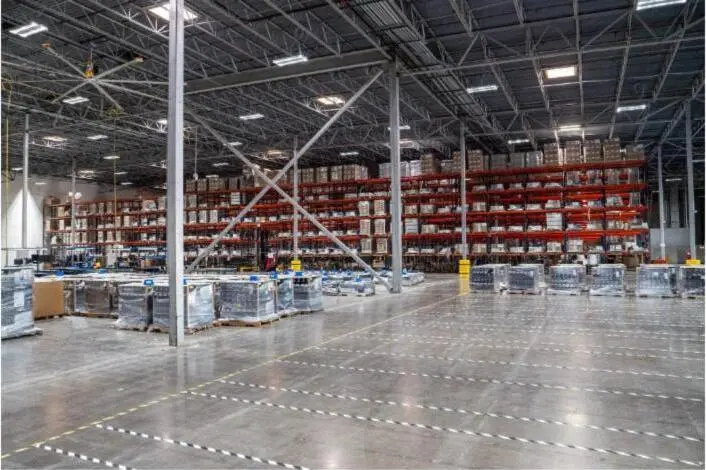
Large enterprise rollouts spanning hundreds of locations can take six months to a year or more when planning, procurement, staging and phased cutover are included. A partner with pre-built logistics infrastructure compresses that timeline and keeps each phase accountable.

Scalability applies equally to reverse logistics. Returns arrive in smaller, irregular shipments and require more decision points per unit than forward shipments. Small process gaps in reverse logistics create delayed recovery and lost product value by leaving items in limbo before inspection, resale, repair or disposal. A scalable partner designs both directions of the asset flow from the start.
Core Deployment Categories Across the Hardware Lifecycle
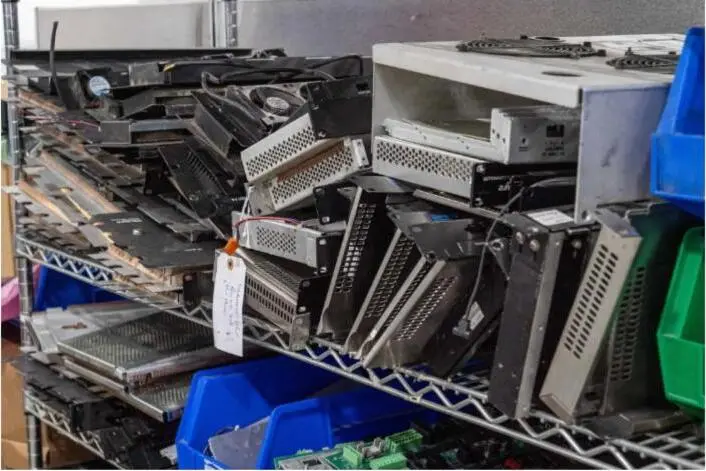
Enterprise hardware programs span five interconnected service categories: procurement and sourcing, device configuration and kitting, forward logistics and deployment, reverse logistics and returns processing, and end-of-life disposition and recycling. Each category can be delivered as a standalone engagement or as part of an integrated lifecycle program.

Seven Characteristics of a Scalable IT Deployment Partner
Operations and supply chain leaders benefit from evaluating potential partners against seven core characteristics before committing to a program.
- End-to-end lifecycle scope. The partner covers sourcing, configuration, fulfillment, transportation, reverse logistics and recycling. Gaps between stages create the hand-off failures that fragment many enterprise programs.
- Modular service options. Clients can engage for a single service such as transportation, depot repair or kitting, or for the full lifecycle. Modular entry points reduce switching costs and support phased consolidation.
- Real-time visibility. Only 54% of organizations report full visibility into all connected devices on their network. A capable partner provides serialized, item-level tracking from intake through final disposition, not just shipment-level status.
- Certified compliance. The partner holds active certifications relevant to the regulatory environment such as TAA, CMMC, NIST, SOC 2 and ISO and can produce documentation on demand.
- Authorized repair network. OEM Authorized Service Center status allows the partner to perform warranty-valid repairs. Partners without ASC authorizations route work through third parties, which adds cost and chain-of-custody risk.
- Scalable capacity. The partner physical infrastructure such as warehouse footprint, carrier network and repair throughput matches peak demand, not average demand.
- Single-point accountability. One contract, one SLA owner and one escalation path. Serialized tracking combined with a single accountable partner reduces operational risk and handoff failures compared with fragmented freight, storage and processing vendors.
How to Evaluate Potential Partners
A structured evaluation process surfaces capability gaps before contract execution. The following questions form a practical checklist for procurement and operations teams.
- Does the partner hold current certifications across the compliance frameworks described earlier, and can it provide documentation?
- How many OEM brands does the partner hold ASC authorization for, and does that list include the primary hardware vendors in the program?
- Can the partner demonstrate serialized, item-level tracking from forward deployment through final disposition?
- Does the partner offer modular services, or does the engagement require a full-lifecycle commitment?
- What is the partner process for secure data destruction, and does it align with NIST SP 800-88 requirements?
- How does the partner define and enforce SLAs across forward and reverse logistics, and what escalation tiers exist for breaches?
- Does the partner consolidate transportation, repair and disposition under one contract, or does the client manage multiple vendor relationships?
- What carrier network and geographic footprint does the partner operate, and does it cover all required sites?
IT leaders evaluating deployment partners should prioritize proven experience with large-scale enterprise deployments across multiple offices and locations, along with demonstrated logistics and service capabilities rather than only software or advisory expertise.

Talk to a lifecycle expert to evaluate whether the current vendor structure meets these criteria.
Compliance and Security Requirements for Hardware Programs
U.S. enterprises and government agencies operate under overlapping compliance frameworks that directly affect hardware deployment and disposition decisions.
- Trade Agreements Act (TAA). Federal agencies must purchase only products manufactured in the United States or in designated trade-agreement countries for contracts above FAR-established dollar thresholds. Noncompliance can trigger contract disputes, audit findings and equipment removal from networks.
- CMMC and NIST SP 800-171. NIST SP 800-171 sets requirements for protecting Controlled Unclassified Information that apply to the Defense Industrial Base and nonfederal organizations in the extended DoD supply chain. These requirements cover access control, configuration management and supply chain risk.
- NIST SP 800-53 and Cybersecurity Framework 2.0. NIST Cybersecurity Framework 2.0 elevates supply chain risk management to a governance priority through its Govern function and requires asset inventories that include hardware, firmware and software across IT and OT devices.
- SOC 2 and ISO frameworks. SOC 2 Type II and ISO 9001/14001 certifications provide audited assurance over data security, operational quality and environmental management. These certifications function as baseline requirements for many enterprise and government procurement teams.
- Data sanitization standards. R2v3 and NIST SP 800-88 apply to remotely returned devices the same way they apply to data-center hardware, with no loopholes for assets recovered from home offices or branch sites.
- FAR Part 39. Federal agencies acquiring IT must include appropriate information technology security policies and requirements, including use of common security configurations from NIST checklists.
Common Deployment Challenges and Practical Fixes
Four operational problems account for many enterprise deployment failures. Each has a process-level mitigation.
- Inaccurate asset data. Missing or mismatched records create downstream confusion in data destruction, resale accounting and compliance reporting. Mitigation: require serialized intake reconciliation at every stage and a single system of record that updates in real time.
- Fragmented vendor hand-offs. When pickup, data sanitization, remarketing and recycling are handled by disconnected providers, visibility tends to break down between stages, which leads to delayed assets, duplicated records or policy misalignments. Mitigation: consolidate under a single-source partner with contractual accountability across all stages, reinforcing the single-point accountability described earlier.
- Unclear SLAs. Connecting every service-level target directly to the specific assets that deliver it enables tracing of hardware health issues upward to potential SLA breaches. Mitigation: define measurable targets, measurement windows, exclusions and escalation tiers before program launch, not after the first missed deadline.
- Noncompliant disposition paths. Some security analysts estimate that over half of corporate data breaches originate from compromised or lost endpoint devices, which makes reverse logistics a core security requirement. Mitigation: require documented chain of custody, certified data destruction and compliance reporting as contractual deliverables, not optional add-ons.
Next Steps for Vendor Selection
A structured selection process reduces risk and accelerates time to program launch. The following sequence applies to both net-new deployments and vendor consolidation efforts.
- Map the current asset flow. Document every stage from procurement through disposition, identify which vendors touch each stage and locate the hand-off points where visibility breaks down.
- Define scope and compliance requirements. Determine which regulatory frameworks apply, reference the compliance section above and confirm that any candidate partner holds current certifications for each.
- Issue a structured RFI or RFP. Use the evaluation checklist above to build the questionnaire. Require evidence of ASC authorizations, real-time tracking capabilities and reference programs at comparable scale.
- Validate SLA terms before signature. Request sample performance reports from existing programs to test whether the proposed SLA metrics can be calculated consistently. This review identifies calculation issues, ambiguous definitions or unmet dependencies before contract execution.
- Plan for modular entry if full consolidation is not immediate. A partner that offers standalone services allows gradual consolidation while maintaining operational continuity.
Premier Logitech has delivered end-to-end lifecycle services since 2007, operating across three DFW facilities with nearshore operations in Mexico and a carrier network spanning North America. The company holds TAA, TAPA, ISO, NIST, CMMC and SOC 2 certifications and carries a CAGE Code for federal procurement. ASC authorizations across more than 20 OEM brands allow Premier Logitech to perform warranty-valid repairs without routing work through third parties.
Talk to a lifecycle expert at Premier Logitech to start the vendor selection process.
Frequently Asked Questions
Difference Between a Deployment Partner and a 3PL
A third-party logistics provider (3PL) typically manages transportation and warehousing. A scalable IT deployment partner extends that scope to include device configuration, kitting, OEM-authorized repair, secure data destruction and compliance reporting. The distinction matters because hardware programs require technical services such as imaging, BIOS configuration and data sanitization that standard 3PLs do not perform.
How Vendor Consolidation Reduces Compliance Risk
Fragmented vendor structures create gaps in chain of custody, asset tracking and documentation. When multiple providers handle different stages of the lifecycle, compliance records become inconsistent and audit trails break down. A single-source partner maintains one chain of custody, one set of compliance certifications and one reporting structure across all stages, which makes audits and regulatory reviews more defensible.
Key Certifications for Government IT Deployment Programs
Government hardware programs typically require TAA-compliant sourcing, CMMC alignment for defense-related work, NIST SP 800-53 and SP 800-171 controls for systems handling federal or controlled unclassified information, SOC 2 Type II for data security assurance and ISO 9001 for quality management. Partners supporting federal procurement also benefit from holding a CAGE Code, which identifies them as a pre-vetted vendor for U.S. government contracts.
Why Reverse Logistics Belongs in the Initial Deployment Plan
Reverse logistics costs more per unit than forward logistics because returns arrive in smaller shipments, require inspection and involve more decision points. When reverse logistics is treated as an afterthought, organizations face storage overflow, fragmented vendor handling, missed reuse opportunities and compliance exposure. Planning both directions of the asset flow from the start allows the partner to design intake, triage and disposition workflows that protect asset value and maintain chain of custody.
Essential SLA Questions for Operations Leaders
Operations leaders benefit from confirming that SLAs define measurable targets for each service stage, not just overall program performance, along with measurement windows, exclusions, escalation tiers and remedies for breaches. SLAs should also specify how performance is tracked, what reporting cadence applies and whether the partner internal operational thresholds are tighter than the contractual limits. Vague SLAs that describe activities rather than outcomes create disputes and leave accountability unclear when problems arise.
