Key Takeaways
- Secure IT configuration services establish, harden and maintain approved system baselines across servers, endpoints, cloud platforms and network devices to reduce compliance gaps and breach exposure.
- Seven core components support an enterprise-grade secure configuration program: baseline creation, configuration hardening, continuous monitoring, drift detection, change control, compliance mapping and audit evidence collection.
- Baseline creation and hardening rely on authoritative standards such as CIS Benchmarks, DISA STIGs and NIST SP 800-53, with infrastructure-as-code tools enforcing consistent deployment.
- Continuous monitoring and automated drift remediation replace periodic audits, shorten response times and maintain audit-ready evidence for NIST, CMMC and SOC 2 frameworks.
- Premier Logitech delivers these capabilities as part of an integrated lifecycle program that aligns secure configuration with operational and compliance requirements.
Seven Core Components of Secure IT Configuration Services
Enterprise secure configuration programs rest on seven connected components that work together to control risk and support compliance. Each component addresses a specific phase in the configuration lifecycle, from initial design through ongoing monitoring and audit support.
- Baseline creation: documenting approved settings for every system type
- Configuration hardening: disabling unnecessary services and enforcing least privilege
- Continuous monitoring: scanning assets against baselines on an ongoing cadence
- Drift detection and remediation: identifying and correcting unauthorized deviations
- Change control integration: gating modifications through formal approval workflows
- Compliance mapping: linking enforced controls to NIST, CMMC and SOC 2 requirements
- Audit evidence collection: maintaining version-controlled records for assessors
Build a secure configuration program at enterprise scale with guidance from Premier Logitech’s lifecycle team.
Baseline Creation for Consistent Secure Settings
A secure configuration baseline is a documented, approved set of system settings and controls that defines a secure state, formally reviewed and agreed upon at a given point in time. NIST SP 800-53 Rev. 5 CM-6 requires organizations to establish, document, enforce and monitor secure configuration settings for every system component, including hardware, software and firmware parameters.
Secure configuration management starts with a complete inventory of systems, then moves to selection of authoritative standards. Authoritative sources include CIS Benchmarks for hundreds of technologies, DISA STIGs for government and defense environments, vendor guides from Microsoft, Cisco and AWS, and NIST publications. Teams customize settings for operational requirements, document them in a baseline configuration document and obtain approval from IT leadership before deployment.
Default vendor configurations often prioritize ease of use over security, expanding the attack surface. Without documented baselines to serve as a reference, configuration drift occurs as administrators make inconsistent decisions or systems deviate over time. Codifying baselines through infrastructure-as-code tools such as Terraform or Ansible addresses both problems by replacing insecure defaults with hardened settings and enforcing those settings consistently at deployment, which reduces human error. Once baselines are established and codified, the next step focuses on hardening those configurations to narrow the attack surface.
Configuration Hardening Across Identity, Endpoint and Network
IT configuration hardening services narrow the attack surface by removing what systems do not need and tightening remaining controls. The Canadian Centre for Cyber Security’s ITSP.10.033 guidance covers configuration management best practices.
A secure baseline must be machine-readable, versioned and authoritative, with the CIS Benchmarks mentioned earlier providing industry-standard references across platforms. Hardening covers access control lists, authentication settings, open ports, enabled services and remote connection protocols. Typical control areas start with identity and access: mandatory MFA for all users with stronger requirements for admins, combined with least privilege and role-based access control to limit what authenticated users can do. Endpoint protection with EDR and tamper protection defends the devices themselves, while full disk encryption protects data at rest. Host firewalls and secure remote access protocols control network-level exposure.
Hardening focuses narrowly on locking an image or OS, while secure configuration is a broader lifecycle practice that includes continuous drift control, auditing and CI/CD integration. Effective IT configuration hardening services treat the hardened image as a starting point, not a destination. Maintaining that hardened state over time requires continuous monitoring that detects when systems move away from approved baselines.
Continuous Monitoring and Drift Remediation
Configuration drift prevention services replace periodic audits with continuous scanning that keeps pace with change. Without continuous monitoring, drift remains undetected between quarterly or annual audits, which leaves systems exposed to misconfigurations that drive a significant share of enterprise breaches. Manual remediation processes stretch response times across multiple days, while automated detection and remediation can close gaps within hours.
Continuous compliance scanning should run on a regular cadence per asset, with immediate rescan on change events. Drift alerts should route to asset owners with the specific control, current value, expected value and recommended remediation so that teams can act quickly and consistently.
High-confidence, low-blast-radius drift such as re-enabling a drifted hardening setting, revoking an unauthorized permission policy or disabling a legacy protocol can be auto-remediated safely because these changes carry limited risk of breaking dependencies. High-impact changes that could affect application behavior require human review before application to prevent service disruption. This tiered approach to remediation reduces mean time to respond by automating the majority of drift cases while preserving human oversight for changes that could affect availability. The same monitoring and remediation activities also generate detailed records that support compliance reporting.
Compliance Mapping Across NIST, CMMC and SOC 2
Secure configuration management services produce the evidence that compliance frameworks require and align that evidence across multiple standards. NIST SP 800-53 CM-6 maps directly to baseline enforcement and monitoring, while CMMC Level 2 practice CM.L2-3.4.2 requires documented hardening standards and enforcement of configuration settings. SOC 2 Common Criteria CC6 through CC8 cover access controls, system operations and change management that configuration baselines implement. A unified configuration program generates evidence that satisfies all three frameworks at once, because the same baseline document, drift detection report and remediation log serve as artifacts for NIST, CMMC and SOC 2 assessors.
How Premier Logitech Executes at Enterprise Scale
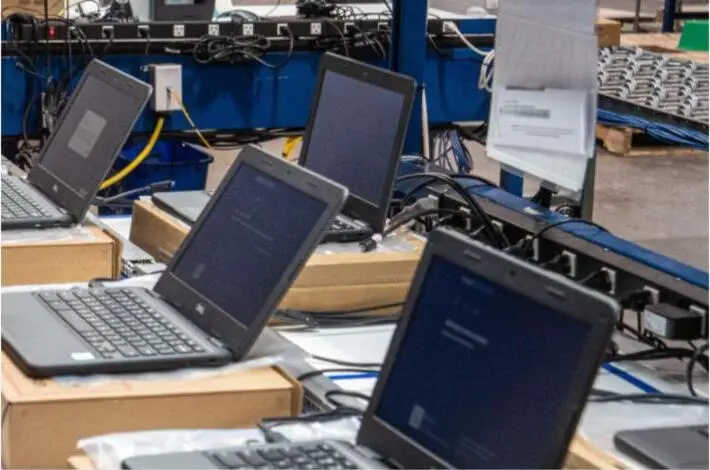
Premier Logitech delivers security configuration management services as part of an integrated lifecycle program that connects configuration with physical device management. Configuration and fulfillment capabilities cover device imaging, BIOS configuration, software installation, asset tagging, serialization and modern cloud-based provisioning. These configured devices then move into warehousing and asset management services that provide inventory reporting, device traceability and lifecycle staging across facilities with nearshore operations in Mexico, which helps maintain hardened configurations from deployment through field use.
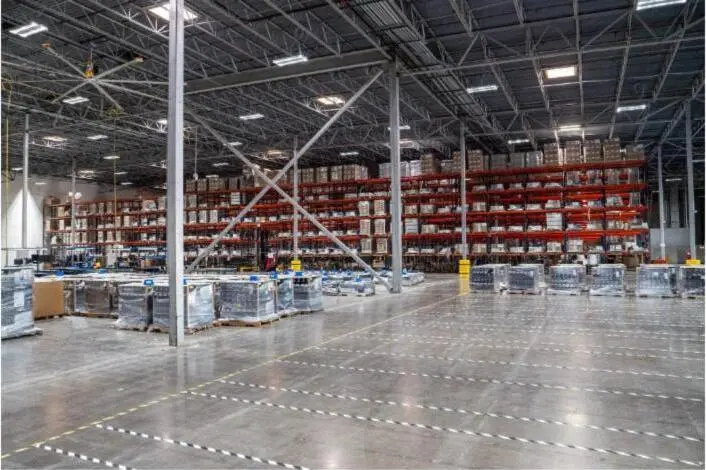
Reverse logistics capabilities close the loop on retired or returned assets through secure data destruction, responsible recycling and compliance reporting aligned to NIST, CMMC and SOC 2. This end-to-end model reduces the fragmentation that creates configuration drift and audit gaps when organizations rely on multiple vendors with inconsistent standards.

Premier Logitech holds TAA, NIST, CMMC and SOC 2 credentials alongside a CAGE Code that identifies the company as a pre-vetted partner for U.S. federal government programs. The company maintains Authorized Service Center status for multiple OEM brands, a logistics network spanning carriers in North America and kitting capacity that supports large-scale deployment programs.

Map compliance requirements to Premier Logitech’s integrated capabilities and align secure configuration with lifecycle operations.
Provider Evaluation Checklist for Secure Configuration Partners
The right secure configuration partner consolidates configuration, fulfillment and lifecycle management under one program, which reduces drift and simplifies audits. The criteria below work together as a single evaluation framework rather than a set of isolated checks.
- Service scope: Provider covers baseline creation, hardening, continuous monitoring, drift remediation and compliance mapping in a single engagement.
- Technical capabilities: Supports imaging, BIOS configuration, software loads, asset tagging and cloud-based provisioning across endpoint, server and network device types.
- Quality and compliance: Holds verifiable credentials including TAA, NIST, CMMC and SOC 2 and maintains OEM Authorized Service Center authorizations.
- Scalability and flexibility: Offers modular services or full lifecycle programs and can support enterprise and government deployment volumes.
- Visibility and data: Provides real-time inventory tracking, device traceability and audit-ready evidence for compliance assessors.
- Network and logistics coverage: Operates nationally with warehousing, fulfillment and reverse logistics capabilities under one program.
- Total cost and value: Consolidates configuration, fulfillment, warehousing and reverse logistics into one partner, which reduces vendor fragmentation and related overhead.
Frequently Asked Questions
What is the difference between configuration hardening and secure configuration management?
Configuration hardening is the process of locking down a specific image or operating system by disabling unnecessary services, enforcing access controls and applying a recognized benchmark such as a CIS Benchmark or DISA STIG. Secure configuration management is the broader lifecycle practice that includes hardening as one component alongside baseline documentation, change control, continuous monitoring, drift remediation and audit evidence collection. Hardening produces a secure starting point, while secure configuration management maintains that posture over time as systems change, patches deploy and environments scale.
How does configuration drift occur and why is it difficult to prevent?
Configuration drift occurs when system settings deviate from approved baselines due to manual administrator changes during troubleshooting, patch deployments that reset security values, software installations, infrastructure scaling from outdated templates and ungoverned automation scripts. In cloud and hybrid environments, the pace of change makes drift difficult to track because new resources can be provisioned in minutes and identity or access settings can shift without triggering traditional change management workflows. Preventing drift requires continuous automated scanning rather than periodic audits, because drift can occur within hours and point-in-time reviews leave exposure unaddressed between cycles.
Which compliance frameworks require secure configuration management?
NIST SP 800-53 Rev. 5 addresses configuration management through the CM control family, with CM-2 requiring documented baselines. CMMC Level 2 practice CM.L2-3.4.2 maps directly to NIST SP 800-171 and requires organizations to establish and enforce security configuration settings for information technology products employed in organizational systems, typically implemented using documented hardening standards and monitoring to detect configuration drift. SOC 2 maps secure configuration baselines to Common Criteria CC6, CC7 and CC8, covering logical and physical access controls, system operations and change management. TAA compliance adds supply chain requirements for government programs. Organizations subject to multiple frameworks benefit from a unified configuration program that produces evidence satisfying all applicable controls simultaneously.
What should enterprises look for in a secure IT configuration services partner?
Enterprises should evaluate providers on the breadth of their service scope, the verifiability of their compliance credentials and their ability to integrate configuration services with fulfillment, warehousing and reverse logistics. A provider that handles only software-level configuration without managing the physical lifecycle of devices creates gaps at deployment and end-of-life. Government and regulated enterprises should confirm that a provider holds TAA compliance, NIST and CMMC alignment and SOC 2 attestation, and that those credentials apply to the specific services being procured rather than the organization broadly. OEM Authorized Service Center status matters for warranty integrity and repair authorization across the device fleet.
How does secure configuration management support audit readiness?
Secure configuration management produces the documented, version-controlled evidence that auditors require to verify that controls are defined, implemented and consistently maintained. Baseline configuration documents, change control records, drift detection reports and remediation logs all serve as audit artifacts. Continuous monitoring programs that run on a defined cadence and feed findings into a formal risk process keep evidence current rather than requiring a pre-audit scramble. Organizations using managed configuration services often reach audit readiness faster than those managing programs internally, because the evidence collection process is embedded in normal operations rather than assembled reactively.
Conclusion: Choosing a Secure Configuration Partner
Secure IT configuration services span baseline creation, hardening, continuous monitoring and compliance mapping. These components form an interdependent system rather than a menu of standalone services, because a hardened baseline without continuous monitoring drifts over time, monitoring without remediation authority leaves detected gaps open and compliance mapping without enforced controls produces documentation that auditors cannot rely on.
The evaluation framework above highlights the capabilities that distinguish credible execution partners from generic guidance providers. The decisive factors include verifiable compliance credentials, integrated lifecycle capabilities and the operational scale to support enterprise and government programs nationally.
Premier Logitech brings configuration and fulfillment, warehousing and asset management, and reverse logistics together under one program, backed by the compliance credentials and OEM authorizations detailed above. Organizations managing complex device fleets across distributed environments gain a single partner that covers the full configuration lifecycle from initial imaging through secure end-of-life disposition.
Close configuration gaps across the enterprise with Premier Logitech’s end-to-end lifecycle program.
