Last updated: July 29, 2026
Key Takeaways
- Secure nationwide ITAD in 2026 requires end-to-end management with certified data destruction, responsible recycling and auditable chain-of-custody documentation that meets regulatory and ESG standards.
- Organizations should evaluate providers on service scope, technical capabilities, R2v3 and NAID AAA certifications, serialized reporting and national logistics coverage to close compliance gaps.
- On-site and off-site destruction support different risk profiles. Off-site options often deliver higher throughput and stronger audit-ready documentation.
- Revenue-share and buyback remarketing models return value in different ways. Transparent, itemized reporting is essential in both structures.
- Premier Logitech delivers a single-source lifecycle program combining R2v3 and NAID AAA certifications, CMMC and TAA alignment and national logistics. Talk to a lifecycle expert to build a secure nationwide ITAD strategy.
Lifecycle Services That Support Complex ITAD Programs
ITAD partner evaluation starts with service scope mapped to operational requirements. A capable provider manages every stage: scheduled pickup, serialized intake, data sanitization or physical destruction, refurbishment and grading, remarketing and certified recycling. Providers that stop short of any stage force organizations to manage handoffs between vendors, which creates compliance gaps and audit exposure.
Premier Logitech operates as a single-source lifecycle partner. Services span sourcing, configuration, depot repair, reverse logistics, secure data destruction and responsible recycling. Organizations can engage the full program or select individual services. That modular structure supports enterprise refresh programs and government decommissioning projects without a separate vendor for each function.
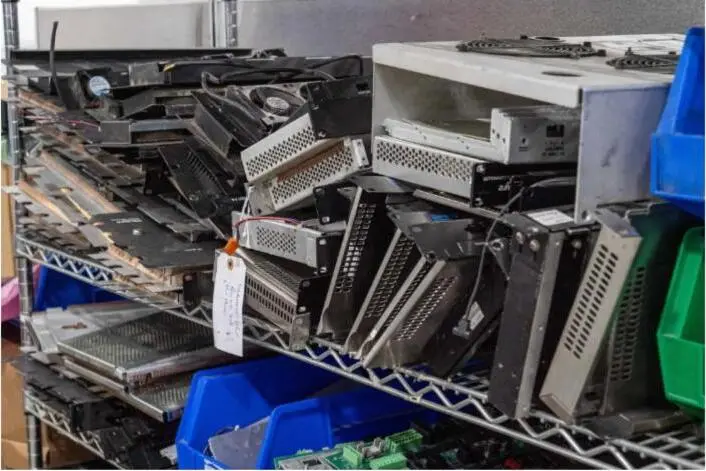
Technical capabilities to evaluate include L1–L4 depot repair, cosmetic refurbishment, grading for secondary-market channels, RMA management and on-site and off-site destruction options. These capabilities matter most when backed by OEM authorization. Providers with 20-plus OEM Authorized Service Center authorizations, as Premier Logitech holds, can perform warranty-compliant repair within the same lifecycle program and remove the need for a separate authorized repair vendor.

R2v3, NAID AAA and NIST Standards That Now Set the Bar
R2v3, managed by Sustainable Electronics Recycling International, is the current responsible recycling standard. All R2:2013 certificates expired no later than July 1, 2023, which required previously certified facilities to complete transition audits to R2v3 by their individual certificate expiration dates. R2v3 requires unannounced annual facility inspections, documented downstream contractor qualification, employee background verification and legal-weight chain-of-custody records for every material processed.
R2v3 Appendix B mandates a formal Data Sanitization Plan, enhanced physical security for data destruction areas and adherence to recognized erasure frameworks including NIST SP 800-88 and IEEE 2883-2022. R2v3 clause 6.6 requires written agreements with all downstream vendors that cover legal compliance, environmental performance and data security, plus regular audits and documented corrective action processes.
NAID AAA certification, managed by i-SIGMA, is a rigorous global data destruction certification. It requires unannounced audits, continuous criminal history screening for employees, serial-number-level chain of custody and 2026-mandated multi-factor authentication plus centralized password management on administrative systems.
NIST SP 800-88 Revision 2 establishes a program governance framework and delegates technical execution for modern SSDs and NVMe media to IEEE 2883-2022, which renders the legacy DoD 5220.22-M three-pass overwrite standard obsolete for solid-state storage. NIST SP 800-88 Rev. 2 defines three escalating sanitization categories, Clear, Purge and Destroy, and requires method selection to match each asset’s FIPS 199 security classification.
Under NIST SP 800-88 Rev. 2, the Purge sanitization tier for SSDs requires verified cryptographic erasure with AES-256 encryption confirmed active from initial deployment. If that control is absent, physical destruction becomes mandatory for high-sensitivity or regulated data.
R2v3 and NAID AAA are the two non-negotiable independent certifications for vendors that support enterprise ESG reporting and secure ITAD requirements in 2026. Requiring both in an RFP closes the gap between environmental compliance and data security in a single vendor engagement.
Chain-of-Custody and Serialized Reporting Expectations
An ITAD chain of custody is the documented, unbroken record of each retired asset from pickup through receiving, data handling, processing and final disposition. Batch-level tracking no longer satisfies 2026 auditor expectations. Auditors increasingly demand per-asset accountability, including verified sanitization methods and chain-of-custody transparency for government contracting and cyber insurance assessments.
Standard chain-of-custody tracking points include pre-pickup details, transportation handoff data, serialized receiving intake, data handling records and final disposition outcomes. Serialized intake at the processing facility cross-checks each asset against the pickup manifest and logs serial number, asset tag and incoming condition, with any discrepancies flagged immediately.
HIPAA requires covered entities to retain certain compliance documentation for a minimum of six years. CMMC 2.0 Level 2 and above contractors must implement NIST SP 800-171 Practice MP.L2-3.8.3, which mandates sanitization or destruction of media with serial-number-level documentation.
Scalability, Flexibility and National Network Coverage
National ITAD programs need consistent service levels across locations. National coverage without a centralized logistics hub often produces uneven performance. Premier Logitech operates facilities in the Dallas-Fort Worth area with nearshore operations in Laredo and Nuevo Laredo, Mexico. That hub structure supports high-volume inbound returns, rapid processing and outbound distribution across North America.

Premier Logitech’s carrier network spans vetted LTL carriers in North America and supports freight audit, logistics analytics, white glove delivery and intermodal options. Organizations that manage multi-site decommissioning projects or high-volume device refresh programs can scale within a single vendor relationship rather than coordinate across regional providers.

Single-vendor consolidation removes the compliance gaps that emerge when separate providers handle logistics, data destruction and recycling. Premier Logitech’s end-to-end model replaces fragmented vendor relationships with one accountable partner, one chain-of-custody record and one reporting stream.
Request a logistics coverage assessment for a multi-site ITAD program.
On-Site and Off-Site Destruction Choices for Different Risk Profiles
Destruction location is a core design choice in a national ITAD program. On-site destruction, performed at the client’s facility before assets leave the premises, removes transportation risk for the most sensitive media. It often fits classified environments, healthcare systems with strict HIPAA obligations and defense contractors that manage controlled unclassified information. The trade-off is higher per-unit cost and scheduling complexity across distributed locations.
Off-site destruction at a certified facility offers greater throughput, documented facility-level security controls and the full chain-of-custody record that R2v3 and NAID AAA audits require. GPS-tracked transport with no third-party handoffs and tamper-evident packaging maintains custody integrity from pickup to processing. For most enterprise programs, off-site destruction at an R2v3 and NAID AAA certified facility satisfies compliance requirements while supporting higher volume and faster cycle times.
The right choice depends on asset sensitivity classification, regulatory framework and program volume. A capable ITAD partner supports both models and documents the decision rationale in the program’s chain-of-custody record.
Asset-Remarketing Revenue Models That Protect Value
ITAD providers commonly offer two primary value-recovery structures. Revenue share models return a pre-negotiated percentage of the final sale price to the client after processing and remarketing and often yield the highest overall payout for recent, functional equipment. Direct purchase models pay a fixed upfront amount and transfer all secondary-market risk to the provider.
Secondary market prices for IT assets are time-sensitive, and high-value assets depreciate every month they sit in a processing queue. Consistent, uniform shipment volumes can raise average rebate returns compared to fragmented, irregular shipments because secondary-market buyers prefer standardized batches of corporate-grade equipment.
Transparency is the key evaluation criterion. Organizations should require itemized recovery statements, clear documentation of the revenue-share percentage or buyback rate and reporting that separates remarketed assets from recycled or destroyed assets. Certified data wiping with full documentation preserves resale value by allowing devices to enter verified resale channels, while physical destruction removes any resale potential.
Government CMMC and TAA Alignment for ITAD Vendors
CMMC Level 2 C3PAO certification requirements for applicable DoD contracts, originally scheduled to begin November 10, 2026, were suspended on July 13, 2026. External service providers such as ITAD vendors must still be evaluated for CMMC scope when they process, store or transmit controlled unclassified information or provide security protection for covered contractor information systems.
DFARS clause 252.204-7021 requires contractors to flow down CMMC requirements to all subcontractors that handle covered information. Misrepresenting CMMC status can trigger False Claims Act liability.
Premier Logitech holds CAGE Code 4WAJ9, which identifies the company as a pre-vetted partner for U.S. federal government engagements. The company supports TAA-compliant product sourcing and maintains a SOC 2 Type II posture alongside ISO quality frameworks, NIST and CMMC compliance. For defense contractors and federal agencies, that combination of CAGE code, TAA sourcing and CMMC-aligned media protection practices positions Premier Logitech as a qualified ITAD subcontractor at every tier of the defense supply chain.
Discuss CMMC compliance requirements for defense-related ITAD programs.
What to Require in a 2026 ITAD RFP
A defensible 2026 ITAD RFP must demand specific evidence from every respondent. These requirements fall into four groups: certifications, security and compliance, financial transparency and logistics and ESG reporting.
- Current R2v3 certification from SERI with documentation of downstream contractor qualification
- Current NAID AAA certification from i-SIGMA with unannounced audit history
- NIST SP 800-88 Rev. 2 compliant sanitization workflows for SSDs, NVMe and HDD media
- Serial-number-level chain-of-custody records from pickup through final disposition
- Audit-ready Certificates of Data Destruction including device identifiers, sanitization method, date and time stamps and facility certification references
- CMMC Level 2 status or documented alignment with NIST SP 800-171 for vendors that handle controlled unclassified information
- TAA-compliant sourcing and CAGE code for government contractor engagements
- SOC 2 Type II report or equivalent third-party security audit
- Itemized revenue-share or buyback reporting with per-asset disposition outcomes
- National logistics coverage with GPS-tracked transport and tamper-evident packaging
- ESG reporting outputs including landfill diversion rates, material recovery weights and GRI 306-aligned documentation
- Proof of general liability, cargo and cyber insurance with limits appropriate to program scope
Quality, Compliance, Visibility and Total Cost and Value
The combination of R2v3 environmental certification and NAID AAA data destruction certification in a single vendor engagement produces co-certified evidence that satisfies data security compliance and ESG materiality disclosures. Organizations that require both certifications from one provider remove documentation gaps that emerge when separate vendors handle destruction and recycling.
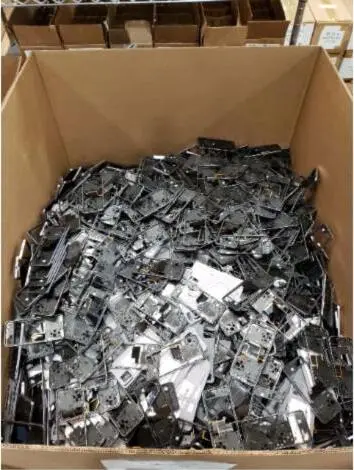
Premier Logitech’s OEM Authorized Service Center authorizations create a compliance barrier that generalist ITAD brokers cannot match. Warranty-compliant repair, certified refurbishment and grading for secondary-market channels all operate within the same lifecycle program. Enterprise e-waste reporting in 2026 is expected to include item-level metrics such as total assets collected, devices redeployed, repaired or refurbished, resold, recycled, destroyed, residual value recovered, landfill diversion rate and chain-of-custody completion. Premier Logitech’s operational visibility tools, including TMS integration, real-time tracking and lifecycle analytics, support that level of reporting without a separate data aggregation layer.
Structured ITAD recovery programs generate measurable savings over five years compared with unmanaged, ad hoc disposition approaches. Total cost and value evaluation should account for avoided disposal fees, recovered asset value, reduced audit preparation costs and the risk-adjusted cost of a data breach or compliance violation avoided through certified chain-of-custody management.
Conclusion
Selecting a nationwide ITAD partner in 2026 requires evaluation across multiple dimensions: service scope and technical capabilities, certification standards, chain-of-custody and serialized reporting, scalability and national network coverage, on-site and off-site destruction trade-offs, asset-remarketing revenue transparency, government CMMC and TAA fit and RFP requirements.
Practical next steps include mapping current asset retirement flows by location and volume, gathering performance data from existing vendors on chain-of-custody completeness and recovery rates and initiating a three-provider RFP that uses the criteria outlined above. Co-certified R2v3 and NAID AAA status, serial-number-level documentation and CMMC-aligned media protection practices should serve as baseline qualifications before commercial terms enter the discussion.
Premier Logitech combines R2v3 and NAID AAA aligned destruction, CMMC and TAA government-grade compliance, 20-plus OEM ASC authorizations and a DFW-anchored national logistics network in one end-to-end lifecycle program. That single-vendor consolidation model removes fragmented compliance risk for enterprises and government contractors that manage nationwide ITAD and secure e-waste recycling.
Schedule a vendor evaluation call to assess Premier Logitech as a nationwide ITAD partner for 2026.
Frequently Asked Questions
What certifications should a nationwide ITAD provider hold in 2026?
A nationwide ITAD provider should hold current R2v3 certification from SERI and NAID AAA certification from i-SIGMA. R2v3 verifies environmental controls, downstream materials routing and data sanitization procedures. NAID AAA verifies data destruction processes through unannounced audits, employee background screening and serial-number-level chain of custody. For government contractor engagements, the provider should also demonstrate CMMC alignment, TAA-compliant sourcing, a CAGE code and a SOC 2 Type II posture. Requiring all of these in a single vendor removes documentation gaps that appear when environmental and data security compliance are managed separately.
How does serialized chain-of-custody reporting work in enterprise ITAD programs?
Serialized chain-of-custody assigns a unique identifier to every individual device and tracks it through each stage of the ITAD process. Organizations often compare this with batch tracking, which groups assets by shipment or processing date. Batch records cannot prove that a specific device received NIST-aligned sanitization. Serialized tracking maintains a separate audit trail for each device and supports auditor or cyber insurer requests for proof that a particular laptop or drive was sanitized to NIST standards.
What is the difference between revenue-share and buyback models in ITAD remarketing?
In a revenue-share model, the ITAD provider markets the equipment and returns a pre-negotiated percentage of the net sale proceeds to the client after processing. This model often yields the highest overall recovery for recent, functional equipment but involves a longer settlement timeline and market-dependent outcomes. In a direct purchase model, the provider pays a fixed upfront amount based on device age, condition and brand and assumes all downstream resale risk. The buyback model provides immediate, predictable value but no upside if secondary-market prices rise. The right model depends on asset age, volume consistency and the organization’s preference for certainty compared with maximum recovery. Transparent itemized reporting that shows per-asset disposition outcomes and recovery amounts is essential in both models.
How does CMMC 2.0 affect ITAD vendor selection for defense contractors?
CMMC Level 2 C3PAO certification requirements for applicable DoD contracts, originally scheduled to begin November 10, 2026, were suspended on July 13, 2026. Even with that suspension, ITAD vendors that process, store or transmit controlled unclassified information fall within the CMMC assessment scope as external service providers. Prime contractors must flow down CMMC requirements to all subcontractors that handle covered information and verify subcontractor CMMC status before award. For media protection, CMMC Level 2 requires implementation of NIST SP 800-171 practices that reference NIST SP 800-88 Rev. 2 sanitization methods. An ITAD provider without documented CMMC alignment, a CAGE code and TAA-compliant sourcing creates a compliance gap that can affect a prime contractor’s award eligibility and expose both parties to False Claims Act liability.
What ESG reporting outputs should an enterprise expect from a certified ITAD provider?
A certified ITAD provider should deliver item-level ESG metrics including total assets collected, devices redeployed or refurbished, devices resold, devices recycled or destroyed, residual value recovered and landfill diversion rate. Environmental outputs should include material recovery weights by category, CO2e avoided through reuse and recycling and downstream disposition documentation that supports GRI 306-3, 306-4 and 306-5 waste disclosures. R2v3-certified vendors are the only class of ITAD provider whose downstream documentation is independently verified to support GHG Protocol Scope 3 Category 12 quantification inputs. For organizations subject to SEC climate disclosure rules, EU CSRD or internal sustainability commitments, these outputs must be audit-ready and traceable to specific processing batches and facility certifications.
